
When I lived in Vilnius, I had a quiet ritual.
Every evening, I went out for an hour and walked - not toward anything, just walked. For almost 20 years, I chose different paths, slipped into courtyards I hadn’t noticed before, and sometimes decided to only pay attention to rooftops or to windows.
Being curious about my daily surroundings was my way to nurture my creativity.
Once, I met some friends on the street.
They asked where I was going.
“Nowhere,” I said.
They looked puzzled. Walking without a goal made no sense to them.
In French, I never have to explain this. There is even a word for it: flâner. It's a cultural concept of aimless but purposeful wandering, focusing on enjoying the atmosphere and people-watching.
In my mother tongue, Lithuanian, the story is different. The word for getting lost, pasiklysti, comes from the same root as klysti — to make a mistake.
You never want to get lost.
You never want to make mistakes.
And slowly, language teaches you to fear both. To avoid detours. To trust only the straight line.
Then there is English — my second language, the culture that raised me through Hollywood movies, MTV videos, books, and songs.
In English, getting lost isn’t always bad - but it almost always needs a purpose.
You get lost to find yourself.
You get lost on the way to something bigger.
It’s the familiar movie arc: the character loses direction, wanders, struggles, questions everything… and then finally understands. Lostness is permitted, but only as a temporary chapter. You’re expected to come back with clarity and a moral lesson. You don’t want to stay lost for too long without a reason.
I often feel I have to justify my wandering. Even at the beginning of this post, I framed it - “walking as a way to nurture creativity.” As if wandering needed a respectable reason.
Maybe sometimes it doesn’t.
This year, I discovered that there are more levels of “lost” than I ever imagined.
I got to feel how normal it is to flâner in French culture. No reasoning needed to walk and wonder.
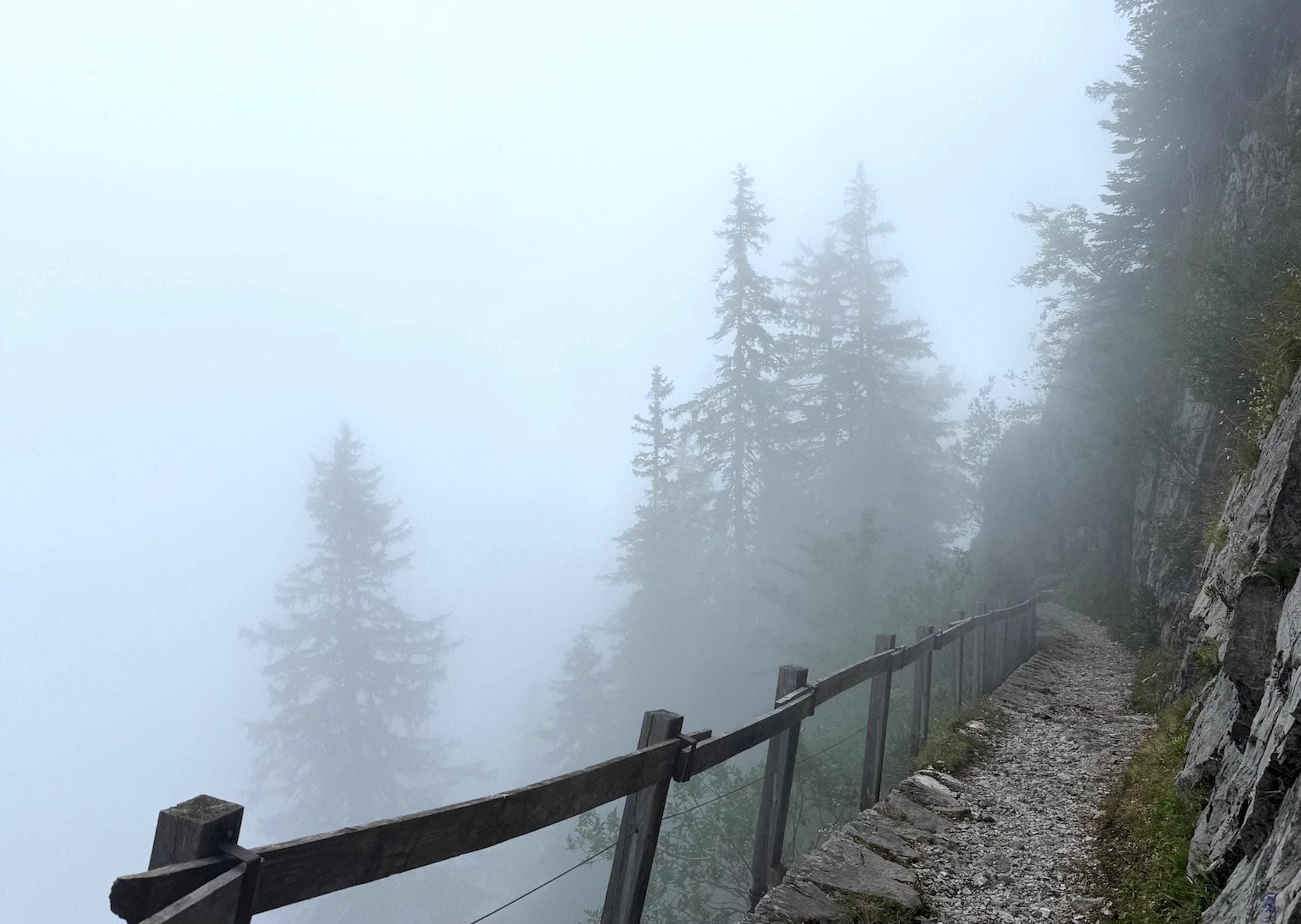
Spanish adds another beautiful layer: vacilando - moving toward somewhere, but not gripping the destination tightly. Direction exists, but it doesn’t own you. What happens along the way matters as much as arrival.
Next year I want to practice a little more vacilando - to keep moving, but to loosen my grip on how things “should” go. To trust the road a bit more.
I’m writing this from an airport. My flight home to Switzerland was cancelled. I had to separate from my family to travel back home. My first reaction was pure frustration: a whole day wasted, hours of waiting, delays, logistics.
And then I caught myself.
What if this, too, is vacilando?
A day that doesn’t go according to plan.
A journey that takes longer than it “should.”
A chance to notice things I would normally rush past - people, conversations, thoughts, myself.
I’m still going somewhere.
I just don’t have to fight the detour so much.
Maybe this is where the practice begins. Not in beautiful city walks at sunset, but in cancelled flights, unexpected delays, and the quiet invitation to be present anyway.
Does your culture embrace wandering, or does it focus on highways to reach the goal?
How do you feel about getting lost? Is it a mistake? A way to find something? Or maybe a lifestyle?
When was the last time you allowed yourself to take a different path - literally or metaphorically?
No posts
Comments
Nothing yet. Say the first thing.
Sign in to join the conversation.