
Castro-Chavismo has left Latin America with a profound legacy of authoritarianism, populism, corruption, and institutional deterioration. Although some of its leading exponents have lost power, the political, social, and economic structures they consolidated continue to shape the democratic future of several countries in the region.
I do not know whether we are nearing the end of the regimes inspired by Fidel Castro and Hugo Chávez, namely Venezuela, Cuba, Nicaragua, and Bolivia, not to mention Ecuador, which managed to free itself thanks to the arrogance and conceit of Rafael Correa, one of the most conspicuous clowns ever to misgovern a Latin American republic, comparable only to coca grower Evo Morales, although still far removed from the lethal Daniel Ortega.
Nevertheless, all the individuals mentioned above are characterized by a populism that bordered on the absurd, deep and widespread corruption, and an ineptitude in governing their respective countries, combined with an ability to proclaim a nationalist vision while transferring their country’s sovereignty to the most promising ally.
The Castro-Chavista project emerged from the alliance between Castro and Chávez. Previously, the Cuban tyrant had attempted, through violence and the systematic manipulation of reality, to impose governments in his own image and likeness throughout the hemisphere, a project in which he reaped only failures. Although Daniel Ortega came to power through terror, he received assistance from several neighboring countries as well as others that were not so geographically close, such as the Venezuela of Carlos Andrés Pérez, who, according to Sergio Ramírez, provided the Sandinistas with $100,000 a month, and the United States under Jimmy Carter, who withdrew all aid from dictator Anastasio Somoza, just as Eisenhower had done with Fulgencio Batista.
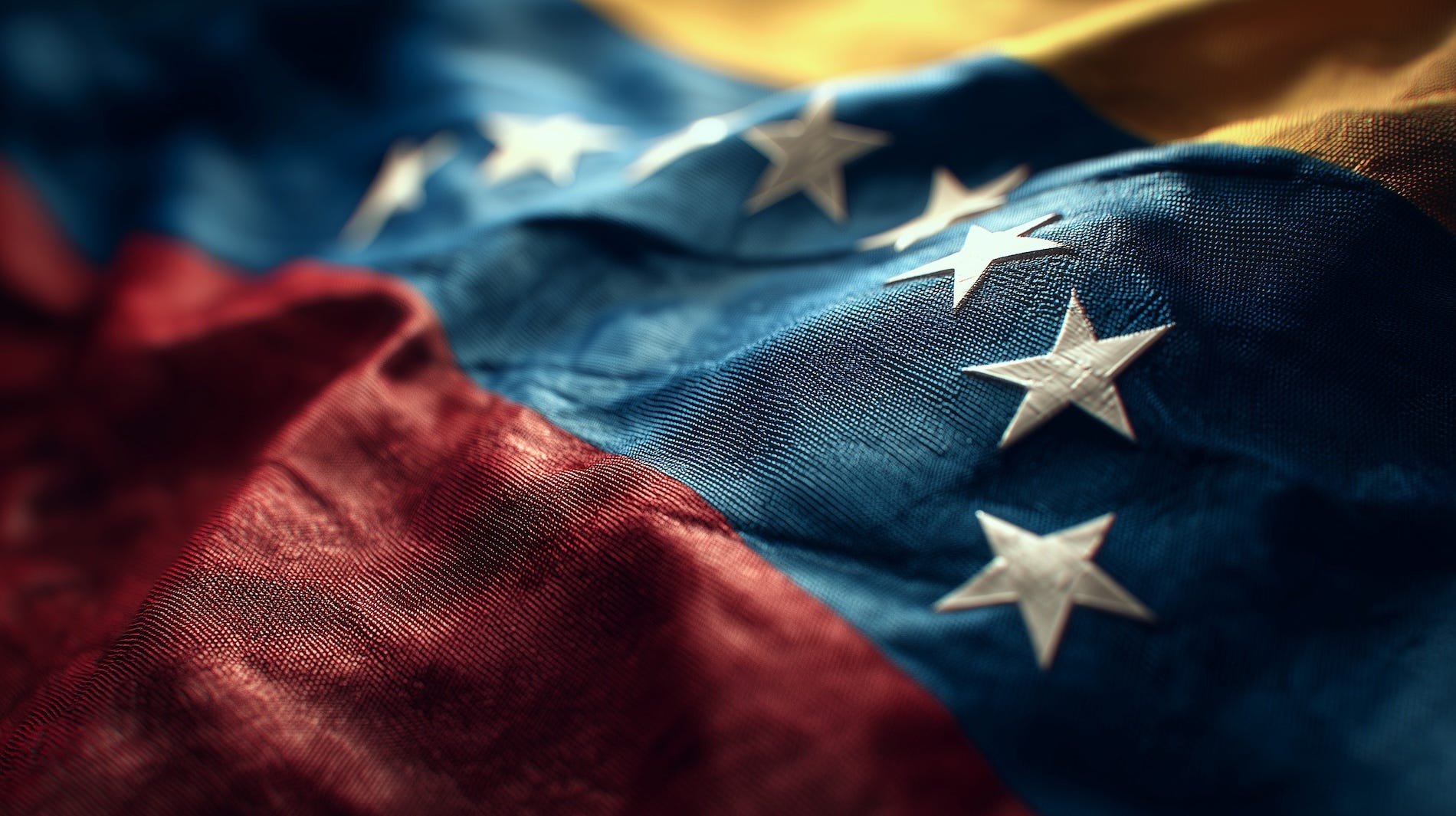
Castro, after thirty uninterrupted years in power, witnessed Hugo Chávez’s arrival at the presidency of Venezuela, a fateful coexistence that resulted, whether through prior agreement or an understanding developed along the way, in a coalition in which their respective hatred of democracy, freedom, and respect for human dignity merged with the resentful envy they harbored toward the United States, forging the indecorous project we now call Castro-Chavismo, though not before proclaiming their support for 21st-century socialism.
It is appropriate to acknowledge that the new alliance was successful. The Castro brothers provided their capacity for subversion, repression, and distortion of reality, while Chávez and Nicolás Maduro contributed all of Venezuela’s wealth, which, pocketed by Chávez and Maduro like good sharks, trickled down to their offspring, subsidized Castro’s totalitarianism, and bought political loyalties through oil diplomacy that drove the Venezuelan treasury into bankruptcy.
This program quickly attracted numerous supporters, among whom stood out the corrupt and deceitful Luiz Inácio Lula da Silva, the most aberrant hypocrite among all Latin American politicians, and the no less nefarious Néstor and Cristina Fernández de Kirchner. Although in truth, these scoundrels were never short of allies, to the point that a movement known as the “Pink Tide” emerged, whose members were always ready to support their proposals, among whom we may recall former Dominican Republic President Leonel Fernández.
Shedding the legacies of Castro-Chavismo is not easy, because they leave scars that are as deep as they are painful. Rafael Correa left power in 2017, and the country still suffers from his legacy. The political clientele he cultivated during his administrations remains eager for a return, sanctified by Correísmo and protected by its devotion.
Bolivia’s example is even more challenging. Evo Morales attempted to perpetuate himself in power indefinitely, cloaking himself in false legitimacy. However, the fraud was uncovered, and he was forced to resign, causing a highly complex period of ungovernability in the country, until one of his most prized sharks, Luis Arce Catacora, came to power and, like a voracious piranha, sank his sharp teeth into Morales, his former protector.
Nevertheless, the highland nation remains steeped in Castro-Chavismo. The current president, Rodrigo Paz Pereira, has been unable to steer the country toward genuine democracy; numerous problems continue to threaten freedom and the path toward a free society.
Venezuela is even darker. The dictator is imprisoned, but the dictatorship continues. There are numerous political prisoners; exiles have no guarantees for their return, and there is no prospect of elections in which everyone’s rights are guaranteed.
As for Cuba and Nicaragua, there is almost nothing left to say. The land of Rubén Darío suffers under a two-person dictatorship that casts a shadow over the Somoza governments. Its abuses are innumerable: political prisoners, mass expulsions, and crimes, not to mention the ultimatum that there will be no elections in a country where elections under the Ortega-Murillo yoke have always been fraudulent.
Finally, Cuba is ruled by totalitarianism, under an ineptitude taken to the extreme, with a people who, it seems, are on the verge of annihilation at the hands of their own rulers.
The greatest challenge lies not only in bringing an end to governments identified with Castro-Chavismo, but also in dismantling the structures and practices they have left deeply entrenched. Restoring institutions, freedoms, and a genuine democratic culture will be a far more complex and prolonged task than simply replacing those who wield power.
Pedro Corzo is a Cuban historian, essayist, journalist, and public intellectual specializing in Cuban and Latin American political history, with a professional career spanning several decades in research, media, and documentary production. He is a regular contributor to major Spanish-language outlets such as El Nuevo Herald, La Prensa, El Mundo, and Montonero, as well as to multiple digital platforms focused on political analysis and historical memory. Corzo is the host of Opiniones on WLRN Channel 17, where he leads in-depth discussions on contemporary political and social issues. He has produced 16 historical documentaries, including Zapata, Boitel vive, Los sin derechos, Muriendo a plazos, and Las torturas de Castro, many of which examine political repression, exile, and resistance. He is the author of 23 books, among them Guevara: Anatomía de un mito, El espionaje cubano en Estados Unidos, and La República que perdimos, and currently serves as Vice President of the Academy of the History of Cuba in Exile and the Cuban Exiled PEN Club.
The opinions expressed in this article are those of the author and do not necessarily reflect the views of the Miami Strategic Intelligence Institute (MSI²).
No posts
Comments
Nothing yet. Say the first thing.
Sign in to join the conversation.