

Jed Bookout: I had a conversation with Frazz recently, where she told me that when she was in the second grade, she was given an IQ test. Why? Because they wanted to put her in a gifted kid program.
“I remember taking an IQ test when I was in second grade to be put in the “gifted program,”” she told me, “and it basically ended up being the reason nobody realized I was neurodivergent lol.”
Frazz: ‘Tis true, dear readers. I squeaked right on by the threshold with a grand total of 131 IQ points. After that, any time I struggled, I mustn’t be trying hard enough. I was just lazy, you see.
Turns out I had a hell of a case of ADHD. But I was in GOAL, so they never went looking for anything wrong with my brain. (GOAL was the gifted program in my part of Pennsylvania. I cannot find what it stands for online, but you know what I’m talking about!)
They just said “Sit on your hands” and wondered why I cried about math class.
Back to you, Jed Bookout.
There’s a good chance for Americans of a certain age that this is a fairly common story; when I was a kid, I also received an IQ test and was placed in GATE - the Gifted and Talented Education program in California, which was intended to provide support for “exceptional” students. And no, it’s likely not a secret CIA sleeper cell program for kids like Reddit would have you believe.

No matter what your memory is of gifted education, it’s a concept deeply woven into the experience of many parents navigating the best ways for their kids to succeed and it has been for over a century. A Gifted and Talented program in elementary school can set a child up, so the feeling goes, on the right path to honors classes, AP classes, a “very good college,” even. Of course, as Katie Arnold-Ratliff points out for New York Magazine, “in many parts of the U.S., G&T has a race problem. As of 2022, roughly 60 percent of American students enrolled in a gifted program are white, though recent data shows that white children are only around 40 percent of the total public-school population — a disparity that has been in place for as long as G&T has existed.
Now, why do you think that is? It’s probably because the concept of G&T, GATE, and any other related programs, at their core, rely on IQ testing as a sign of what constitutes “exceptional” students.
And “exceptional” is measured in a way heavily resembling the outdated and racist concept of eugenics.

What does “exceptional” even mean, though? Well… that was part of the problem.
If you look up GATE, or TAG, or even just “gifted education” as a concept, you’ll find wildly varying definitions of what “gifted, “talented,” or “exceptional” even means. For instance, in Pennsylvania, being “mentally gifted” can mean you are a year or higher above grade achievement level in one or more subjects, “as measured by nationally normed and validated achievement tests.” It can also mean that there is “documented, observed, validated or assessed evidence that intervening factors such as English as a second language, learning disability, physical impairment, emotional disability, gender or race bias, or socio/cultural deprivation are masking gifted abilities.”
But in California, a “gifted and talented pupil” is someone who “demonstrates the potential for high performance capability in…intellectual ability, specific academic achievement, creative ability, leadership ability, visual and performing arts talent,” and so on, with each district in the state providing its own identification procedures, such as cognitive and achievement tests like like the CogAT, MAP, or SBAC, or even simply teacher and parent nominations.
If you look at the info in that hyperlink I posted, though, you’ll see an interesting fact: “[In] 1961: California launched the Mentally Gifted Minor (MGM) Program, identifying students with IQs in the 98th percentile or above.” This raises two questions for me:
Number 1, what did they do before IQ tests?
Number 2, what’s the deal with IQ tests and eugenics?
Both questions can effectively be answered if you look at one person’s advancements in the world of intelligence testing by the name of Henry Herbert Goddard, a former football player at the University of Southern California who became a professor in Latin, history, and botany in addition to his coaching duties. After leaving USC, he went to Clark University where, in 1899, he earned a doctorate in psychology.
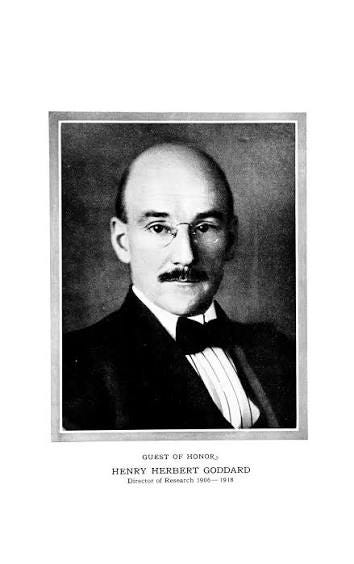
Eventually, he became a full time researcher and was invited to become the director of research at… *sigh* the New Jersey Training School for Feeble-Minded Girls and Boys, in Vineland, N.J.. Now, despite the horribly aged name, Goddard had altruistic goals in mind: he wanted to figure out how children’s brains worked and wanted to be able to have education meet them at their level, rather than adopting a “one size fits all” approach to education - something we have seemingly always known doesn’t work.
But he had no idea what he was doing, so he went to Europe to see what other researchers were doing when working with people with disabilities. This is when he learned about French psychologist Alfred Binet, who alongside colleague Theodore Simon had developed the Binet-Simon Scale - a thirty question test focused on areas not explicitly taught in a classroom to measure a child’s aptitude. This included questions about attention, memory, and problem-solving skills, but also more philosophical questions about the difference between “boredom” and “weariness.”
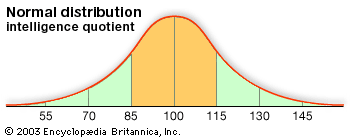
The answers would lead to a definitive score, divided by the participant’s age, and multiplied by 100 to create… the intelligence quotient, or IQ. Binet & Simon really believed this test reflected “general intelligence” within a person. But, quick: define “general intelligence.” Much like “gifted kids” can’t be fully explained, “general intelligence” is something that simply does not exist - especially across the world. These concerns were raised early on with Binet & Simon, yet that didn’t stop the test from spreading globally…
…to people like Goddard, who took the test, translated it into English, and began testing it on his own students. Goddard was, if nothing else, a showman and a hustler - his rampant promotion of the method enabled it to spread quickly, and by 1911, it was used in public schools across the country. By 1913, it was used at Ellis Island for incoming immigrants.
Lewis Terman would later develop the “intelligence testing” we all know and “love” so well, but Goddard is the one who innovated the industry and made it popular as a result. But he was also the one who popularized feelings the world had about “feeble-minded people,” such as the idea that procreation with a “feeble-minded” person would genetically lead to “inferior descendants,” including criminals.
“Goddard argued that society should keep feebleminded people from having children, either through institutional isolation or sexual sterilization.,” Dr. Ludy T. Benjamin Jr. once wrote. “As a result of its seductive mix of science and ideology, Goddard’s book became a favorite among eugenicists. As such, Goddard’s views were part of a dark chapter in American history.”
And what “dark chapter” would that be? Why, eugenics of course! The belief that “desirable” and “undesirable” genetic traits could be controlled in humans via selective breeding.
As Dr. Stefan C. Dombrowski of Rider University explained in a TED Ed presentation, “What started as a way to identify those who needed academic help quickly became used to sort people in other ways, often in service of deeply flawed ideologies.” We quickly see the U.S. military used IQ tests for recruits during World War I, not taking into account that many recruits were recent immigrants with no formal education and a limited grasp on the English language.
This “created an erroneous intelligence hierarchy of ethnic groups,” he said. “The intersection of eugenics and IQ testing influenced not only science, but policy as well. In 1924, the state of Virginia created policy allowing for the forced sterilization of people with low IQ scores— a decision the United States Supreme Court upheld. In Nazi Germany, the government authorized the murder of children based on low IQ.”
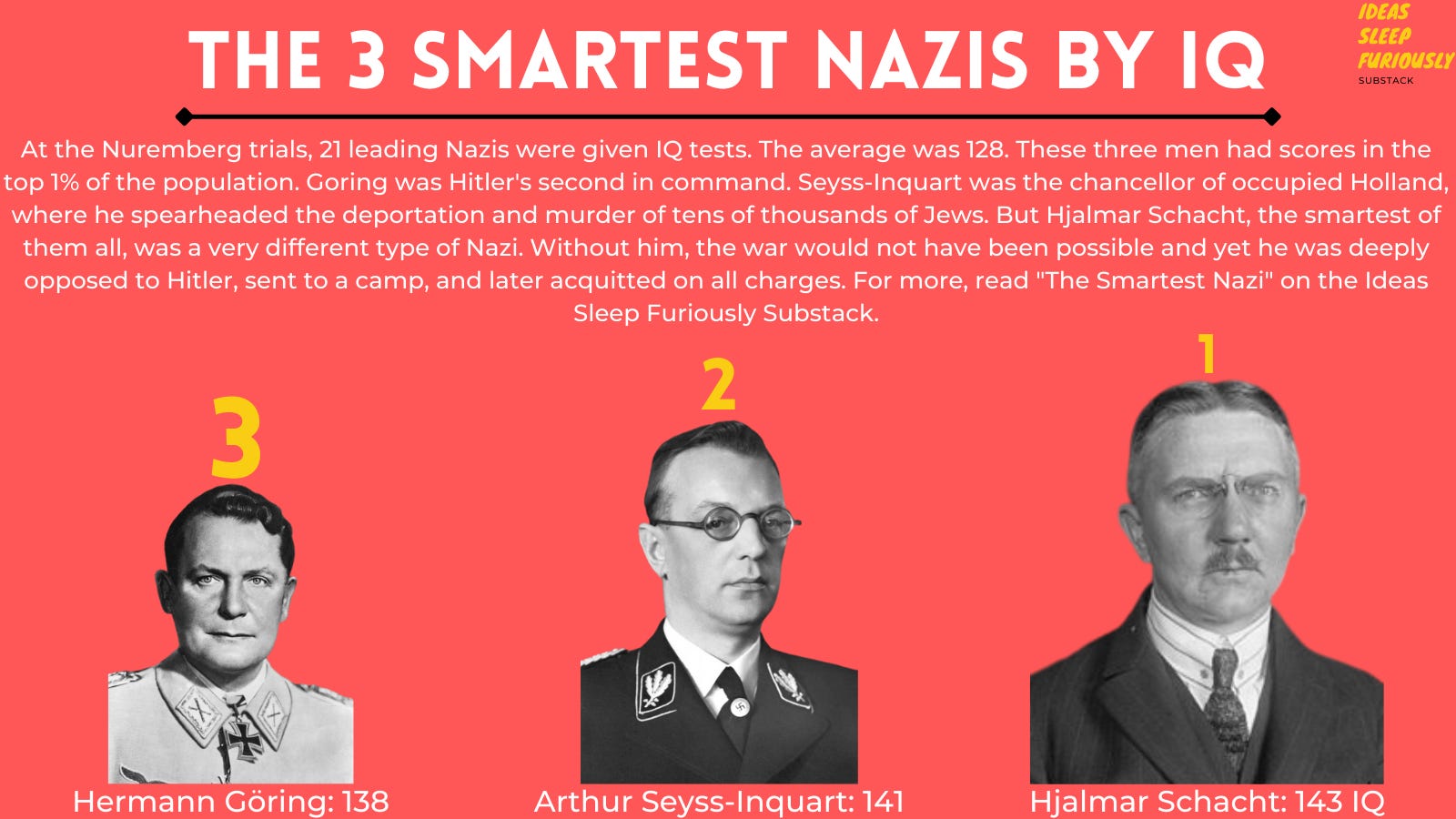
The IQ test was, of course, improved over the years, but an intelligence quotient isn’t meant to be a “one-size-fits-all” answer to whether somebody is intelligent or not. Ironically, it wasn’t even designed to be as such! And yet almost immediately after Goddard, and later Terman, popularized the IQ test in the U.S., it began being used as a means to identify “gifted” students who scored highly on the tests. By 1922, educator Leta Hollingworth began creating curricula and specialized classes for high-IQ children in New York City. Fun fact, this was the era of Social Darwinism, so her classes initially focused on the ideas that men could operate on levels ranging from “genius” to “stupidity,” and women were… merely average. Why you gotta do us like that, Leta?
(In her defense, Leta immediately pivoted to trying to dispel not only this notion, but also the idea that “”bright children take care of themselves,” and especially sought to emphasize the importance of early identification of intelligence, daily contact, and grouping gifted children with other gifted children with similar abilities.)
But that’s the thing about all of this: you may have noticed that IQ tests didn’t improve drastically before they attached themselves to gifted education, and they didn’t become improved in any meaningful way over the following century, either. That’s the focus of a study by Michael S Matthews and Jennifer L Jolly that bluntly asks, “Why Hasn’t the Gifted Label Caught up with Science?”
“Eugenic societies thrived during the first several decades of the 20th century as they pursued the goal of bettering human society through the control of reproduction, largely among those from non-White racial backgrounds, the physically or mentally ill, and those considered feebleminded, criminal, or socially deviant,” the pair write. “For example, low IQ scores were used to identify individuals for forced sterilization campaigns carried out throughout the United States and continuing until as recently as the 1970s. This misguided and reprehensible use of IQ test results likely has fueled the ongoing narrative among some writers that claims IQ tests are intentionally designed to be racially biased (rather than the more reasoned view that their differential results reveal a lengthy history of systemic discrimination and related societal inequities). In gifted education these intertwined ideas likely have impeded a greater acceptance of recent research related to IQ and intelligence and thereby also have limited the field’s ability to consider labels that could have greater utility than the term gifted.”
The 1970s!!! Think about that for a second. The IQ test was created in an archaic form at the turn of the 20th century, and multiple generations later, it existed in tandem with the problematic worldviews it upheld. We simply should not be tying a test linked so closely with eugenics to the idea that some children are “gifted” because they are “generally” more intelligent. It seems absurd that nearly a century and a quarter-century later, programs like these still rely on this test.
Even worse, though, is the labeling itself:
The label issue for gifted education still fails to reflect what we have learned over a hundred years of scientific study. Over time our understanding of learning, teaching, personality, and the influence of non-cognitive factors on educational attainment has grown dramatically, but the identification practices and terminology of gifted education have fallen drastically behind the progress made on these same issues in the related field of special education.
In the best of cases, a label indicates needed services without conveying prejudice or other ancillary meanings. Labels used in special education have become more nuanced and prescriptive over time, whereas in gifted education there are fewer branches—a cactus rather than a tree—meaning that the general gifted label is far less useful for purposes of service delivery than a special education label (e.g., dyslexia or a specific learning disability in numerical processing). This is true even when the gifted label is further divided into identification categories based on academic achievement vs. intellectual potential, or even into reading or English language arts vs. mathematics. In other words, the utility of the gifted label remains on par with the utility of early special education terms like ‘moron’—which is to say, it still has little relevance to service delivery.
…
[W]e urge those who wish to support the needs of students currently or potentially labeled as gifted learners to continue thinking about how to improve the label in a manner that would make more evident these learners’ specific individual and collective differences and needs from typical learners, while also being more palatable to policy makers and the public at large than the term gifted currently is.
This is the problem with the illusion that there is even such a thing as “gifted education.” If anything, it’s gatekeeping that relies on outdated mindsets to keep “certain” children paywalled away from success. If 60% of “gifted” students are white when only 40% of all public school students are white, there’s a barrier that is clearly unable to be breached through a test created in the early 1900s.
But on the flip side, being “gifted” and told that maintaining the trajectory this program sets for you determines your adulthood can lead to an explosion of high expectations drowning a child, which could lead to the very real phenomenon of “Gifted Kid Burnout,” defined by Monika Roots, MD, a child psychiatrist, as “when a gifted kid experiences exhaustion, frustration, and diminished motivation due to persistent pressure to excel and meet high expectations.”
“This can sometimes manifest in a decline in performance and motivation, but more often presents as increased irritability, social withdrawal, or a mental health issue such as OCD, anxiety, or an eating disorder,” Rachel Goldberg, founder of Rachel Goldberg Therapy in Los Angeles, CA, says.
And what does Roots say further down in that article?
“Although not every gifted child may be diagnosed with a type of neurodiversity, giftedness is often associated with neurodiversity, including autism spectrum disorders. Children with neurodivergent brains “often experience burnout more intensely than other kids,” Dr. Roots says. “They often have more of a cognitive response and exhibit brain fog, detachment, and sometimes difficulties completing basic tasks and self-care.””
Full circle.
It is incredibly likely that we are poorly serving all students with an outdated look into what constitutes being “gifted,” and maybe we should allow the term to catch up with the science or even, like we did with eugenics, leave it in the past where it belongs.
No posts
Comments
Nothing yet. Say the first thing.
Sign in to join the conversation.