
We’re midway through a lesson about hyperbolas when someone calls it out.
“You should smile in your yearbook photos,” they say.
It’s a complete non-sequitur from the conic equation at hand, except that the new yearbook arrived recently. The question betrays that a few among us are…multitasking.
I’m wearing a mask at the time, playing it safe while dealing with a sore throat, so no one can tell whether I’m smiling. At the same time, everyone present knows I’m not feeling my best, particularly during the last period of the day, so I’m under no obligation to answer. I could even pretend I didn’t hear it, and nobody would be offended.
Instead, my eyes light up. I drop the computation I’m in the midst of to address the commenter.
“I haven’t smiled in a yearbook photo since…” I say before pausing, not because I’ve forgotten when I stopped but because I realize, right then, just how much time has passed.
“2016,” I finish. “It’s been a decade.”
A murmur races around the room. 2016 is a long time ago, so long ago for this group that a few of those present weren’t yet in kindergarten. Ten years is a lifetime to someone who’s only experienced fifteen.
“Why did you stop?” The original commenter asks the obvious question, and a curious smile joins it. That same interest spreads across the classroom. Whereas most of that eagerness evidences genuine interest in my story, others respond because they crave temporary relief from foci and asymptotes. This doesn’t offend me, but especially not today when I, too, would rather not be sketching hyperbolas.
I hesitate, though. My answer, which I haven’t voiced in at least eight years, sits on the tip of my tongue, but I alone recognize it will shift the warmly bored atmosphere by 180°. After clearing my throbbing throat, I tell them the truth.
“I can tell you, but it’s a difficult story,” I say. “Are you sure you want me to tell it?”
Scanning the room, I search for opposition, but I find none. They nod, their 68 eyes meeting my two and granting me permission to continue.
“Okay,” I say. “This is a story about death.”

She put on a brave face all day.
She attended every class on her schedule. She raised her hand upon hearing her name. She accepted condolences as they came and listened to the consolers’ elaborations. She made it through four blocks. And then she walked back into her math class, sat down in the extra desk chair, and began to sob.
Although her emotion was explosive, she didn’t explode with that emotion. She unzipped her dazed exterior, and underneath a hoodie of numb inertia, there sat a crumpled girl clutching the eviscerated threads of her former self. Amid huffing gasps, her mascara snaked down her cheeks until it dripped like a smoky waterfall into the cavity where her heart had once been.
In July, she had folded into herself, curling into a fetal position on the back seat of the sedan, mumbling words with the energy of an out-of-shape runner post-marathon, an immortal exhaustion glistening in her eyes. She regarded french fries like rat poison, swallowing her courteous few like she’d licked an ashtray. Her texts were soggy with tears, every word empty, and every other phrase unfinished. She wasn’t…there. None of her was there.
In August, post-Memorial service but pre-funeral and burial, she resembled her former self on her first day back. The makeup. The voice. The colorful pens. It was all the same as before. But her disguise expired at 3:05 when she realized she had 179 more of these trials to endure, and he would not be there for any of those, either.
With its majestic leather back, the chair made her look small, but she chipped in, too. Twisted into a pretzel of limbs and frazzled hair, she drew heavy breaths that sent shockwaves rippling through the plastic frame. When she tried to talk, her words tumbled inward like her streaking makeup, the gravity inside becoming a black hole.
When it seemed like her skin and face would be pulled in next, like the straining breaths might damage her lungs, the others descended on her chair and put their arms around her, but she could only cry more, helpless tears from above further matting her hair. The others’ efforts were futile because all efforts were futile, because he was not only absent on day one of senior year but gone from the rosters, gone from the system, and gone from the eyes of the classmates who found their closure easier and sooner. Such was the mercy of their distance from him that she lacked.
She remained in the muggy cocoon of their afternoon breath for several long minutes. Her lungs slowed as she ran out of tears from dehydration, having drunk nothing but coffee before Senior Sunrise ten hours prior. She was a husk of herself during summer, but she became a husk then, dried, brittle, dehydrated fiber meant to wrap something. But with nothing to wrap, she was less a husk than an empty vessel.
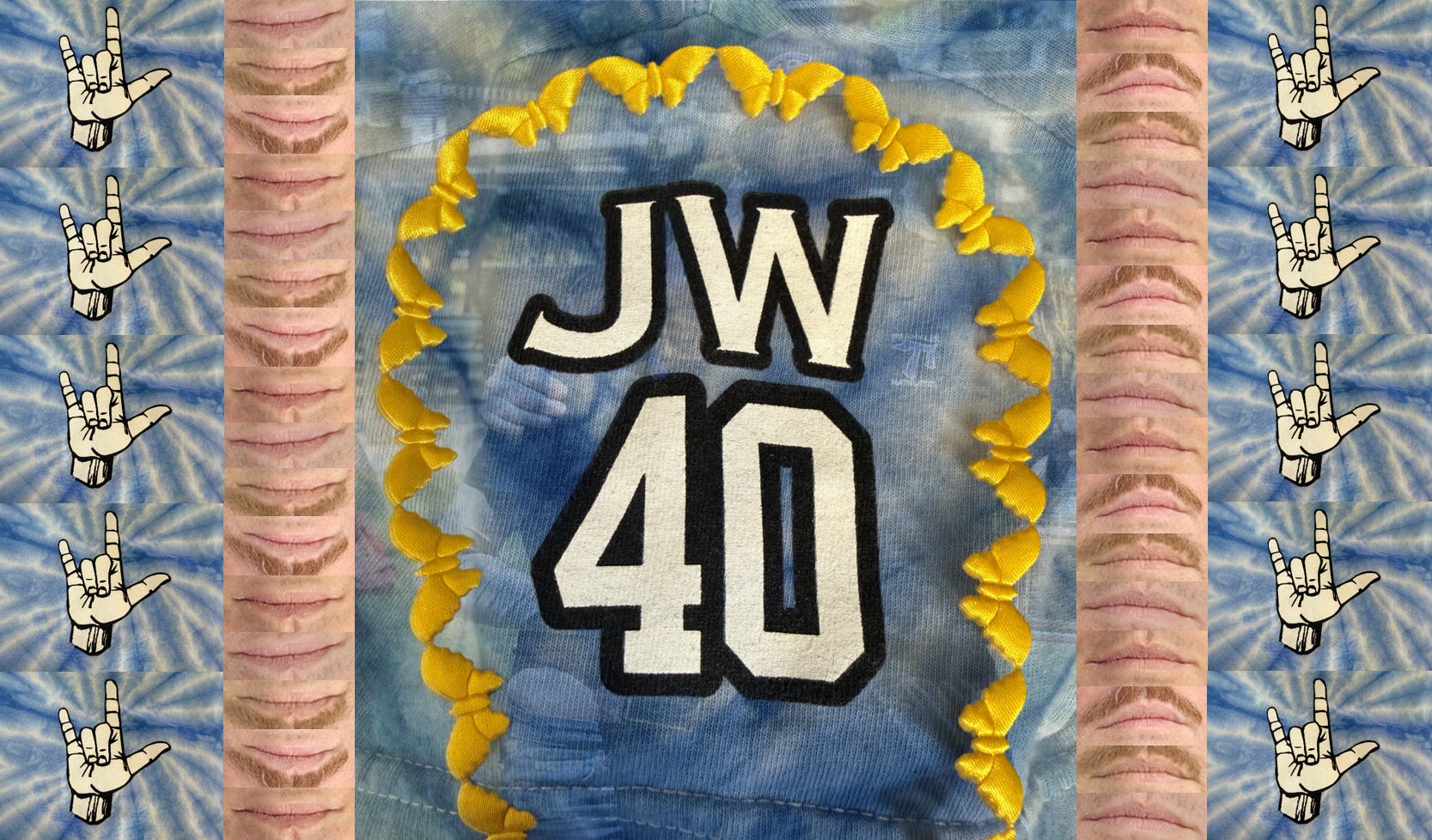
Finally, semi-coherent words sputtered out. With a vacant gaze, with a hollow off-planet voice, with a rainbow tie-dyed t-shirt dabbing her eyes and absorbing fresh streaks of black, she trembled out her crackled lament.
“He’s just…gone,” she wobbled. “We were going to be friends forever. Our kids were going to be friends.”
With the others silent, she squeezed her sternum as if preparing to extract it.
“They’re all still out there like nothing happened,” she whispered, “but he’s not.“
She had no liquid left, but she cried more anyway, sourcing tears from a reservoir only the brokenhearted find.

“Did you know him?” someone asks. “Her friend who died?”
“Not really.” I shake my head. “I knew him a little because I saw them together. They’d sit on desks and talk like people who know everything about one another do. They existed, together, in their own welcoming world.”
“So you never met him?” another asks.
“No, I met him. She introduced us, and I knew his name from baseball. I saw what turned out to be the final inning he ever pitched in a summer ball game. But we only ever really talked once.”
“When?” two ask simultaneously.
“We were at McDonald’s. She’d run the scoreboard for me at a game I announced, so I bought her food afterward. He joined us there. We talked about baseball for a while. I liked him.”
“But she loved him,” someone says.
“Yeah. It was there in her body language when he was around and the way his name always came up. It’s different with old friends, the ones who knew you growing up. They know your full trajectory. You can’t separate them from childhood because they’re in all the stories. They’re the friends that teach you how friendship works.”
I pause to swallow and adjust my mask.
“When you lose someone like that,” I continue, “it’s like—”
“Losing a part of yourself,” a somber voice says.
“It is. Yeah. You lose an essential part of your heart. It’s hard to believe you’ll ever function without it.”
I take a deep breath. The room is silent.
“I don’t know how you go on after a loss like that,” I note. “I don’t.”
“It must have been hard for her,” a voice speculates.
“Did she keep on hurting like she did on the first day?” another asks.
“Yes. She did.”

She wore dark clothes to hide the blood and streaking mascara, except that’s a metaphor because she didn’t actually wear anything different than before. That was the thing: she climbed into a shell, but it was a shell of her former self. Her voice sounded full, firm, and forceful; she aced every exam and then took harder ones and aced those, too. She was everywhere. She was boisterous. She went shoeless between classes. She told rude people off. She laughed with such unrestrained gusto that the ceiling panels bounced and tufts of dust drifted to the floor.
But it wasn’t real. Not exactly. Every day, she calibrated, then recalibrated, then calibratied again, manufacturing an approximation of who she’d been before Thanos snapped away a chunk of her heart. Sometimes, she nailed the impression, and no one noticed the red stains on her collar, but other times, she couldn’t rein it in, and her impression became too much, a caricature of her old self, unbound rather than undeterred.
But when other people caught on, the ones who knew her, they understood. They waited. They gave her space to turn her dial one click at a time until she found a functional temperature that kept her grief to a simmer.
It was always there, though. Always bubbling below the lid. When she talked through her college essay about him, she pressed her words together so none of the agony could slip out while she confronted the pain. She wandered through her heart’s razed forest every day, tiptoeing over still-smoldering branches, the ashes of her love pressing between her toes, yet her mouth kept moving, her voice kept speaking. Translating anguish and loss from that wasteland borders on impossible, and translating it into a sickly-strict, 350-word capsule defines cruelty. Yet she did it. She insisted on doing it.
She did everything else, too. Everything she did before, she continued to do, and at the highest level. She shouldered responsibility and took on extra tasks; she argued and groaned and excelled. She did more, too, everything she was going to do had he been there, urging her on, and then she did more. In September, she coached baseball. In October, she went on a date. In November, she submitted her applications. In December, she opened her heart to someone. In January, she hosted a contest. In February, she organized concessions for the bluest season the varsity field ever hosted. In March, she won a meet. In April, she was royalty.
In between, she buried her friend. In between, she monitored his friends. In between, she visited his parents. In between, she brokered connections between his family and the school that struggled to honor their son. In between, she hid her pain until she needed to brandish it and put someone in their place or guide someone through mourning. She tethered herself to her grief, to the center of her hurt, refusing to seek the stitches she needed because she couldn’t, not while others’ wounds might have already begun to close. Someone needed to suffer his absence.
She was multitudes—nouns like daughter, sister, friend, student, girlfriend, president, coach, leader, organizer, and adjectives like dynamic, compassionate, superlative, brash, intense, winning, funny—but she also did multitudes, running out of space on her college applications’ activities section because the state of California couldn’t comprehend what she was capable of doing, or being, or feeling while bleeding.
When at last day 180 of 180 arrived, when at last she could leave the place that refused to let a scar form, she walked across a grand stage with yellow butterflies draped around her neck atop every honor, cord, sash, and stole one could imagine.
She was finally free to vanish forever from the place that haunted her all year with memories of the friend she’d lost.

“I can’t believe she did all that,” someone says. A murmur of assent follows.
“Yes.” I nod. “I didn’t appreciate it enough in the moment, when we were going day-by-day, but I did afterward. The totality of her year is staggering.”
“I couldn’t do that,” another says. “It would hurt too much to keep working.”
“I used to think that,” I say, nodding. “There’s no right or wrong way to grieve, so it would’ve been fine if she’d stepped back from some things. That’s what I presumed would happen.”
I let my gaze wander around the room. I still have the rapt attention of 68 eyeballs.
“But I admire the way she approached it. She never stopped feeling or hurting, but she refused to cave to her loss again. What happened on the first day never happened again because she kept moving, kept working, kept striving.
“Feelings are real, but they’re also separate from our physical selves. Emotion can overwhelm us, but we have the power to set it aside, to let it process in the background rather than stall out while we fixate on the open application.”
“But how?” someone asks. “How do you just not feel those emotions?”
“Oh, you feel them. You feel the pain, worry, and heartache, but you do more than simply feel them. You do other stuff because otherwise you’re trapped in an infinite world of hurt between your ears.
“And if you do it well, sometimes you can make your hurt become something to help other people, too.”
“That’s what she did, right?” someone asks.
“That’s right,” I reply. “She did.”

When they established a baseball scholarship in his name, she returned to award it. In the same multipurpose room where they held his memorial, where she floated numbly between tables with puffy cheeks, she spoke to increasingly younger players who only knew him by his retired jersey number. She became the caretaker for his legacy. She still returns there to this day.
When they hosted workshops for kids, she made time to attend them. In the same room where she wore her heart and his initials on her sleeve, she now sits with increasingly younger teens who only know him through her words. She became the storyteller who preserves his memory. She chose to renew her grief so the next generation could learn from it and learn from him. She still attends to this day.
She does these things even though they hurt. Each return slices through pink scar tissue to reveal familiar gore inside her chest, since each event drags her back to the radioactive place she clawed through at sixteen and seventeen. But she has assumed the role of docent to preserve some part of him in the world, the same way he’ll be preserved in her memory.
Part of that docent role is advising others. Sometimes she knows that it’s coming and can brace for it, but other times, the call comes unexpectedly. But the silver-lined cost of shouldering grief for all of her adult life is that she got really good at it really fast.
Only two years after he died, she delayed a return to college and skipped a few classes to volunteer at an event in the park. It was 105°, even hotter by the afternoon, and she needed to start the long drive back to her temporary home. Nevertheless, called to action, she refused to peek at the clock and let the day stretch even longer.
Over massive KFC sodas held by sweaty hands in a parking lot that cooked patrons like chicken tenders, she listened to someone less versed in making sense of the residue left after a suicide. After patiently listening to him explain his pain, she shared the secret that had kept her going all along.
“My heart will never heal,” she said quietly, before taking a sip of Sprite. “I don’t want it to heal. I need to feel the hurt so that he’s never gone. I don’t wanna get better. I want it to always be there. I don’t want my heart to heal.”
She took one more sip.
“I want it to hurt forever.”
With her grief transmuted into wisdom, she guided him through his feelings while chugging soda like a seasoned pro.
“You don’t have to heal,” she told her apprentice. “That’s the trick.”

They can only see my eyes above the mask, but there’s enough real estate to watch the tears roll down my face.
I’m not alone in the emotion, either. When I look around the room, I find only sympathetic eyes. We’re on the same wavelength, they and I.
“But wait,” a familiar voice calls out.
I turn toward the asker and raise an eyebrow.
“You never told us about the yearbook,” they say. “Why did you stop smiling for your picture?”
The room is already quiet, but it somehow goes even quieter.
I begin.
“On her first day of school after losing him, I didn’t take my photo before first period. I wanted to be in the classroom if someone walked over. I planned to take my photo after school.”
“Oh,” someone says. “But she came here.”
I nod.
“She did. She entered this room, sat down, and let out the emotion that she’d fended off all morning. I completely forgot about taking my photo because the only thing that mattered in the universe was being there for her.
“The next morning, while I stood in line in the gym, I thought about her in that chair, and I couldn’t figure out how I was supposed to smile and pretend the year was starting on a happy note when it wasn’t. When she broke down that way, something fractured inside me.
“Seeing her in pain, I thought I will never be happy again, which was obviously hyperbole, but it felt true. I couldn’t smile. So I didn’t. And then the next year, when I arrived on the first day of school, I remembered her pain and what it was like the year before, and I decided to do the same.
“I’m never going to smile again. Not in that picture.”
“That story’s really sad,” someone says. Several voices second that notion.
I turn and look back at the chair. It’s been ten years since she folded herself up in it, but it doesn’t feel that long ago. I can still see her engulfed by the emotion, sobbing like I’d never seen before from her and never would again. But then, suddenly, the heaviness in my chest lightens. The story I’ve been telling them feels incomplete.
“In a way,” I say. “But I don’t see it as a purely sad story. Not anymore.”
“What do you mean?” someone asks. “Her friend died. She’ll hurt forever. That’s a sad story if I ever heard one.”
“I disagree,” I say.
“If it’s not a sad story, then what is it?” another asks. “What is it to you?”
My mask prevents them from seeing it, but I smile.
“It’s a love story.”
Eyebrows raise with confusion. Surely I’ve misspoken.
“Oh, I know. It’s definitely a story about loss and broken hearts and pain the likes of which you can’t fully appreciate until it finds you. And it’s a sad, sad story anytime someone buckles under the weight of a grief like that.
“But when you observe that pain over the absence of a friend, what you’re seeing is the presence of love. I didn’t know Joe, not well, but I feel this incredible affection for him because of what he meant to her. Because I’ll never really know him, her anguish—which is to say her love—is how I understand him. It’s why I still think about him, remember him, and honor him. I know him as those streaks of mascara on a tie-dye shirt. I know him as the thing that decimated the strongest person I know, a person I look up to, trust, and rely on, who I think about every day, even though we only see each other once or twice a year.”
I take a deep breath and scan the room. We’re in a bubble, they and I, a bubble outside the curves projected onto the board. I can pop this bubble any time I want and return us to our original objective, but seeing their eyes still with me, some damp, some closed, some concerned, some empowered, I decide to say one more thing. Just in case, you know?
“To behold that magnitude of love still humbles me, but the incredible thing about tragedy is its power to ripple outward. I believe in silver linings. I believe in our ability as a species to extract good from even the most hopeless situations. And I believe the Conservation of Matter and Energy applies to love. I believe real love never disappears, that it seeps outward, that it adopts new shapes and appears in new hearts when someone who is loved disappears.
“Joe’s death revealed her love for him; her pain was their platonic love manifested. But in the wake of saying goodbye, other loves surfaced. She’s still in the relationship that began months later, a relationship that has thrived through distance, ambition, and change. She might not agree, but I don’t think that’s a coincidence.
“But it’s more than that. The remarkable thing is that her love for Joe spread away from her, too. Seeing her hurting that way hurt me. I’d never been shaken by another person’s sorrow before. I shouldn’t have felt hurt then because I barely knew Joe, but I knew her, and witnessing her grief wounded me. I left that first day of school feeling like a part of my world had shattered because a part of hers had.
“I loved her. And I do. I didn’t think I’d ever really known what love felt like before, but as I drove home, I understood that the ache in my chest was love. That’s what love is: an overwhelming, irrational, utterly nonsensical compassion for another person. I’d used the word before, but only then did I understand the depth of it. Only then did I realize what loving someone entails.
“That day was an awful day painted blue by unfathomable loss, but it was also a day that opened up my heart. I’d always wondered what would happen to the love in my heart that would be squandered if I never found a wife or never had a son or daughter, but that love doesn’t lie dormant inside me. The same love that could go to them, instead, goes to her.
“And it goes to you as well. It’s the Yellow Butterfly Effect: that mountain of love she had for him inspired a new capacity for love in her and then in me. My heart is different now. All of you get a tiny piece of that heart. I give it willingly, intentionally. If something happened to you, I would hurt for you. When you hurt, a part of me hurts with you, and for you. They sound like just words, and I get it, because they sounded like just words to me once, too, but it’s true.
“And you can know this is true because even though Joe died ten years ago, I haven’t smiled for a yearbook photo since.
“People look at those pictures and see a frown, but I don’t. I see a reminder that love endures. I see a reminder of Joe, a reminder that some of him remains here long after he threw his final inning. I see a reminder of what his death did to her and the connection her hurt certified. And I see a reminder that love is a resilient force that always, always finds a way.”
Although I probably shouldn’t, I step back and remove my mask so they can see my face.
“We need to get back to math,” I say quietly, tears still pooled in my eyes. “But I love you. I really do.”
They nod because they believe it.
I smile because I believe it, too.
And because I’m thinking about someone I love.
I wrote some parts of this in May after talking to my class about why I don’t smile in my yearbook photos. Despite telling the story I wanted to share with them about Joe’s death and how it affected someone I love, I started writing a fuller version the next morning that focused not on what happened to him but how it affected her. That experience wrecked me—it was my first time going back to that first day and thinking about everything that followed for her—so I ended up shelving the piece to preserve it for this week, which marks the tenth anniversary of his death.
This piece attempts to marry the two experiences—talking to my class and learning through her approach to grief—and I’m not that it captures the power of either one. I also fear that it fails to convince the reader that the two are the same, that the Yellow Butterfly Effect transforms love that loses its vector into something that spreads to others, but I’ve decided to let it be. Some parts of this story have been shared before—you might remember “Cope Floats” or “Power Ballad”—but others don’t fit into words because love doesn’t conform to language quite so tightly.
Rest in Peace, Joe. You were and still are loved.
No posts
Comments
Nothing yet. Say the first thing.
Sign in to join the conversation.