
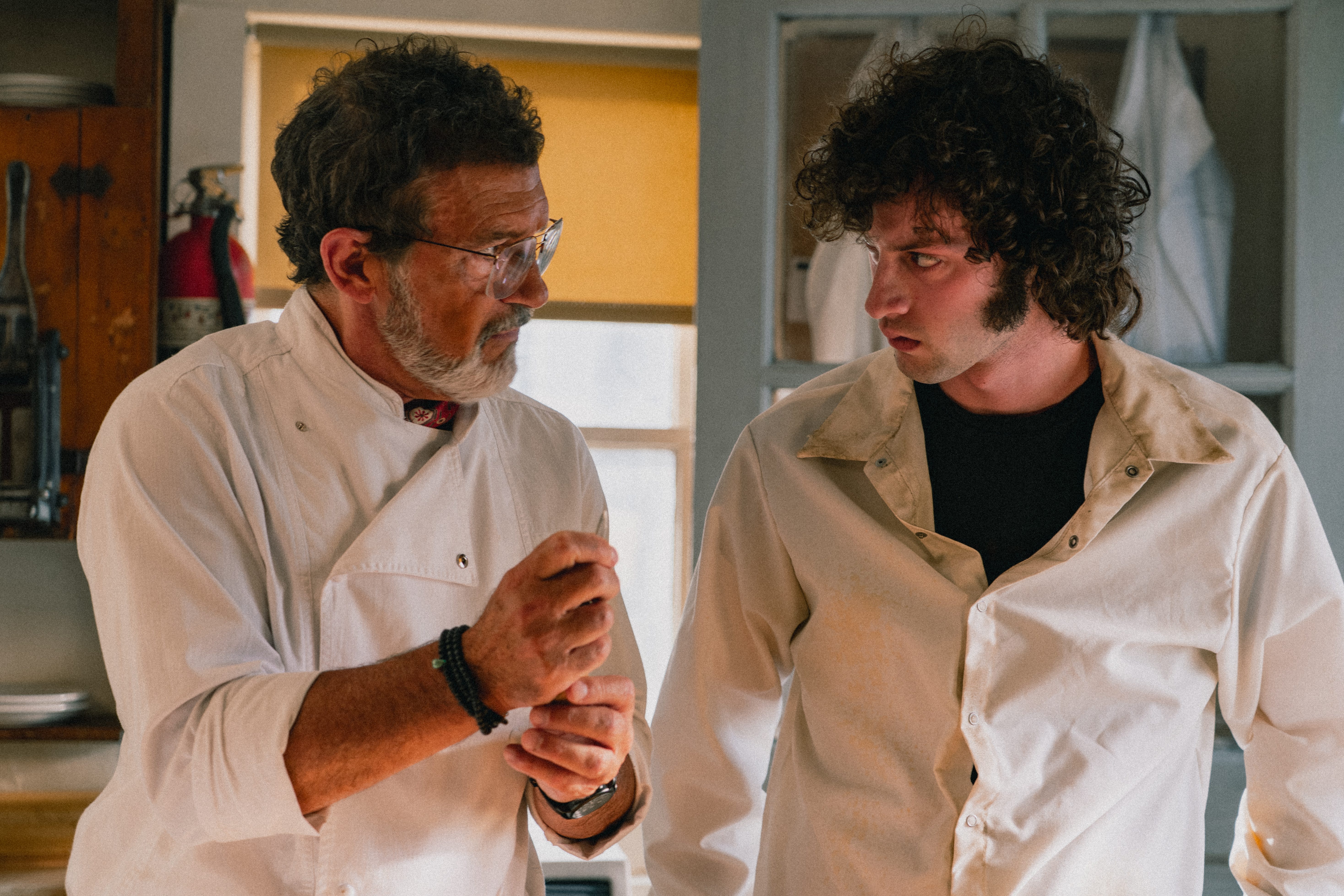
Last month, my friend and fellow critic Clara Cuccaro and I saw the new movie Tony. We both wanted to review it properly somewhere, but as non-staff critics, neither of us could get a bite, which itself felt telling: a lot of our usual outlets were passing on this one entirely because it seemingly wasn’t worth the space. That should tell you something before you read another word.
To recap: The movie focuses on the 19-year-old Bourdain’s formative summer in Provincetown and is cobbled together from a few chapters in Kitchen Confidential. It has been mostly met with high praise, which puzzled us, so we talked at Canyon Coffee to get our feelings out.
Clara and I actually met at one of these random Rotten Tomatoes mixers (also a godsend, since they have actual food) during TIFF, where film criticism briefly resembles summer camp. She’s a nyc–based critic and, just as importantly for this discussion, a longtime restaurant worker—over a decade in the service industry gives her a particular perspective on Anthony Bourdain’s mythology. Originally from Indiana, Pennsylvania (Jimmy Stewart’s hometown, not New England, despite what her aura suggests), she has written for Los Angeles Review of Books, MUBI Notebook, and Reverse Shot among others.
Our conversation below.
Elissa: The entire time I watched the movie, the feeling I had, however misplaced it was: what would Bourdain have thought of this movie—and does that even matter?
Clara: I don’t think it matters… because he’s not around.
Elissa: Agreed. And yet.... Anyway, I saw a pretty seasoned critic write in his review that he caught himself wondering the same thing—that it would be a shame to have a Bourdain movie that the man himself didn’t like and then he concluded he would’ve loved it.
Clara: Interesting.
Elissa: Obviously I, no one cannot speak for Bourdain, but I would kinda disagree??
Clara: On his shows he talked so much about the filmmakers he loved—Pasolini, Abel Ferrara—and this is the antithesis of that kind of filmmaking. It’s a cutesy coming-of-age story that’s also goofy and a little bit crude. I think he was cooler than the person depicted in the movie, but maybe that’s me bleeding the TV persona into it.
Elissa: He opens the movie by saying—and this is from the book—“I was, to be frank, a spoiled, miserable, narcissistic, self-destructive and thoughtless young lout, badly in need of a good ass-kicking.” Which he is. But it makes the movie play like maudlin, mopey nostalgia or fan service rather than a real reckoning or anything substantive. And it’s different enough from the facts of his actual life that it could pass as not Bourdain-related at all. Other critics have pointed that out, which raises the question of— why bother?
Clara: I think it’s better for someone who doesn’t have an intense relationship with Bourdain. I will say: I got really icked out reading the comments under the trailer, people going “Tony would’ve hated this.” We have no way of knowing. People have really intense parasocial relationships with him, and I think it’s annoying—I want to put that on the record. What we were seeing on TV was very much an act. He had his demons he was mostly processing offscreen. I think this movie is the beginning of the internet’s next phase of obsession with him.
Elissa: Yeah, we can’t know what he’d say, and we shouldn’t be protective of something just because of what we imagine he’d think of it. But go to the other end of it: granting the filmmaker artistic license to do whatever he wants, this movie mythologizes Bourdain in a different direction and turns him into an unnecessary corrective to his own persona, which also kind of unsettled me.
He’s also rendered as this sulky, skulking kid who doesn’t know where he’s at—which is fine, we probably all were that kid at some point—and that, taken purely on its own terms, as a coming-of-age story of a young man with no Bourdain baggage attached, it wasn’t really for me.
Clara: If anything, this movie is a classic Matt Johnson text—and I don’t think it’s his best work. We’ve talked about this: he makes movies about adolescent men, and he’s literally doing that with the Tony character. It’s also Dominic Sessa’s interpretation of Tony, his own life journey brought into the character. It’s not the person we know as Anthony Bourdain.
Elissa: Okay, people have been raving about Dominic’s performance, and I thought he was just okay. I could never get over the fact that it was Dominic Sessa, which is saying something, given he’s only done ONE movie thus far. He’s already established himself as a certain kind of actor.
Clara: He’s typecasting himself.
Elissa: He literally acts the same as in The Holdovers: boarding-school kid, if he decided to go to Vassar and have this journey to P-town. One-note moody angsty. I was rooting for him.
Clara: Literally. What is that amnesia? Why is no one putting that together? I didn’t think the performance was that great either. I wasn’t super into any of the performances, if I’m being honest.
Elissa: I thought Leo Woodall was really good.
Clara: He was probably the best. I also liked him as a Masshole.
Elissa: Did you know he’s British?
Clara: I know. I love One Day. And he was in White Lotus.
Elissa: He was in another show on Netflix, too: Vladimir where John Slattery and Rachel Weisz are professors at a college, and he’s the hot young new adjunct she wants to sleep with.
Clara: As she should.
Elissa: He’s not British in that either. He was in Tuner, which I thought was good entertainment.
Clara: His trajectory in Tony appeals to me more than Dominic Sessa’s. When he fucked the bride, I was like, “That’s incredible.”
Elissa: I’m pretty sure that really happened. Leo’s character lands better because of his charismatic nature too.
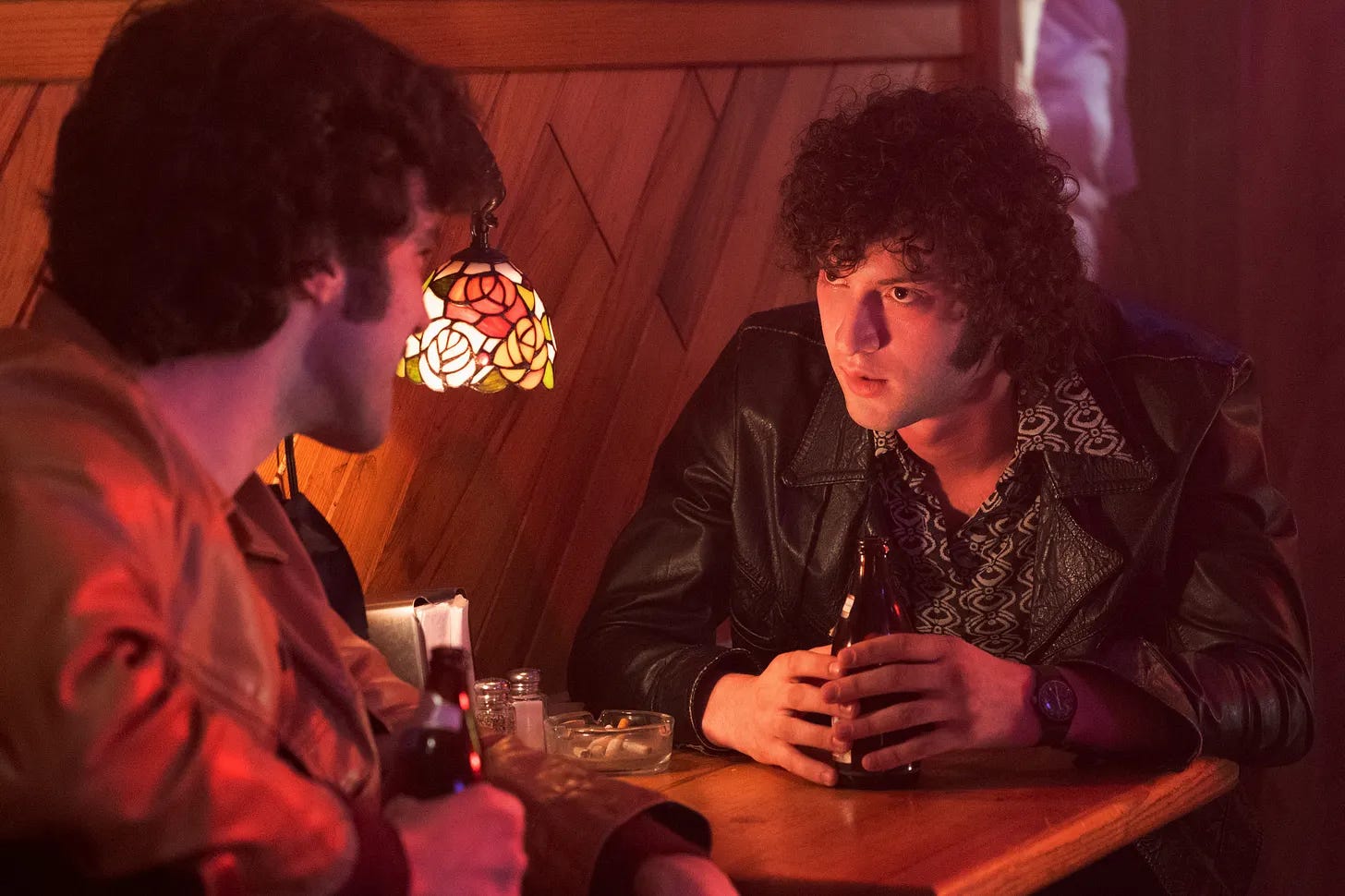
Elissa: Back to the Matt Johnson text. Do you like Matt Johnson?
Clara: I do. I was introduced to him through Matt and Mara.
Elissa: Me too! I love that movie. We should add that it’s directed by someone else: Kazik Radwanski.
Clara: The movie was great, and I was like, “Who is this guy who talks a mile a minute? He’s obnoxious, but I’m also weirdly attracted to him.” Then one of our critic friends was like, “That’s Matt Johnson. He’s made a shit-ton of movies.” So I had to go backward—I watched Nirvanna the Band the Show, then The Dirties—and noticed he has a certain thing he likes to do, and a team he likes to work with. And I don’t think that team came along to Tony until post-production. He didn’t have his usual filmmaking apparatus with him.
Elissa: Tell me about The Dirties.
Clara: It’s a spoof about school shooters, but it also really gets into the nitty-gritty of the dark side of cinephilia—which you and I have both seen with male critics—that guy who’s so insecure but thinks he knows everything, and he’s very into his movies. Johnson plays a character like that who gets bullied, seriously, and then basically becomes a vigilante shooting his haters. The ending is really creepy, and really good. Is it funny or is it dark? Both. He’s really good at capturing white male adolescence at its most imaginative and worst.
Elissa: Another school-shooter movie for me to add to the list… So I’ve only seen BlackBerry and Nirvanna the Band the Show the Movie, which feature guys a bit older, and what I got from both of those was male friendships—men bonding real hard. Ironic because Tony doesn’t really have any friends! He’s a lone wolf.
Clara: It actually makes me sad, because you can tell his character is at a crossroads: is he going to go the Masshole route, start doing drugs or the culinary route, which is his mentor played by Antonio Banderas. And he does both. That felt like it was leaning into the mythology of Anthony Bourdain too, because we all know he had issues with addiction.
Elissa: You can feel Tony’s very much at a pivotal moment in his life. He’s very much an observer in the kitchen, and as a viewer you can see the tinkering going on in his mind. The camera very consciously highlights these moments, where he’s clocking things, in kind of a weird foreshadowing. Like he’s seeing his coworkers openly do drugs. It was restrained yet kind of belabored.
Clara: Wait, the coke. Can we talk about the drug scenes? Those were so goofy. It must’ve cost those guys a lot of money to do that much coke, and they seemed pretty broke.
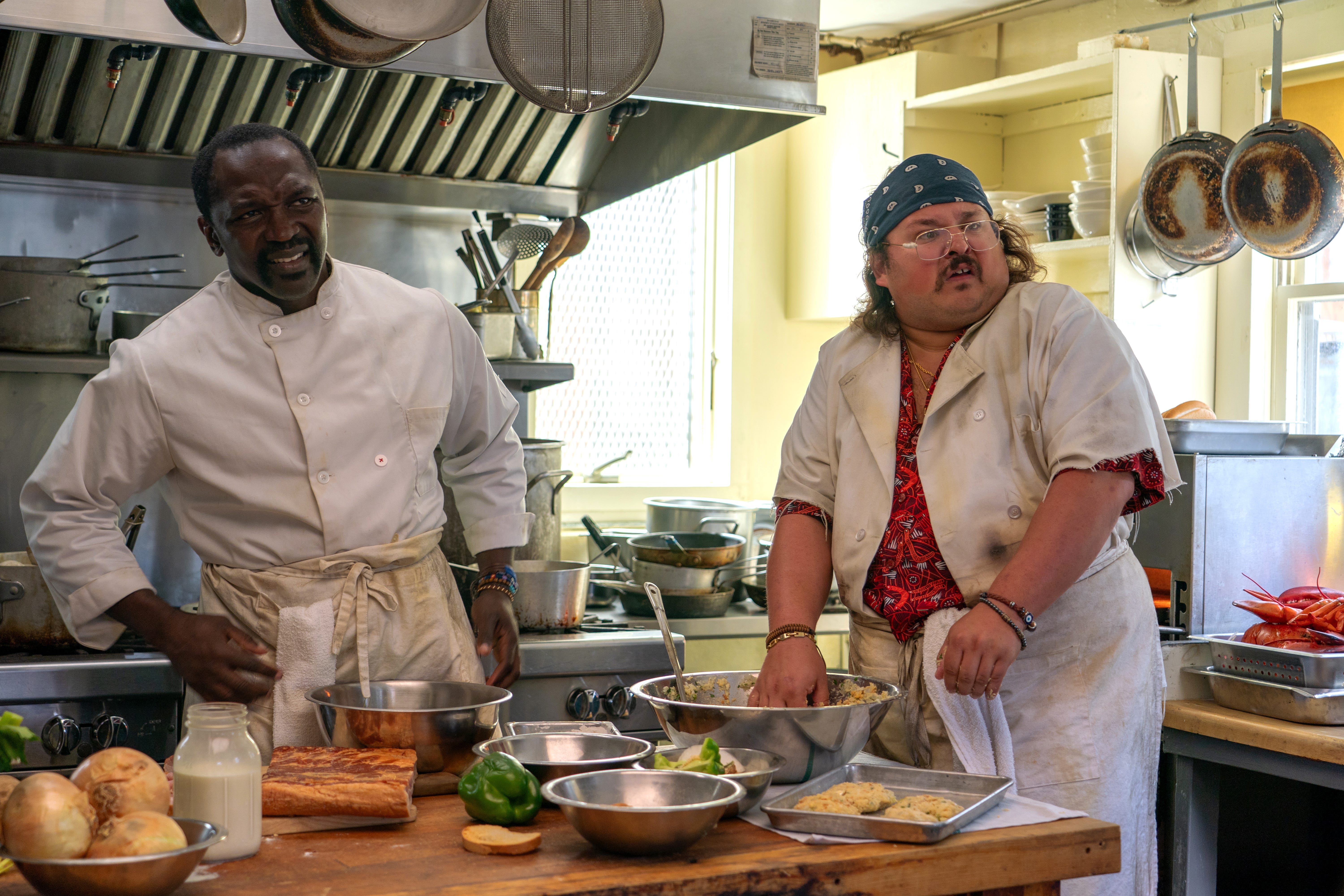
Elissa: Maybe it was cheaper in the 70s? In the books—and obviously he hyperbolized things—he seemed to have fucking loved the kitchen and taken to it immediately. In the film, though, he’s much more wary, or just hasn’t taken to it yet, obviously. Some care is taken not to depict the kitchen as the raucous, toxic environment to the extent we think of these days. I liked the camaraderie between everyone who worked there and wish there was more.
Clara: I agree. I wish he’d been more ingrained in the kitchen, too. He started as a dishwasher, then moved to garmo [garde manger]—oysters, salads—which is the natural progression for someone coming into a kitchen. But the way they showed the other people working could’ve made it more appealing. I wasn’t like, “I need to work in a kitchen,” after that.
Elissa: They definitely don’t try to romanticize kitchen work.
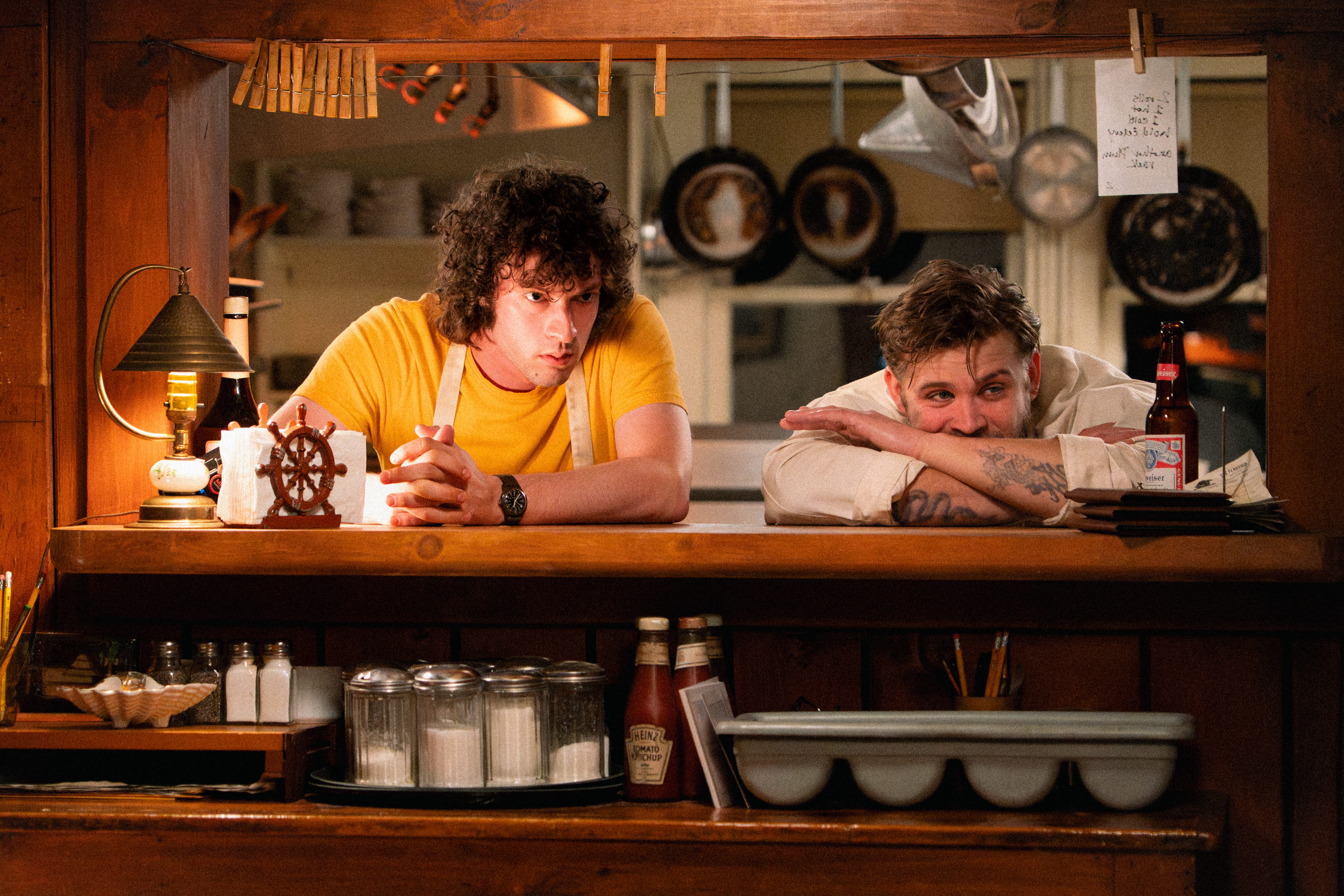
Clara: I thought they made it a caricature of what a kitchen could be. That’s how I felt about the whole movie. I didn’t feel like the characters were well-rounded.
Elissa: Yeah, there isn’t too much depth to any of them. That scene where Tony’s screaming “I’m a writer, I’m not a chef“ — kind of condescendingly to Banderas like, “why would I work here permanently?“ It didn’t feel emotionally true to me and didn’t really hit the way it was supposed to be climactic.
Clara: I feel like it was leaning into the “I was an asshole” quote, and it was just bad scriptwriting. It’s exposition-forward. They couldn’t just let you decipher who he is. And he seemed like a bad writer. He didn’t get that fellowship, and he was writing about Salinger. That’s so embarrassing.
Elissa: He basically sounded like a character from Salinger. The script is very guiding and conventional for the most part.
Clara: He’s so pretentious, but he’s also looking down on this profession that’s been around forever. It’s kinda like prostitution in that regard.
Elissa: What did you think of it as a coming-of-age story?
Clara: I wouldn’t have thought this if I hadn’t read the New York Magazine profile about Johnson, but the film is more of a Matt Johnson coming-of-age story. In that piece, he talked about how he didn’t get along with his mom, how he was really terrified of her. People would say, “Oh, you have something going on,” and she would cut him down. So the version we’re seeing of Bourdain’s parents is really Matt Johnson’s family. He does like to literally put himself into his films most of the time. This is him spiritually processing something.
Elissa: I was wondering where that detail came from. I remember Bourdain saying his parents were great and supportive, that he was privileged in that regard, for the most part. Maybe that’s why the family scenes stood out in the movie—they’re coming from something real and close to Matt, not from the text.
Clara: I also like seeing a difficult woman on screen, so I’m glad we got a little bit of that in a bro movie amidst so many men.
Elissa: He pretty much had to add it because otherwise we don’t know anything about Tony at the time from the book. When you go this route, the script requires a backstory. That restaurant fire that never really happened…
Clara: That’s the thing: I don’t care if biopics make things up. But it’s weird when it’s actually so different from what happened or when they smush characters together. They really jigsawed this to make a movie out of his life.
Elissa: Other times it’s pretty dutiful, though. You were saying this movie might not be for the diehards. But I’d argue it’s also not for someone who knows nothing about him, right? I suspect they’d get to the end, and you’re like, “What the fuck was that ending? Who is this guy?” And would they feel compelled to find out? Maybe, maybe not. The movie is for fake fans.
Clara: For performantive This movie is made for millennials. But what about people who didn’t grow up with Anthony Bourdain? Would they see this and go, “I need to watch No Reservations”? I don’t think so…
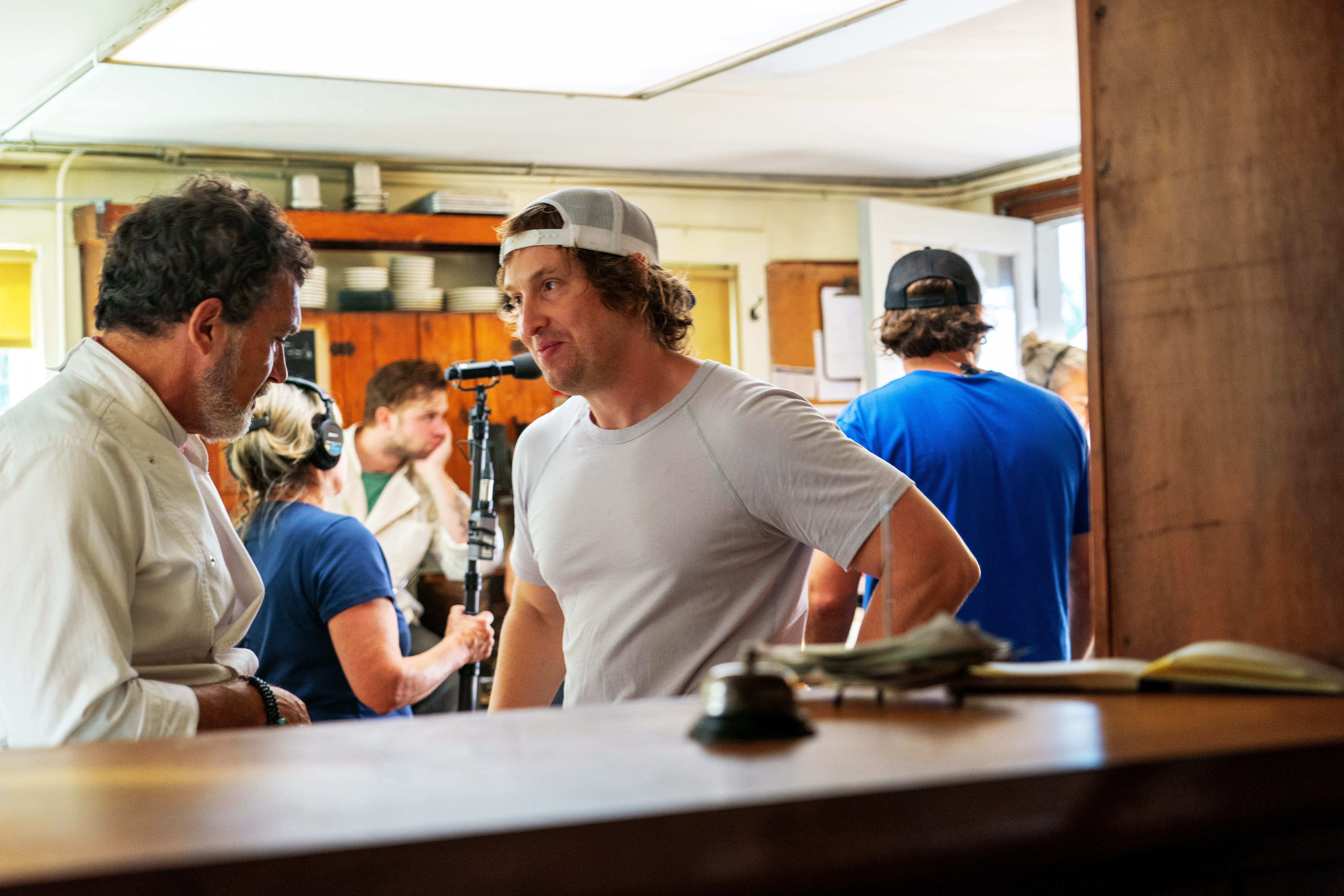
Clara: Should we say who’s at the end of the movie?
Elissa: Yes!
Clara: I really liked Eric Ripert being there.
Elissa: The audience audibly gasped.
Clara: I gasped. We were all collectively in awe.
Elissa: “The real chef.”
Clara: The thing about Eric Ripert is his persona is “cool and collected chef.” The opposite of Tony and whatever he’s come to symbolize as the sort of asshole chef. There’s a video on Youtube of them working at Les Halles, and Bourdain’s freaking out because he has to work the line, and Ripert comes in smooth as hell. I was like, “That’s hot.” I love that he gave the film his blessing.
Elissa: Banderas’s chef character has some nice reveals, and he lent a bit of gravitas to the whole thing.
Clara: Did he have a lot of Botox? I know actors will often de-class for projects like this, but his face was looking plump and young. I really hated how they dressed him, too. We should talk about the food, but first I want to talk about the clothes. Because I did not think the clothes were good.
Elissa: As a period piece, I think it’s just typical of a lot of mainstream movies. They did use vintage lenses to shoot, but otherwise it still in that very costumey vintage in way. Just big signifiers: hair, leather jackets, the style of jeans.
Clara: When I think about Provincetown, it’s a queer mecca. But this movie is acting like there were no gays in the ’70s.
Elissa: Where were the gays in this movie??
Clara: They were not going to that restaurant.
Elissa: Maybe they hadn’t made the sojourn yet? [In fact: P-town was already a well-established gay destination by the early ’70s]

Elissa: I heard someone say about the love interest played by Emilia Jones that she has TikTok face, a very modern look, and doesn’t look like she lived in the ’70s. I just didn’t buy the romantic connection. For him to be so enamored, he’d follow her across state lines? I don’t think she was it.
Clara: Right? There was no chemistry. One thing I will give Dominic Sessa: he did have that grungy ’70s thing. He’s handsome, but he’s not TikTok-y handsome.
Elissa: More timeless.
Clara: Because A24 is its own studio now, I’ve been thinking about their period pieces—Marty Supreme was so good with the costumes. There was a grittiness, a lived-in quality: people wearing clothes that were out of fashion, which is how clothing actually goes in the real world. You’re not always up on the beats. In this movie, it felt like, “this is what was in fashion in 1974.”
Also, I love a beach movie. And this beach movie is trying too hard to be a beach movie. Do you have a favorite?
Elissa: The first thing that came to mind was that documentary Wildwood, NJ
Clara: Mine is maybe Point Break? I’ll never get over the line “dumb, young, and full of cum.” But I also love The Beaches of Agnes. I rewatched that recently.
Elissa: Tony is very Urban Outfitters at its peak, to bring back the millennial comparison you made. A sepia-toned hindsighted romanticism. The hardcore Bourdain fans in my life are avoiding this movie like the plague. So it’s almost for fake fans.
Clara: Performative fans. I wonder: bad press is good press? People hating on it is getting people to talk about the movie. It feels like a plant.
Elissa: All the people I want to hear from have been silent. I’m waiting for the Brody review to drop. There’s no way he could’ve liked it, right?
Clara: Let’s go, Richard. Give us a little tweet or something.

Elissa: How true to life is the working state of the kitchen literally? Here is where I say that I have no kitchen experience, though know plenty of people who do. If this movie resonates with you along those lines, more power to you. But that background isn't a requisite for liking the movie, and for people without it or even with, the rest of the film may not do enough to make up the difference.
Clara: Totally real. I did like how grungy the kitchen was. As someone who started out working in a small-town restaurant kitchen: they look like that. You don’t know when the health department was last there. It was crummy and small and cramped, and these guys are sweaty and kind of hot, but also disgusting. Very real. Kitchens in movies now are so sanitized-looking. They always have copper pots!
Elissa: Very glossy. But the food itself, especially as a New Englander, what did you think?
Clara: Wait, I’m not from New England, remember?
Elissa: Right, right.
Clara: What did you think of the food?
Elissa: It didn’t necessarily make me want to eat immediately, but maybe cook for someone. It’s nice they didn’t do the Netflix Chef’s Table thing with slow-motion over-stylization and closeups.
Clara: That would’ve been so funny if they did. But was the food in the restaurant actually good?
Elissa: Seemed like no.
Clara: They call it fast food at one point. And food in the ’70s was so different than it is now, so of course it wasn’t gourmet. I liked when he pulled out the crazy gourmand cookbook because that’s something he would always touch on. He loved French cuisine.
Elissa: The title is escaping me, but that title is specifically mentioned in Kitchen Confidential. Food films today seem like they have a greater potential to be highbrow now, because we’re obsessed with fine dining. I appreciated that there’s still an appeal to fast food or seafood shacks in this environment.
I liked the scene when Tony sends out the lobster thermidor to Nancy’s table and waits to see how she reacts. That was a cute, small moment.
Clara: That felt real to me. The moment I didn’t like was the one with the photographs. We all know those photos of Tony as a young chef, but I found their recreations so corny.
Elissa: I think corny is an apt description of this movie.
Clara: There’s one kitchen scene that was trying to do a lot: after Leo Woodall comes to work late—he’s really aggressive, he gets fired, he punches Banderas—and then Woodall says “I know you want to hit me,” and Banderas is like “No, I like you.” I think that was meant to do a lot of emotional lifting, and it didn’t. That felt very Matt Johnson to me.
Elissa: Similarly, I did not like when Banderas tries to explain that Leo’s character is a “sin eater.” It’s meant to land as tragic and deep, but it doesn’t need underlining like that. It’s almost like they’re trying to thread in the real Bourdain tragedy in advance and rationalize it before it happens. Felt a little heavy-handed to me.
Clara: You’ve written so extensively about food in movies. Is there another movie you’d compare this to, food-wise?
Elissa: I thought this was going to fall into more of the “chef” or persona- or character-driven movies around food. Things like Chef, No Reservations (2007)—
Clara: Oh my god, that movie is so bad.
Elissa: —or Burnt the Bradley Cooper one. Did you know he also plays a Bourdain type in Fox’s short-lived Kitchen Confidential series? I think of egos in the kitchen in those movies, and the food being presented as life-changing, which it isn’t in and of itself in Tony. It’s more about the idea of food and cooking, learning to have an appetite, or appreciating the act of eating. But that felt kind of tamped down. I was surprised there weren’t any louder proclamations of pleasure, no “fuck, that’s delicious.” It was really restrained. The fishing scene is a big moment in the book, but it fell a bit short for me.
Clara: That was crazy. Though I did think it was funny when Nancy runs into him, and she’s like, “Why were you having a cookout on the beach at midnight?” So silly.
Elissa: Also, it took her so long to realize Tony was lying? The whole romcom throughline.
Clara: Girl, the signs were there! What I’m taking out of that is that women believe men too often, and we shouldn’t.
Elissa: True in the ’70s, still true today.
Clara: I really do love Matt Johnson, and I don’t really like this film. But I feel like he was given this opportunity; he had to take it, and he tried to make something out of it. It’s a double-edged sword—a hard thing to accomplish, and I don’t know if anyone could have done the job better. I want to give him some grace, basically.
Elissa: Given the job he had to do, he pulled it off. It wasn’t terrible—but that doesn’t mean it’s good.
Clara: I think it’s forgettable. People will be like, “Remember that Bourdain movie?” And the answer will be no.
Previously…

Comments
Nothing yet. Say the first thing.
Sign in to join the conversation.