
Adapted from Virginia Feito’s novel, VICTORIAN PSYCHO is a darkly frosted confection about a death-haunted governess of dubious origins (Maika Monroe) who arrives at a new place of work at a new country estate carrying more than a few secrets. Having not read the source material (deemed “relentlessly gory” by the NYTimes Book Review), I can only judge the film on its own terms, and as such, it is an unexpectedly and viciously hilarious piece of Gothic entertainment that serves as a showcase for Monroe’s newly revealed comedic talents that her previous roles have largely kept hidden. Freed from the brow-furrowing anguish of the Colleen Hoover-verse and the closely related perpetual strain of horror-movie vigilance, she reveals wonders, turning up the corners of her mouth ever so slightly into the fakest of smiles, and intoning in the most singsongy falsetto as she dispatches anyone who opposes her. Who knew she could be so funny? (Thomas McKezie also does great work.)
Make no mistake—this elegantly accented satire metes out plenty of violent vengeance (sizzingly splashy direction by Zachary Wigon of Sanctuary) and absolutely no new revelations about the cruelties of the Victorian class or the social evils that lurk in a great house. In fact, it barely accentuates them. But there is something undeniably pleasurable about the lacquered nastiness of it all.
I have had “Giovinezza”, aka the adopted Italian fascist anthem, unfortunately lodged in my head ever since I watched FIUME O MORTE!, a droll, remarkably fascinating documentary about a bizarre episode in Croatian history. I actually saw it last year. In 1919, Gabriele d’Annunzio—whom I had previously thought of primarily as a poet, though perhaps should first as a proto-fascist—seized the port city of Fiume (now Rijeka) in an outrageous, theatrical bid for power. Director Igor Bezinović brings this history by having townspeople—whom we see recruited in farmers markets, on the street—reenact fragments of the past and supplementing their performances with archival footage, resulting in something like Drunk History by way of civic reclamation Another comparison point would be Peter Watkins’ Commune or Robert Greene’s Bisbee 17.) The people of Rijeka spill onto the screen as they narrate the absurd events. Generously, Bezinovic lets the people of Rijeka spill onto the screen, makes sure that every participant introduces himself and the next, too, and he films them in historically significant locations like palatial or officious drawing rooms so the subjects accrue an unexpected, painterly dignity.
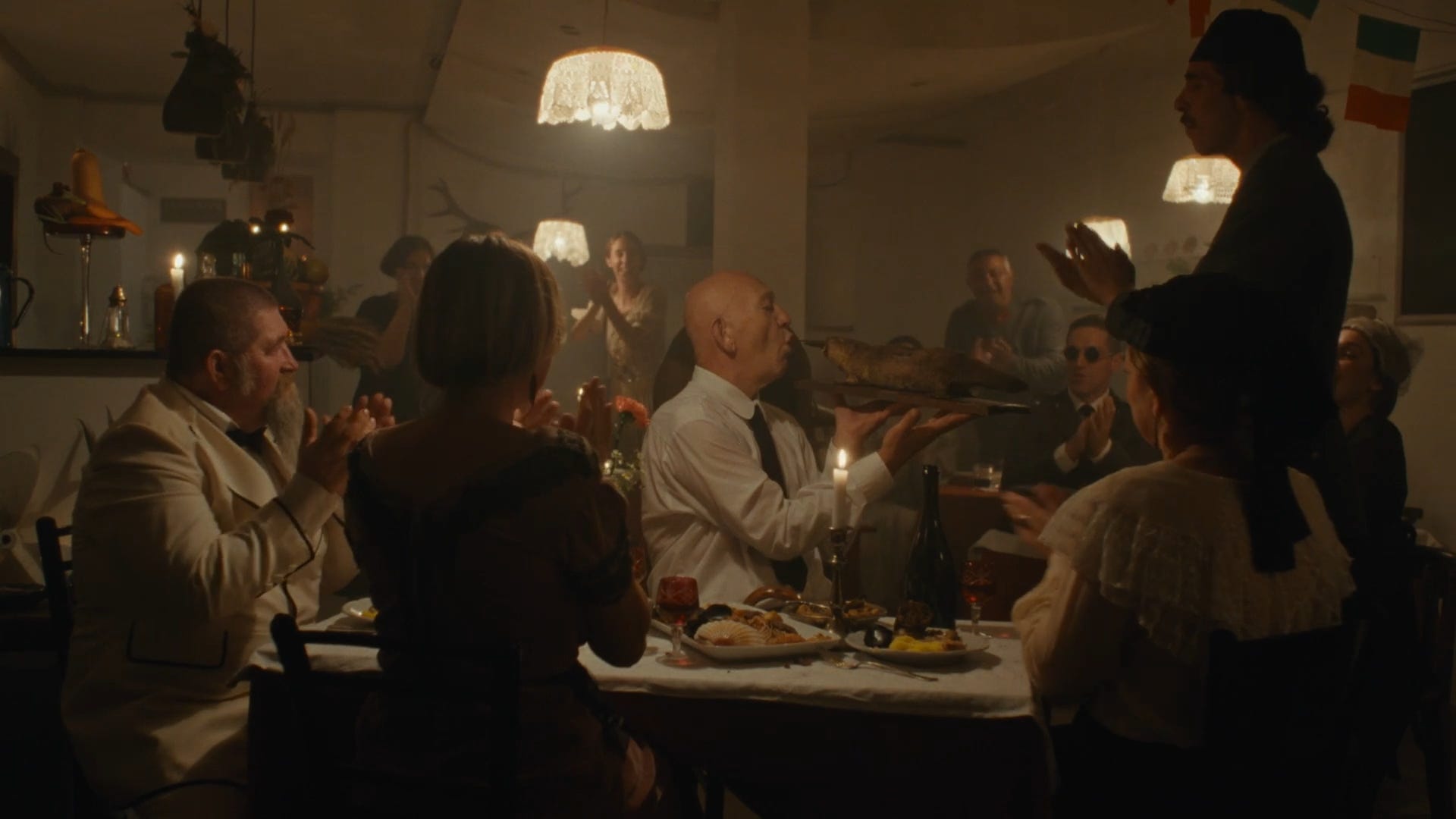
Steven Soderbergh is on a roll. Like the best paintings, THE CHRISTOPHERS— reaches beyond the frame and opens a window into a larger conversation keenly focused tango between Ian McKellan and Micaela Coel, playing two artists of two different generations. Since they’re British it’s all very civil and their 33 straight pages of approachably heady dialogue about aesthetic principles flies by. I wonder how closely aligned Soderberg feels with McKellan’s character, a Brit Pop painter à la David Hockney, who confesses that his last decade or so of work has been trash.
Barbie Ferreira really gets the short end of the stick when it comes to the 9-to-5. In MILE END KICKS, she’s a Spin-esque intern navigating a workplace #MeToo in early oughts Montreal. The movie was more of a placid daydream than I’d wanted.
In FACES OF DEATH, she’s an adderall-popping content moderator (for the fake site called Kino) whose pleas to remove a possible snuff film with electrocutions and brain-bashing fall on deaf ears. (Meanwhile, Narcan explainer videos and any midriff unaccompanied by a pool or beach are no-brainers for removal.) The gruesome death videos deliberately echo those in the 1987 original series Faces of Death, which horror film aficionados are likely familiar with—I was not— and described by her roommate as the first viral video before the internet.
Like How to Blow Up a Pipeline, Daniel Goldhaber and Isa Mazzei move us swiftly through the plot, aided by a dialogue that feels a little too declarative. There is a didacticism that is more fitting to this film and its frequent invocation of “the algorithm,” but which took years to secure a distributor. (I guess the money-people couldn’t sniff knowingly exploitative quality and retro schlock grindhouseness off the film) The ambiguous tension of Faces of Death between cheesy line readings and genuine urgency, between critique and spectacle of how our society has decayed amid untrammeled access to all sorts of things online, gives the film its strange charge, but ultimately fizzled out for me.
Another blood-soaked, down-the-rabbit-hole journey of the amateur sleuth—here, a film school student variety—is the subject of CITY WIDE FEVER. Produced by Guy Madden, this playful, imaginative feature debut by Josh Heaps is everything you would want in a dollar-slice neo-giallo—stagey non-professional performances, violent conspiracy, exacting frames, fuzzy SOV (shot-on-video) aesthetic in which you’ll find an execrable beauty, the violet light flinging off the edge of a razor swung high. Unintentional production problems led to two actors in one role, a neat bit of unintentional kismet that adds to the film
Snippets of today’s commodified but still grubby Times Square of M&M stores and Disney mascots rightfully find their place alongside dirty monologues and excellent wisecracks about super pussies and Swedish sex dolls. Great IKYKY cameos from Larry Feesenden, Onur Turkel, and Posteritati’s Stan Oh.
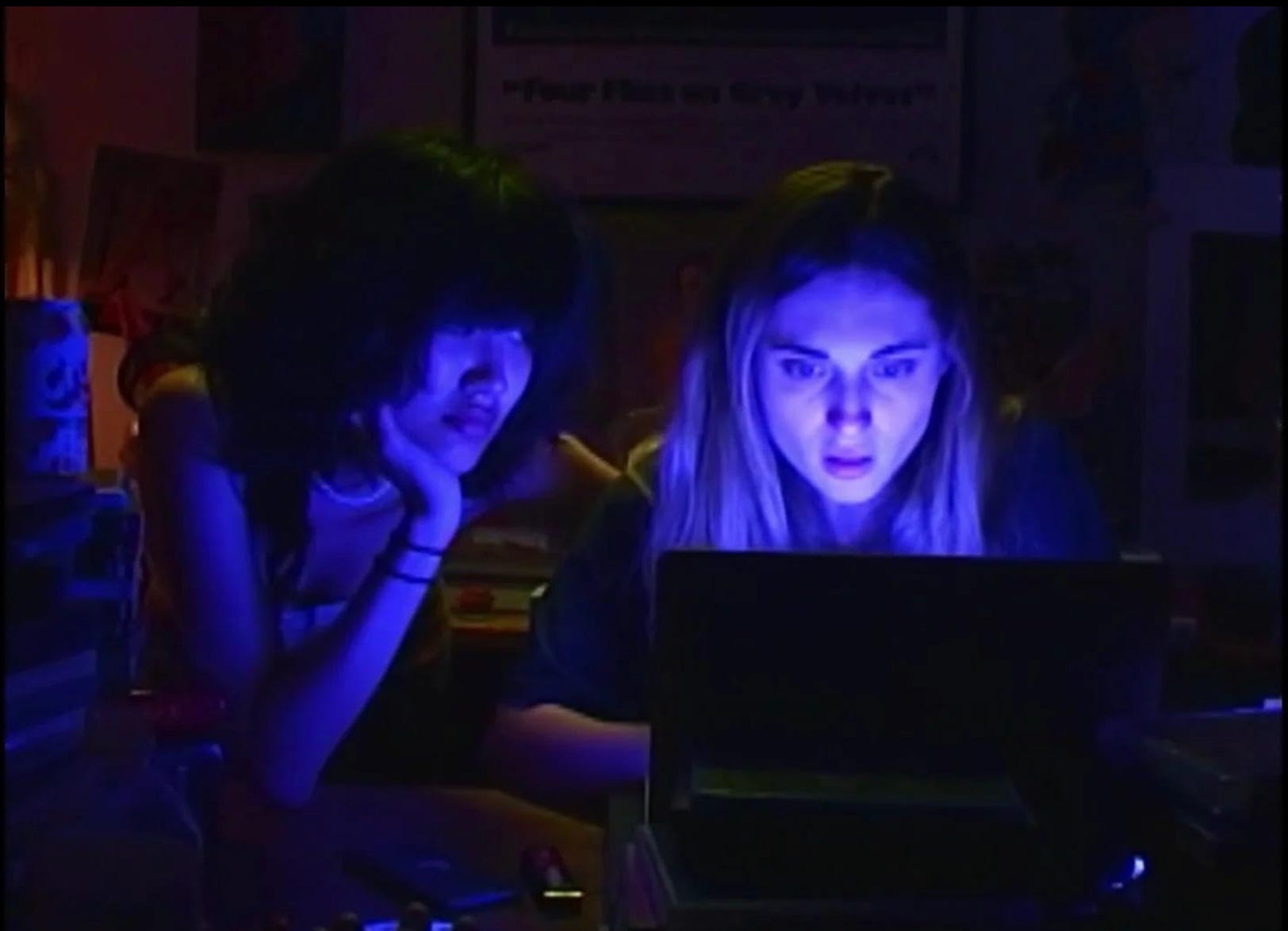
“Why are intellectuals like us drawn to such sleezy movies?”
Comments
Nothing yet. Say the first thing.
Sign in to join the conversation.