
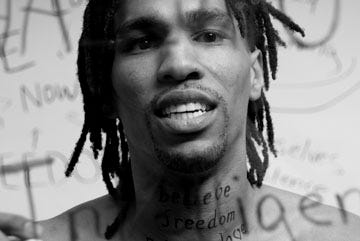
As we begin we want to remember to keep our intentions gentle, observing the ways in which we are merely reconnecting with as opposed to “learning” our understanding of the purposes of poetry. Inevitably, one component of this will be de-mystifying what we believe about poetry in that we will have to unlearn the ways in which poetic expression is narrowly conceived.
PROMPT: Begin this lesson by free-writing about poetry using the prompt, “Poetry IS”
LESSON: Prompts from Poets to Practice Poetry: read what poets have said about poetry and use their poems to prompt your own
STUDENT POEM: Read “What is Poetry,” by Shaquori, 11th grade
INSPIRATIONAL POEMS: Read Hanging Fire, by Audrey Lorde
COMMUNITY: Hands & Heart Activity
ESSAY: Poetry: The Soul of Our Struggle

Write a “Poetry Is . . .” poem (7-10 minutes)
SHARE YOUR POEM WITH DOCTOR K
ACTIVITY #1: Read quotes about poetry written by poets
“Poetry is not a luxury. It is a vital necessity of our existence. It forms the quality of the light within which we predicate our hopes and dreams toward survival and change, first made into language, then into idea, then into more tangible action.” - Audrey Lorde
“Poetry is not only dream and vision; it is the skeleton architecture of our lives. It lays the foundations for a future of change, a bridge across our fears of what has never been before.” - Audrey Lorde
“A poet's work is to name the unnameable, to point at frauds, to take sides, start arguments, shape the world, and stop it going to sleep.” - Salman Rushdie
“Poets have been mysteriously silent on the subject of cheese.” - G.K. Chesterton
“Poetry is the language in which man explores his own amazement . . . says heaven and earth in one word . . . speaks of himself and his predicament as though for the first time.” - Christopher Fry
“A poem begins with a lump in the throat.” - Robert Frost
“Writing poetry is the hard manual labor of the imagination.” - Ishmael Reed
“For poetry was all written before time was, and whenever we are so finely organized that we can penetrate into that region where the air is music, we hear those primal warblings, and attempt to write them down, but we lose ever and anon a word, a verse, and substitute something of our own, and thus miswrite the poem.” - Ralph Waldo Emerson
“Most people ignore most poetry because most poetry ignores most people.” - Adrian Mitchell
“Poetry is a deal of joy and pain and wonder, with a dash of the dictionary. - Kahlil Gibran
“Poetry comes nearer to vital truth than history.” - Plato
“A poem is never finished, only abandoned.” - Paul Valéry
“Authentic language, which has not lost its magical potency by being used up and abused, is poetry.” - Albert Hofstadter
ACTIVITY #2: Re-read the quotes and identify the phrases which provoke thoughts or emotions. Which quotes stand out to you and why?
MORE QUOTES ABOUT POETRY: What are some of your favorite quotes about poetry?
Text within this block will maintain its original spacing when published
What is Poetry
Text within this block will maintain its original spacing when published
Poetry is expression
Text within this block will maintain its original spacing when published
Poetry is the gift of life
Text within this block will maintain its original spacing when published
Poetry is the gift that not everybody has
Text within this block will maintain its original spacing when published
Poetry can be wat happened in ya present future or past
Text within this block will maintain its original spacing when published
Poetry is whatever you want it 2 be
Text within this block will maintain its original spacing when published
Poetry can be 2 simple words
Text within this block will maintain its original spacing when published
Poetry can be the same word repeated several times
Text within this block will maintain its original spacing when published
Poetry can also be a way of releasing anger and aggression
Text within this block will maintain its original spacing when published
Poetry is something dat doesn’t need to rhyme
Text within this block will maintain its original spacing when published
Poetry is what u want it 2 be jus speak your mind
Text within this block will maintain its original spacing when published
Say what you feel
Text within this block will maintain its original spacing when published
Noone will judge u
Text within this block will maintain its original spacing when published
Poetry is a word
Text within this block will maintain its original spacing when published
Or is it a paragraph? A well-written paragraph of what
Text within this block will maintain its original spacing when published
u feel or how u reacted towards a certain situation
Text within this block will maintain its original spacing when published
My point is poetry is poetry end of story
Text within this block will maintain its original spacing when published
Poetry can be about love
Text within this block will maintain its original spacing when published
Poetry can be about romance
Text within this block will maintain its original spacing when published
Poetry can be about emotions
Text within this block will maintain its original spacing when published
Poetry can be about ya day
Text within this block will maintain its original spacing when published
Poetry can be all of the above
Text within this block will maintain its original spacing when published
Jus kno dat wen ya pen hits da paper
Text within this block will maintain its original spacing when published
And words are created you have jus created
Text within this block will maintain its original spacing when published
A Poem
PRAISE SECTION: Show the Poet some love.
IMAGE Audry Lorde
Some call it spoken word. At times it sounds like hip-hop. Others insist we use the word poetry. By whatever name, it is our stories, our truths, our songs, spoken from our own mouths. Poetry, as old as breath itself, is the foundation of all human cultural expression. From poetry comes lyric, song, narrative, drama, scripture, essay and ideology.
Only a few years ago, poetry was hidden in cafés and small intimate circles and often associated with finger-snapping. For many young people, poetry was seen purely as an academic exercise, as English teachers led their students to believe only Robert Frost and William Shakespeare defined poetry. It was not cool for young people, especially young men, to express themselves using this cultural art form. For years my poems were hidden in journals under my bed, and along with them my thoughts, ideas and emotions.
Throughout the eighties and nineties, community-based cultural institutions, such as the Nuyorican Poets Café in the Lower East Side (Manhattan), the Afrikan Poetry Theatre in Queens, and the Brooklyn Moon in Fort Greene (Brooklyn) created an open space for myself and other young people to express ourselves in front of a captive audience, at open mics.
An open mic sessions has an energy of its own. Sometimes the chairs are arranged like church pews facing a podium or stage with a single microphone. Other times, the chairs are arranged in a circle so that eye contact is continuous. Either way, a space is created where emotions and ideas can be shared without judgement. A list is passed around for people to sign-up for the open mic. An encouraging and energetic host calls each person to take their turn filling this sacred space with words from their notebook, paper or freestyle – extemporaneous poetry. Throughout the open mic, the listeners respond church-like with a mixture of laughter, head-nods, finger-snaps, reflective silence and applause.
The open mic is democracy at work. The microphone is open to all, regardless of gender, race, class, age, education or sexual orientation and all perspectives, even if disputed, are respected. Poetry is an opportunity to gain knowledge from different perspectives, giving us each an understanding of our universal human experience, the formula for creating community.
Through these poetry venues, I was introduced to new people and new ideas. Others raised questions similar to my own – questions of hopelessness, poverty and injustice in our society through their poetry. Some stood up with flyers for rallies, meetings and discussions on many issues. One of the first events I went to was about a man I had never heard of before, Mumia Abu-Jamal. I learned of the unjust treatment Mumia had received, and about other political prisoners and the prison industry. In this way, poetry venues were my entrance into the activism that would shape all my poetry and my life.
At the Uptown New York City Young Communist League club’s monthly “Politics, Poetry & Peace” discussion and open mic, poetry and hip-hop share equal time with topic-based discussion. Many times, we find that a single poem has summed up the sentiments and mood of the discussion. Other times the open mic session adds new elements and allows young people who previously were unable to speak, have a voice.
Without having read the writings of Karl Marx, the speeches of Che Guevara, or the Autobiography of Malcolm X, through poetry, young people clearly and articulately describe their feelings, thoughts and ideas about the conditions surrounding their lives and their communities. Many of these poems, which deal with topics like police brutality, mis-education, the prison industry, racism, and sexism, are personal testimonies against capitalism and imperialism. These poems transcend political analysis, and offer beauty, love and hope for change, transformation and struggle.
The poets themselves are transformed by this process. In a culture where individualism is a core value, but there are no platforms available for individuals to express themselves, the open mic represents true access to society. Now, we have a voice. Each time we mouth our stories and our truths, we speak ourselves into existence. A people who have identified themselves and can describe their conditions is an empowered people. They are beginning a process of transforming and molding themselves, their families and their communities – thus transforming society.
With this modern spoken word movement, history is no longer told in a straight line, by the so-called history-tellers. The telling of history has returned to the oral tradition, read from personal journals and tattered print-out sheets at open mics and poetry gatherings everywhere. Individuals indigenous to each community are able to have their story recorded, with their own local, national and global perspectives given full value and appreciation.
In New York, more young people probably get their information from poems than Fox News and the New York Post. In the past two years, while corporate-owned media made jingoistic war-cries, poets asked questions and offered alternatives to violent reactions. Even as the American history books record the acquittals of all four police officers involved in the shooting death of Amadou Diallo, New York poets help create a community perspective by screaming, yelling and repeating “41 shots! 41 times! 41 bullets! Why 41?!” These are just two examples of poetry helping to form our consciousness.
Poetry made its way back into the everyday lives of young people through the open mic. These events have given many young people their only opportunity to express themselves. Now poetry can be heard on street corners, at rallies, in schools, in churches, on television, and at open mics everywhere. With this modern resurgence of poetry in our society, this cultural tool will not and cannot be viewed as either a commodity for capitalist exploitation, or merely a political tool for those in the movement, but as a valuable means of human expression in itself.
Everyone should write poetry. What we write, as poets, is on the forefront of ourselves. We write when we are exploring, want to gain clarity or are searching for truths within ourselves. When we form a poem into specific language – we give life to these budding emotions, thoughts and ideas. Poetry is the natural phenomenon of emotions and thoughts forming into words, ideas and then action. Through young people today, poetry again takes its rightful place, as the soul of our struggle.
No posts
Comments
Nothing yet. Say the first thing.
Sign in to join the conversation.