
Listen to a woman a year into loving someone and time how long it takes her to say her own name. She can tell you what he said and what he meant beneath it, what he ate, how he slept, the precise weather of his moods all week. She narrates him like a book she has read a hundred times and still opens every night. Ask her what she is making these days, and watch her reach for it, further off than it used to be, on a shelf she has not touched in months.
I want to be clear before I go any further that this is not an argument against the love. The love is one of the best things that will ever happen to her. A man who truly sees her, who wants her, whose hands she likes on her skin, is worth building a life beside, and the warmth of him on an ordinary morning is its own good reason to live. What I am against is the disappearing, which is a different thing entirely, though the world calls them by the same name.

It comes on so gently that it looks like love the whole way down, and most of it is love. You are the one who says you don’t mind which film. You move your own deadline to sit inside his hard week. You spend an hour reading his silence like a text in a language you invented, and you file the hour under love. His moods begin to set the temperature of your day. Your own work, the thing with your name on it, slides into the drawer marked hobby, the one you will get back to once the two of you settle, and you never quite settle. You fold yourself a little smaller each season, until a friend asks what you are working on and your hand goes up to that shelf and comes down empty.
The erosion of self for a woman starts in the first flush of a new love, when dissolving into someone feels like the most natural thing in the world. You start playing his music. You drift into his hours, his friends, his politics, his idea of a good weekend. Some of that is the ordinary, lovely merging of two lives, and some of it is you setting your own tastes down at the door so that less of you needs defending. The small choices go first, and you never feel the loss as a loss.
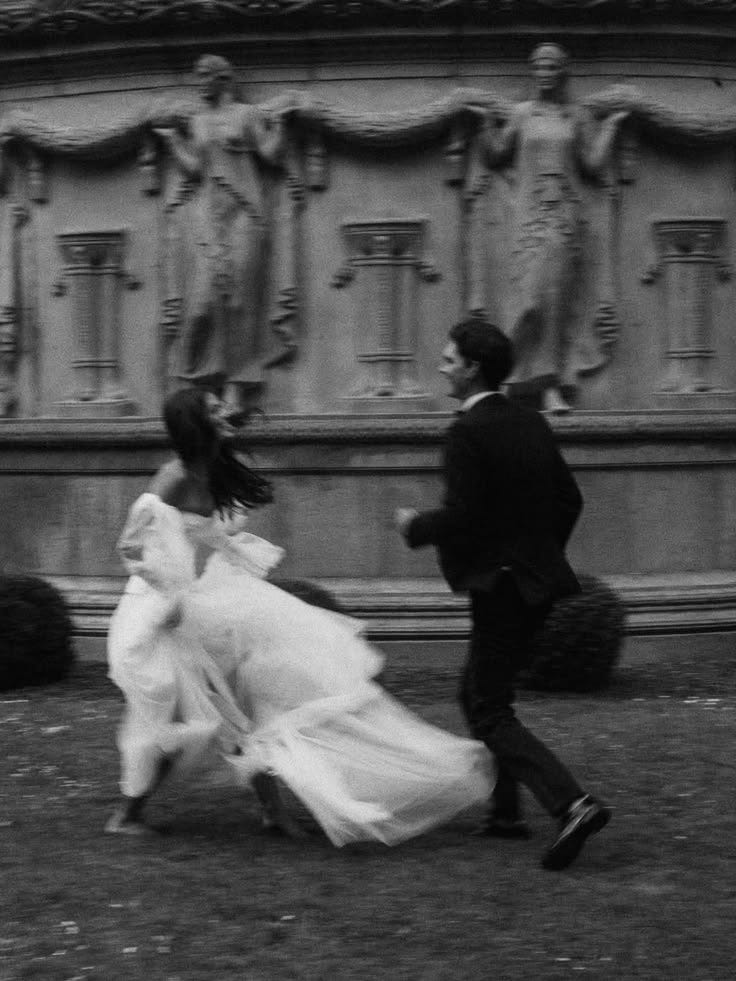
Give it years and it compounds. A woman who has poured a decade into a life with no room left for her own does not stay purely grateful. Under the good partner and the easy Sundays, a low sound begins, at him, at the lost years, at herself most of all, and she can hardly say it aloud, because on paper she has everything she was told to want. What looked like a beautiful surrender curdles, by slow degrees, into a resentment she never gave herself permission to feel all this while.
A man, Simone de Beauvoir wrote almost a century ago, is raised to build a life; a woman is raised to find a life she can move into. He reaches for the world with his own hands, and she is taught to reach it through him, to take her size from the size of the man she can fasten herself to. His ambitions become the roof over her head. His name becomes the country she lives in. His future becomes the only future with any weather in it. She stops authoring anything of her own and lives, warmly and busily, inside a story with someone else’s name on the spine.
A folktale goes something like this. A seal comes out of the sea, sheds her skin to dance on the rocks, and a lonely man hides the skin so she cannot return. She stays. She loves him, she bears his child, she is good to them both. And slowly she begins to dry out, her eyes clouding, her skin cracking, her body failing, because a creature of the sea kept too long from the water will wither no matter how kind the shore. Only when she finds her skin again and slips back under does she come alive. Clarissa Pinkola Estés, who keeps this story, gives that skin its real name. The soul. A woman dries out in exactly this way inside a good home, a home with nothing at all wrong in it, when she lets the wild, knowing, sea-going part of herself be folded away for the good of the household.
Here is what none of them were told, the thing that would have kept them wet and breathing. Staying whole is not the enemy of the love. It is the price of the love staying alive.

Love is a verb, not a noun. It is not a thing you fall into and then live inside, it is an action that moves between two people who are each already whole, each still growing on ground of their own, two full lives leaning toward a third thing they make in the middle. And desire, it turns out, does not live on closeness alone. Esther Perel, who has sat with more couples than almost anyone, found that it needs a little distance too, some unclaimed ground, the sense that the person across the table is still slightly beyond you and still entirely their own. Desire is a reaching, and a reach needs a gap to cross. It is why you can feel a jolt of wanting for your own partner when you catch sight of him across a party before he sees you, laughing with someone you do not know, briefly separate, briefly a man with a life of his own you are not inside. In that second of distance he becomes desirable in the old way, a man with a life of his own, briefly a stranger. Fold completely into each other and you close every one of those gaps, and you do not get more love for it, you get less desire. The space between two whole people is not a failure of intimacy at all. It is the very thing that keeps the fire breathing.
A healthy relationship is not two people who fused into one person with two names, but two people who keep meeting, again and again, across a small and deliberate distance. That distance is not grand or dramatic. It is two people who work out in different gyms because they each find a different room inspiring. One at the pottery wheel and the other on the pickleball court, each with their own set of friends there, each occasionally pulling the other in to see the thing they love. It is my three weeks in the mountains every summer, alone, by choice, a holiday I take for myself and have never once wanted to hand to anyone, nesting and meeting strangers and coming back to myself, while the two of us stay tethered across the distance by the odd text and rarely a call, each with three weeks of our own beautiful independent ground to work and read and be. He does not have to come to every dinner. You do not have to hold the same opinion on everything to prove you belong to each other. None of that is a crack in the love. It is the air moving through the house, the thing that keeps two people curious about each other long after the newness wears off.

So stay whole, and be exact about what that means, because it is not a feeling you drift into on a good day. Keep the work that carries your name, the real version with ambition in it and the honest risk of failing, not the tidy hobby you mention at dinner. Keep dreams that are only yours, the ones he never appears in, the ones you would chase across the world if he had never walked into the room. Keep the friendships that know your laugh, the women you see without him, the long lunches and the late calls and the nights that belong to you and no one else. Keep the practices that are yours alone, the morning ritual, the walk you take by yourself, the notebook no one else reads. Keep a little money of your own and a room of your own, because a lock on your own door is the power to think your own thoughts, and money of your own is the power to stay because you choose to and never because you cannot afford to leave. And keep your own pleasure close, because a woman’s joy is a source of her power, and a tired world will always try to talk her down from it. The delight you take in your own body, your own work, your own full days is not taken from the love but carried home into it.
And then, out of all that fullness, build things together, because that is the joy of it. Two people who each kept their own centre can make a shared life neither could have made alone. This is the part the disappearing was always trying to reach and always spoiled, the deep pleasure of a life braided with another, and it arrives only for the two who did not dissolve to get it. A home that holds both their weathers. A business, a child, a garden gone a little wild, a long string of ordinary mornings, the shorthand and the private jokes and the history that no one outside the two of you will ever fully hold. It holds because it stands on two people who are each standing, not one propped against the other. You keep your own dreams and you grow a few in the middle, and the shared ones come out richer for arriving between two people who each showed up whole, each carrying a world of their own to fold in. He becomes someone building beside you, on his own two feet while you stand on yours, close enough to reach and far enough to still surprise you. Nothing you make together is weakened by the fact that you each stayed someone. Everything it is, it is because you did.
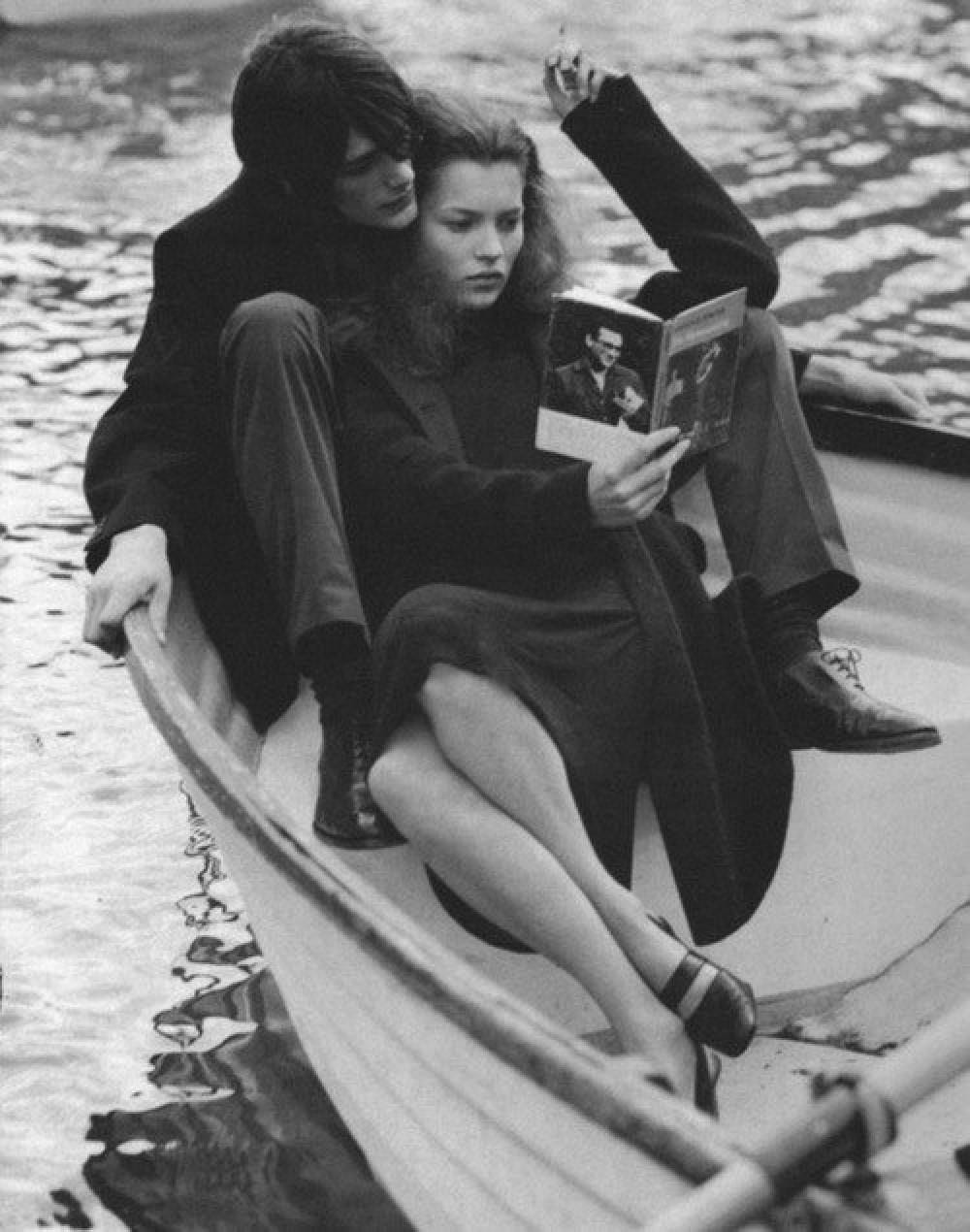
And notice how a man responds to your fullness. A man worth keeping is drawn to the parts of your life he is not in. Your work lights him up, your friends are welcome, your solitude is respected, and he does not flinch when you want a night, a trip, or a dream of your own. The one to be careful of is the one who wants you a little smaller, who sulks at your ambition, who is warmest in the weeks you have no plans that leave him out. The pull you had before he arrived, the gravity that filled a room on its own, is the very thing he fell for, and it is the first thing to fade if you spend your days in orbit around him. The woman running her own ground at full speed is the one worth crossing a room for, and she is doing the choosing every bit as much as she is being chosen.
None of this is theory to me. The longest love of my life is ten years old now, and there was a stretch of it where I felt myself going invisible. He did nothing to vanish me. I had simply stopped tending my own friendships, my own hobbies, the meaningful ground a person needs outside a couple, and a woman with no ground of her own is hard to see, even for the man who loves her. Learning to draw the line again was not graceful. The first boundaries came out as reactions, and they landed as reactions, and they ticked us both off. It took years, and long deliberations, and the slow building of a space safe enough for each of us to hold our own stance and be heard across the disagreement. It cost us time, and I think that time saved us the bigger rupture that waits for the couples who never drew the line when they needed to, who dissolved instead and called it peace.
Freeing yourself is one thing; claiming ownership of that freed self, Toni Morrison wrote, is another and harder thing. You can be loved, and safe, and cherished, and still not quite believe your own life belongs to you. So claim it, the way you would claim a house you paid for. Love him with your whole appetite, dream with him, build with him, come home to him at night. And keep the sea-skin where you can reach it. Keep the work with your name on it and the friends who knew you first and the room with the lock and the wild, knowing part of you that answers to no household. Let him be the great love of your life. Never once the plot of it. That was always yours, from the first page, with your name alone on the spine.
No posts
Comments
Nothing yet. Say the first thing.
Sign in to join the conversation.