
California’s longest mountain bike route, the Stagecoach 400, is a an American bikepacking classic. 2026 would be the 15th edition of the “grand depart” - the unofficial race start - starting and finishing in Idyllwild, California. The route is masterfully crafted; riders face a diversity of terrain and landscapes through Southern California’s mountains, desert, and urban sprawl. It’s been on my list for a long time, and decided to make the trek down to SoCal this spring.
This first part is all about the equipment I brought to successfully finish the ~400 mile/30,000ft race first/second overall. In the next part I’ll break down the ride and race itself.
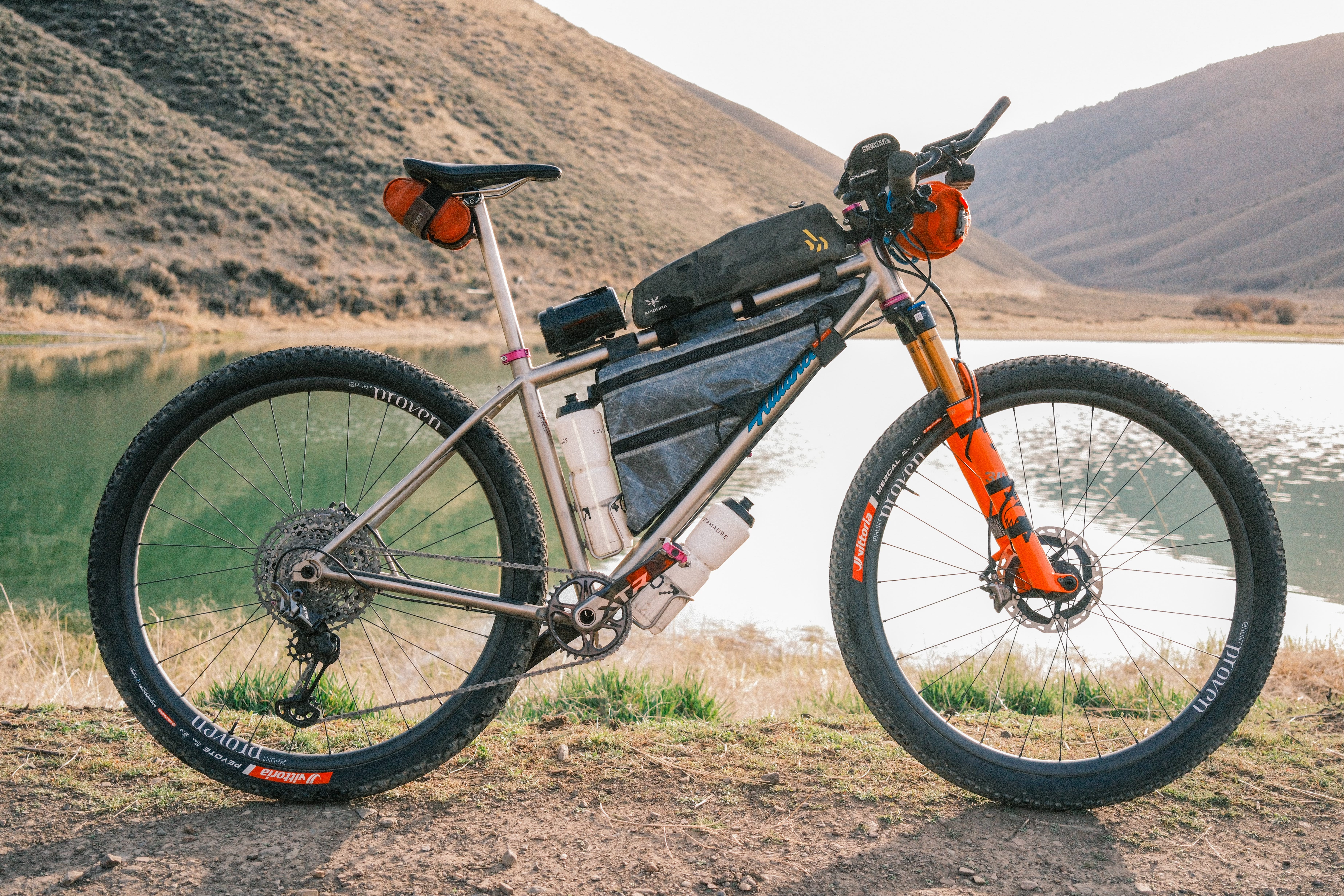
With quite favorable weather conditions and a shorter course than last year, I decided to go with the most minimal kit I’ve ever used in a bikepacking race. I was aiming for under 48 hours total time, which is on the cusp of pushing through with little to no sleep. Here’s what I took:
I’m so smitten with this bike that Erik Rolf from Alliance Bicycles handmade for me here in Hailey, Idaho. We worked together to build a purpose-made bike for demanding off-road ultra racing. It’s a hardtail MTB built around a FOX 34 120mm front fork, using high quality titanium tubing that’s light and compliant. It’s a joy to ride and feels incredibly stable yet capable over the rough stuff.
It’s built up with a Shimano XTR mechanical groupset, featuring a 34t front ring and 170mm cranks, with a 10-51t cassette. I went with mechanical shifting on this build due to its reliability, weight, and cost savings over electronic, which I’ve experienced some issues with in long rides in the past.
Wheels are the HUNT Proven carbon dynamo, so the front has a hub that generates electricity to power my front light and a charging system for ultimate self-sufficiency. Tires are 2.4 Vittoria Mezcal (front) and Peyote (rear) in the more burly trail casing.
Contact points are an Ergon saddle, Wolf Tooth Components ALT pedals, and Wolf Tooth Components mega fat paw grips, with some SQLabs inner bar ends and cut down aero bars for more hand positions.
I used a mishmash of bags to carry my limited stuff. A Rockgeist partial frame bag was mainly for storing food, but also housed my backup headlamp. In there was also some backup carbohydrate drink mix, a mini pump, and emergency blanket.
The top tube bag by Apidura held the charging port from the dynamo, which connects to a power bank to recharge my phone while on the go. In there was also a dynaplug tire plug kit, chapstick, chain lube and rag, multitool, sunscreen, waterproof over gloves, and food.
A small saddle pack carried two tubes, and had a tool caddy mounted in a bottle cage to the top tube that housed my repair kit:
spare derailleur hanger
needle and thread
mini leatherman
chain pliers + quick links
tire lever
spare tubeless valve
spare brake pads
tire boot
spare dynaplugs
spare cleat and bolts
I also carried a Salomon hydration vest with a 2L bladder and storage for a few other items, like extra food, my camera, and water filter.
Lastly, a small dry bag was mounted to the bars with voile straps to carry my down jacket, spare socks, and pillow.
I brought a pared down kit that I knew would be enough for the forecasted high and low temperatures along the route. I’ve experimented a lot with clothing while doing these long races so know what I need to stay warm. The start and finish, and riding through the Cuyamaca Mountains at night, would be cold but not freezing, and the daytime riding through the exposed desert would be quite hot. I felt my selection was the perfect balance between being prepared and being minimalist.
short sleeve jersey
cargo bib shorts
mesh sleeveless base layer
knee warmers
down jacket
rain jacket
buff
MTB long finger gloves
waterproof overgloves
two pairs of cycling socks
helmet
sunglasses
The only thing I didn’t use was the second pair of socks - I probably could have swapped them out going into the final night after the long, sandy, and wet hike a bike section where my feet got pretty destroyed, but by then it was almost over and I just powered to the finish. I managed to stay fairly warm and only got properly cold in the last few hours riding near a lake.
I had capacity for over 4L of water, including a 2L bladder in my hydration vest, 2 x 1L bottles on the bike, and a filter flask that was about 700mL. I basically kept 4L topped up all the time, especially in the hotter sections. I brought some electrolyte tablets and a variety of riding food from the start (such as candy bars, a bagel, leftover pizza), plus a number of gels and carbohydrate drink mix. There was ample resupply on the route for the most part, so I only stopped a few times to replenish calories and finished with a lot of leftover food.
I knew I would only stop to sleep very briefly, and with the weather being pretty mild I opted for just an emergency blanket, inflatable pillow, and down jacket as my sleep setup. I ended up only sleeping for about 30min the early morning of the second day, and felt that was enough to get me through.
I use a COROS Dura for navigation and ride tracking, which has incredible battery life. I think it was still at around 70% battery after the 41 hours of being out there.
My front light is a dynamo-powered light by k-lite, which works great in these events. I also had a Fenix headlamp for the hike a bike sections and added illumination for the more technical portions as the dynamo light doesn’t work super well at slow speeds. A blinky tail light kept me seen during the few traffic-heavy sections.
I also brought a small film camera to capture some of the scenery which I’ll develop and scan soon!
This was also my first event using a waxed chain. The Old Man Mountain Experimental Bikepacking Team I’m part of is sponsored by Silca, who sent us a sweet little chain waxing kit, making it really easy to do. The wax treatment lasted roughly 180 miles before I switched over to Silca’s Synergetic wet lube.
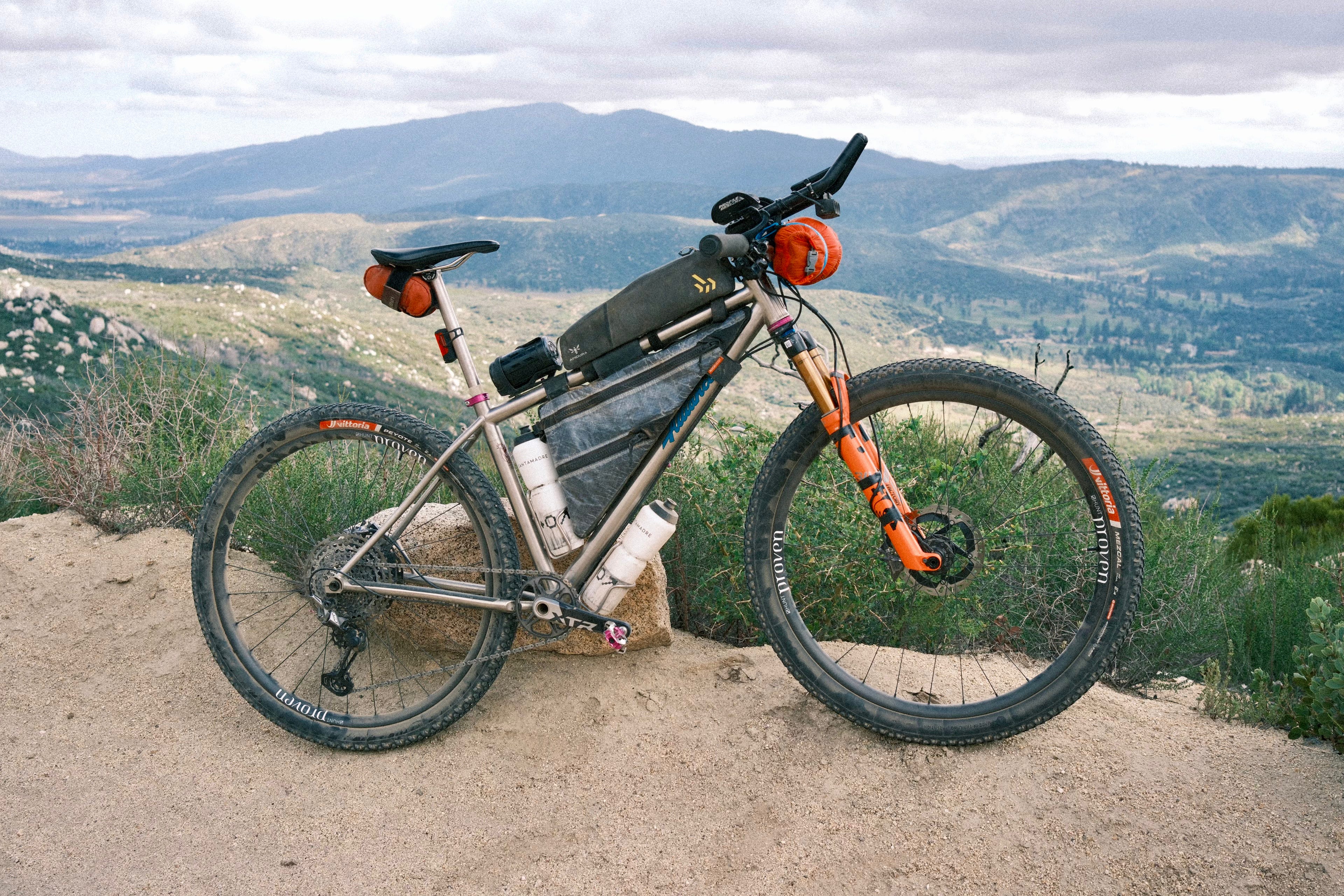
Overall, I’m incredibly happy with the setup and had no mechanical issues to speak of. In this length of race, with the ideal conditions we were blessed with, I could afford to run a very minimal kit. Granted, I was pushing at the front of the race with a goal of finishing under two days, so each person’s needs are different. I have now done a lot of these ultras, building a lot of experience (learned from making many mistakes), and I recommend anyone interested in taking something like this on to do the same. It takes a lot of trial and error to build the wisdom for what you do and don’t need out there, and my setup might look totally different for the next one based on the individual demands and conditions.
Stay tuned for the race report coming soon! And feel free to drop me any questions about the setup in the comments.
-jackson
No posts
Comments
Nothing yet. Say the first thing.
Sign in to join the conversation.