
This week we are reading Chapter 3 of Beauty in the Word, and the section The Habit of Perfect Execution in Home Education.
In Beauty in the Word, Stratford Caldecott continues to reimagine the three liberal arts that make up the trivium. This week, he asks us to reconsider what classical education has long called “rhetoric.”
Rhetoric
“Rhetoric” is usually thought of as the art of persuasion. Sometimes this is understood to be a “set of techniques to impress (oratory, eloquence)” or “a means of manipulating the will and emotions of others (sophistry, advertising).” But Stratford Caldecott asks us to think of it as Speaking, and he defines it as the ability to speak truth.1
Truth & Tradition
Our modern minds tend to think of communication as self-expression. But according to Caldecott, our speech must correspond to more than what is just internal. It must also communicate reality. True knowledge is “a marriage of the self to reality,” and both our thoughts and our speech must correspond to the reality of the cosmos, as it exists both inside and outside of us.2 This is what rhetoric accomplishes: speaking the truth about reality. The truth that will set us free.
“Freedom,” as Caldecott understands it, is not an endless amount of choices. It is the ability to choose the right action instead of the wrong one. This makes freedom dependent upon truth, and the ability to communicate truth essential. This is especially true for teachers. When we are communicating truth to our students, we are offering them a way to be free. The art of Speaking (and of teaching) is“[…] a way of liberating the freedom of others by showing them the truth in a form they can understand.”3
As we cultivate this freedom, we are also cultivating and sustaining community and tradition.4 Our Speaking is“[…] the communication of values, or meaningful information, and of wisdom and of tradition, between persons and across generations.”5 This is what rhetoric in our homes and schools is capable of.
Beyond Words
Of course, the message we communicate to the world is more than just the words we say. It is also what we do and who we are. Our “rhetoric” depends on our ethics and ethos, our actions and morality, our mission and vocation, our sense of beauty and melody, our imagination and our intellect, our fruit and our life.
“Communication in the fullest sense must involve the whole person, that is body, soul, and spirit, with imagination and intellect in harmony. Rhetoric cannot be kept entirely separate from any other subject […]”6
If “rhetoric” is our ability to speak truth, we must be able to attend to and interpret reality. It requires language and knowing the names of things. It is dependent on both freedom and community. And it must take place in the heart.
Where It Leads
Ultimately, rhetoric is not the end goal of education. The end goal of education is worship.7 This is why Caldecott argues that liturgy and faith must be fully integrated into the school, not simply tacked onto it. All things come from and point to God, and every subject is capable of drawing us deeper into worship of our Creator.
“Belief in God as our Father and the world as His beautiful and rational creation binds faith and reason, nature and culture, art and science, morality and reality into a coherent and integrated unity. This unified view reaches its summit in worship, which is the form of knowledge and thus the end goal of true education.”8
This is where Speaking and Rhetoric, and the liberal arts as a whole, eventually lead us: to worship.
RESOURCES & DOWNLOADS
Church Year Cookbook (paid subscribers): 12 visual recipes for the liturgical year! Complimentary for paid subscribers during the month of July.
Downloads
Church Year Cookbook
·
Jun 30
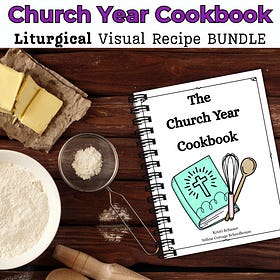
Paid subscribers can download The Church Year Cookbook below, a collection of 12 visual recipes for the liturgical year, including Advent, Christmas, St. Nicholas Day, Epiphany, Candlemas, Valentine’s Day, St. Patrick’s Day, Shrove Tuesday, Lent, Good Friday, Easter, Michaelmas,
Home Education Audio: You can listen to the audio version of Home Education for free on LibriVox. This week we are reading section 40.
No posts
Comments
Nothing yet. Say the first thing.
Sign in to join the conversation.