

If we’re being honest with ourselves, we know motherhood changes us—it changes how we look, how we feel, how we think, and most certainly how we live.
But it changes something even more fundamental… and often that’s how we talk to ourselves.
It changes the way we move through a dressing room, the way we react to a photo we didn’t approve, the way we touch our face in the mirror, the comments we make without thinking, the tiny negotiations we have with ourselves before leaving the house, the quiet pressure to look like we’re handling everything, even when we’re very much inside the very normal chaos of holding a life, a family, a body, a schedule, a career, a home and some version of ourselves together…
At some point, many of us realize our children are not just watching what we do, but they’re learning from the way we speak to the woman in front of them.
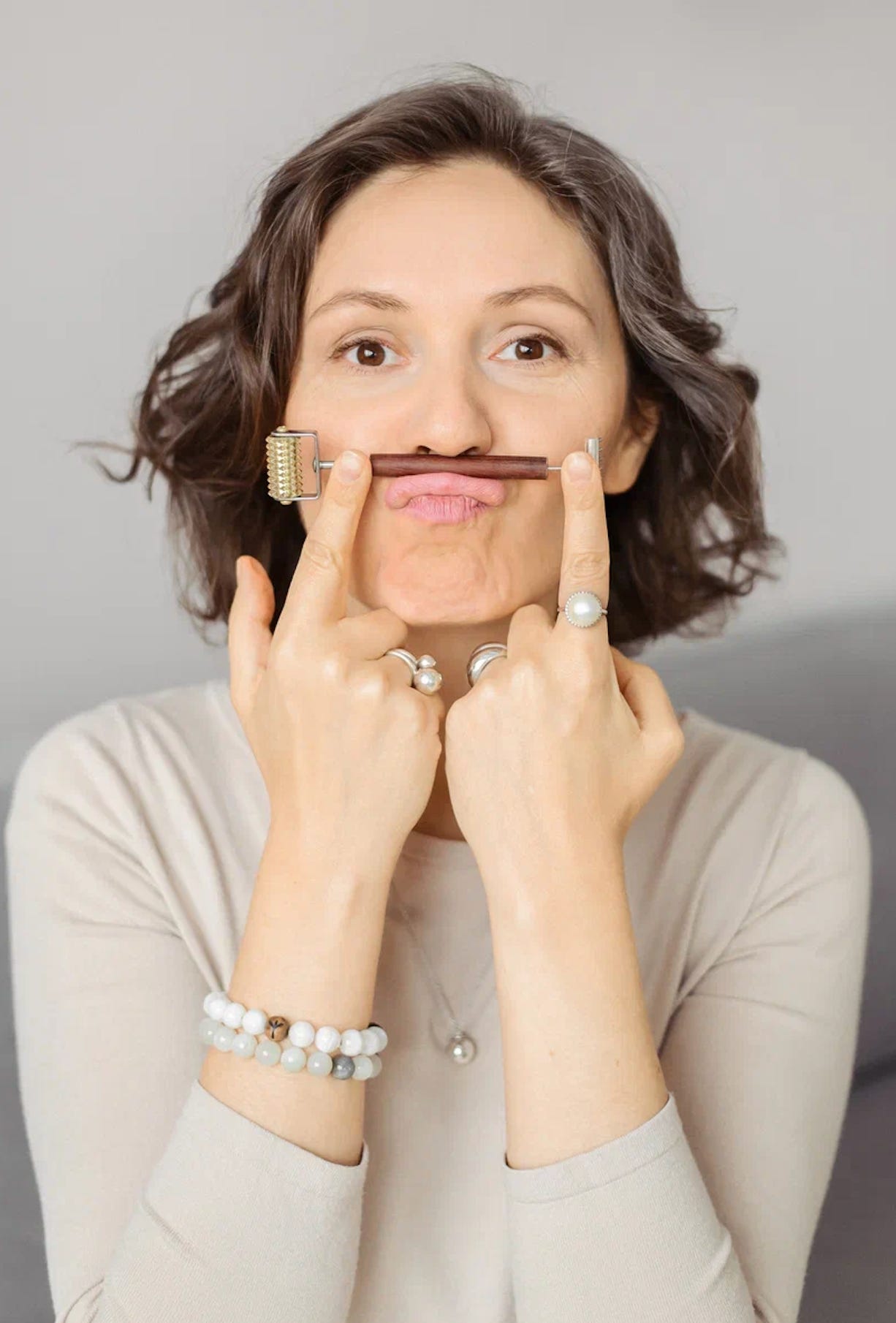
That is what drew us to Natalia Dichkovska’s work
.
Natalia is a New York–based keynote speaker, author and holistic beauty expert whose work sits at the intersection of beauty culture, performance pressure and the nervous system. She is the founder and CEO of an international holistic beauty school, the author of three books and has spent more than 15 years teaching women a more grounded, body-based way to relate to themselves.
But what I found most compelling about Natalia is that she does not talk about beauty in the way women are so often used to hearing about it. There’s no panic in her approach, no shame, no scolding women for caring, no pretending that appearance doesn’t matter in the world we live in.
Of course mothers are allowed to care about beauty—we’re allowed to want to feel good in our skin, to love a facial, a lipstick, a haircut, a serum, a treatment, a ritual that makes us feel more like ourselves. Wanting to feel beautiful does not make a woman shallow. It makes her human.
But Natalia asks women to look at what is underneath the ritual.
Is it care, or is it correction? Is it pleasure, or is it pressure? Is it a way of reconnecting with yourself, or another way of telling yourself you are falling short?
That distinction feels especially powerful in motherhood, because so much of this season is lived in front of little eyes. Our children hear the throwaway comments. They absorb what we say about our bodies, our faces, aging, other women and ourselves. They learn whether beauty is something to enjoy, something to fear or something to constantly manage in order to feel worthy.
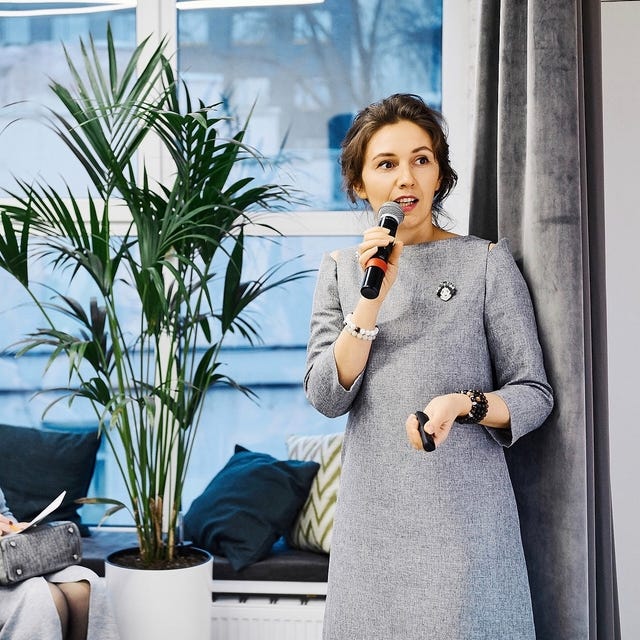
In this installment of The Motherhood Identity Series, Natalia talks about raising children in a culture built on comparison, why so many women live in a state of self-monitoring, the thin line between self-care and beauty pressure dressed up as wellness, and what it means to come back to yourself instead of “bounce back.”
As my daughter grew up, I realized she was entering a world built on comparison, self-monitoring, and the feeling of never being enough. And I understood that girls learn how to relate to their bodies by watching their mothers—how they speak about themselves, aging, and other women.
I didn’t want my daughter to grow up watching a mother constantly fixing or criticizing herself. And I didn’t want her to go to the same war so many women go to every day—the war against themselves.
I often say that women do not actually have a wrinkle problem. They have a safety problem. Many women live in a constant state of self-correction, and the body reads that as stress.
That shifted my entire perspective. I want my daughter’s energy to go toward creativity, leadership, voice, and building a meaningful life — not toward endless comparison and manipulation disguised as self-improvement.
Motherhood taught me that one of the most powerful things we can model for our children is not perfection, but self-trust.
People often think faces change mostly because of age. But in reality, our expressions are shaped by the emotions we live in most often. Stress, worry, exhaustion, tenderness, resilience—over time, these patterns settle into the face like emotional imprints.
And when you truly understand how much women carry, especially mothers, it becomes impossible to look at faces superficially. So many women are constantly holding everything together—caring for children, managing emotions, staying alert, functioning even when they are overwhelmed.
That’s why judgment around women’s appearance deeply upsets me. We rarely know what a woman is carrying behind her face. Maybe she hasn’t slept well in years. Maybe her child is struggling. Maybe she has spent years in survival mode.
Motherhood made me see faces less as aesthetic objects and more as stories of love, stress, endurance, and care. I think it’s a powerful reminder to be gentler with one another and with ourselves.
I developed a method that allows women to support both their appearance and their nervous system at the same time, which is exactly why it fits so naturally into the life of a busy mother.
What makes this approach unique is that we don’t touch the face mechanically or only for aesthetic reasons. We use the face consciously, as part of the nervous system. The same intentional practices that help a woman look fresher, more rested, less tense, and less puffy also help regulate the body’s stress response.
When we release chronic tension in the face, jaw, eyes, scalp, and neck, we indirectly signal safety to the body and activate the parasympathetic nervous system—the state where the body can finally recover, restore energy, heal, and deeply rest.
Many mothers spend years in a constant “give, give, give” mode. These practices help shift the body out of survival and into a state where a woman can actually feel present, softer, clearer, and more alive again.
That’s why I love this approach so much: it improves how women look, but more importantly, it changes how they feel and function inside their own lives.

I became a mother relatively young by American standards. I had my first child at 25. At that time, I had a very transactional relationship with my body. I expected results from it, criticized it often, and wanted to change things quickly, without really understanding how my own stress, thoughts, and self-perception were shaping the way I felt.
Motherhood changed me completely.
My oldest daughter received the most immature version of me—emotionally unregulated, hard on herself, constantly striving. And in many ways, it was through seeing myself reflected in her eyes that I realized I wanted to become a different kind of woman.
I started therapy, began learning about the nervous system, emotions, and self-awareness, and slowly rebuilt my relationship with myself from the inside out.
Over the years, my understanding of beauty became much softer, calmer, and more compassionate. Today, beauty for me is no longer about urgently fixing or changing myself. I no longer take care of myself from fear of aging or becoming less attractive. I take care of myself from a place of love, respect, and long-term care for my body.
I honestly don’t think I would have found this level of peace with myself without becoming a mother.
We also frame recovery as something that should happen quickly. In reality, it’s gradual. Your body is recalibrating. I remember scrolling social media and an influencer I followed was posting videos of her dancing 2 weeks postpartum where I couldn’t even get out of bed yet due to intense pain from debilitating injuries from childbirth. I felt horrible watching those videos, wondering how come other moms can bounce back and I can’t? I remember feeling inadequate. But all of our bodies are so different, and we have such unique childbirth experiences. We really can’t compare ourselves to other people.
First of all, I would say: I can relate. After giving birth, my body and appearance changed dramatically. My curly hair became straight, I lost a huge amount of hair, I was exhausted, depleted, and honestly did not recognize myself in the mirror either.
What I wish more women understood is that the body after childbirth is not “broken.” It is recovering from something enormous. And every woman enters pregnancy and motherhood with a different level of stress, health, support, sleep, and life circumstances. Comparing yourself to celebrities or Victoria Secret’s models whose full-time job is maintaining their appearance is deeply unfair to yourself.
Right after birth, the body’s main priority is survival and recovery—healing, feeding the baby, functioning on little sleep, carrying and caring for another human being. Aesthetic perfection is not the priority. Health, resilience, and nervous system stability are.
I think mothers deserve much more compassion during this stage, especially from themselves and from their partners. A woman should not be criticized or pressured while her body is rebuilding itself.
The good news is that the body is incredibly intelligent and resilient. So much of what feels scary in the beginning is reversible with time, support, nourishment, rest, and gentle care.
And I truly believe self-care during this stage should not come from panic or self-rejection. Even 10–15 minutes of gentle, conscious touch—a face massage, caring for the skin, slowing down for a moment—can become a way to reconnect with yourself again. Touch itself sends signals of safety to the nervous system.
I think mothers feel this pressure most intensely around the idea that they are supposed to “bounce back” immediately—physically, emotionally, professionally, sexually, socially—as if nothing fundamentally happened to them.
Modern motherhood often comes with impossible expectations. Women are expected to recover quickly, stay attractive, remain emotionally available to everyone, succeed professionally, and somehow do all of it without showing exhaustion or struggle.
And social media amplifies this pressure constantly. Mothers are exposed to endless images of women who appear perfectly toned, energized, youthful, productive, and happy just weeks after giving birth. For many women, this creates a quiet feeling of failure and inadequacy.
What deeply concerns me is that women start treating themselves as projects that need to be fixed instead of human beings going through one of the biggest physical and psychological transformations possible. To me, this is not really about beauty. It’s about worthiness. Many women unconsciously feel that if they no longer look a certain way, they will lose love, value, visibility, or acceptance.
That’s why my work focuses so much on helping women move out of fear and self-monitoring and back into connection with themselves. Because a woman who feels safe in herself makes very different choices than a woman who feels constantly evaluated.
For me, the difference is very simple: fear versus care. If I’m doing something because I’m afraid of aging, rejection, becoming less valuable, or not being enough—that’s beauty pressure disguised as wellness.
But if I’m caring for myself because I’m enjoying it, I want to feel better, support my body, have more energy, feel calmer, more connected, more alive—that’s self-care.
The action itself can look identical from the outside. The real difference is the nervous system state underneath it.
All of these practices became part of our family life, not just my personal work. My children grew up surrounded by essential oils, reflexology tools, bespoke lotions, and natural approaches to wellbeing. They each have their own little aromatherapy kits they travel with or take to school. They know what lavender is for, when to use tea tree, how geranium can help emotionally.
As they got older, I started teaching them more directly. My daughter became interested in facial practices as a teenager. I taught her simple facial reflexology protocols, and now if she has a headache or stress, she knows how to help herself. My son comes to me for reflexology and aromatherapy instead of reaching for medication.
What’s most meaningful to me is not just that I do these things for my children, but that I taught them how to care for themselves independently. To me, that’s one of the most important parts of motherhood—giving children tools that help them feel connected to their bodies, emotions, and wellbeing without becoming dependent on someone else to “fix” them. And these holistic practices helped me create that kind of relationship inside our family.

It shows up everywhere. Chronic vigilance often creates jaw tension, tight foreheads, shallow breathing, puffiness, fatigue in the eyes, skin sensitivity, and a constantly “switched on” nervous system. Many mothers become so used to functioning in survival mode that they no longer notice how much tension they carry. The face reflects this state very honestly. That’s why I often say the face is a dashboard of the nervous system. It tells the story of how safe, rested, supported, or overwhelmed a person feels.
I would make it very simple and sensory. I’d put on a diffuser with some calming essential oils like lavender or ylang-ylang, warm a little massage oil between my hands, and spend a few quiet minutes touching the face very slowly and consciously.
Not trying to fix anything, just softening the jaw, smoothing the forehead, relaxing the skin around the eyes, letting the body feel safe again through touch. You don’t need to know any complicated techniques—the most important thing is moving gently from the center of the face outward, with softness and attention.
And one of my favorite nervous system tools is fake yawning a few times. It sounds funny, but it relaxes the jaw incredibly quickly and helps shift the body out of stress mode.
These three mindful minutes of safety and softness can change the entire state of a woman’s nervous system.
I think women often misunderstand glow as perfect skin—the result of peels, expensive skincare, and treatments. But real glow is something much deeper. It’s energy.
We instinctively feel it when we look at another person. Are the eyes alive? Is there curiosity, vitality, interest in life, connection to self?
To me, glow is not glass skin. It’s aliveness. It’s what happens when a woman is shamelessly pleased with herself and genuinely enjoys who she is.
For a long time, I thought control was other people’s issue, not mine. But eventually I realized how much I was trying to control—my children, my life, the future, even how other people perceived me.
And I think modern beauty culture feeds that illusion constantly. It tells women that if we try hard enough, we can fully control aging, appearance, emotions, even other people’s reactions to us.
But life doesn’t work that way. There are seasons in life, just like in nature. Spring, summer, autumn, winter. We cannot stay in spring forever. Aging is not a failure — it’s part of being alive.
I think a lot of suffering comes from trying to force permanence onto something that is naturally changing. Trying to control how everyone sees us is especially exhausting. Some people will find us beautiful, some won’t. Some will understand us, some won’t.
For me, the biggest shift was moving from fear into trust. Fear dominates when you believe everything depends entirely on you—that you cannot even blink or relax without losing control of something. But when you begin trusting the flow of life more, that fear softens.
Motherhood taught me that peace comes not from controlling everything, but from staying connected to yourself while life changes around you.
As contradictory as it may sound, I think one of the most important people in a mother’s life has to remain herself. Of course, when we bring a child into the world, we carry enormous responsibility. But many women start abandoning themselves completely in the process. I did that too. I thought being a good mother meant giving until there was nothing left—no rest, no food, no time, no energy. Eventually, that led to exhaustion and emotional breakdowns.
What changed me was a very simple idea: “Put your own oxygen mask on first.” Not because motherhood is selfish, but because a depleted woman cannot truly thrive, connect, or feel alive. When women begin caring for their own basic needs, restoring their energy, and treating themselves as valuable human beings—something shifts.
And unfortunately, as much as we want the world to be perfectly fair, people often treat us the way we treat ourselves. If we constantly devalue ourselves internally, allow negative self-talk to dominate, or make ourselves emotionally invisible, people tend to mirror that relationship back to us.
That’s why I believe even a few intentional minutes spent with yourself—working gently with your face, paying attention to your emotions, regulating your nervous system—can become a powerful investment in your sense of self-worth. Because the most valuable thing any of us truly has is time. And when a woman invests not only money, but time and attention into herself, it changes the way she feels about herself completely.
I realized there is no such thing as absolute beauty. When you love someone, they become beautiful to you. That’s why mothers see their children as the most beautiful beings in the world.
Motherhood taught me that beauty is deeply subjective, and all people become beautiful when they are loved.
Recently, I asked my daughter what kind of relationship she hopes to have with her body and appearance 20 or 30 years from now. And what made me happiest was her answer: she said she doesn’t have a plan for how exactly she wants to look. What matters to her is feeling happy with herself and not being at war with herself.
Of course, she still had moments of insecurity and self-criticism, especially as a teenager. But she told me that one thing that helped was that I never spoke negatively about my own body, about her body, or about other women’s bodies around her. And both my husband and I gave our children a lot of verbal love and reassurance.
More than anything, I want my children to know that they are loved for who they are—not for their weight, skin, facial features, or appearance.
And honestly, if I had to choose between “perfect” looks with constant dissatisfaction and imperfect looks with genuine self-acceptance, I would choose self-acceptance every time.
To me, “bouncing back” implies returning to who you were before motherhood—as if motherhood didn’t change you. But motherhood changes you completely. It brings a new level of honesty with yourself, a new level of wisdom. It develops so many emotional and practical skills that you simply cannot become the same person again.
The body changes too, often in response to life itself—stress, exhaustion, resilience, unconscious needs for protection or endurance. I think it’s healthier to look forward with curiosity instead of trying to recreate an old version of yourself.
That’s also why support and community matter so much. The people around us shape our beliefs. We inevitably absorb the values of the environment we live in. So surrounding yourself with people who support self-acceptance instead of constant self-rejection can change everything.
I would never judge any woman for what she chooses to do with her body. But I do wish more mothers would pause and ask themselves: “Am I doing this from love and desire, or from punishment and panic?”
In the U.S., there’s a huge normalization of the “mommy makeover” culture—the idea that after motherhood a woman should quickly erase every visible sign that her body changed.
What worries me is not the procedures themselves, but the emotional state underneath them. Sometimes women rush into changing their bodies before they’ve even had time to emotionally reconnect with them. I think mothers deserve a period of compassion before correction. A body that carried children is not something that needs immediate fixing.
The Motherhood Identity Series exists to spotlight women navigating the real, complicated, and transformative terrain of motherhood—founders, creators, leaders, artists and mothers whose stories challenge how we talk about identity, ambition, and becoming.
If you know someone whose story deserves to be told — or if you’re interested in being interviewed yourself — we’d love to hear from you.
📩 Email Jenn at jenn@milaandjomedia.com with a brief note about who you are (or who you’re nominating) and why their story feels meaningful right now.
Comments
Nothing yet. Say the first thing.
Sign in to join the conversation.