
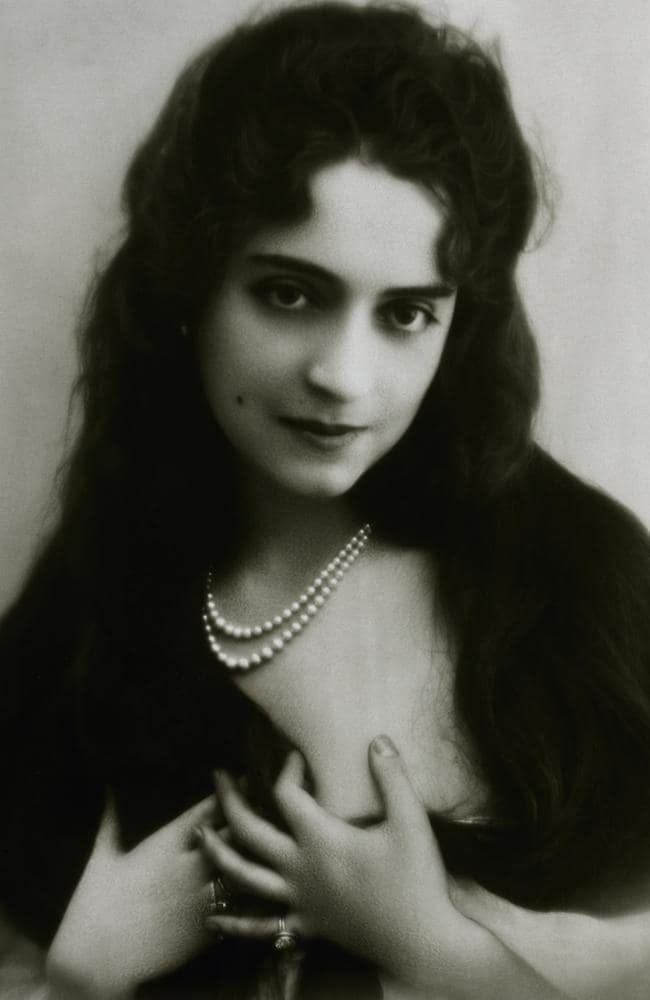
There are three women with whom Edward VIII is most often associated when it comes to romantic partnerships. Of course the most famous is Wallis Simpson, the women he chose to abdicate the throne for. But before Wallis, the then Prince of Wales was in a relationship with Thelma, Viscountess Furness, another American and the aunt of the famous, Gloria Vanderbilt. Before Thelma was Edward’s longtime love, Freda Dudley Ward. They were together for well over a decade, and they remained close even after their romantic relationship ended. Freda is often thought to be the Prince’s first mistress, but, in fact, before his time with Freda he carried on a relationship for about eighteen months with a French courtesan names Marguerite Alibert.
Marguerite was born in 1890 to a respectable French family, but, she took a different path. By the age of sixteen, she had a baby by an unnamed parter, something that was of course completely unacceptable in that time. After the birth of her child, she went to work for Madame Denant, a woman who ran a brothel that catered to high society men. While in her employ Marguerite became an educated and sophisticated courtesan.
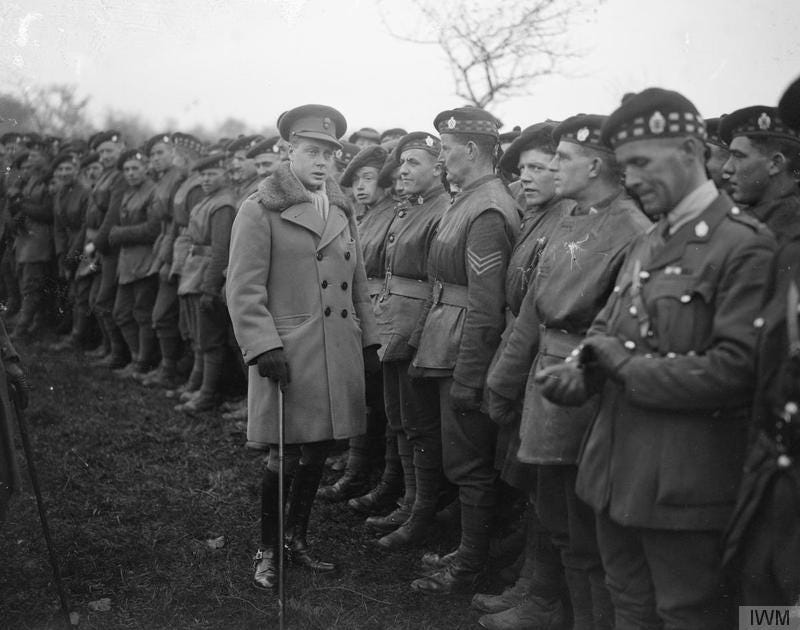
It was in 1917, in the midst of The Great War, that the Prince of Wales first met Marguerite though a friend of his. Although much of his diary concerning Marguerite is no longer believed to exist, he does write of the “three days of bliss” he spent with her when their affair undoubtedly began. Because the Prince was often in France during the war, the affair was able to continue for the next eighteen months.
Four years after the end of her affair with the Prince, Marguerite met and subsequently married a very wealthy Egyptian man named Ali Fahmy Bey. (He is often called a prince and Marguerite a princess, but he was not actually a prince.) Accounts of their relationship detail it as being fractious and full of arguments which were witnessed by onlookers across Europe. In July 1923, the couple arrived in London, staying at the Savoy Hotel. On July 9th, they went to see an operetta and after the show, had a late dinner back at the hotel. They began to argue and at 2:30 am, Marguerite shot her husband from behind, reportedly hitting him in the neck, back and head. He was transported to the hospital where he died about an hour later. As she stood over her injured husband, she reportedly said, “I’ve lost my head. I’ve shot him.”
The story and trial, were highly publicized with people lining the streets outside Old Bailey (The Central Criminal Court of England and Wales) on the day the trial began. The part of the story that I find most interesting however is that even though Marguerite was undoubtedly guilty of murder…..she was not charged. During the trial, Marguerite and her defense sold the story that she was a Western European victim of a horrible marriage to an “Eastern Man” playing up the couple’s difference in race as an excuse for what drove her to shoot her husband. But, there is most certainly another reason that Marguerite was not charged with her husband’s murder…Her past relationship with the Prince of Wales.
The Prince, who was never shy about writing letters to the women he was involved with, had written a collection of letters to Marguerite during their relationship. The letters were a sort of insurance policy for Marguerite, as I am sure she thought that if she had letters from the Prince of Wales, she could not ever find herself in too much trouble. (Evidently regardless of her actions!) And, Marguerite was right. The Royal Household, particularly the staff at York House, which was the Prince’s official household, did everything in their power to make the Prince’s past relationship with Marguerite disappear.
Although it seems the efforts on behalf of the Prince were successful in keeping his name out of the trial, there was still just enough written down to confirm that Prince Edward had indeed been in a relationship with Marguerite, and that she did indeed keep his letters for her own protection. It is believed that in the letters she kept, the Prince was unkind about his father, shared information about the war, and also often included intimacies. Letters of this nature fall completely into line with the collection of letters that the Prince had written Freda Dudley Ward which were later published in Letters From a Prince. (Scroll down for my series analyzing these letters.)
Words referencing Marguerite were also written by Prince Edward to others where he talks about how the letters she hasn’t burned are trouble. In another letter he refers to “those bloody letters” and wrote that he is a fool for not following the advice he was given about them. In another reference to Marguerite, the Prince wrote that he thought she would have to be paid off and that he was disappointed and surprised she turned “nasty.” Clearly the Prince and his advisors knew that Marguerite was not afraid to use the letters for her own gain.
During the trial, Prince Edward conveniently had a rather large change made to his summer schedule and he was booked for a three month trip to Canada. The Royal Household was successful in keeping the Prince and his name away from the trial, and in order to do that, Marguerite went free after clearly murdering her husband. What is interesting is that some in London society were aware of the Prince’s relationship with Marguerite. The then Foreign Secretary, Lord Curzon, wrote a letter to his wife saying that the French girl who shot her Egyptian husband was the woman who was the “Prince’s Keep” in Paris during WWI. He then wrote, “It is fortunate he is off to Canada and his name is to be kept out.”
This story is a sensational one, that, had it not been covered up, could have completely changed the course of Edward VIII’s life. For me, this story also serves as a reminder, that for as much as we think we know about history, there is always more to learn and discover. Something I always hope to be doing here with Mostly British History.
Tell me, did you know about this almost major royal scandal? Whether you did or didn’t, does it change your view of Edward VIII?
Best,
Mckenzie
While we are exploring Royal Scandals, I am deep in research for our next deep dive series looking at the life of James II, his wives, his mistresses, his many children, and so much more. If the Stuarts interest you, make sure you are an upgraded subscriber so you have access to all of the content from the series.
Upgraded subscribers also have regular extras in our MBH Chat where I share even more historical content that I just can’t fit into the main narrative. There is so much to explore, and I love sharing as much as possible with those who love British History as much as I do.
Sources:
Edward VIII’s Murderous Mistress which is a documentary that can be found on YouTube. It is based off of a book by Andrew Rose called The Prince, The Princess and the Perfect Murder.
https://www.express.co.uk/entertainment/books/389389/A-new-book-brings-to-light-the-scandalous-story-of-Edward-VIII-s-first-great-love
Exploring “Letters From a Prince- Edward VIII to Freda Dudley Ward 1918-1921”
(The first post in an eight part series analyzing this book)
In Love with a Prince- Thelma Viscountess Furness and the Prince of Wales
4 Royal Mistresses with Modern Day Connections
The “Could Have Been” Queen, Rosemary Leveson-Gower
No posts
Comments
Nothing yet. Say the first thing.
Sign in to join the conversation.