
I can’t believe that our annual Open House is only two weeks from now, on May 2nd! We have done the event enough times that some items on the list I remember to do without even a thought, like order the extra bathrooms and get help with parking and secure a shuttle. But the actual prepping for an event at the farm always involves the weather, the customers, the insects, the employees, the crop failures - you know, everything you can’t put on a calendar. Monday’s rain put a quick stop to the garden clean up, but the donkeys enjoyed some flower munching time - they discovered the Sambucus nigra - elderberry - flowers, and quickly decided they were the new favorites.
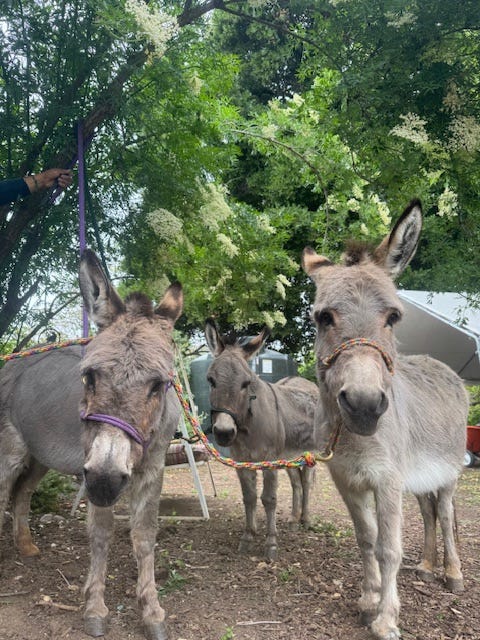
There is always the possibility of bad weather the day of the event, but trying to clean up gardens is hampered by wet weather, and if the weather is too nice, like it was in March, we find ourselves behind in seeding, planting, and every other task necessary to grow enough plants to be ready at the right time for customers. There is no bigger gambler than a farmer!
But enough whining about the stress of our Open House, it is always a fun event, with lots of great educational talks, vendors, music and food. We have a great list of vendors for this year, we hope you will come out to support them!
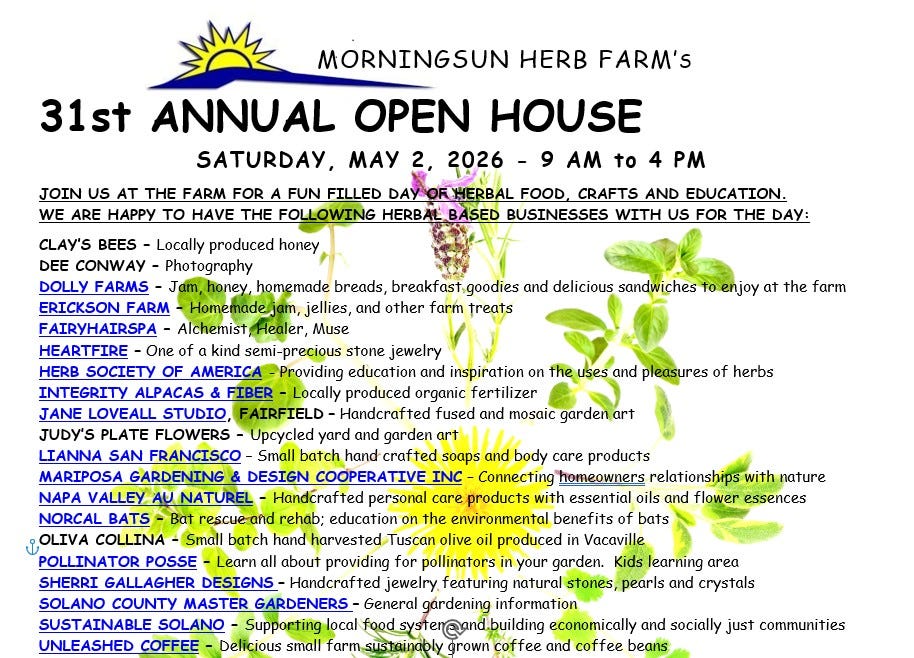
The Open House at Morningsun Herb Farm is a celebration of herbs and gardening, and a way for us to share our passion. It is a free event, open to the public, with extra parking available down at our farm neighbor Soul Food Farm and a free shuttle running between the two farms. It will be the opening day for the year for Soul Food Farm so you can park and easily visit both farms!
We have a full day of talks scheduled, beginning at 9:30 am and running throughout the day.
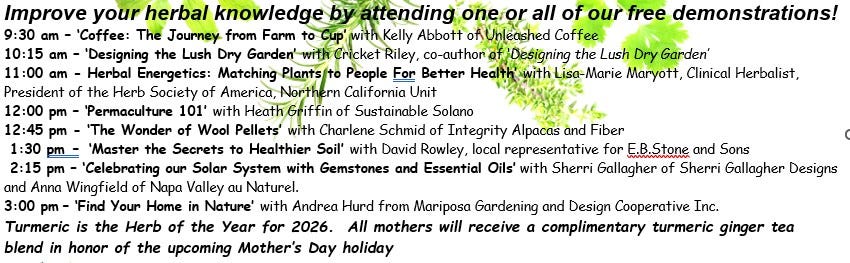
Whether you want to learn about improving your soil, using sustainably produced local organic fertilizers, optimizing resilient landscaping techniques, choosing appropriate medicinal plants for your needs or more, you can learn from one of our free informative talks. They are a highlight of our Open House!
____________________________________________________________________________
If you like to drink beer (um, yes!), and buy native and drought tolerant plants that are well adapted to our climate, we hope you will also come out next Saturday afternoon, April 25th from noon to 4 pm to Berryessa Brewing Company in Winters for the SRCD Spring Native Plant Sale.
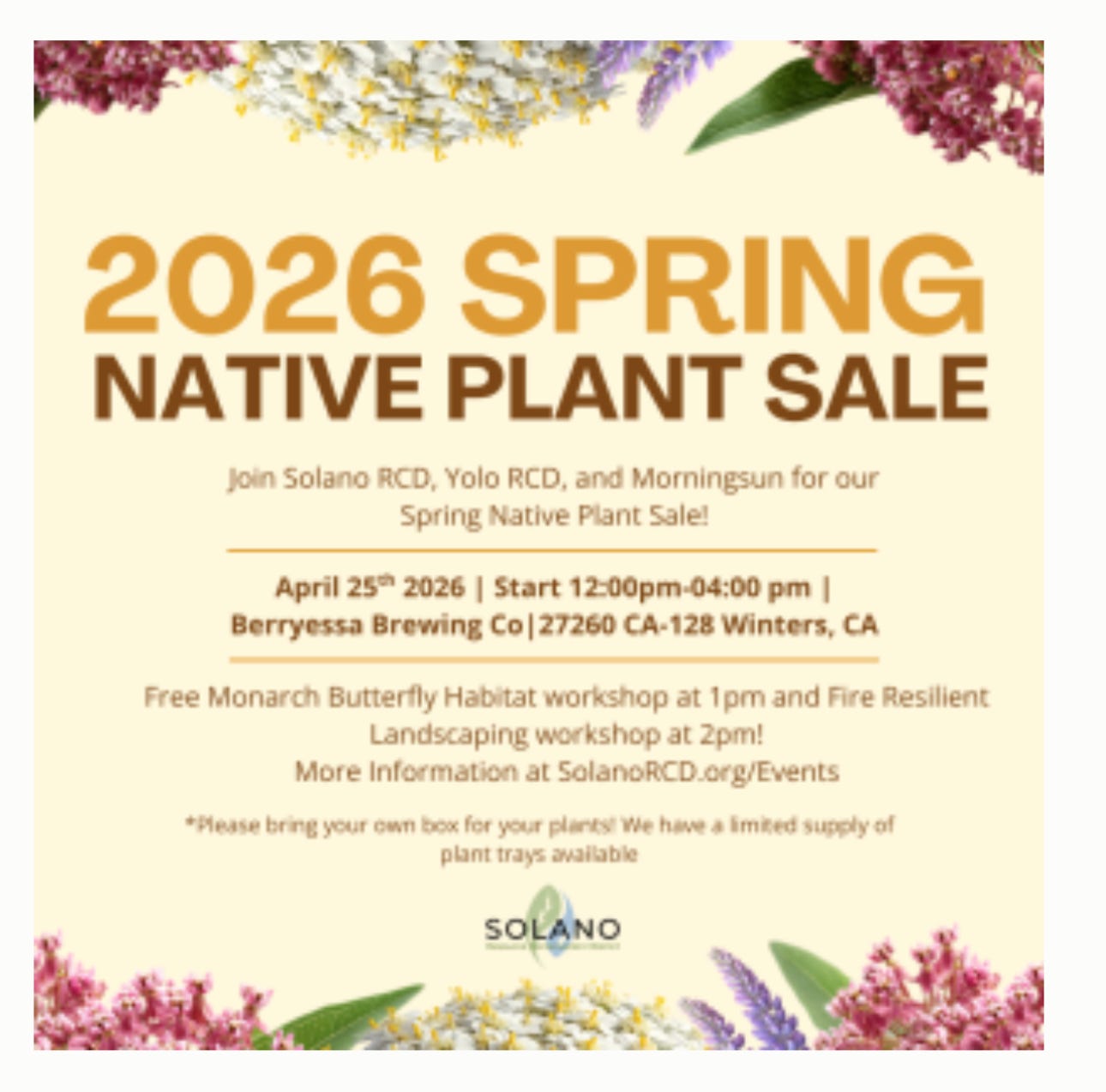
We will be out supplying lots of fun plants to complement the many beautiful native plants provided by the Resource Conservation District. Also, at 2 pm I will be giving a short talk on fire resilient landscaping.
___________________________________________________________________________
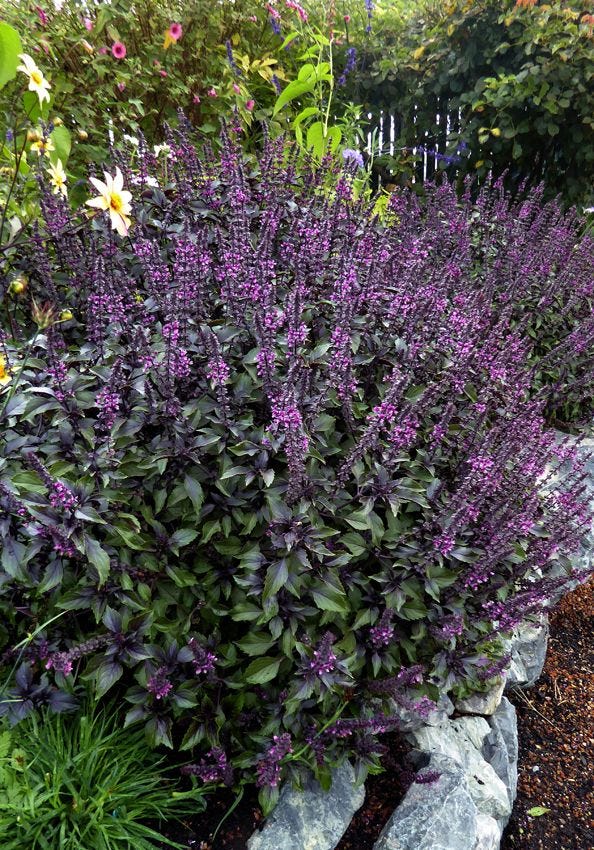
Forty two years ago (wow, can’t believe I am saying that) I was working what would turn out to be the funnest summer job of my life, (one of the funnest jobs ever, actually) between my junior and senior year of college at UC Berkeley. I was a Forestry major, working at Blodgett Forest Research Station, just outside of Georgetown, California. Working beside a number of fun undergrad buddies and driving around in rather questionable old army trucks and Honda 90 dirt bikes, we worked hard during the day and went swimming, hiking, fishing, and cooking together after hours in our somewhat antiquated cabins. And there was a non OSHA approved hot tub consisting of a cattle trough filled with water placed over a hole where we lit a fire and put the mats from the men’s showers on the bottom so we wouldn’t burn ourselves. There may have been some libations involved with that nightly stunt. It was one evening after a trip home to visit his family that my friend Norman asked if we had ever heard of pesto. Nope, sounded strange. Then he made some. Looked strange. Didn’t taste strange though, it was absolutely fantastic, it made a tableful of always hungry college kids completely excited to have a delicious new food to spread on virtually everything. I went home and taught my parents how to make pesto, and my dad proclaimed “If I had a million dollars I would spend it all on pesto”. Fortunately, pesto isn’t that expensive to make, and there is an endless number of possibilities for recipes.
My article on this substack is in honor of my very dear friend Norman, who passed in January after a short illness. There were hundreds of people at his memorial in January, and everyone mentioned three things about him - his incredible kindness and willingness to help everyone around him, and PESTO! Everytime I eat it I think of him.
"Nothing says summer in the garden like the smell of basil, and no herb garden – in fact, no garden – would be complete without at least one basil to enjoy the fragrance and flavor of this perfect plant. The botanical name Ocimum basilicum, commonly called sweet basil, makes perfect sense for this beloved herb. The genus comes from the Greek word Okimon, meaning smell. The species name, basilicum, is the Latin translation of the Greek word basilikon, meaning king. I think we can all agree that basil is the king of smells – just rubbing the leaves of sweet basil brings our thoughts to pesto, Caprese salad, and an idyllic trip through rural Italy.
There are at least 15 species of basil and hundreds of varieties, with new varieties available every year to try. Most varieties are grown easily from seed – I have included some tips at the end of the article for keeping your basil actively growing througout the season. It is an annual in most areas, although if you live in a temperate or subtropical climate it can be a perennial. Here is my number one tip for growing delicious basil: Always treat your seed grown basils like they are hungry teenagers, meaning they need lots of food and water throughout their lives! If they get hungry for nitrogen and water deficient they will flower quickly and set seed, because they think their life is ending! So give them plenty of fertilizer whether they are in a pot or in the ground (look at the tips section for more growing info).
We grow at least 20 varieties of basil at Morningsun, and I never grow tired of describing their many scents, flavors, leaf and flower colors and uses to new herb gardeners. A simple question of ‘Do you have any basil for sale?’ or ‘What’s your favorite basil?’ can lead to a rather lengthy walk, complete with tasting and smelling, through the nursery gardens and greenhouses. It is always a delight to watch someone start with an appreciation of basil grow passionate about the plant as they discover so many possibilities in the world of Ocimum. What about lemon basil infused gin, lettuce leaf basil wraps of fresh mozzarella and sungold tomato, thai style noodles with shrimp and thai basil, cinnamon basil chai shortbread cookies, and tulsi basil tea? From appetizers to after dinner tea, there is a basil to fit your wildest culinary fantasies.
I think of basils in 5 categories: sweet flavored, small leaved, purple leaved, specialty scents and flavors, and sterile. The sweet varieties such as ‘Genovese’ or ‘Italian Large Leaf’ have the classic flavor and look of basil, but if you have problems with diseases such as downy mildew or fusarium, try more resistant varieties like ‘Aroma’ or ‘Emerald Towers’.
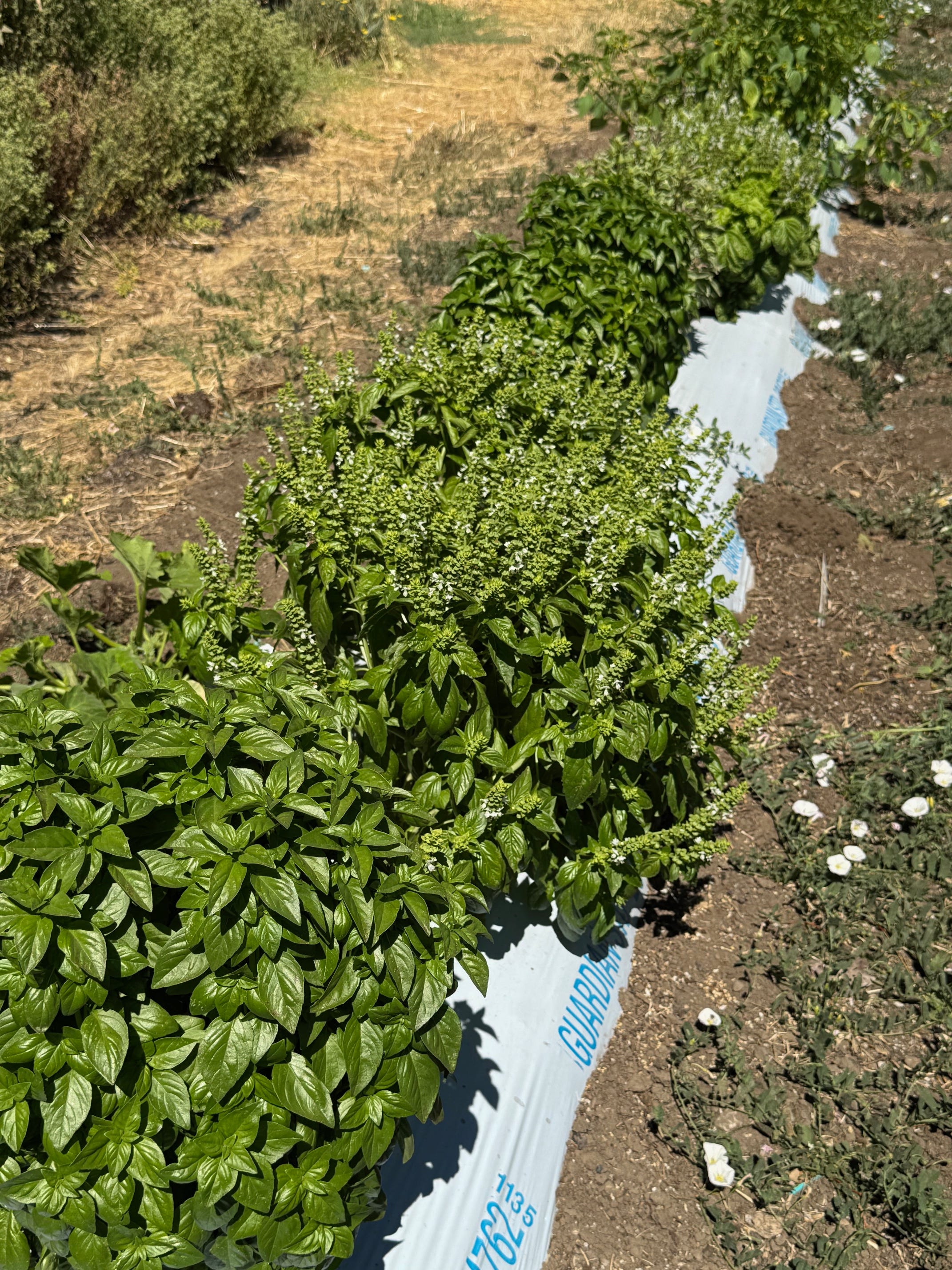
We have fallen in love with Emerald Towers as it is perfect for container growing – compact, short nodes between the leaves for more leaf production, disease resistant and slow to bolt, but maintaining a classic Genovese basil flavor.
In 2026, we are also trialing two new varieties: Everleaf Thai Towers and Everleaf Lemon basil, two varieties which should be less likely to flower and produce larger and more prolific leaves. These would be two great new basils for your gardens this year! The lettuce leaf varieties of basil, such as ‘Napoletano’, can easily grow to 30 inches tall, with large ruffled leaves growing 5 inches long and 4 to 5 inches wide. Switch out lettuce for these large leaf basils in your sandwiches, burgers and wraps.
On the other side of the size spectrum are the small leafed or dwarf basil varieties. Ocimum ‘Spicy Bush’ only grows to 12 inches and is perfectly rounded. Perfect to edge an herb garden bed, this basil will flower quickly but can be pruned back to keep in a beautiful ball shape. The flavor is heavier than sweet basils, and thicker with a spicy mint flavor. It is delicious on pizza or appetizers, and the flavor doesn’t fade when it is heated or cooked.
Purple leaf basils range from mottled purple and green, like the heirloom Ocimum basilicum ‘Amaratto’, to deep purple, such as the Genovese type basil Ocimum ‘Amethyst’ or Italian large leaf type Ocimum ‘Red Rubin’. Excellent as salad greens, they are also infused into vinegars to impart both a basil flavor and a stunning pink shade to the vinegar. They are wonderful as edible garnishes, with pink blooms that can be added to flower bouquets.
The specialty basils encompass a huge range of varieties, from citrus to clove to licorice, each with a different flavor profile. I cannot have a garden without Ocimum basilicum ‘Mrs Burns Lemon’ in it. This is a basil that has been in production for over 60 years, for good reason. The lemon flavor is huge, with an undertone of cinnamon and mint, and the plant is generously sized so multiple batches of lemon pesto, lemon basil ice tea and lemon basil infused vodka can be made each year. Ocimum basilicum ‘Cardinal’ is my other new favorite. I first viewed it at a Master Gardener test garden, full grown and in full bloom. It is a robust Thai style basil, heavy with the spicy flavor of clove and anise.
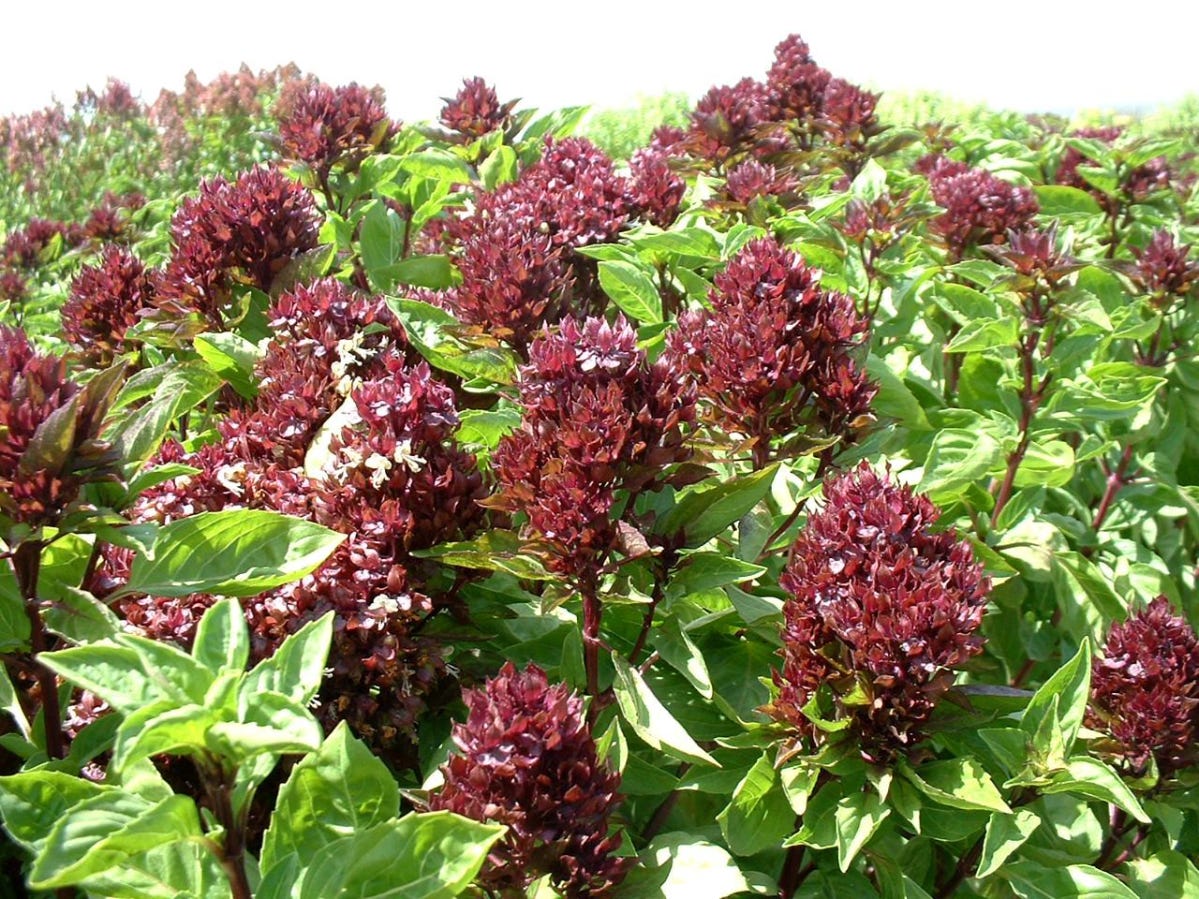
The flower spike is the show stopper though – short and squat, in rich deep purple. Each spike can be three to four inches wide, and as a cut flower adds both fragrance and color to a summer bouquet. But if you want to try other unusual types of thai like basils, try Ajaka or the Thai towers for a fun change.
I can hear the basil growers out there all shuddering at the thought of flowers on basil plants. Of course we need to keep flowers pinched off and plants pinched back to keep them shrubby and productive, but the flower farmers have discovered the beauty of fragrant basil flowers in bouquets, chefs and mixologists are mixing, sprinkling, infusing and muddling basil flowers into new culinary sensations, and the bees adore basil flowers, so why not expand your basil garden beyond your traditional culinary uses?
This is where the new sterile basil varieties can be showcased in your garden. Ocimum ‘African Blue’ (Ocimum ‘Dark Opal x O. kilimandscharicum) was a chance seedling found at Companion Plants Nursery in Athens, Ohio. It typically grows to 3 -4 feet tall and wide, with green leaves and purple veining, and blooms with large purple flower spikes and lavender flowers.
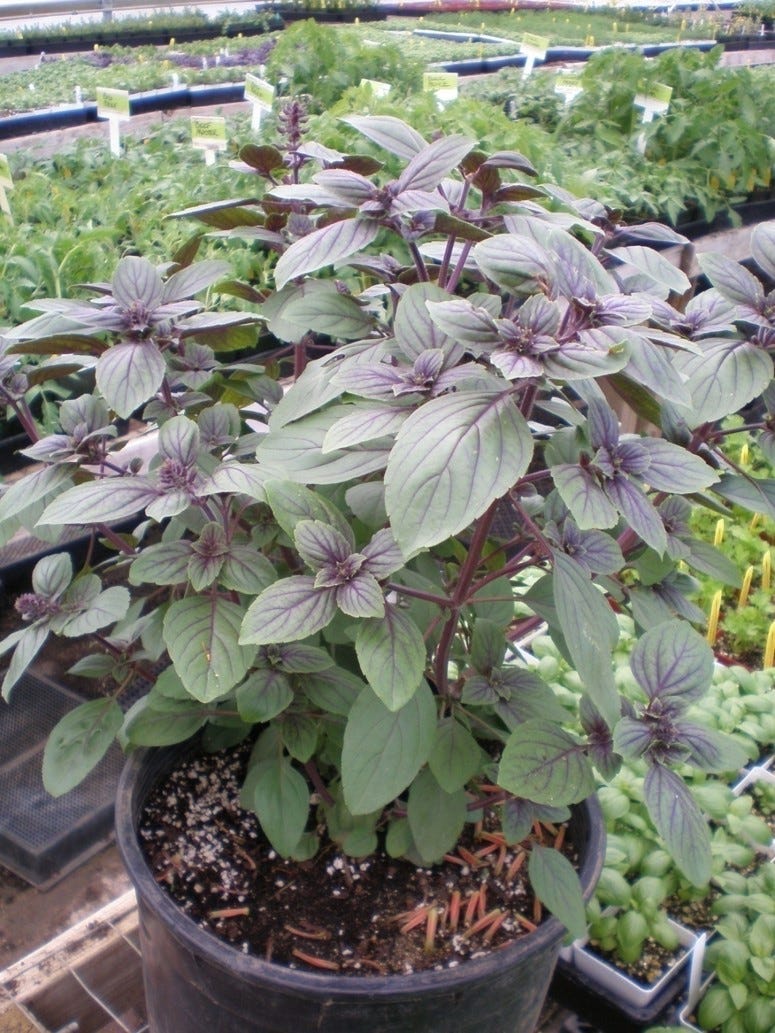
It will grow and flower almost continuously throughout the growing season, much to the delight of the many bees that will visit it. It is a stunning garden specimen and excellent for bouquets. Although it is considered an annual it does overwinter in the more temperate regions, and is also more forgiving as a winterized houseplant than the seed grown basils. The leaf scent and flavor is a bit heavy with camphor, and is generally considered an inferior selection for cooking.
There are several newer sterile selections that are attractive in pots or in beds, disease resistant, produce stunning flowers, culinary worthy, fairly disease resistant, and will tolerate more extreme hot and cold conditions. My favorite is Ocimum Herbalea ‘Wild Magic’, a patented sterile basil that grows to 18 inches tall, well branched with deep violet green leaves, plum-black new growth, dark stems covered with deep pink blooms, a delicious spicy flavor, great tolerance to fusarium disease, good vigorous growth and bloom over a long season, will tolerate slightly drier soils than other basils and looks good even when temperatures drop down to the low 40s. In our central California garden ‘Wild Magic’ looks and tastes good and is blooming usually until late December when we get a hard freeze, and will tolerate life as an indoor plant during the winter. It is really a hard working herb! Ocimum Herbalea ‘Magic Mountain’ is a lovely complement to include alongside ‘Wild Magic’ in the garden or in containers, with a deeper green leaf, light pink bloom, and milder flavor (Frey, 2018). This year, expect to find the ‘Magic Mountain’ basil highlighted in a pesto recipe for Open House.
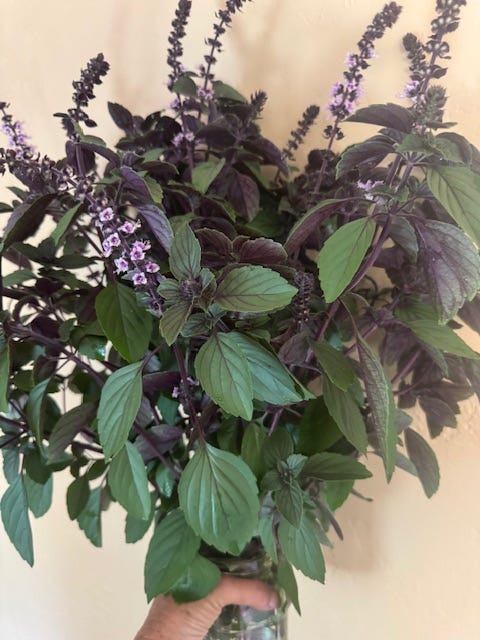
On the other side of the spectrum is Ocimum ‘Pesto Perpetuo’, a variegated non blooming Genovese style basil.
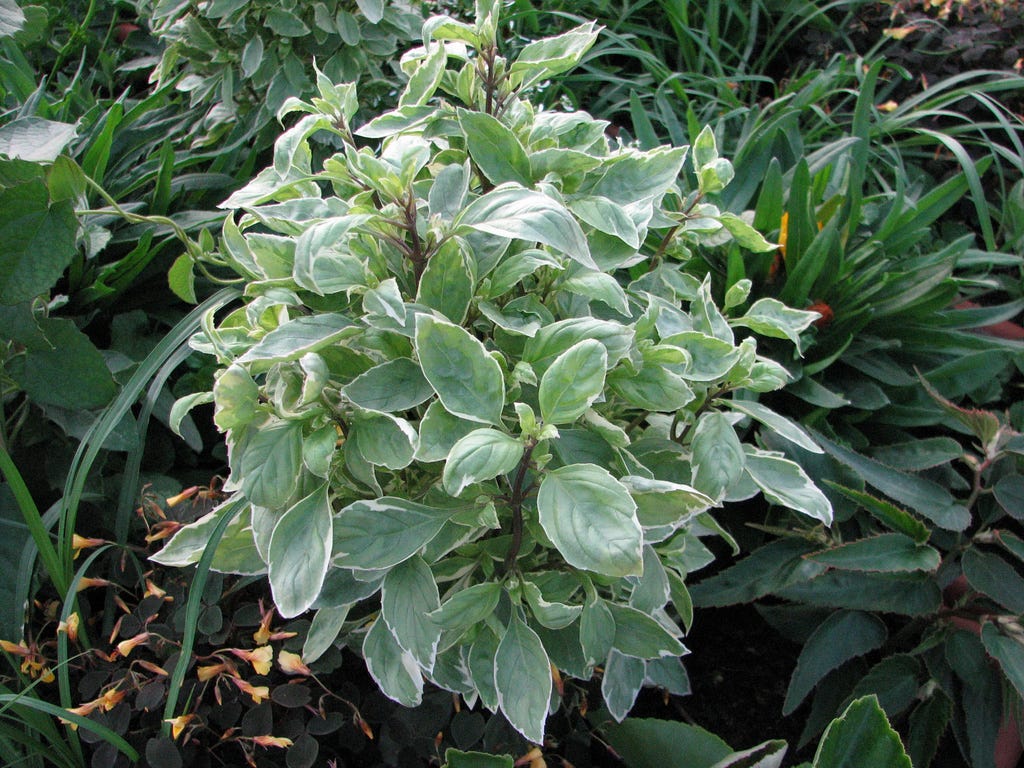
It is such a stunning plant in the garden, shining as a container plant, even tucked into mixed pots of perennials or herbs. It will not bloom, giving the absent gardener the opportunity to enjoy basil at its highest quality.
The largest basil I grow in the garden at Morningsun is a tulsi basil known as ‘Vana’. There are so many varieties of tulsi,or holy basil that it is difficult to choose just one, but Ocimum gratissimum ‘Vana’ is so large in the garden it is difficult to ignore. Growing to five feet, with large fuzzy green leaves, maroon stemmed flowers and a very strong lemon/licorice/clove/mint scent, I can’t help but think of tea every time I walk by it. It is woody stemmed, and lives in my zone 9b garden until mid December. It is stunning to look at, and I find even a pinch in a tea adds an amazing burst of flavor. But don’t forget the other varieties of holy basil - ‘Rama’, ‘Krishna’, Amrita’ and ‘Kapoor’ all have their own interesting flavor profiles for tea and for curry and other food.
Basil always reminds me of my father. My father (his name was Leroy, ‘the king’, and yes, our little donkey is named after him!) did not discover basil until later in life, when he was in his 60s. He always had a huge garden, and I learned so much about vegetable gardening from him. I introduced him to basil though, and once he started growing it, there was never again a day without pesto. I think of him standing in his garden with his basil plants, growing a row of about 20 plants and thinking that wasn’t going to be enough for his year round needs, getting ready to head to another farmer to buy more so he could freeze enough for his winter pesto.
*Start basil seed indoors 6 to 8 weeks before the last frost. Use well drained soilless media in small pots.
*Basils require dark for proper germination, so cover the seed lightly with soil or vermiculite at least 1/8 inch.
*Invest in a heat mat to maintain soil temperatures at 65 degrees, especially if you are starting seed in January or February. This will assure faster and more even germination, less damping off and strong seed development.
*Basil requires sunlight so be sure to have a sunny window or a proper grow light.
*Some basils, such as Genovese basil, are quick to germinate, often in 5 to 7 days. Tulsi basil, Ocimum tenuiflorum, is very slow to germinate, and requires warmer temperatures and more light to develop strong plants. Even with heat mats and additional lighting, germination often takes 14 days, and plant development is much slower.
*Be patient, and allow soil temperatures to warm up to at least 65 degrees before transplanting. Purple and dark leaved basils also take longer to germinate. Sacred basils need even more warmth and are even slower.
*Basils are big feeders, and need more fertilizing than perennial herbs. If you are growing basil in containers supply both a slow release fertilizer when you first plant as well as liquid fertilizers every 2 - 3 weeks, depending on the pot size and how often you need to water. If growing in ground incorporate compost and a slow release fertilizer at planting and liquid fertilizer every 3 to 4 weeks to maintain healthy plant growth. Organic dry fertilizers and fish emulsion are preferred. This probably seems extreme, especially since with perennial herbs such as oregano and rosemary you may only fertilize once a year! Think of basil as a hungry teenager, and if it doesn’t get enough nitrogen and water it wants to send up pretty flowers, get pregnant, have babies, and get old. Your job is to keep it young and in school so you can make lots of delicious food and drinks with it.
*To keep basil in a vegetative state, pinch back blooms and several sets of leaves. If the plants try to rebloom quickly, it is a sign that it’s time to fertilize! Don’t forget to eat the flowers! All culinary herb flowers are edible, and basil flowers are robust and a bit sweet.
*Plant basil in succession to get the highest quality flavor throughout the season. This is especially true in more temperate climates, where basil growing season may be as long as March through October. March planted basil will not produce good quality leaves by October, but June planted basil will still be vigorous for fall harvest.
*If you plan to save seed, remember that basil varieties, and between species, will cross pollinate readily. Only allow one type of basil to bloom and set seed at a time to assure that you are saving each variety separately.
*All basils will readily produce roots from cut tips, either in water or in a soil less media.
We have an informative you tube video on basil varieties and growing basils on our you tube channel, click here to have a look.
____________________________________________________________________________
We will be taking a break for most of May, but if you want to learn more about basil (and some of its very close relatives!) join me for a fun fast moving informative talk at 10 am on Wednesday morning, May 27th, at the Contra Costa Master Gardeners garden in Walnut Creek at the corner of North Wiget and Shadelands Dr. For more information click here.
Classes at Morningsun resume Wednesday, June 3rd, with a second chance to learn more about how to grow cannabis in the garden.
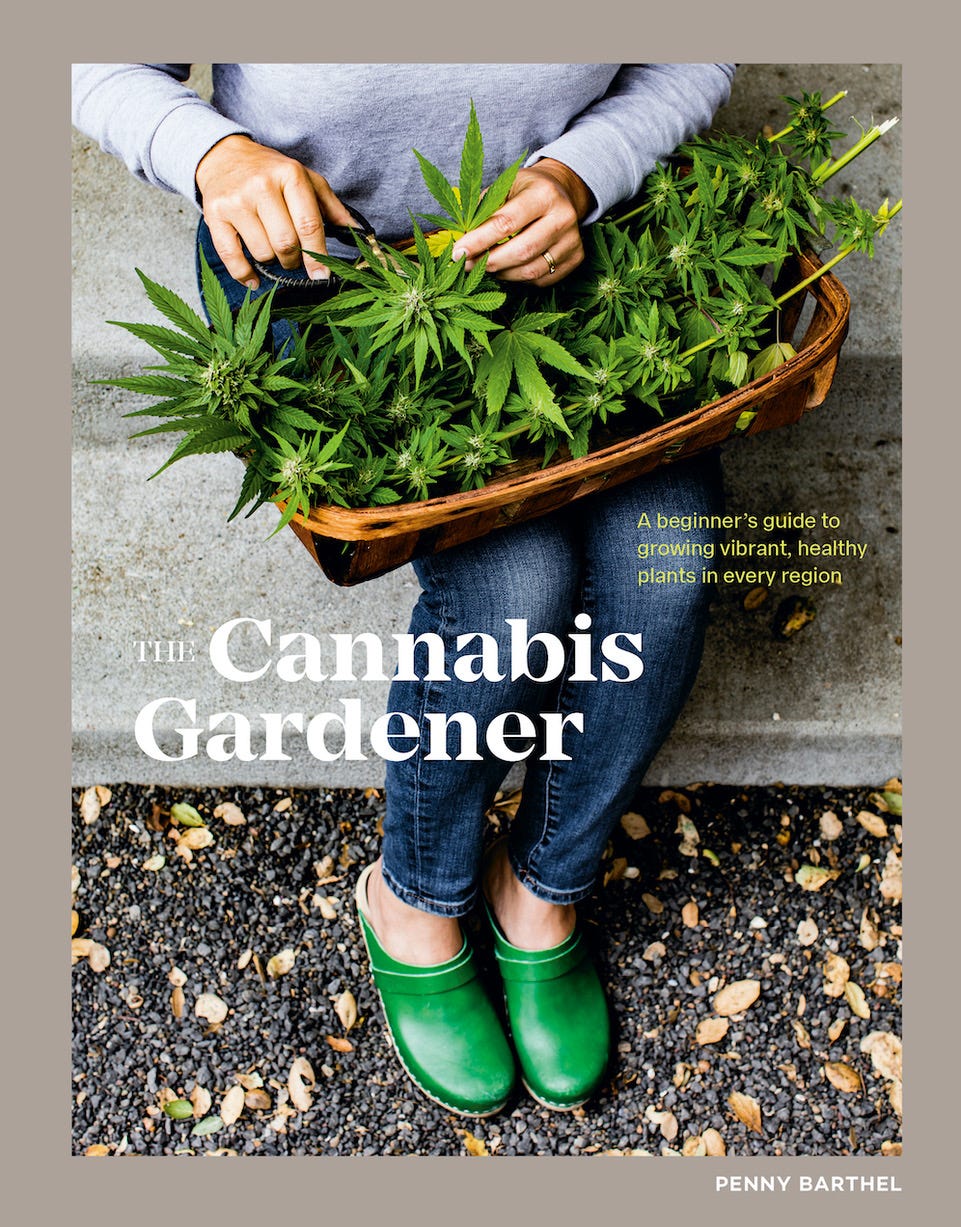
No, it’s not to late, you have until Father’s Day, June 21st to plant your seeds to assure a fabulous crop for fall harvest. Sign up here to attend our second class to be sure to grow your best crop ever, and even start seeds during the class. And June is also the time we can start harvesting flowers and foliage, and enjoy classes in distillation of herbal essential oils,
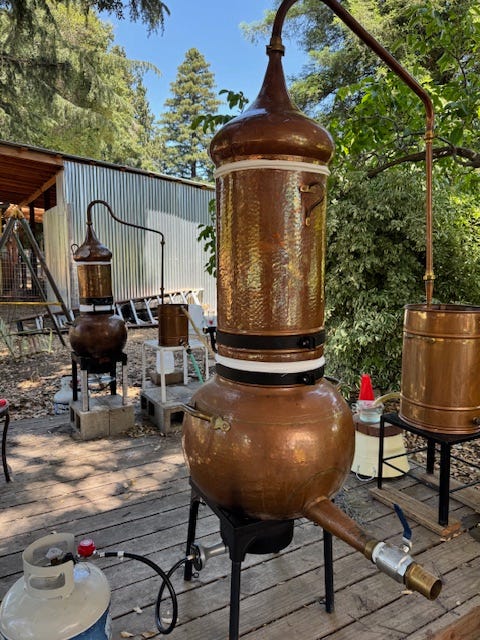
and also a new class to learn what to do with herbal hydrosols, also known as flower waters.
____________________________________________________________________________
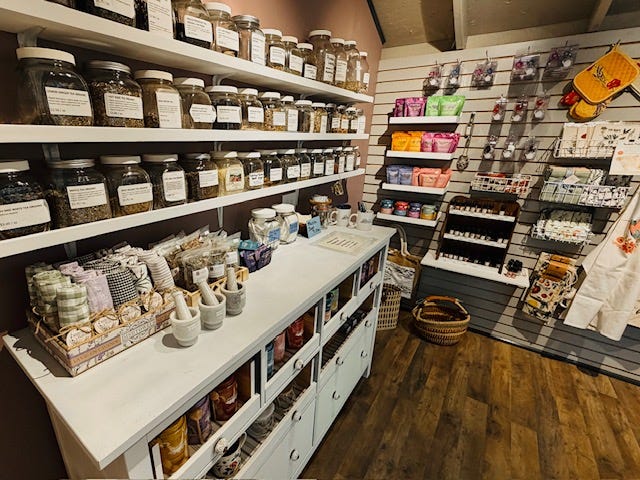
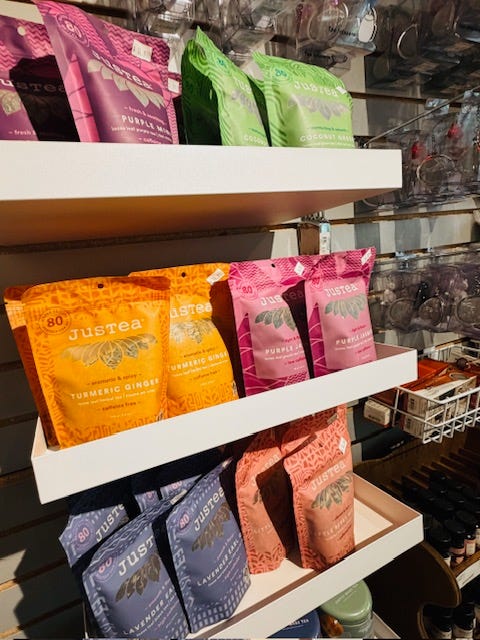
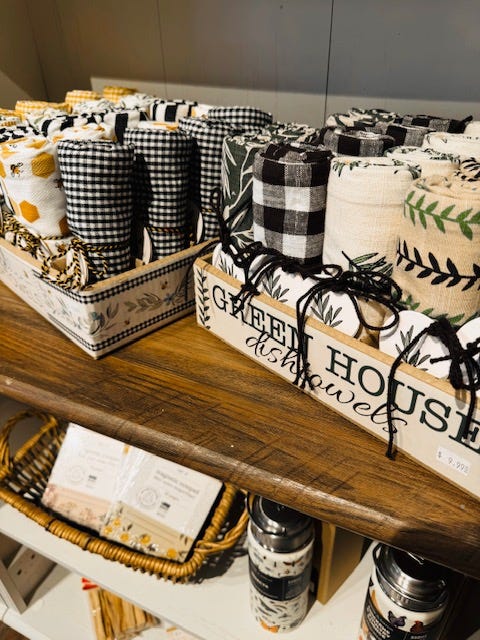
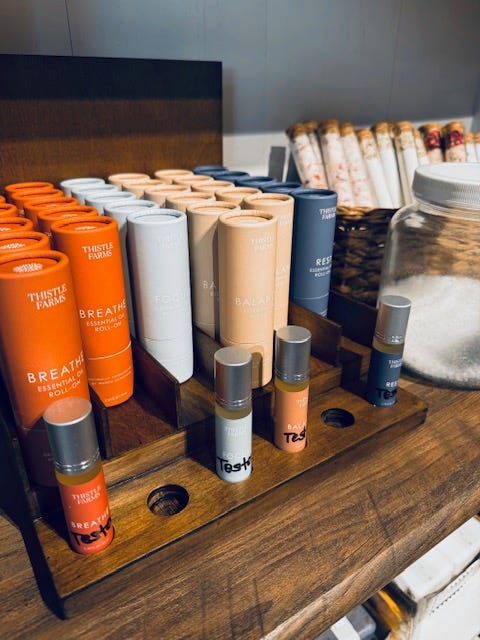
Be sure to check out our updated gift shop, with new paint, new flooring, and cute new herbal and gardening items. We have been working on it since early January, and we think you will find it much easier to shop and full of great new items for you and for gifts!
No posts
Comments
Nothing yet. Say the first thing.
Sign in to join the conversation.