
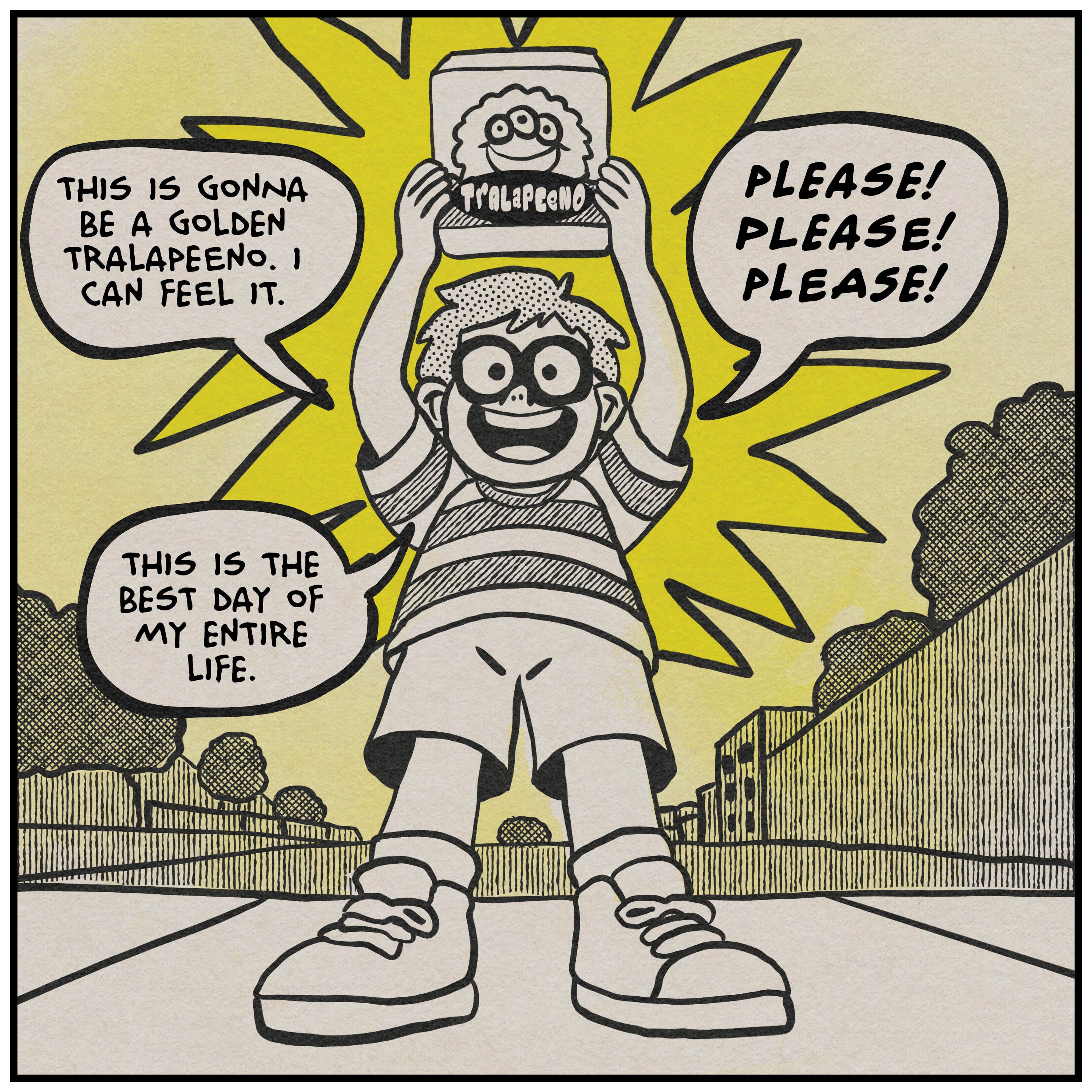
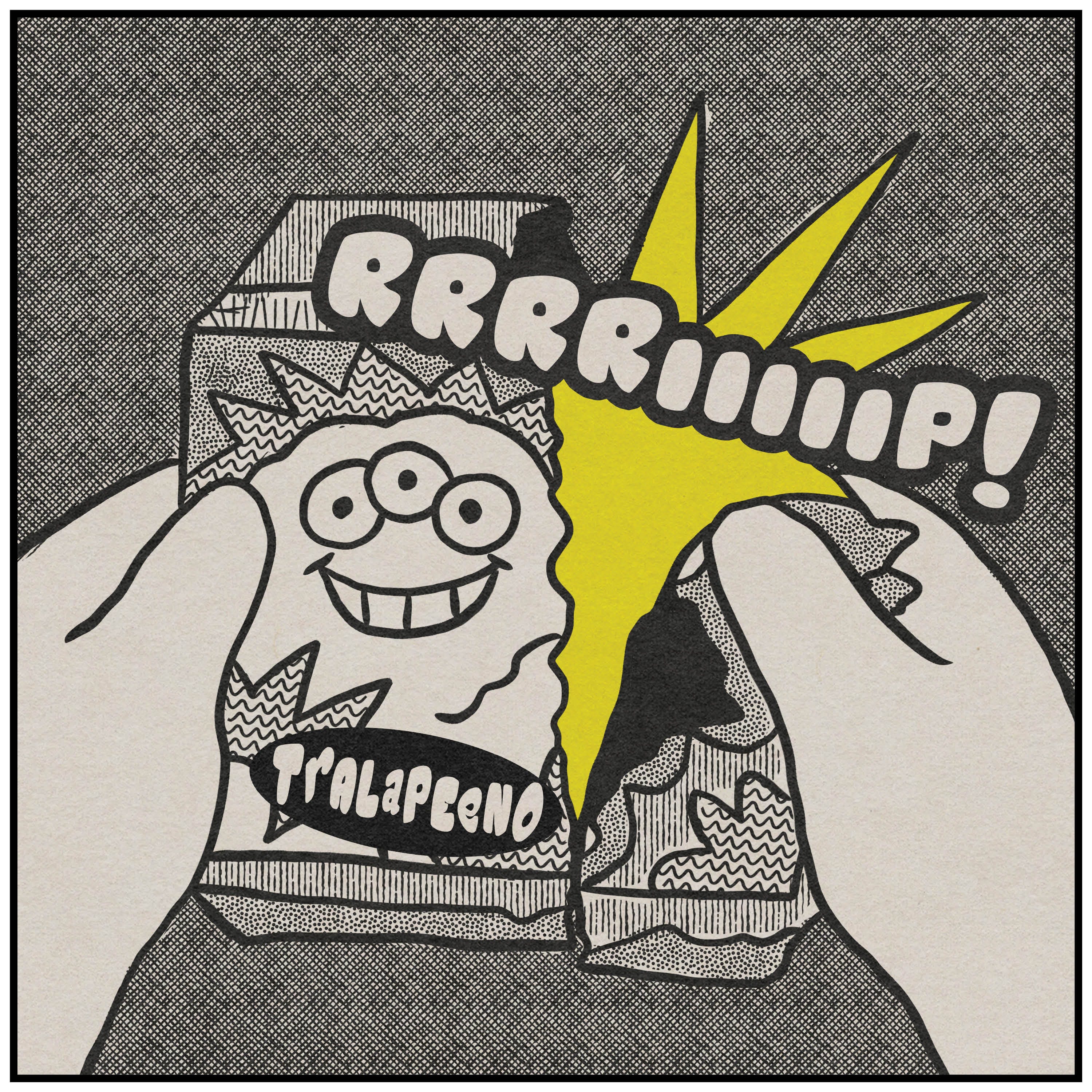
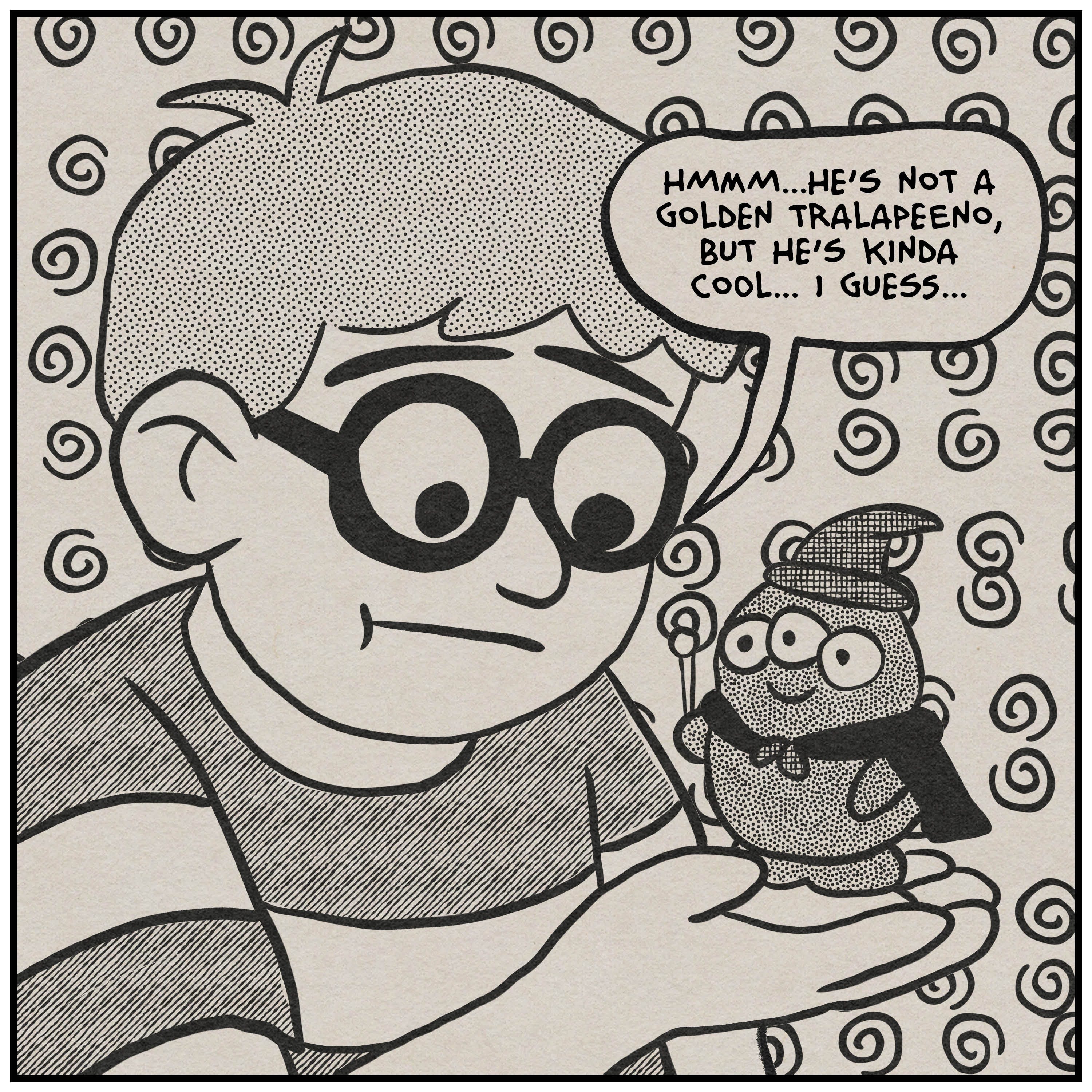
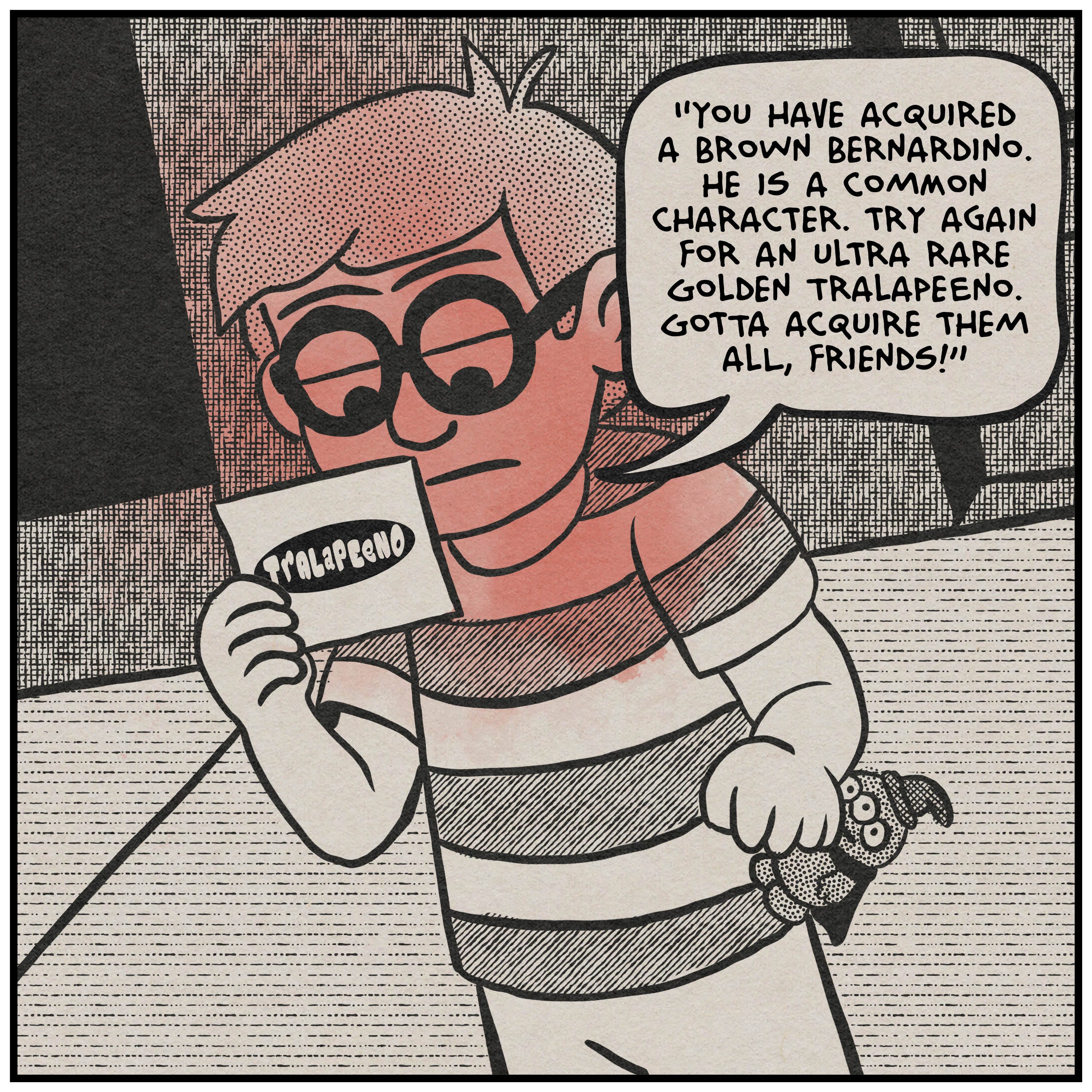
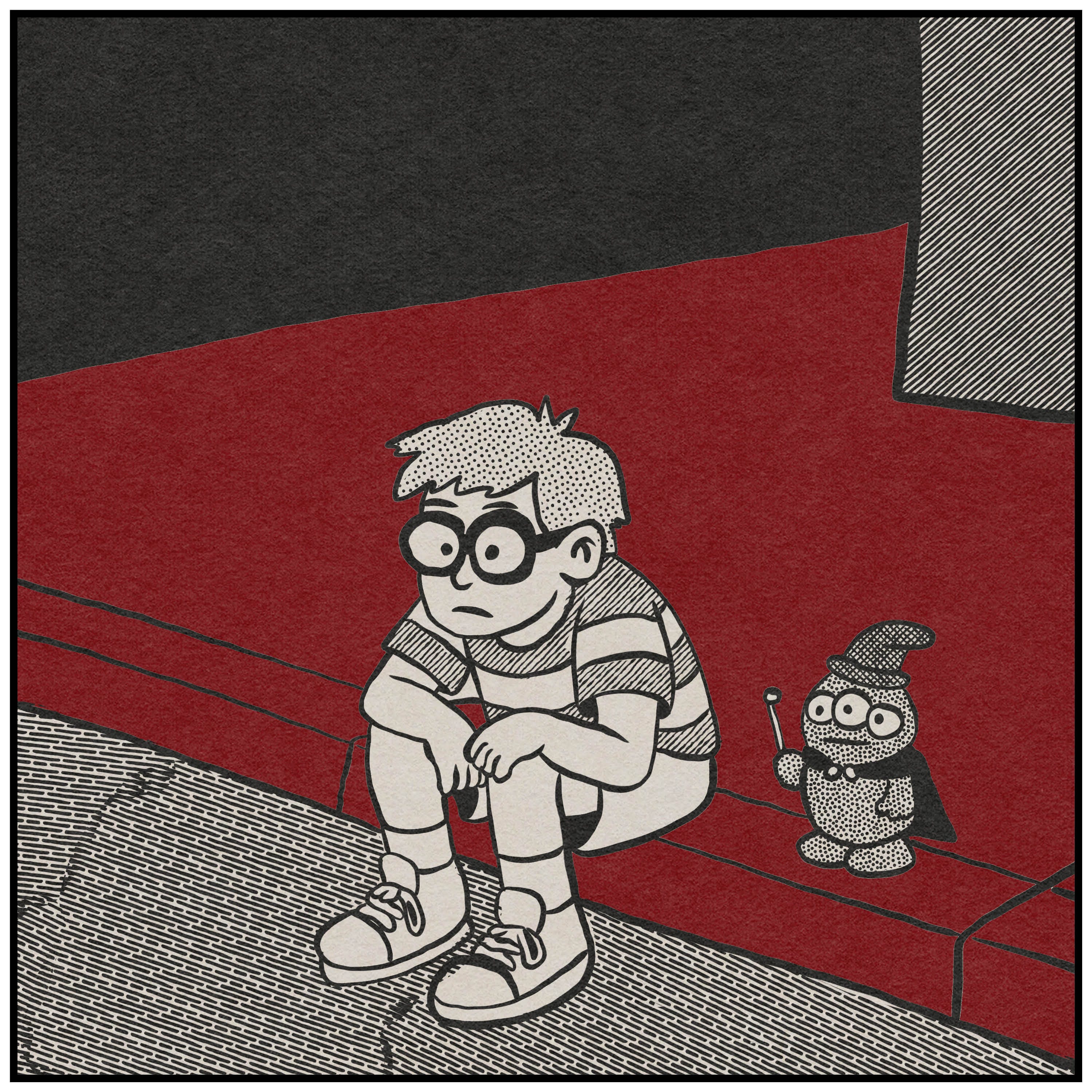
Last week, my seven-year-old nephew was staying up at the farm. And on Wednesday, we ended up at the comic book store. He had money saved, and he wanted a pack of Pokémon cards. He was hoping for one very specific card. (Charizard?) The boy was literally singing as he paid the cashier for the card pack.
As we walked outside, but before we made it back to the car, I watched him closely as he opened the pack. I felt horrible about what I witnessed next. His excitement was sky-high. And then, suddenly, magically, it looked like somebody had just run over his dog. The ultra rare card he was hoping for wasn’t there. It was heartbreaking. He’d been saving his money. He plunked it down. He was happy with the purchase before he opened the pack. He was nervous as he ripped through the mylar wrapper. He was miserable after he reviewed his newly acquired trading cards. He barely looked at them. That’s the detail I can’t shake. He wasn’t holding a handful of cards. He was holding the absence of one.
That’s when a wicked dark thought crossed my mind: is he collecting trading cards, or is this just training wheels for gambling?
Small children are hardwired to be the perfect gambling demographic. Back in 1980, a developmental psychologist named John Weisz ran an experiment where kids drew cards blind from a shuffled deck. It was a game of pure chance. But the kindergartners playing didn’t see it that way. They believed the outcome depended on how good you were: your skill, your age, your competence. To a little kid, being lucky is something you are, the same way you’re tall or fast or good at spelling. Older kids figure out the deck doesn’t care. Little kids haven’t yet. Researchers call it the illusion of control, and it runs strongest in exactly the age group with allowance money in their pockets.
Magical thinking has a real lock on kids. It’s one of the few advantages kids have in this world. It’s the trait that sends them out the door to explore, take chances, and become the person they’re meant to be.
That’s why the Pokémon incident felt so rotten. That trait, the optimism of childhood, is precisely the thing these products are engineered to harvest. A blind pack doesn’t work on someone who understands odds. It works on someone who believes he’s lucky. The business model runs on the exact psychological feature that’s supposed to be powering him somewhere better.
And I can’t pretend this is confined to the card aisle. The same mechanic was waiting for him at Walmart a few days later, molded in plastic on an endcap. Blind box toys, $7.99 a pull, rare figures and common ones, all the mystery manufactured at the factory. It’s waiting for him in every sport he’ll ever watch, too. His older brother is always asking to purchase online loot boxes in Roblox.
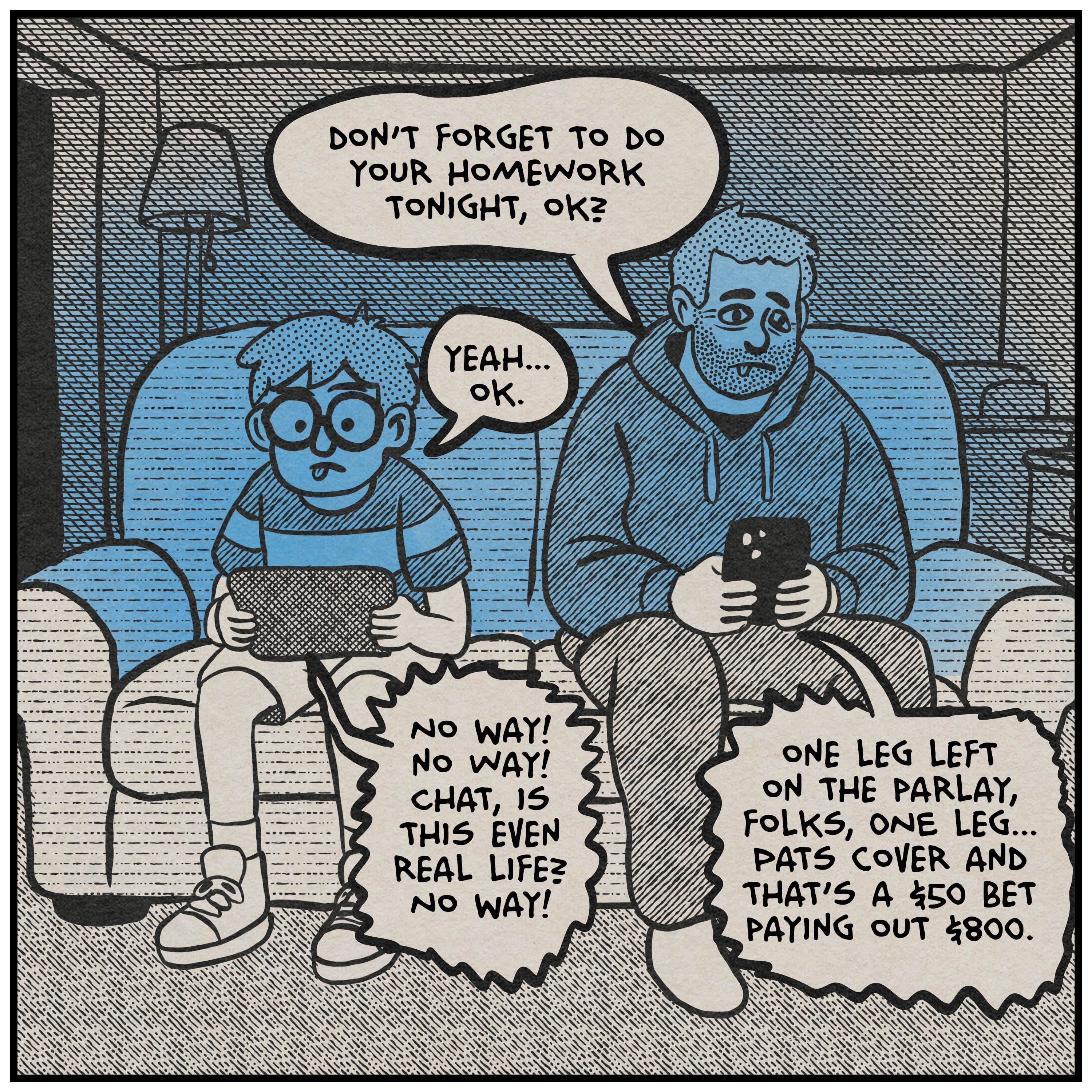
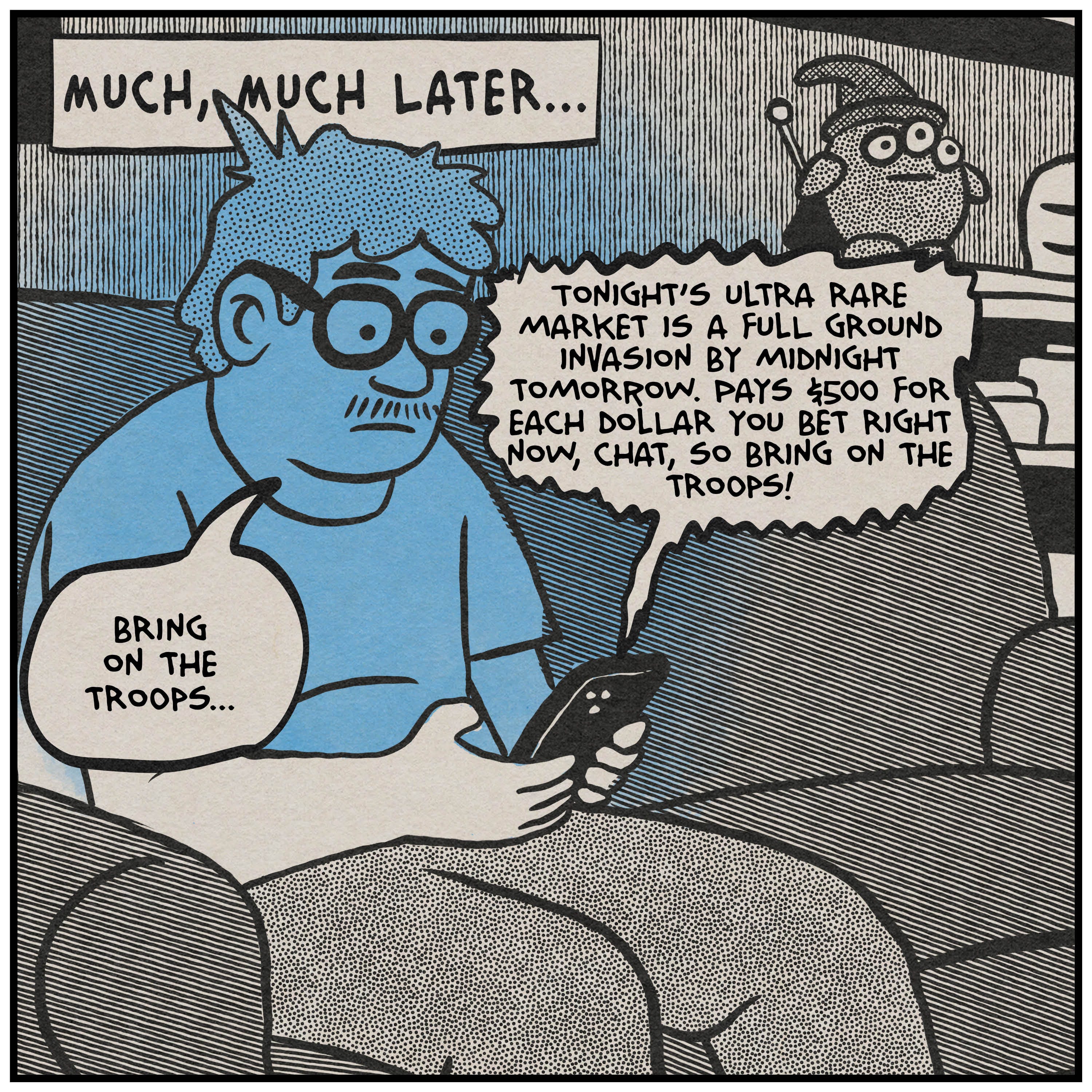
The through-line from the foil bag to the Polymarket position is not a slippery-slope argument. It’s a product roadmap. When you open up the possibility of every outcome being financialized, every outcome will be financialized. And financialization overwhelms everything else. We’re living in a world right now where human tragedy is a profit opportunity. And once that starts happening on a regular basis, you start to question the motives and outcomes of virtually everything. Everybody, everywhere, has a potential opportunity and motivation for profit.
When viewed in aggregate, it’s hard not to see my nephew’s pack of cards as training wheels.
I say that as somebody who collected. Baseball cards. Garbage Pail Kids. To this day, nothing brings me more joy in life than finding a 1989 Billy Ripken F*Face card. But when I opened a wax pack of Topps, whatever came out had somewhere to go. Doubles got traded with friends at school. Odd cards got me closer to completing the set. The rarity was a byproduct of the hobby. Now the rarity is the product. The manufacturer decides what’s scarce and what’s common, which figure has value and which doesn’t, and how to tune it all to drive the next purchase. They’re milking kids for transactions.
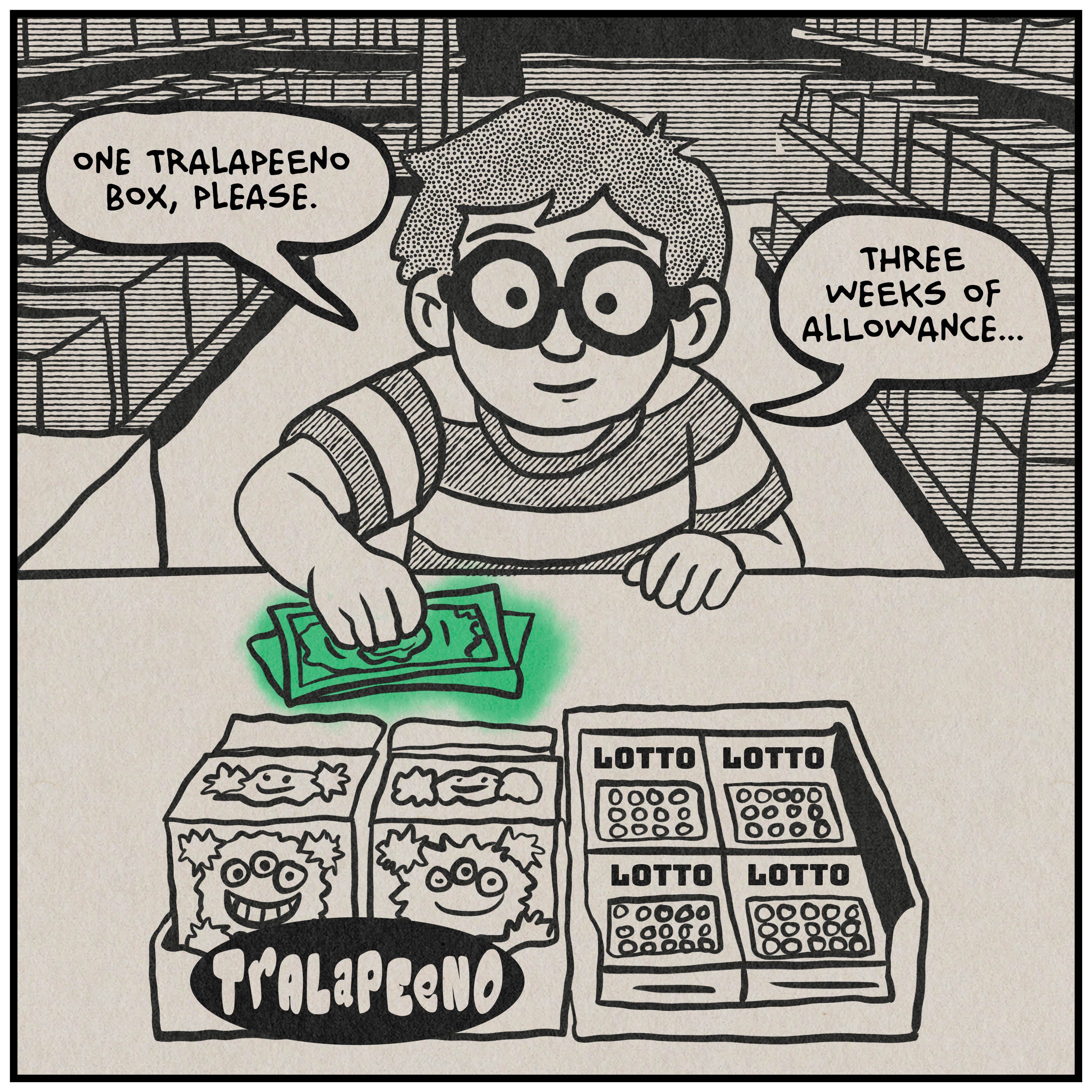
So when my nephew plunks down his hard-earned money to buy a pack of Pokémon cards, if he’s not actually buying the cards for the sake of the cards, what’s he actually buying? The other day, at the comic book shop, my nephew bought an experience about two minutes long. The walk from the shelf to the register. The anticipation at checkout. And then fifteen seconds of opening and flipping. That’s the product.
And the worst part is what it does after. It leaves a kid evaluating what he got against what he didn’t get. Not appreciating the thing in his hands — measuring it against the thing in his head. That’s how a gambler thinks.
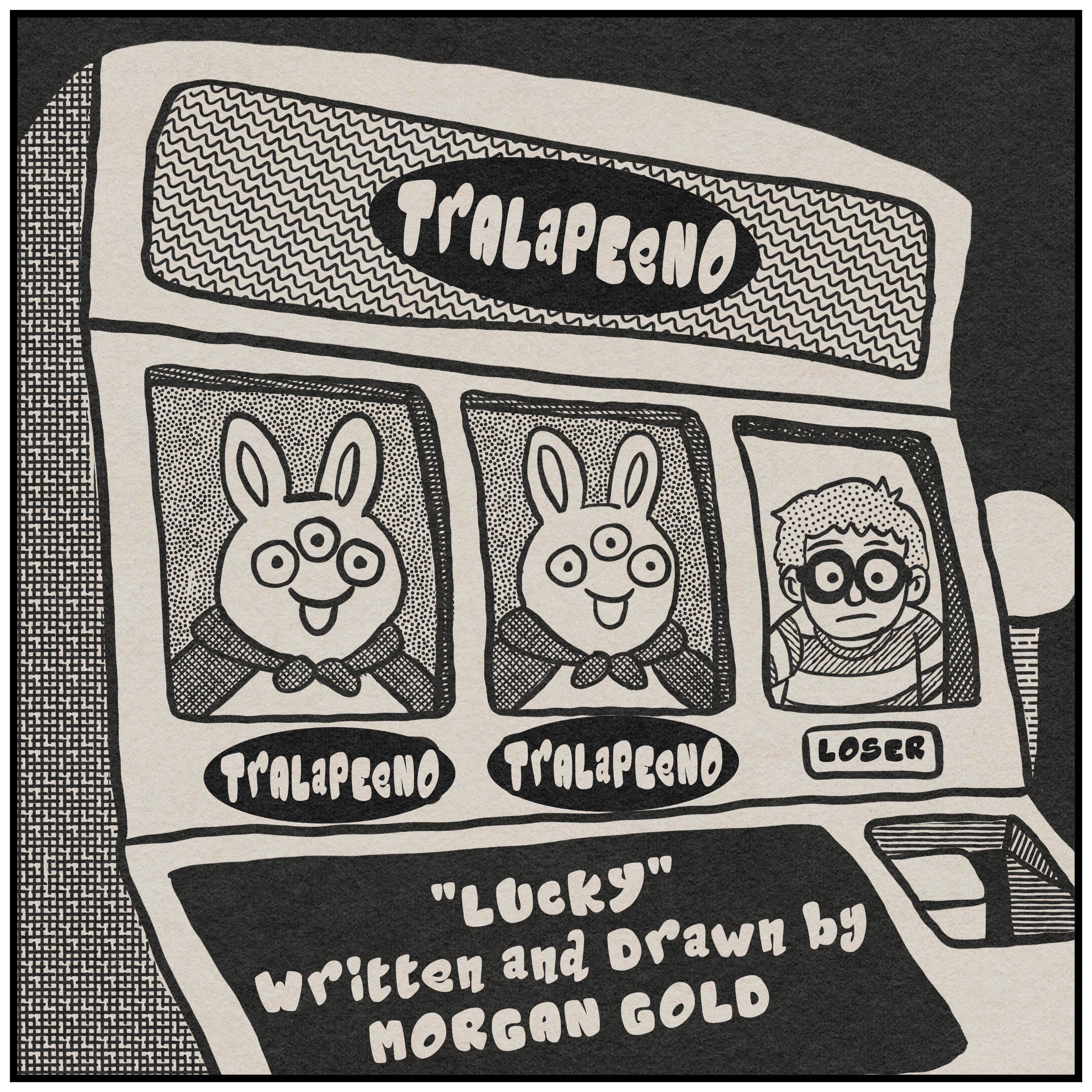
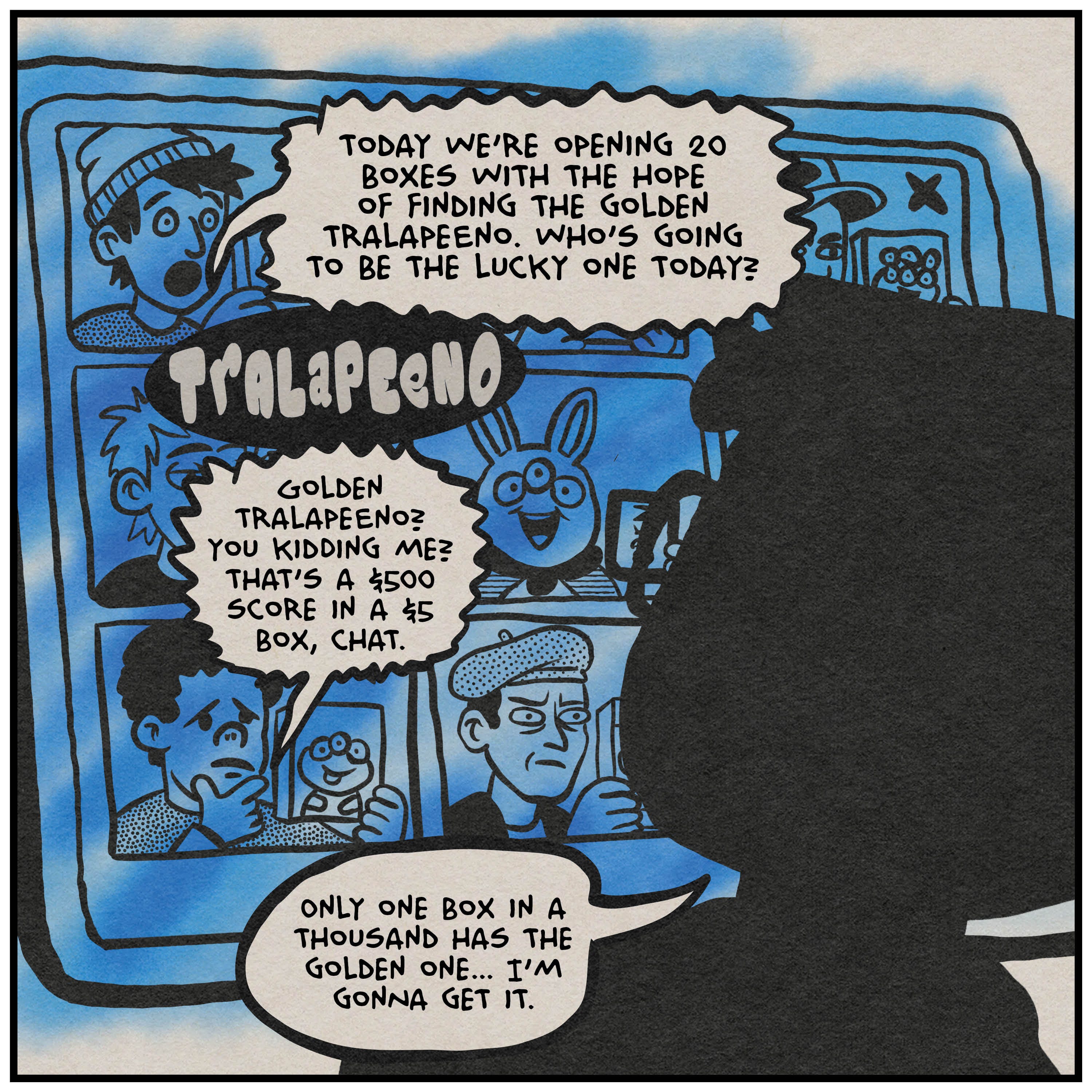
I’m overly proud of this week’s comic. Because I publish on a weekly schedule, sometimes it can be a little hard to get the comic right. Do I feel like I’m telling the story the right way? Am I making it visually interesting? Does it have a worthy message? It’s not always easy. But since I feel like it’s important to publish on my set schedule, some weeks are a struggle. This was not one of those weeks. This was one of those weeks where the moment I saw my nephew in the parking lot, the idea for the comic hit like a lightning bolt.
I will also confess that I had way too much fun coming up with the idea of Tralapeeno. I’ve been fascinated with kids’ fascination with Italian brain rot. A few months back, I was talking to my friend’s sons about brain rot and the economics of brain rot within Roblox. That was definitely the guiding North Star I used when I designed Tralapeeno and Brown Bernardino.
Allison and I were on vacation in New Brunswick and Nova Scotia last week. Canada’s a really good place.
Thanks for reading Stories Told by Morgan Gold! This post is public, so feel free to share it. And if you share it, there’s a 4% chance that you’ll confirm that aliens exist and that all of the Charizard cards are fake.
No posts
Comments
Nothing yet. Say the first thing.
Sign in to join the conversation.