
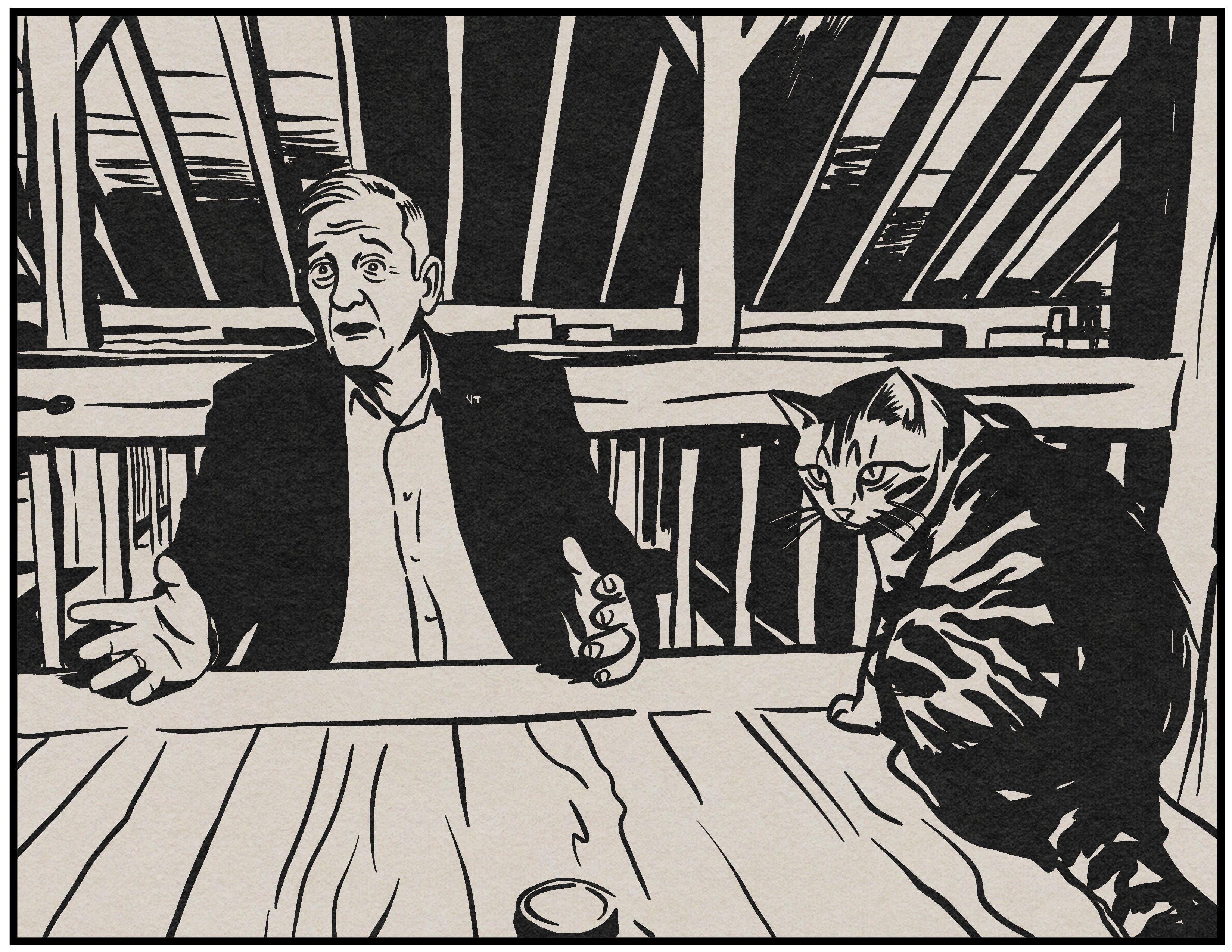
MORGAN: You haven't seen it?
MALLOY: No.
MORGAN: Really? Just, like, quick. I'm curious. I wanted to get your take on it. You don't even want to put your eyeballs on it?
MALLOY: I think it's — you know, you can do whatever you want.
MORGAN: If you're uncomfortable, I don't want to make you uncomfortable.
MALLOY: I just don't want to watch his ads.
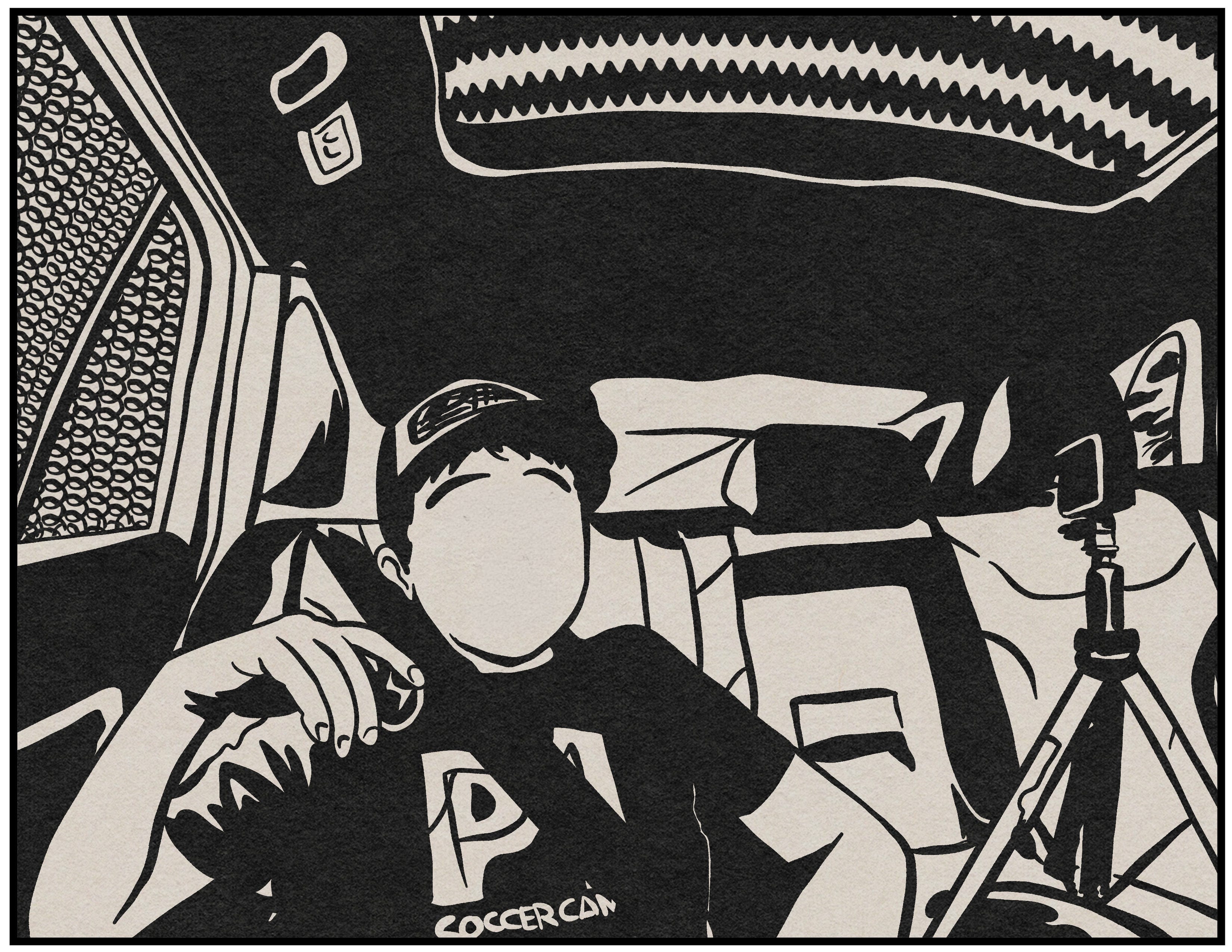
NEPHEW: Today, we are going to head to the radio station, and we're going to ask some people some questions.
MORGAN: Yeah, that's right. What do you think's going to happen when we're asking questions? How do you think it's going to go?
NEPHEW: Well, I'm pretty sure what's going to happen is, like, things are going to start out smooth, and then they're going to get bumpy, and then they're going to get slow.
MORGAN: You think it's going to go bumpy?
NEPHEW: Tiny bit. Yeah.
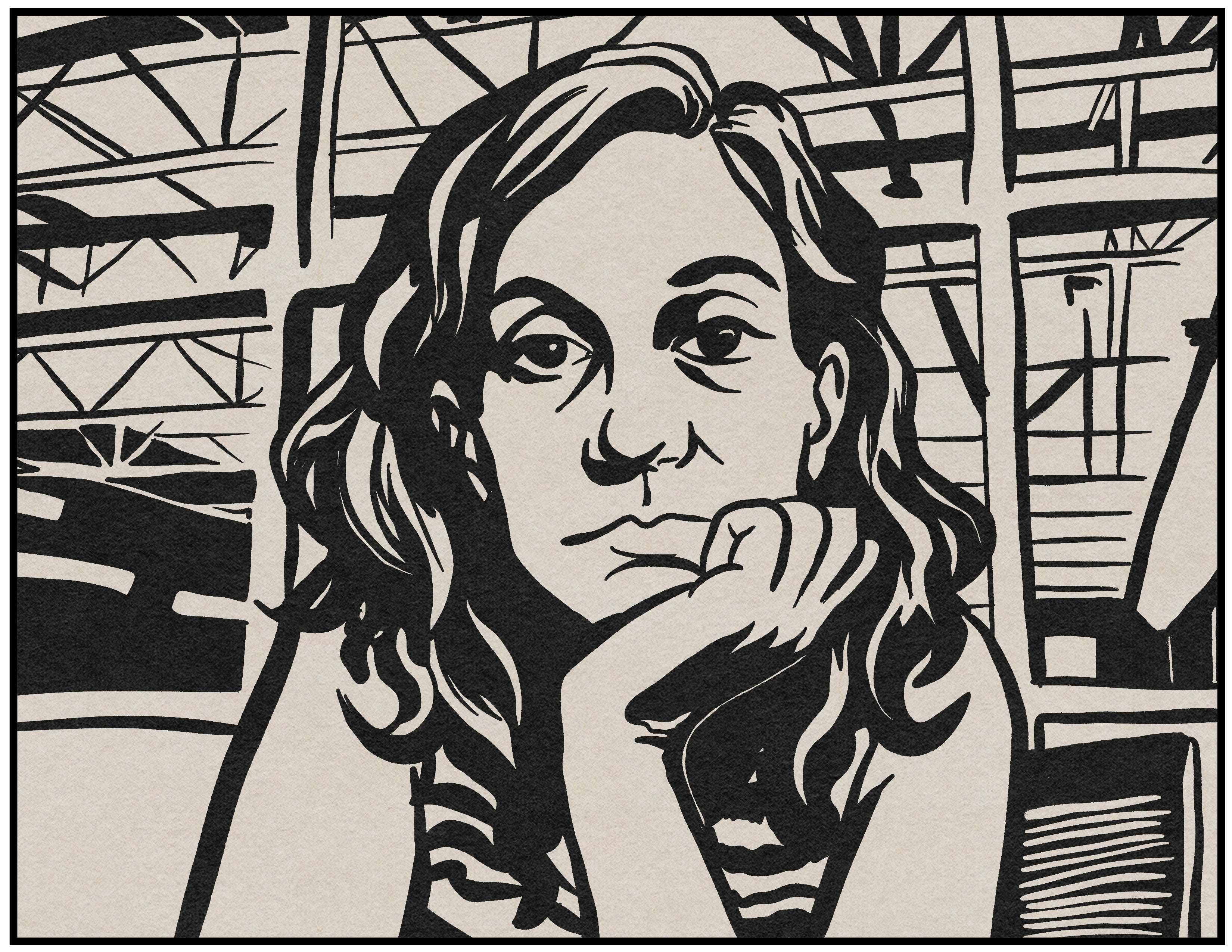
MORGAN: When somebody's actively hostile, it seems like it's harder to be fair.
LEFRAK: Yeah — yes and no. Sometimes I think, for me personally as a journalist, sometimes it's easier to be in that position than it is to be with a politician who talks real smooth and real nice, and ends up saying nothing. Just like the public can be blindsided by that, you know, a journalist can too.
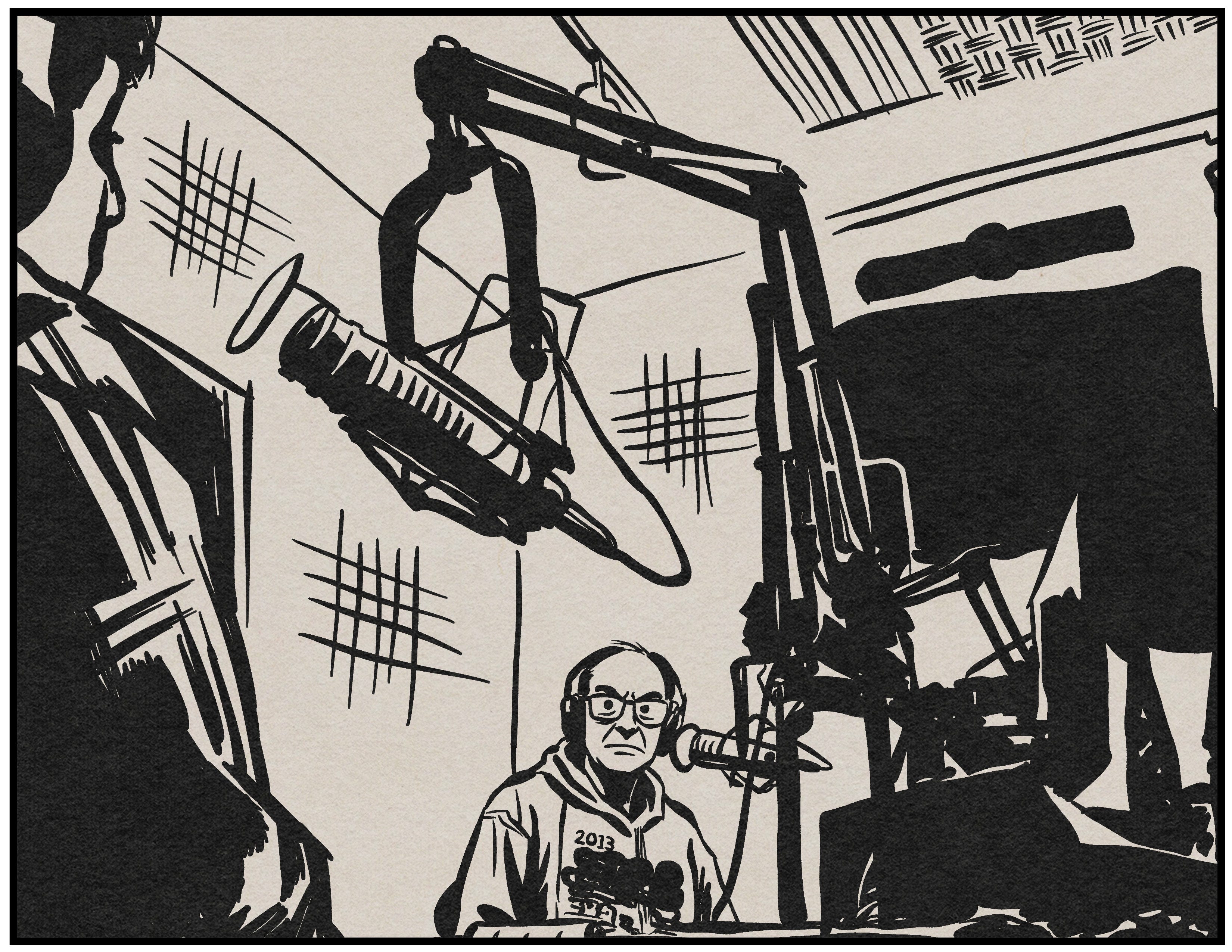
MORGAN: How do you be fair when you know you don't agree? Has that ever been a challenge for you?
PAGE: Sure it is, all the time, and I'd be lying to myself if I said it wasn't. The thing I try to do to get around that is I try to empathize. I try to think, what really matters to this person, and how are they seeing the world? And maybe sometimes I succeed, and sometimes I don't.
MORGAN: Do you think the rest of Vermont media does?
PAGE: Some. Some not.
COESTER: I mean, it's very common for a guy to, like, grab somebody's ass, right? It's not necessarily appropriate, right? But it's very common.
MORGAN: Yeah. Absolutely. Right.
COESTER: And it requires very little effort.
MORGAN: But isn't that something, like, the president himself has said in the past — that he would do that, or that you could do that? Or am I just taking the bait by even asking that question?
COESTER: Probably. You're taking the bait.
On Thursday night, I turned on The Daily Show and saw a guy I know.
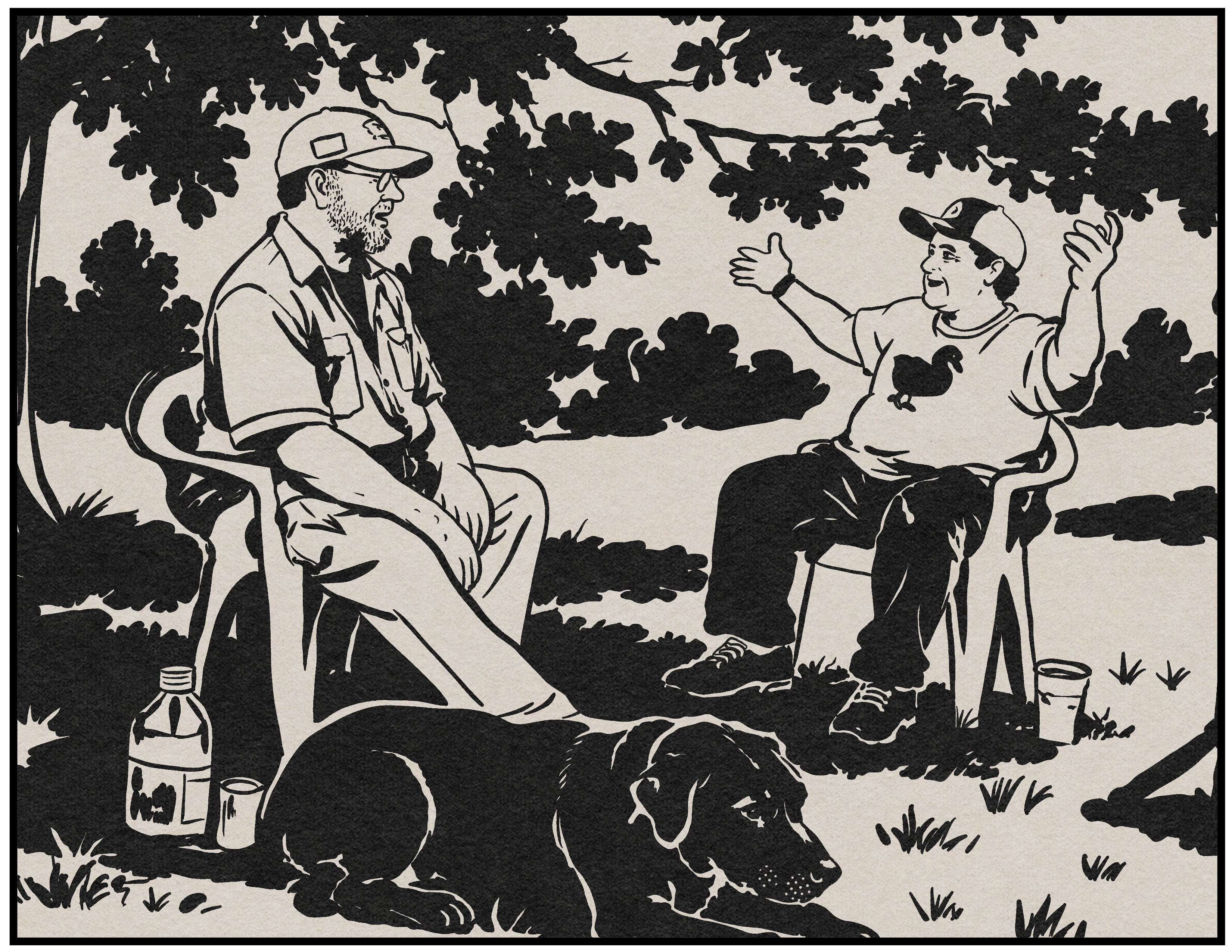
Just the day before, I’d spent four hours talking with him in his dooryard, under the shade of a maple tree. Now here he was on national television, getting made fun of for poor spelling.
But I guess it’s just been one of those summers.
The guy’s name is Mark Coester. He’s a logger who says exactly what’s on his mind and couldn’t care less what anyone thinks about it, and he’s one of two Republicans running for Vermont’s lone seat in the U.S. House. That seat is held by two-term Democrat Becca Balint. She’s expected to win reelection comfortably this fall, but first, Republicans have to choose a nominee. The other candidate in that primary is Gerald Malloy, a retired military officer and defense industry executive who moved to Vermont in 2020.
The reason I was standing in Coester’s dooryard is that for the last several weeks, I’ve been working on a new documentary. It’s about politics again. This time, though, it’s about people I don’t usually spend much time thinking about: Republicans.
It’s not because I’d call myself a Democrat — or even particularly political. I care about what happens where I live, and I care about what my government does, but there’s a modern of making politics a core part of your identity. I don’t think that’s a good thing.
But despite this aversion, I decided earlier this spring to interview as many candidates running for statewide office in Vermont as I could. Elections matter, and I wanted to give voters a chance to hear from the people asking for their vote.
Last month, I released interviews with Amanda Janoo and Aly Richards, two Democrats challenging five-term Governor Phil Scott in this year’s gubernatorial primary. I focused on the challengers because incumbents already have enormous structural advantages. If elections are going to be competitive, challengers need opportunities to introduce themselves beyond a thirty-second sound bite on the Six O’Clock News or a Reel that people scroll past.
Writing about the Governor’s race was the easy assignment. Honestly, I could picture voting for either of those candidates. I think they’re both smart, capable people. I don’t agree with either of them about everything, but I wouldn’t have felt like I was holding my nose if I had to vote for either one.
The harder assignment came next.
Sitting down with Mr. Malloy was pretty straightforward. My conversations with Mr. Coester turned out to be… more complicated. That afternoon under the maple tree, we probably could have kept talking well past the four-hour mark, but my camera batteries died. All of them. And I bring a lot of freaking batteries.
And while I was filming, the race took an unexpected turn.
Supporters of Mr. Coester circulated an AI-generated video showing Congresswoman Balint being scooped up by an excavator and dumped into a dumpster. Vermont’s Attorney General opened an investigation because the state recently passed a law regulating undisclosed AI-generated political advertising.
When the story first broke, it felt like just another strange local political story. Then The Daily Show got hold of it. Their video was about artificial intelligence in politics and featured an AI video starring Mark Coester and Becca Balint. They even pronounced Coester’s name right, which, if you listen to Vermont media, is a much harder task than you might think.
Ordinarily, I make videos about my farm—the triumphs and disasters of livestock guardian dogs, learning how to raise cattle, or the adventures of a barn cat running around with a GoPro strapped to its neck. But over the last several months, I’ve found myself making more and more political videos.
Partly because I think someone should.
The media plays a critical role in a democracy. When I was talking with Mr. Coester, he called it the fourth branch of government. I wouldn’t use that exact phrase, but I agree with the idea behind it. Call it whatever you want, but good reporting keeps things honest. Good journalism gives voters the information they need to make decisions and holds the people in power accountable to the rest of us.
In 1976, Gallup asked Americans a simple question: do you trust the press to report the news fully, accurately, and fairly? 72% said yes.
That was the high-water mark. The timing of the poll tells you why. Watergate was barely in the rearview mirror. Nixon had resigned in disgrace. All the President’s Men was playing in theaters. Reporters were, briefly, the heroes of the whole American story. If you grew up in that moment, the press wasn’t just another institution. The press had the job of holding people in power accountable.
Ask people today what happened between then and now, and most will give you a one-word answer: Trump.
But I don’t think that’s the whole story.
Trust was eroding for decades before anybody rode down a golden escalator. The 2000 election was the first time in living memory that half the country decided the other half had stolen something, and the partisan gap in media trust cracked open the very next year.
In 2004, CBS ran forged memos about George W. Bush’s military service and had to apologize, one year after the press was complicit in letting the country into Iraq behind weapons of mass destruction that didn’t exist. Conservatives saw a press that smeared their president. Liberals saw a press that sold them a war. Trust in the media never saw a majority again amongst Americans.
The Fairness Doctrine, the federal rule requiring broadcasters to air opposing views, died in 1987. Rush Limbaugh went national the next year. Fox News launched in 1996 as a third-tier cable channel and remained that way until September 11th. Within months, it passed CNN, and it’s been the most-watched cable news network in America ever since. By the Obama years, saying you watched Fox told people more about you than saying where you went to church.
You can’t blame Donald Trump for any of that. In the spring of 2011, Donald Trump’s most consequential action was firing Gary Busey for The Great Omaha Steaks Disaster.
In 2000, 53% of Democrats and 47% of Republicans trusted the media. Statistically significant but not insurmountable. In 2016, Republican trust fell from 32% to 14%. Fake news started out as a term for hoax stories Macedonian teenagers wrote for ad money. Within weeks, a president-elect turned it into a label for any story he didn’t like. “Alternative facts” and “enemy of the people” were also some early Trump 1.0 bangers. Rush Limbaugh spent decades telling his audience the press was biased. Trump told them it was fake. When something’s biased, you’ll try to argue with it. When it’s fake, why bother?
So was it Trump? Kinda sorta.
In 2005, American newspapers took in $49 billion in advertising. By 2020, it was under nine billion. Seven out of every eight dollars, gone in fifteen years. And the kicker is that advertisers didn’t stop spending. They spent more than ever. The money just moved, and most of it moved to two companies, Alphabet and Meta. Neither one employs a single reporter.
Today, there are 208 counties in the United States with no local news source at all, and another 1,563 down to their last one. That’s nearly 55 million Americans living in the dark. Like the now-zombified corpse of the Washington Post tells us, “Democracy dies in darkness.”
The advertising dollars that used to sustain the cost of fully staffed news desks and months-long investigations now pay for social media feeds. An editor, whatever their sins and biases, was trying to tell you what happened in your town. The algorithm’s only job is to keep you scrolling.
And I say all of this as a guy whose main paycheck comes from the algorithm gods. Which is why I undertook this whole “interview the candidates” project in the first place. I do feel a sense of guilt about the state of the world.
In 1980, 52 million Americans watched the same three evening newscasts every night. One in four people in this country. Back then, they disagreed plenty. But they were disagreeing about a shared set of facts. By 2019, it was down to about one American in 14, and the rest of us were scattered across a million feeds, each one tuned to what we already believed. You can’t compromise with someone when you can’t agree on what even happened on Tuesday.
By the end of the 2010s, the American media ecosystem was on life support. Then 2020 broke the whole thing apart.
In the span of 18 months, a lot of crap happened at once. COVID claims. Election claims. Accounts got pulled. Channels and creators got demonetized. A sitting president got deplatformed. You can make a good-faith defense of almost any one of those actions. Back then, I made a lot of those arguments myself. But argue each case one at a time, and you miss what happened in aggregate: the people who got pushed off the big platforms didn’t go away. They built a parallel media universe.
Rumble, a video site most people had never heard of, grew from 1.6 six million monthly users in the fall of 2020 to 36 million a year later. It had sprung up as an off-brand YouTube alternative. But it wasn’t actually competing with YouTube. It was becoming YouTube for the other country: same format, same creator economy, different rules, different audience. A Pew study found that about three-quarters of Rumble’s news users are Republican.
Deplatforming was supposed to work like a quarantine. Remove the bad information to stop the spread. Instead, deplatforming worked like segregation. Before 2020, the two Americas at least argued in the same room. Now we often don’t talk in the same room. Different platforms, different stars, different advertisers, different narratives, different facts.
Different countries.
Which brings me back to that maple tree.
Mark Coester and I live in different media countries. He watches things I don’t. I read things he doesn’t. He has X-brain. I’m a recovering TikTok addict. If the last 50 years of this story tell you anything, it’s that the two of us aren’t supposed to be able to sit down together anymore. We’re not even supposed to agree on what happened Tuesday.
But for one afternoon in his dooryard, we did the old-fashioned thing. We sat in the shade and talked until every battery I had was dead.
The documentary comes out later this week.
Thanks for reading Stories Told by Morgan Gold! This post is public so feel free to share it. In fact, if you do share this post on social media, you will be granted 38 minutes of good luck. So probably the best thing you could do is share this post and then do something you’ve been avoiding and then buy some scratch-off tickets. If you share this post a second time, you’ll be granted 19 minutes of good luck. A third time? 9 1/2 minutes. Do you see how it works?
I originally recorded most of this week’s essay, particularly the parts about media and trust, as a scene in the documentary. It was this complicated explainer with lots of charts, and me talking on my porch. It got cut for time and pacing. The documentary is story and conversation-driven. It’s not really a video essay. I figured the work I did writing and researching that part of the video could be reused, and Substack would be a good place for it to live. Waste not, want not, friends. Also, I’ve been on a wicked time crunch, so it always helps when you can be lazy and not have to write more stuff.
The drawings for this week’s comic were also from the documentary. I based most of them on stills in the video.
No posts
Comments
Nothing yet. Say the first thing.
Sign in to join the conversation.