
Dear Morfollower,
Last month I was in Panama for a working group on post-fire restoration led by Conservation X Labs. “How do you reduce uncertainty before deploying capital in ecosystem restoration?” was one of the most recurring questions.
It’s a simple question in appearance. Four years ago, we started building an internal system to force ourselves to think differently, hectare by hectare, zone by zone. It started as a spreadsheet. Then a process. Then a platform. Today, it runs on every project we deploy across Amazonia, Mata Atlântica, and Cerrado. On sites where we’ve used it: 30–50% lower costs vs. uniform approaches.
Let’s grow!
Pascal Asselin, Co-founder & CEO of MORFO
When we started restoring at scale, we hit a wall. We had good science, good field teams, good tools, but we were still applying similar approaches across very different terrains.
So we started building. Over four years, we developed a system that plans restoration zone by zone. For example, on one 8,000 ha site in Maranhão state, we identified 21 distinct zones - each requiring a completely different approach. We recorded a video to show how it works - and how it could work for your projects too.
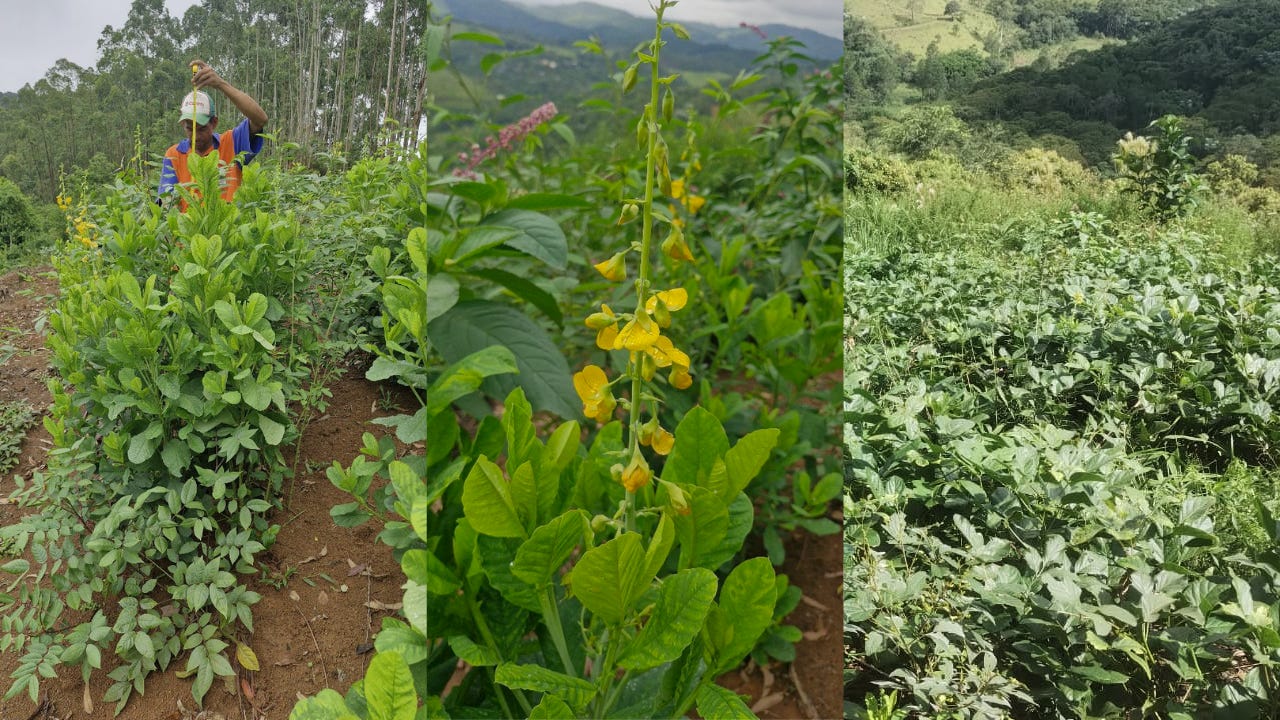
On one of our early projects in Mata Atlântica, that started in 2024, the planting season was closing and we didn’t want to miss it. So we skipped the diagnostic and went ahead with a uniform protocol. It didn’t work at all. The soil was far more acidic than expected, and Brachiaria regrowth invaded within weeks.
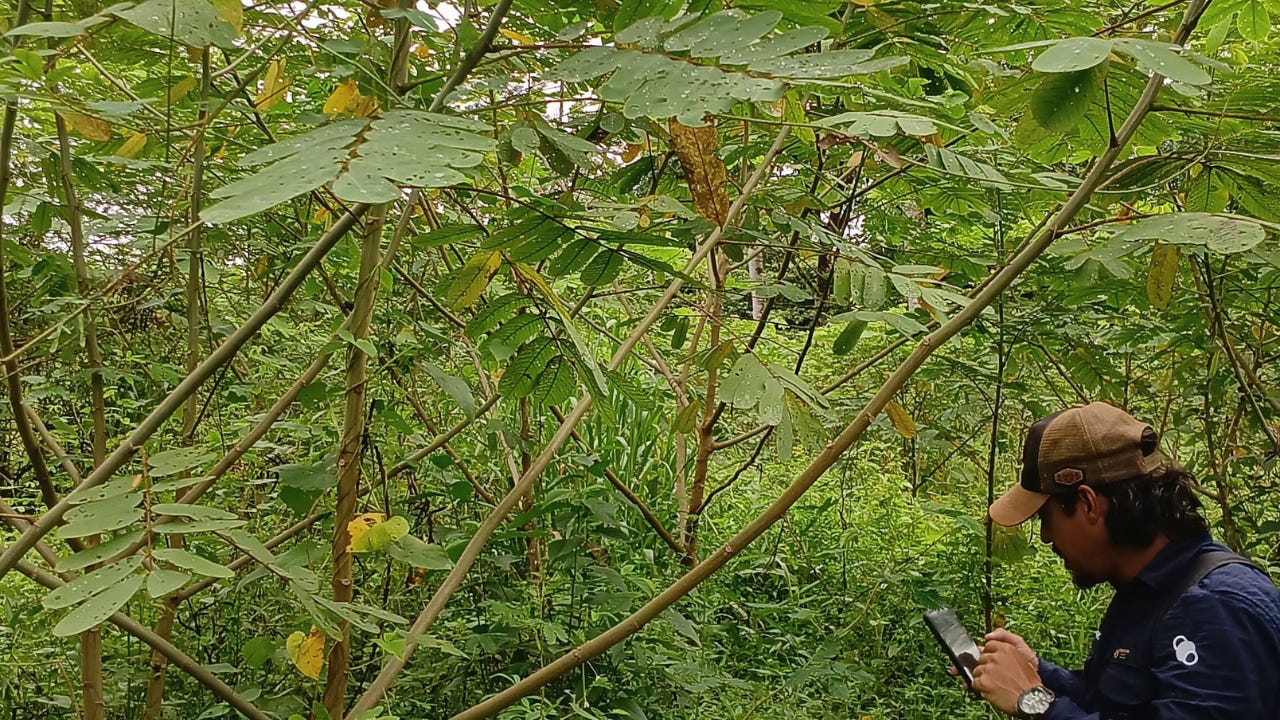
When we came back, we did it properly: soil analysis, pH correction, acid-tolerant species, line planting for mechanized maintenance, a dedicated field operator on site controlling regrowth on a recurring basis. This week, during our monthly team meeting, the results came in. The field team and our client now call it an “island of diversity.” One more proof that the diagnostic needs to come before everything else.
On one of our early projects in Mata Atlântica, which started in 2024, the planting season was closing and we did not want to miss it. So we skipped the diagnostic and moved forward with a uniform protocol. It did not work. The soil was far more acidic than expected, and Brachiaria regrowth invaded within weeks.
Good news: MORFO is a partner of the Bioeconomy Amazon Summit (BAS), happening May 12-14 in Belém. We’ll be speaking at several conferences, and on May 13 we’re organizing a new site visit.
Join us at BAS, and let us know if you’d like to visit the site.
Why soil is the forgotten variable in restoration. We published an article on how soil conditions drive cost differences between zones on the same site - and why skipping soil analysis is one of the most expensive mistakes in restoration planning.
How to get hired in reforestation. Pascal shared 9 things he’d tell anyone applying for a job in climate or nature right now. Worth reading whether you’re hiring or looking.
Drone vs. seedlings? Gregory shared his take on the debate (PT): there’s no superior technology, only the right choice for a given site. Some areas respond well to drone seeding, others need seedlings, others perform best with hybrid designs. The question isn’t “which method?” but “what gives this hectare the best odds?”
The ratio that stays with us. In 2024, fire burned 13.5 million hectares of forest. Roughly 200,000 were restored with real biodiversity. About 100 to 1. Pascal broke down the math using three independent methods.
If you’re looking at restoration economics in Brazil:
Orbitas: Room to Grow - USD 141 billion opportunity in Brazilian pastureland restoration over 30 years. 350,000 jobs annually. ROI up to 169%.
AlliedOffsets: Future Buyers in the VCM - 131,500 companies modeled for carbon credit purchasing likelihood. Forestry & Land Use projected at 51% of demand, up from 46%.
For carbon market watchers:
Carbon Direct: 2026 State of the VCM - Retirements fell 7%, but commitments surged 227%. ARR supply flat at 7-8 Mt with near 1:1 retirement ratio. Tight market.
CORSIA Phase 1 ending 2026 - 78M tonnes of demand expected. Supply constrained, prices around $21/tCO2e.
From the research side:
Biodiversity resilience in a tropical rainforest (Nature, April 2026) - 8,500 species tracked across 16 taxonomic groups. 90% of diversity returns within 30 years if secondary forests are protected. But recovery is uneven: seed dispersers and pollinators come back fast, soil communities take much longer.
Wildlife-friendly landscapes boost biodiversity in fragmented forests (PNAS, March 2026) - Two forest remnants of the same size can host twice as many bird species depending on the surrounding landscape. What’s around the site matters as much as what’s in it.
ETH Zurich: where you plant matters as much as how much - Strategically placed reforestation achieves the same cooling effect with fewer trees. Which hectares > how many hectares.
🌎 Thank you for reading MORFO’s newsletter until the end. If you enjoyed it, please share it with someone who cares about doing restoration right - hectare by hectare.
🇧🇷 Want to read our newsletter in Portuguese? Subscribe here.
To stay connected, click here!
No posts
Comments
Nothing yet. Say the first thing.
Sign in to join the conversation.