
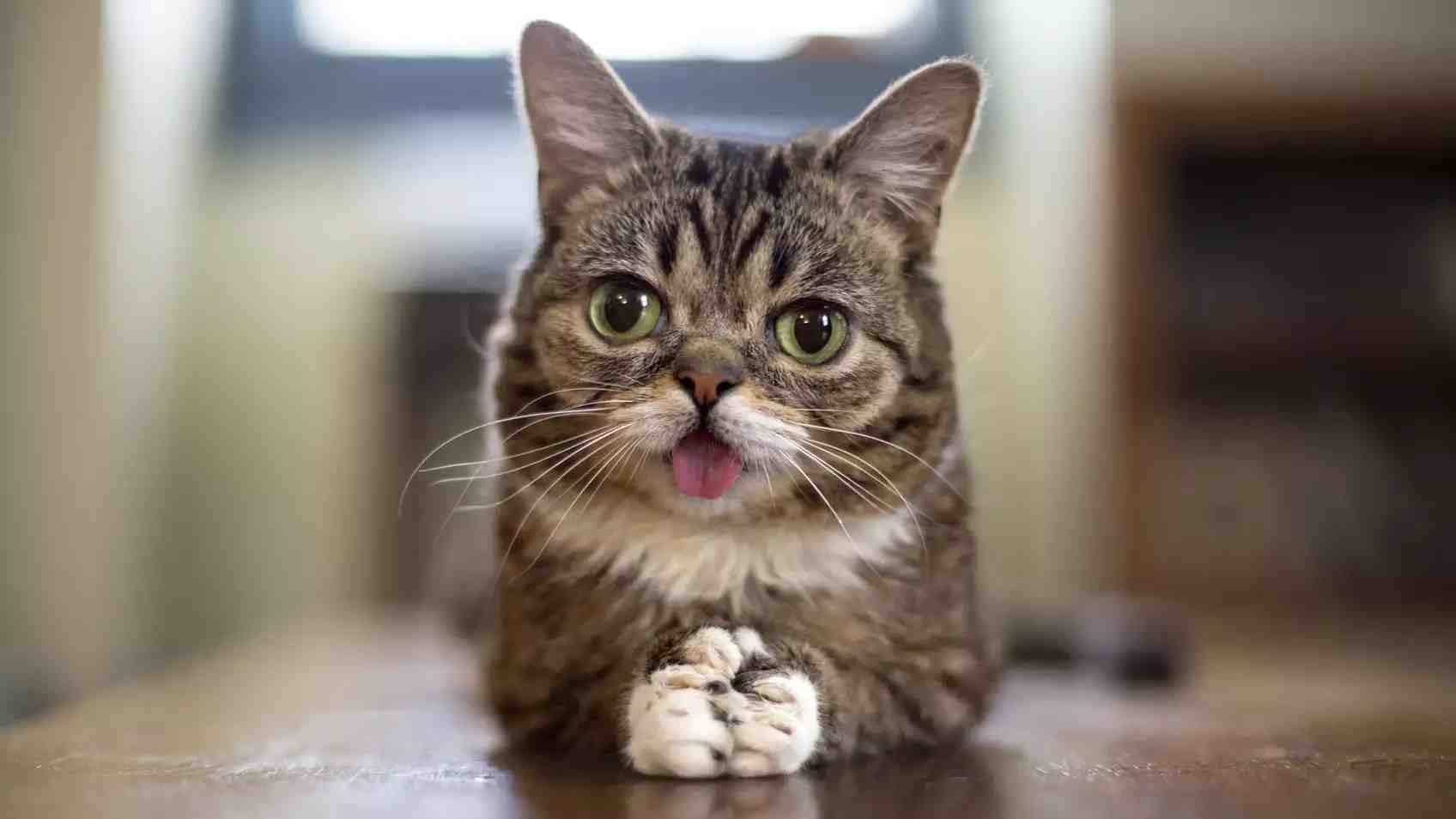
This is an article (rather than a blog post) I wrote in 2019, with the hopes of placing it in an outlet like Salon or The Atlantic. That didn’t happen, so I’ve decided to share it here. Although many different internet-famous cats have died in the years since, the emotional impact is the same for many followers.
Content warning: This article discusses the details of individual cats’ deaths, which may be distressing to readers. If you think it will upset you, please take care of yourself and don’t read further.
“911—call me ASAP,” the text read.
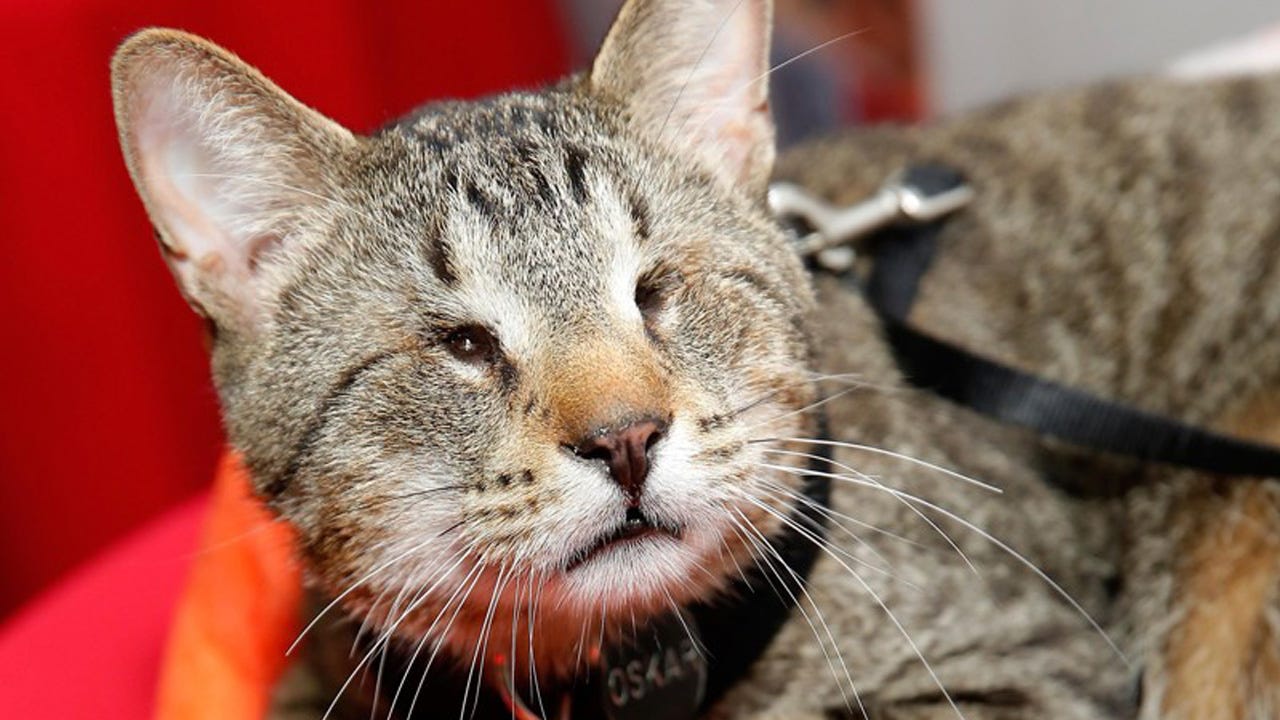
The morning had begun like any other. In a high-rise in downtown Seattle, Mick Szydlowski put his daughters, Faye and Fern, in high chairs as he prepared their favorite breakfast, boiled eggs. The girls’ mother, Bethany, had left for her job as a hospital lab technician hours earlier. As they ate, the family’s six-year-old cat, Oskar, stood on his hind legs, attempting to steal cottage cheese off Mick’s plate. Mick thought it was cute and took a video to share with the feline’s 400,000 Instagram followers. Mick put on a cartoon for the girls while he fed Oskar and their older cat, Klaus.
Mick stepped into the galley kitchen to rinse off some dishes. When he returned, he noticed Oskar lying underneath the table. Then he noticed the cat’s tongue sticking out. A feeling of dread wrenched his stomach. Mick picked Oskar up; there was no tension in the cat’s body. A wave of panic hit him, as it does when any of us have an emergency with our pet. That’s when he texted his wife and began CPR on Oskar.
***
Approximately 15,000 domestic cats die every day in the United States—and that’s just those who have lived a full lifespan. For each of those cats, at least one human grieves. Until recently, the only animals most of us grieved were those we lived with, or maybe a dog we knew well from the park. The internet has allowed people to become deeply invested in animals they’ve never met. And with love comes grief.
Instagram has been a lifesaver for innumerable cats, especially those with health conditions. Shelters overflow with unwanted felines in need of a home. Many of them euthanize the ones they consider unadoptable, simply for lack of space and resources. “Special-needs” animals are among the most popular accounts on Instagram, and they often inspire followers to adopt shelter cats with similar conditions.
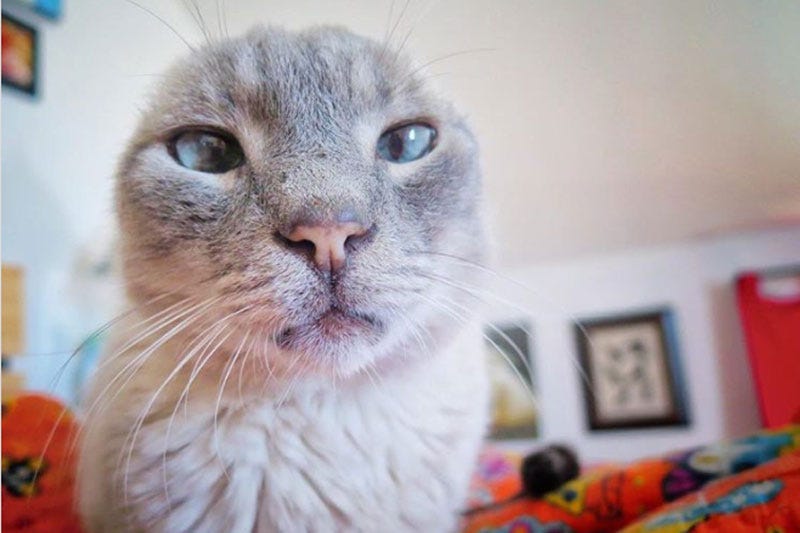
Eddie (@eddie_the_lilac_lion) had multiple challenges from his rough start in life. By the time he arrived in Beacon, NY with photographer Jennifer Sarah Blakeslee, Eddie was toothless, mostly deaf and half-blind, with severe nystagmus and painful eustachian scarring from ongoing ear infections. These traits only made him more lovable to Blakeslee—and to the account’s 70,000 followers. When Eddie needed surgery to remove his precancerous ear canals, followers chipped in to contribute nearly $4,000 in less than a day. At that point, Blakeslee decided, “he was no longer “my” cat. He was everyone’s cat.”
Blakeslee captured Eddie’s face in snarky expressions juxtaposed with captions that evoked a being of endless compassion, an advocate for mental health issues, a fierce social justice warrior, and avid consumer of tunatinis. She created a persona that effectively channeled her voice through a perception of Eddie’s personality. She wrote what she, and so many other people, needed to hear. That included the goodbyes.
“When his time came, I felt a real responsibility to make his experience and my grief accessible to everybody. He was a being that people had come to not just love, but rely on for humor, for connections, whatever. The ending of that, there was something sacred about it. I wanted to honor that, not just for me, but for [his followers].”
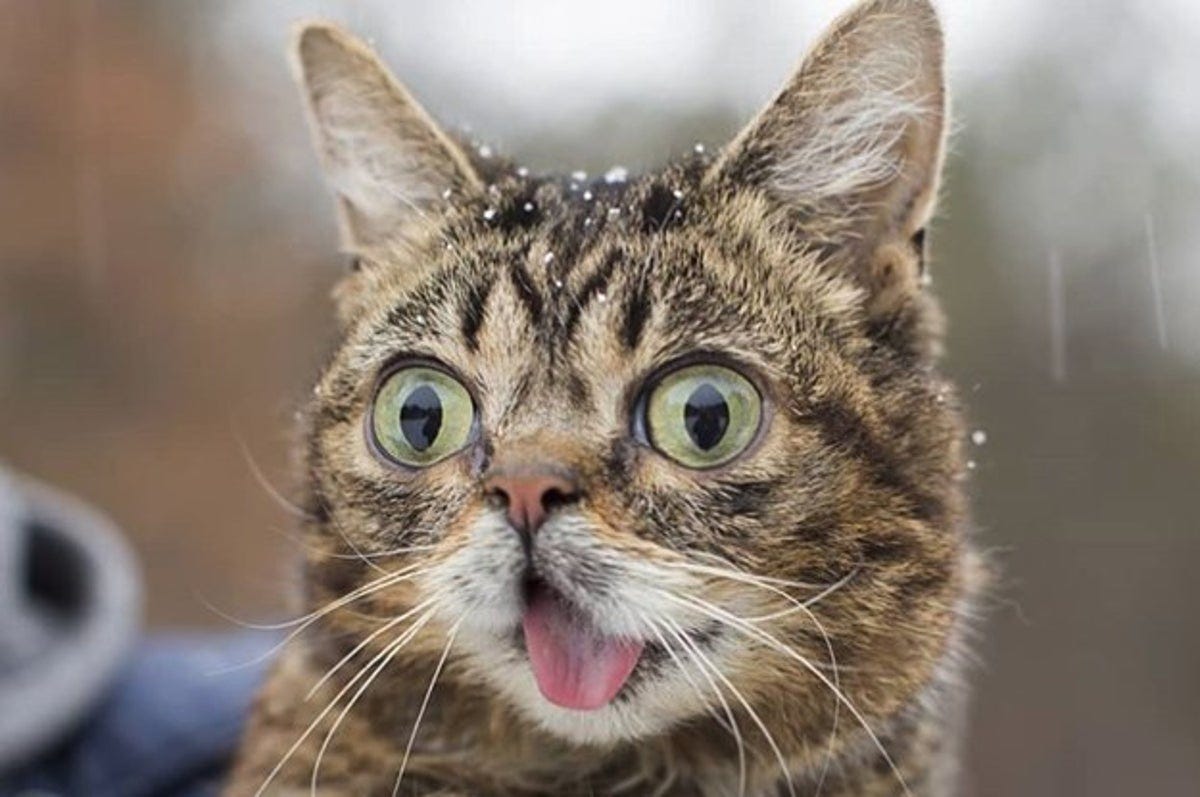
L’il BUB (@iamlilbub) was the most adored cat ever to grace the internet, with more than 2.5 million social media followers. BUB ticked all the boxes that trigger our “cute baby mammal” protective instincts: Tiny body and short legs, thanks to a form of dwarfism; huge soulful eyes; lolling tongue and a demeanor that can only be described as “super chill.”
On the morning of December 1, 2019, BUB’s “dude,” musician and recording studio owner Mike Bridavsky, began his morning routine—his wife Stacy had gone out with their two young children, leaving Mike alone in the house. “I was cleaning up and I thought, oh, where's BUB? I haven't heard BUB. And then I went into the room that she sleeps in and I just opened the door and saw her there laying there.” His voice broke as he recalled that morning. “I knew instantly. It was a real shock. I couldn't wrap my head around it. I didn't know what to do.”
As with humans and other mammals, a cat’s death is often accompanied by a releasing of the bowels. “It was awful,” Mike recalled. “I bathed her poor dead body. I was so in shock.” He only remembers one phrase that looped in his mind: “Oh, what do I do? What do I do? What do I do? Like, ‘what do I do’ on so many levels? What do I do now? What do I do later? What do I do 10 days from now? Like, what do I do with everything? Oh my gosh, it was so intense.”
For at least three months, Mike said, “I was a real, total wreck. There were only a few hours between sobfests.” Yet he had to keep going. Within minutes of announcing BUB’s death, merchandise sales—the primary source for L’il BUB’s Big FUND—spiked off the chart. In the following week, they sold more merch than they had in the previous three years combined.
“[BUB] knew when she was going to die,” Bridavsky said. “She knew everything. I knew that when she passed, she would show me the way.”
***
“To accept the reality of the loss” is the first of psychologist William Worden’s Four Tasks of Mourning, a framework better-suited to the nonlinear experience of grief than Elizabeth Kubler-Ross’ better-known “five stages of grief.”
When it comes to pets, we often know the date and exact time of death a few days in advance, which means there’s an opportunity to accept that the loss is going to happen. Blakeslee, who arranged euthanasia for Eddie, shared her anticipatory grief with Eddie’s followers. “I positioned the whole experience as thanking him for what he gave us and what he brought to the world and being brutally honest about the pain and the sadness. It was important for me to share that, because other people felt connected to him, too.”
Being witnessed in grief, it turns out, is a powerful balm for healing.
Fifteen minutes after Mick found Oskar under the table, he and his wife stood in the veterinarian’s office as the doctor tried to revive Oskar. Ultimately, the vet determined that the six-year-old cat had died from sudden heart failure, likely due to an unrecognized congenital heart condition.
Within a few hours, thousands of comments offered condolences. Within days, the number grew to over 30,000. Oskar’s fans and followers had watched him from the time Mick and Bethany adopted him as a seven-week-old kitten from a farmer in Iowa. They witnessed Oskar shadow-box a hairdryer, and later, work with the National Federation for the Blind and NASA. And now they were witnessing Mick and Bethany in their grief. The couple took turns reading comments out loud to each other, which helped, "because the comments were filled with so much love and support for us."
For the Szydlowskis and Bridaviskys, followers helped them to process the shock at their young cats’ sudden deaths—in other words, to accept that the loss had happened
Mike hadn’t ever talked about himself on BUB’s platform, and that remained true of his grieving process. “I shared a lot of my favorite memories, my favorite photos of her and what she meant to everyone.” He also worked to figure out how to continue her legacy and “honor the work that she’d done.” In addition, he noted, “There are tens of thousands of people who genuinely believed that they loved her more than I did. And I couldn't let those people down. I just did what felt natural and what felt right and sort of what was in my heart.”
Fans who grieve “meme cats”—Colonel Meow, Keyboard Cat or Grumpy Cat—may also feel a loss, but they likely never felt as though they had a relationship with that particular cat. Special needs cats are different. Fans grieve, not unlike the way people grieve for a human celebrity that has touched their lives or brought them happiness.
Pet loss psychologist Dr. Catherine Lawlor, PsyD. (@pettlosspsychologist) explains the power of those accounts, “[They] are showing that you can have a disability and still be loved. I think the reason those accounts are so popular is they tap into our vulnerabilities. Deep down, we all just want to be loved. And especially in this culture, there is such a priority on outward beauty and perfection. And these accounts that are saying, ‘No, let's embrace what all comes natural to us, and we can live, beautiful, wonderful fulfilling magical lives’ and I think it just touches on the vulnerability.”
For many followers, Oskar, Eddie or BUB brought their only smiles of the day; checking their accounts was a morning or evening ritual.
As a culture, we don’t have any rituals for grieving a companion animal, and the Instagram cat community has organically developed some of its own. Among the most popular: fan art and shelter donations.
Bridavsky says, “I literally have hundreds, if not thousands of unique works of art that are like quality, like oil paintings and all kinds of stuff.” As an inked guy himself, he’s always noticed the fans who got BUB tattoos. “But when she passed away, there was a huge influx of BUB tattoos I have, at least, I'd say 150 photos of BUB tattoos.” Some of BUB’s “superfans” came together and purchased a star in the tiny feline’s name. “That was really special, really sweet.” He adds that it made the experience “much more emotional, in a way.”
As pet loss psychologist Lawlor says, “It's [followers’] way of processing their grief, while hopefully doing something good for either the animal community or for a cause that's incredibly meaningful to them.” She adds, “Grief is so incredibly powerful yet so incredibly feared in this culture. None of us wants to feel helpless.” Creating art or making a donation “gives us that sense of agency that we can contribute and we can mark this occasion.” It’s also a way to express gratitude to a cat’s guardians, she adds, for “doing something that was so meaningful to them.”
All three accounts continue to be active. Blakeslee continues to post photos of Eddie alongside her other cats, and she now writes social justice and mental health advocacy posts in her own voice. When she posts photos of Eddie, followers say, “‘I needed to see this today. Thank you.’”
Mick and Bethany adopted another blind kitten, Juno (@thejunocat), who carries on Oskar’s legacy, as does their elder statescat, Klaus (@theklauscat). The Bridavskys continued to honor BUB’s mission: to raise awareness and adoption of special-needs pets. They fundraise and manage L’il BUB’s Big FUND, which helps rescues cover expenses related to special-needs cats, and they’re launching a fund for people who foster special-needs cats.
Cats on Instagram fill a very specific need in our culture. As Lawlor sees it, “We [humans] go around projecting our deepest fears and hold on to each other and those get pinged around and bounce back in very complicated ways. That's not the case with animals. They just absorb everything that we give them and give it back to us in the most natural way.” In an increasingly complex and chaotic world, “They just simply want to be by our side and love us. And vice versa. We just want to be loved. With an animal, you just don't have to think. You can turn your mind off and turn your heart on.”
If these losses have taught us anything, she concludes, it’s that “All we have is this moment.”
Thank you for reading this edition of the More Than Tuna newsletter. I understand you’re probably swamped with emails, and that makes it all the more meaningful that you took the time to read this. If you found this post helpful, here are four simple ways to support Tuna and this Substack:
Subscribe to this Substack, if you don’t already
Upgrade to a paid subscription (bonus: you’ll be supporting a Canadian 🇨🇦!)
Click or tap the heart icon to like this post
Share this post by ‘restacking’ (use the ‘quote’ function to say what helped you the most about this post)
Leave a review wherever you purchase the book
Forward this email to a friend or share the link on social media
No posts
Comments
Nothing yet. Say the first thing.
Sign in to join the conversation.