
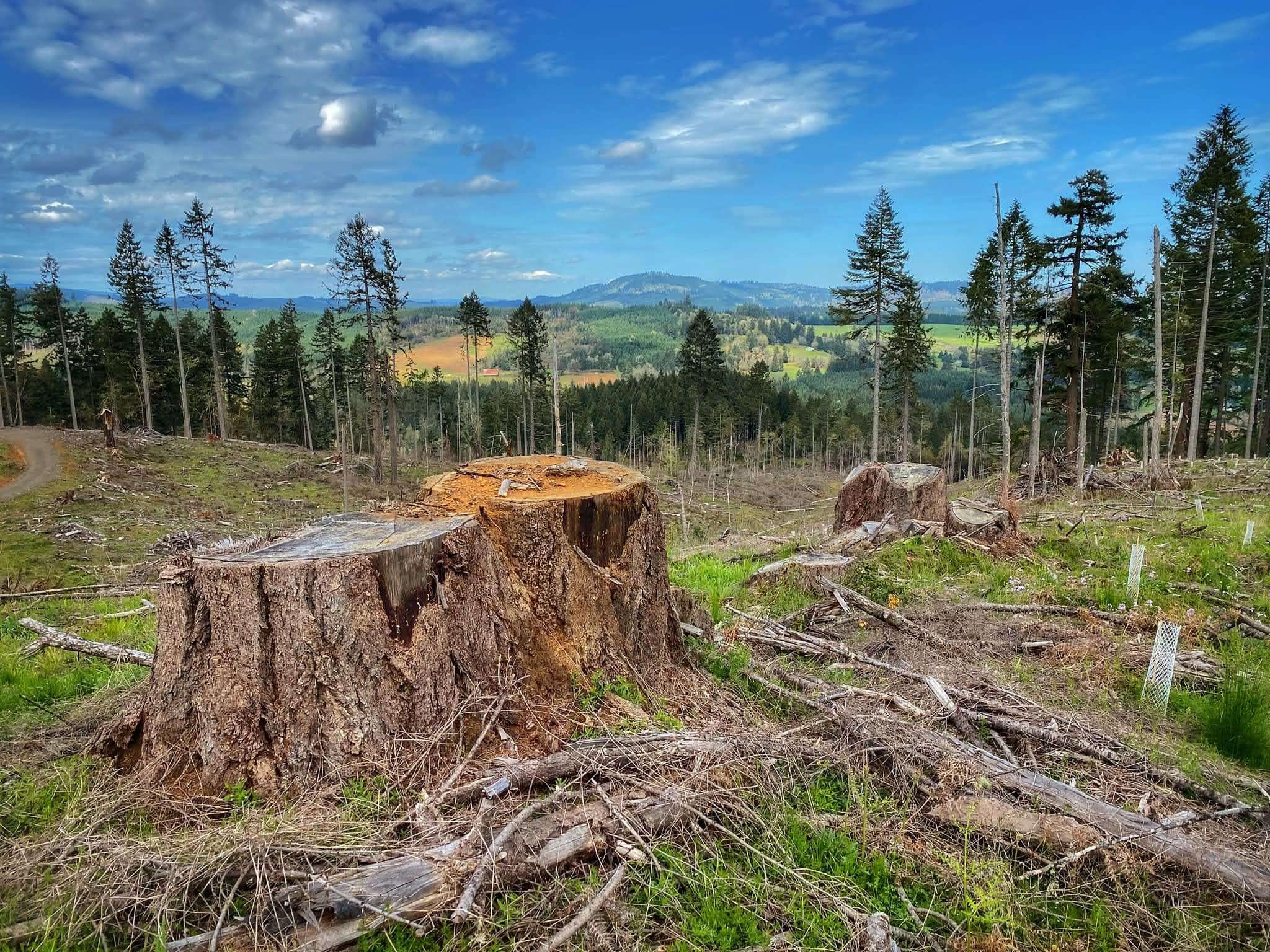
Every quarter the U.S. Forest Service publishes a report called Cut and Sold. It tallies how much wood came off the national forests and how much the government was paid for it. It’s all compiled in a spreadsheet few people outside the surprisingly small industry read. For fiscal year 2025, the timber cut across every acre of the Forest Service's 193 million acre portfolio generated $135 million. Closer to $150 million if you count the sales run by state agencies, where the state keeps the check.
Home Depot closed its fiscal year with $165 billion in sales across 2,359 retail stores, which comes out to almost $70 million a store. The entire U.S. Forest Service timber program, the one the current administration is gutting a century’s worth of land and wildlife protections to boost, produced less revenue last year than two hardware stores with garden centers attached.
In case you’re wondering, 2025 wasn’t a fluke. Over the last fifteen years the trees logged on your national forests have never produced more than three Home Depots’ worth of revenue. And don’t forget a Home Depot store doing $70 million worth of revenue is making money. The federal timber program has never made money, ever, that we know of. The Government Accountability Office found it lost more than $2 billion between 1992 and 1997. By 2001 the annual cost of the program was “no longer determinable” by the GAO. Taxpayers for Common Sense calculates the Tongass sales alone have cost the public more than $1.7 billion since 1980. Over forty years, extensive logging has resulted in $227 million in revenue against a staggering $1.96 billion in costs. Eight dollars out for every dollar in.
At this point you’ve heard that logging on your national forests, an obsession of this administration that has resulted in the gutting of historic conservation laws and regulations, amounts to two Home Depots’ worth of revenue and loses a staggering amount of money.
Let’s add another knot to your stomach. Forest Service lands account for just four percent of total U.S. timber harvests.
The Forest Service’s own documents state that private forests supply over 90% of U.S. forest products. The wood in your house came off a tree farm, likely from a loblolly plantation in the South where 40% of the country’s timberland sits. The American Forest Resource Council acknowledges that just one half of one percent of Forest Service land is harvested in a given year. None of this is new, which makes the current policy so absurd.
The federal timber program collapsed almost forty years ago. In 1988, the high water mark of the federal timber program, national forests produced 12.6 billion board feet worth $1.24 billion. Even that was a smaller piece of the American woods supply than most people assume, somewhere between 12-15%.
Producing that many board feet meant clearcutting ancient forests across the Pacific Northwest. Nearly 90% of the region’s old growth was gone by the 1990’s and the 8-9 million acres still left were on federal land. The Forest Service had no intention of keeping them there. Scientists from the Forest Service, BLM, and Oregon State wrote in 1982 that virtually all remaining old growth in the state was expected to be logged by 2020 and that trees would be replanted and cut in their place on 60-80 year rotations. They concluded that it was “extremely unlikely that old growth forests will ever again be regenerated.”
That set off one of the fiercest fights in American environmental history, the Timber Wars, which ran through the 80’s and early 90’s. Activists sat in trees for weeks, blocked logging roads, and chained themselves to equipment. Timber interests answered with convoys and the government answered with aggressive removal tactics. It all turned on a small owl. The northern spotted owl nests almost exclusively in old growth, so liquidating the forest meant liquidating the bird.
In 1989 the Seattle Audubon Society sued the Forest Service to save the owl with the Sierra Club Legal Defense Fund, now known as Earthjustice, arguing the case. In 1991, Judge William Dwyer ruled the Forest Service had a responsibility under the law to keep the owl from going extinct in its own habitat and shut down logging in every acre of owl habitat on national forest land in Washington, Oregon, and northern California. He found that the Forest Service and Fish & Wildlife Service had “deliberately and systematically refused to comply with the laws protecting wildlife.” In a single year the value of the timber the Forest Service put up for sale fell from $1.6 billion to $687 million. The shutdown was meant to be temporary until the agency produced a plan the court could accept. In 1994 the Clinton administration put together the Northwest Forest Plan that made the remaining old growth off limits.
After the resulting drop in federal timber harvest, prices spiked for a year or two until southern forests and Canadian imports filled the gap. Most Americans never noticed any change.
George W. Bush tried to revive large scale logging with a cooperative Congress that passed legislation to make it happen. But harvest remained the same. The appetite was gone and so were many of the mills. The first Trump administration tried again and got the same answer, a small bump in harvest in 2018, before going back down by the end of his term. Two administrations tried to bring it back and couldn’t.
Now the second Trump administration is dismantling the Forest Service, gutting NEPA and the ESA, firing researchers, and moving to strip protection from 45 million roadless acres to chase a program that’s been worth less than three hardware stores for the last twenty five years.
Rescinding the roadless rule in its entirety is, quite frankly, an asinine thing to do when you consider that it’s 2026 and the United States is the richest nation on earth. Other countries that used to be our allies and friends are looking on in shock and disbelief. The place they used to spend serious money to travel to and see our vast protected landscapes is now busily ripping them to shreds. And for what?
In it’s own justification documents USDA found that rescinding the roadless rule would produce somewhere between $5.2 and $11.4 million a year in revenue to the Treasury and the Forest Service while resulting in $6.1 million in losses to the recreation industry yearly. $11.4 million is the top of a range built on the assumption that every operable acre gets logged every year, which the agency admits in the same paragraph is unlikely. The high end of the Trump administration’s own estimate for logging our roadless areas amounts to one-sixth of one Home Depot store.
The public comment window is open now and runs until September 21st. You can check out our roadless site to learn more about the rule and use our comment builder to make your own unique and substantive comment that will help in the fight to come.
Thanks for reading.
Until next time,
-Jim
Comments
Nothing yet. Say the first thing.
Sign in to join the conversation.