
In the first part of this feature, I talked about the importance of finding a way to be genuinely excited about things that are part of your social media persona and public writer face.
The social and tagging aspects that I mentioned at the end of the first part lead nicely into another way of generating new excitement: collaboration. I’ve collaborated with lots of writers and artists on lots of projects, mostly just because I loved the project or I got on with them. But if you’re pushed for time and spoiled for choice, then it may be worth considering whether you’re likely to complement each other’s skills and audiences or simply duplicate them.
Duplicating skills and audiences isn’t necessarily wrong. You’re probably less likely to disagree creatively and working together will probably still build more confidence and excitement. But you’re also less likely to be learning new skills or approaches, and when it comes to selling the project (whether that’s actual selling or just generating interest) you’re likely to be tapping into a similar-size pool to the one you’d have working alone, as opposed to mutually increasing the reach with different pools of friendship/interest.
I’m now getting quite excited about what I hope may be helpful advice for others, which leads me back to my main topic here and another thing that I’ve found useful. That is keeping a journal where I note down exciting parts of the creative/publishing process. Sometimes, I may post about them too. Other times, they may be things that I can’t post about then. Either way, keeping that list of them, gives me something to return to when I can share them or want to tap back into that sense of excitement.
In some ways, this isn’t too dissimilar to keeping a continuous CV. I’ve chosen to do this publicly. I wouldn’t necessarily advise making every single thing public in the way I have – to be honest, I doubt anyone reads mine other than me. The length of it means that most important items may be easily missed. But it does remind me of things I might otherwise forget I’d done, giving me a confidence boost and helping to fight off imposter syndrome.
It also doubles as a record that I can refer back to if need be – to find copies of old poems or locate all the details and dates of projects/publications relevant for a particular application/submission/commission proposal. This helps me not to overlook significant things I’ve done that aren’t in my immediate memory when I’m putting together such a document, especially if the deadline (time between opportunity posting and submission date) is tight. Also, it saves time compared to having to start entirely from scratch every single time in building up the list of things that might be included.
I’ve digressed again, so will pull myself back to excitement and something that has become a publishing staple – the unboxing video!
What I would say is that if you’ve watched any of these, they tend to be more engaging if they feel natural and real. By this, I mean as unscripted as possible. In reality though, this may not be possible and advance prep is still important.
If you can get away with just thinking beforehand about what you might say or do, then this is probably the best way to tackle it — that’s how I approached my unboxing recording below, which, though I’ve been writing for decades and had lots of books published, is actually the first time I’d done this. If you feel more comfortable with a script, then have one but try to find a way of not making it obvious and give yourself permission to deviate and go with the flow once you start.
More important preparation is to decide whether you’re going to have a static camera (the only choice if you’re filming yourself) or one with someone else filming for you and moving with you. A static one will be more steady but only one angle and if you move out of shot, you’re out of shot. A moving one can move with you to try and keep you in shot and potentially get different angles, but it’s likely to be more shaky and may end up with some awkward angles/shots getting you back on screen if you go out of it.
Whether you choose a static camera or moving one, remember that as long as you can edit videos (or who have someone who’ll do it for you), you can potentially edit out things such as parts with fluffs, awkward facial expressions or film angles that don’t work. (Replacing or superimposing over them maybe with a still of your book cover. for example.)
If this won’t always fix things – bigger/longer problems with sound may be trickier to sort in retrospect – you could try videoing again but rather than as a full unboxing from the point of cutting the parcel’s sealing tap, you could go for the reveal of opening the box flaps to reveal the book inside. (This opening the flaps video may be the one to go for anyway, as it’s shorter and less complicated than having to cut the tape first, though also less obvious that this is the absolute first time you’ve seen your physical book!)
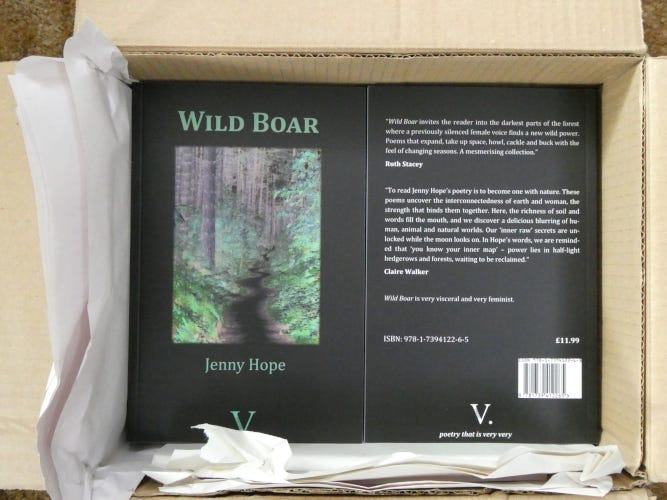
Unboxing is really something that can be captured by video. But if that feels too much or goes drastically wrong, then you could try a photo instead of the books in the box opened for the first time. This is what I do with my publisher hat on when a new V. Press title arrives in stock.
Having unboxed some of my thoughts about building excitement and faking it if need be. I’m going to return to my key point – that finding a way to make this excitement/the requirements of marketing and social media feel as natural as possible is really what I’ve really been talking about in these posts.
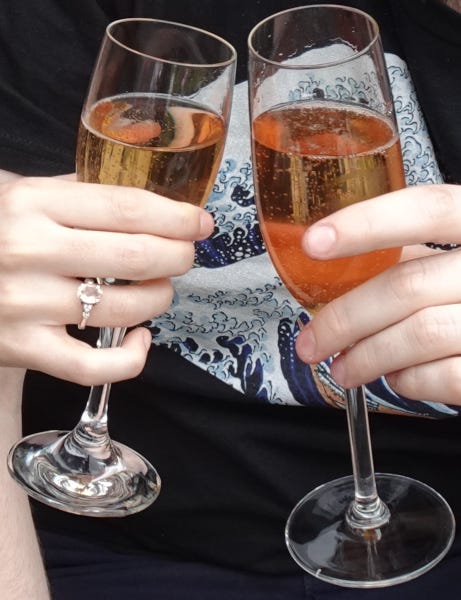
This may involve slanting or upping the level of some elements of ‘your writer face’ along the way. But I’m not advising faking who you really are – or feeling pushed to do anything that takes you too far out of your comfort zones. One person’s ‘making it’ may look very different to another’s. They real key is working out the best ‘making it’ aim for you and then finding the best ways for you for getting there. Here, I’m raising a glass already to celebrate whatever works for you!
If you’re enjoying my posts, please do consider pledging to become a paid subscriber. Alternatively, you can also support me/this Substack with a coffee-tip donation from time to time or by buying my collection Darling Blue (Indigo Dreams, 2025).
Thank you!
No posts
Comments
Nothing yet. Say the first thing.
Sign in to join the conversation.