
There’s a photograph most Americans have seen.
A line of ordinary folk, dressed in their Sunday best, walking across a bridge in Selma, Alabama. Some are holding hands. Some are looking straight ahead. The sky is pale. The faces of the people are etched with resolve. They recognize the importance of their actions, and are steeling themselves for the repercussions ahead.
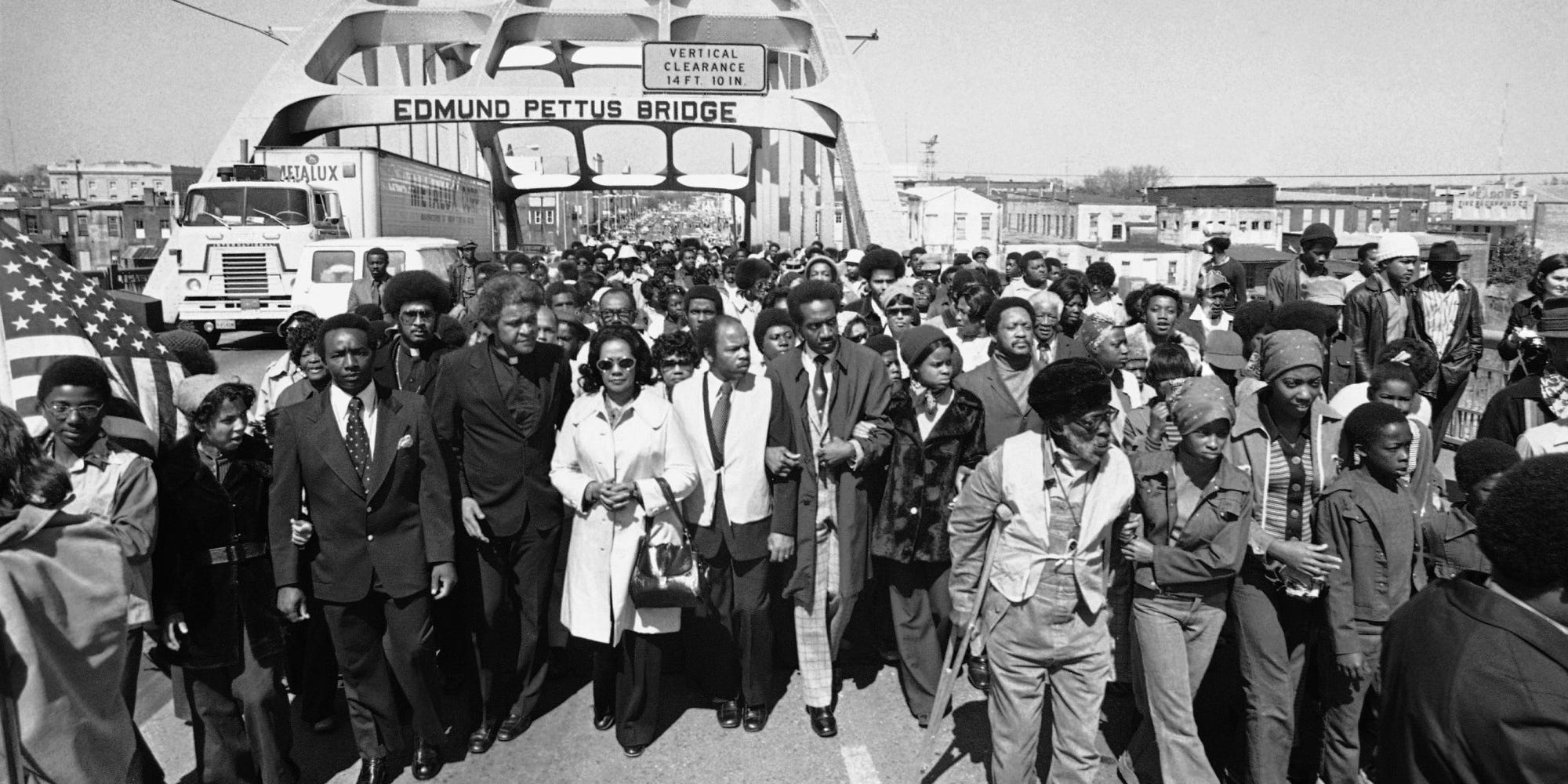
It is one of the most iconic images in American history.
And the bridge has a name.
Most people who’ve seen that photograph don’t know why that name is important.
The Edmund Pettus Bridge was built in 1940 and named after a Confederate brigadier general, two-term U.S. senator, and Grand Dragon of the Alabama Ku Klux Klan.
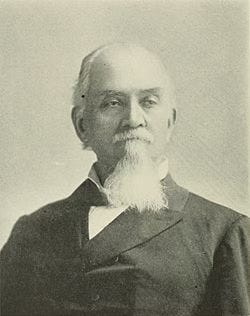
Let that sit for a second.
The bridge that became the symbol of the Voting Rights Movement—the bridge that John Lewis and 600 marchers crossed on March 7, 1965, in what became known as Bloody Sunday—carries the name of the man who spent his life making sure Black Americans had no rights worth protecting.
That’s not irony.
That’s a message.
Edmund Pettus died in 1907. The bridge was named after him thirty-three years later. At the dedication, he was remembered as “a great Alabamian,” and the occasion was marked with a Confederate rallying cry: “the South will rise again.”
This wasn’t mere nostalgia. It was a declaration of ill intentions.
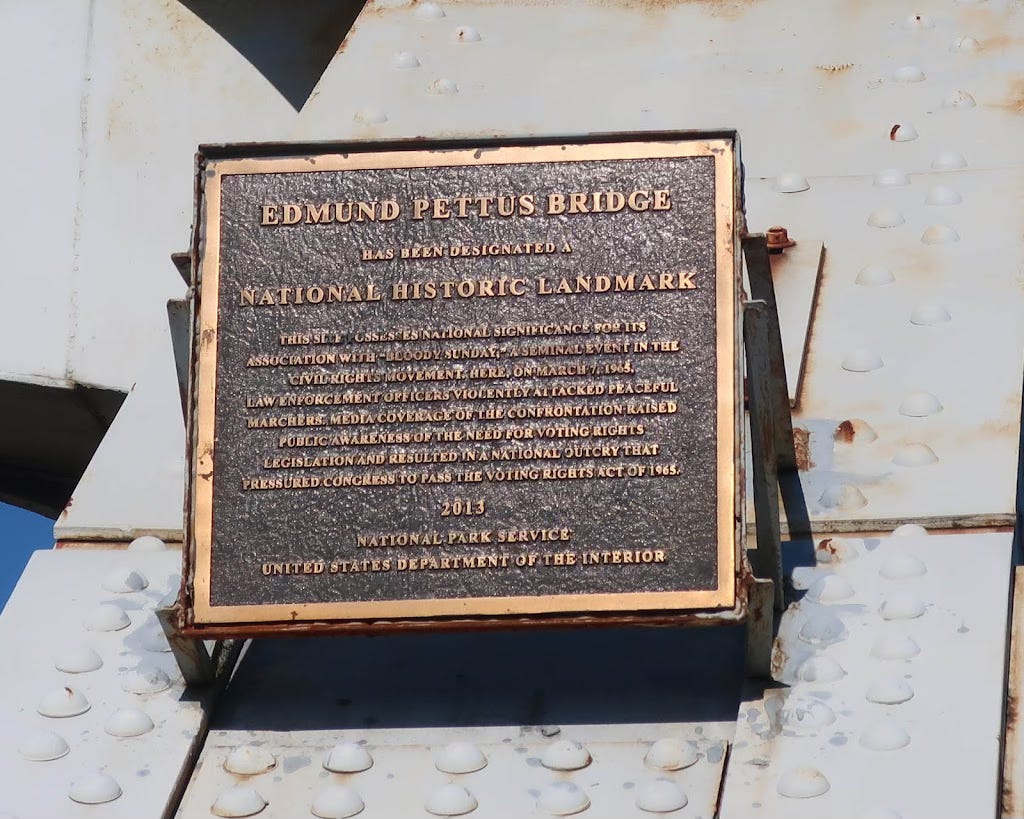
According to historian John Giggie, who teaches Southern history at the University of Alabama, when legislators chose Pettus’ name for the bridge in 1940, there was no mistaking the message they wanted to send. “They wanted to stamp that—to brand it—with this vision of the South as very much a world dedicated to white supremacy.”
Alabama historian Wayne Flynt put it even more plainly: 1940s Selma “would’ve been a place where place names were about Black people’s degradation.” Naming the bridge after Pettus was “a sort of in-your-face reminder of who runs this place.”
The bridge wasn’t named after a man who just happened to be in the Klan.
It was named after him because of what he stood for.
Pettus campaigned for the U.S. Senate on his white supremacist record. He ran on his successes organizing and popularizing the Alabama Klan and his prominent opposition to the constitutional amendments that elevated formerly enslaved people to the status of free citizens. He won. Black Then
He served two terms.
When he died, the U.S. Senate eulogized him.
And in 1940, the state of Alabama put his name on a bridge—the gateway to Selma—as a reminder to every Black person who crossed it of exactly where they stood.
Twenty-five years later, John Lewis led 600 people across that bridge anyway.
On the other side, they were met by Alabama state troopers on horseback, armed with clubs and tear gas.
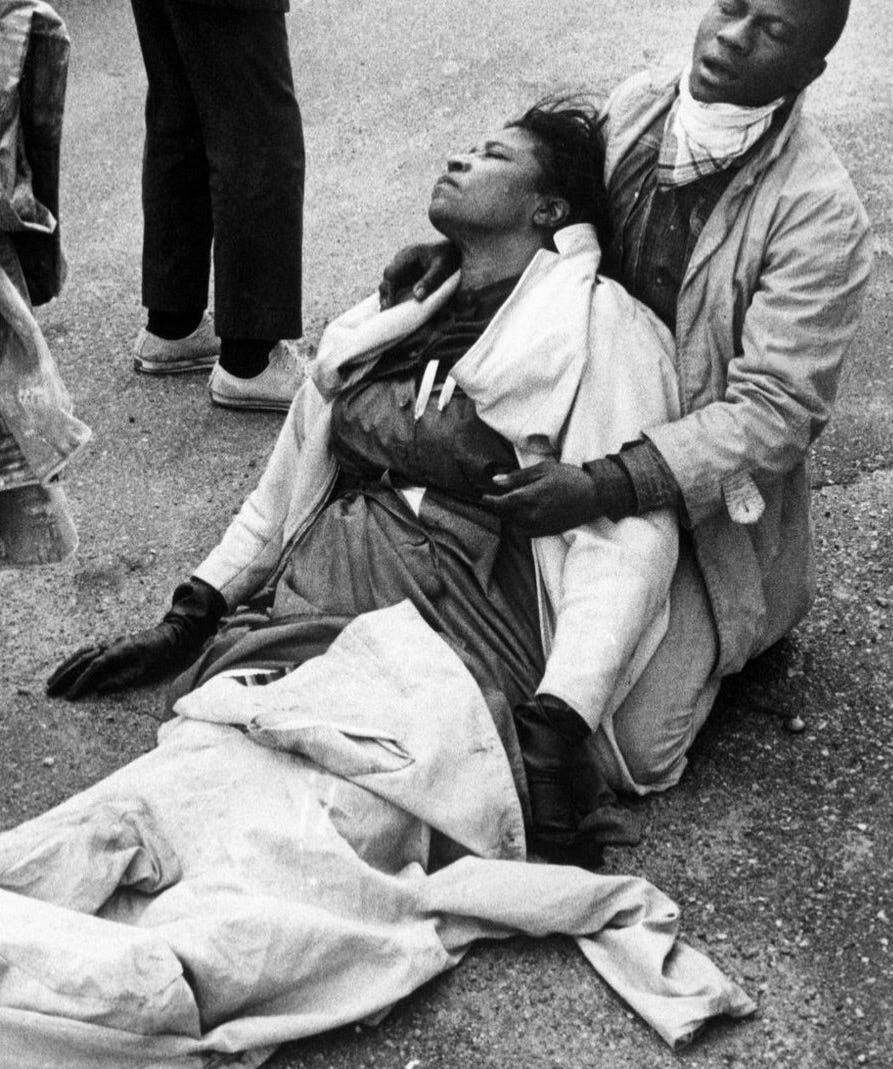
Amelia Boynton, who had helped organize the march, was beaten unconscious. A photograph of her lying on the Edmund Pettus Bridge appeared on the front pages of newspapers and news magazines around the world.
Seventeen marchers were hospitalized. Fifty more were treated for lesser injuries.
The images of that day, which showed ordinary people being beaten in their Sunday best on a bridge named after a Klan leader, broke something open in this country.
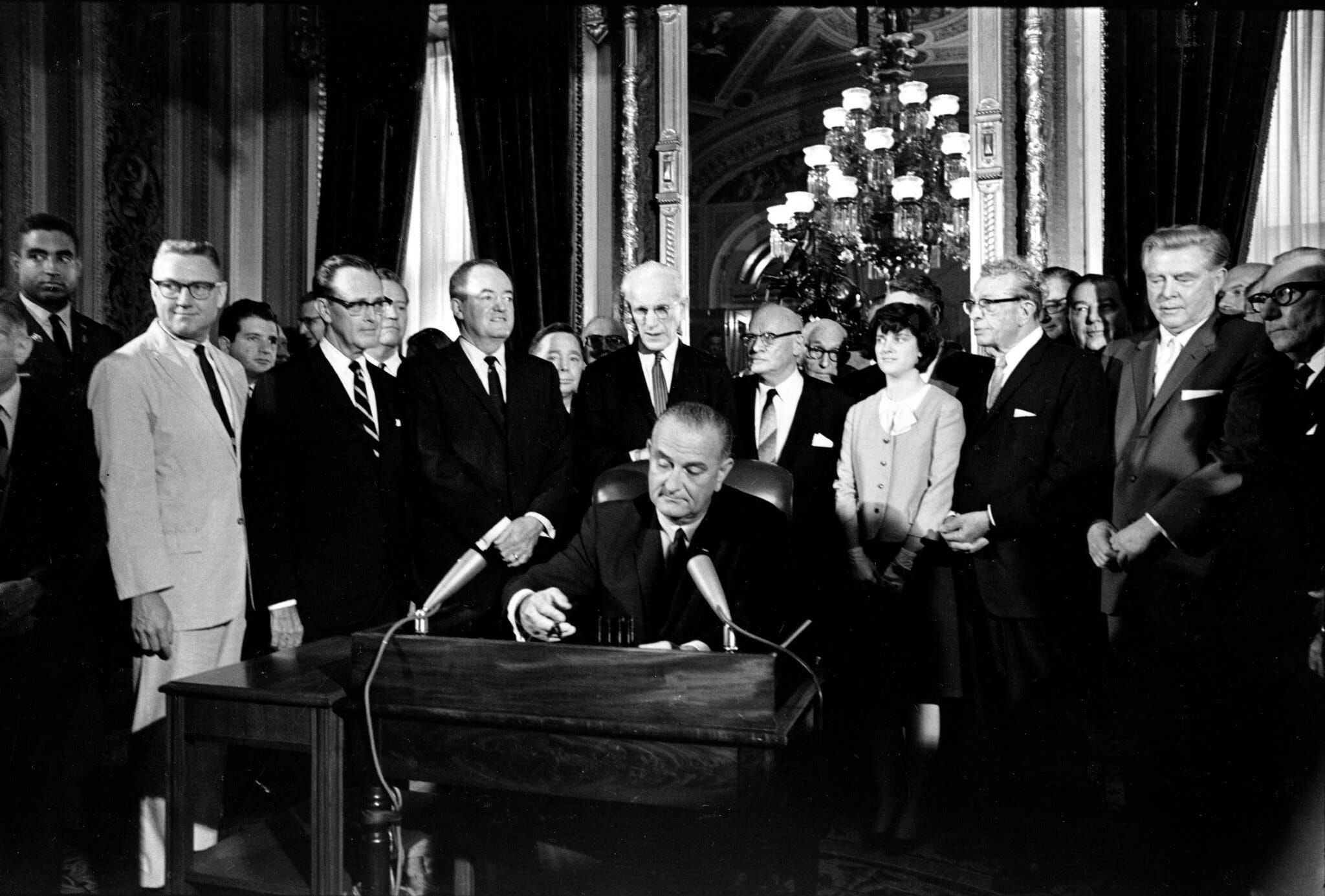
Five months later, President Lyndon Johnson signed the Voting Rights Act of 1965.
At the time of this writing, the bridge is still named after Edmund Pettus.
Through the years, there have been numerous efforts to rename it. There were petitions to name it after John Lewis, after the foot soldiers who bled on its pavement, after anyone whose legacy doesn’t include running a terrorist organization... yet, they all failed to bring change.
After Lewis died in 2020, his funeral procession crossed the Edmund Pettus Bridge on the way to Montgomery. It was a moment so loaded with meaning it almost defies description.
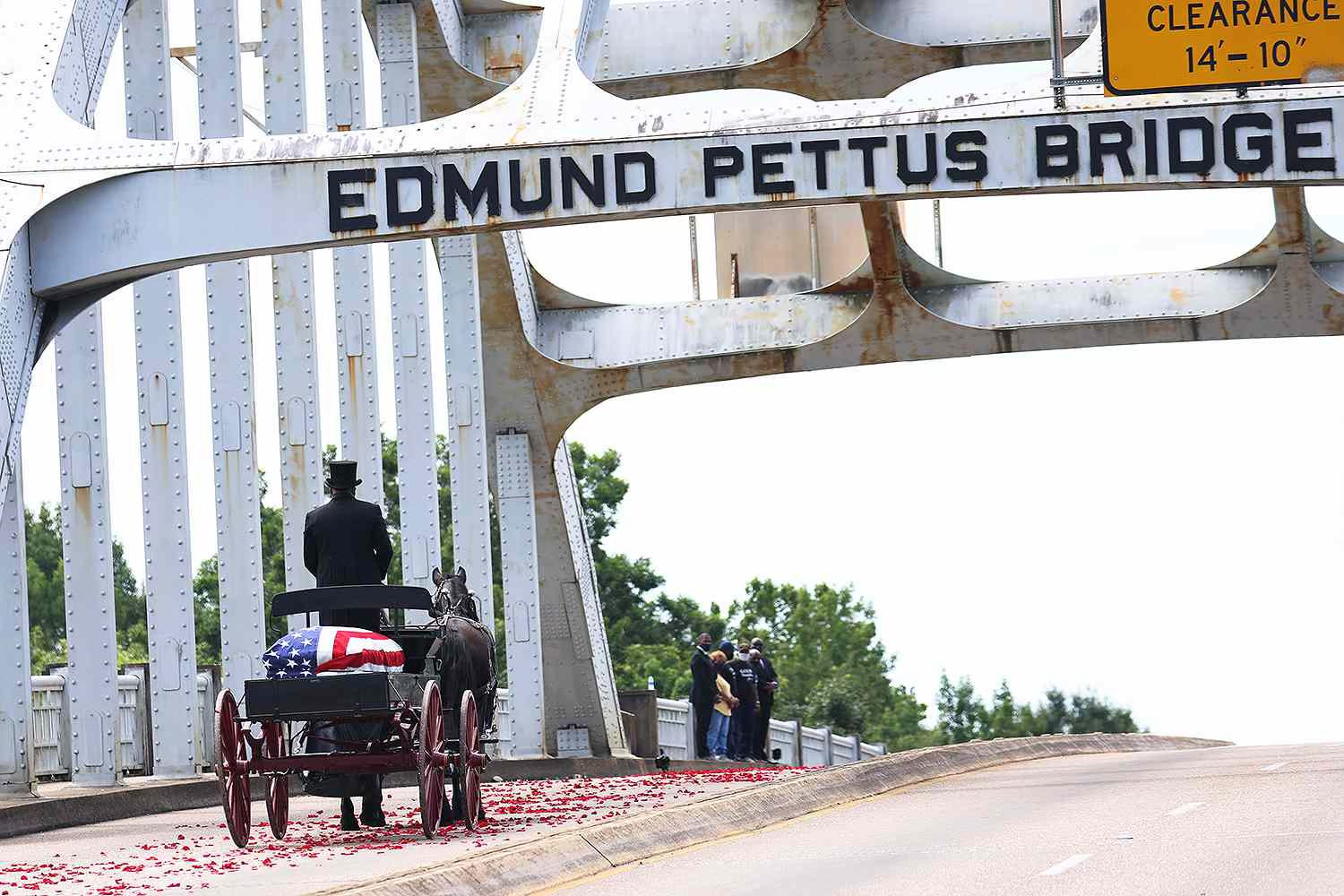
The man who was beaten on that bridge as a young man, carried across it in death.
Still under the same name.
The debate over renaming rages on. Some argue the name has been reclaimed—that Bloody Sunday transformed it into something Pettus never intended. Others argue that’s exactly the kind of comfortable story that lets us avoid confronting what the name still says.
I’m not going to tell you which side is right.
But I will tell you this:
The name was chosen deliberately. The violence on that bridge was deliberate. The century of voter suppression that made the march necessary was deliberate. (And now, just days before publishing this article, the U.S. Supreme Court has all but completely gutted the 1965 Voting Rights Act.) Common Cause
As the Smithsonian put it, the bridge was named after Pettus “in part, to memorialize his history of restraining and imprisoning African Americans in their quest for freedom.”
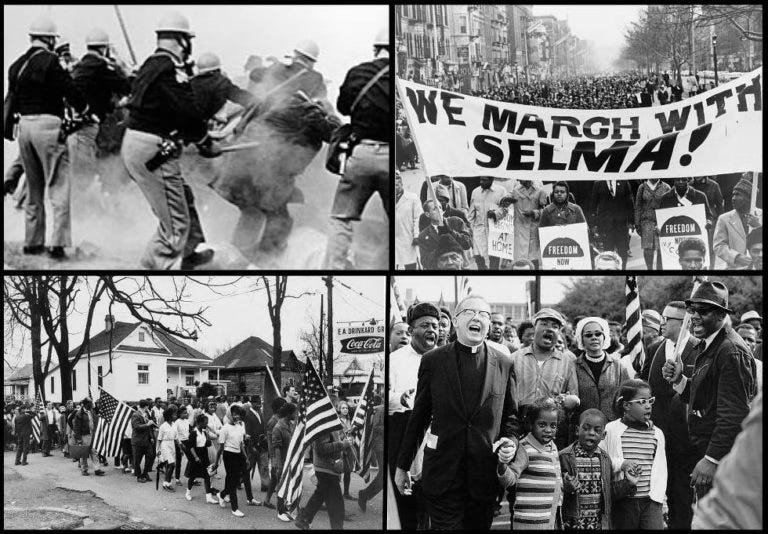
The people who crossed it in 1965 knew exactly whose name was on it.
They crossed it anyway.
That’s the part worth remembering.
And maybe, just maybe, that little bit of history will keep us resisting all current and future racist actions against the right to vote in this country.
History can be a lot of things…
…including MORBID.
-Thomas Gloom
Comments
Nothing yet. Say the first thing.
Sign in to join the conversation.