
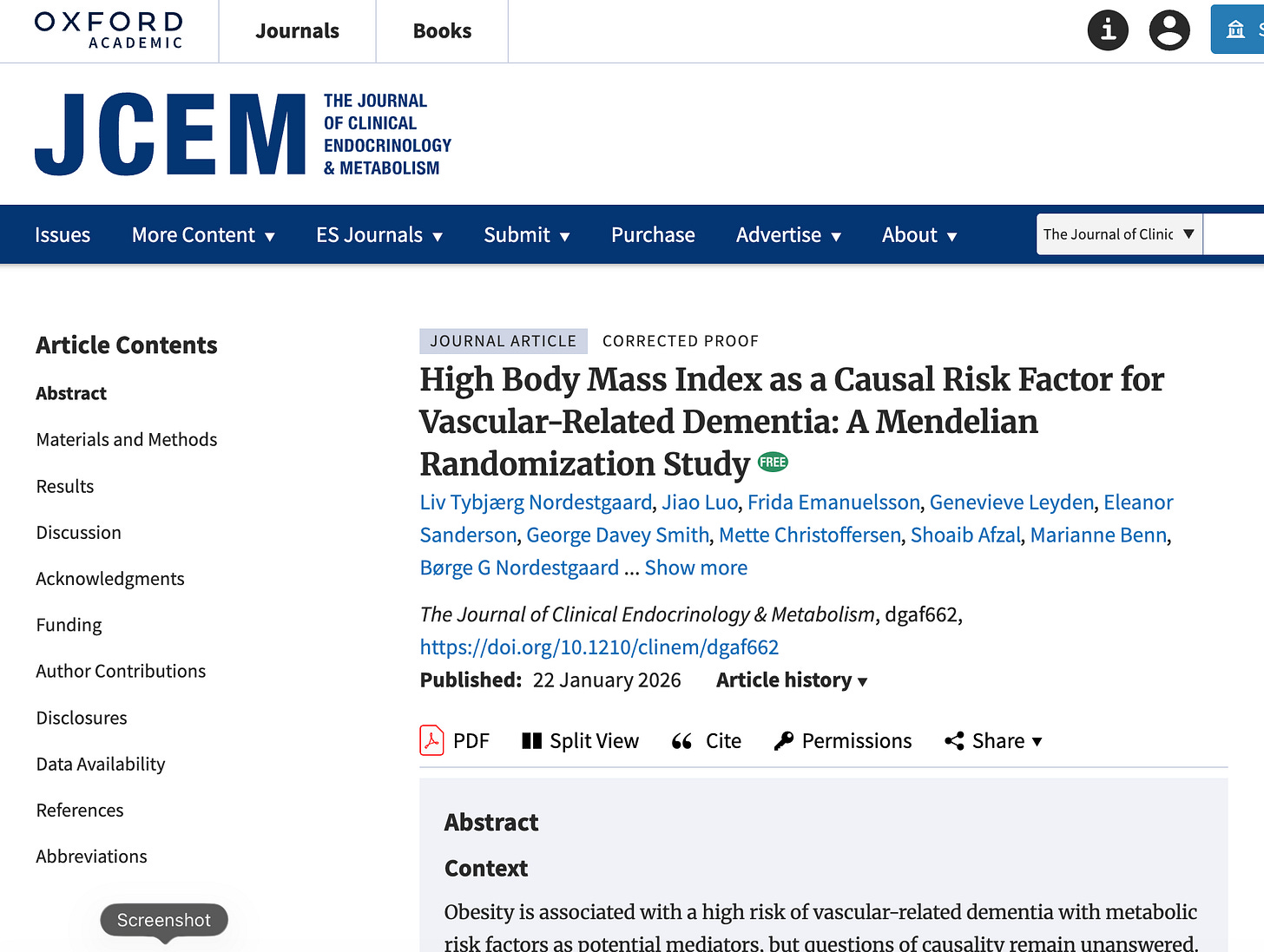
On Thursday, the Journal of Clinical Endocrinology & Metabolism published a study on the link between body mass index (BMI) and vascular-related dementia.
In my 20s, I was a gym rat. I carried around a clipboard and pencil, recording the amount of weight I had lifted for each exercise. One day, a friendly trainer who worked at the gym offered me a free BMI test. Considering how fit I was, I was surprised to learn that my BMI was very high, dangerously so. The smiling fellow would help get my BMI to a healthy level if I purchased a package hiring a personal trainer. I thanked him and said I’d think about it.

Back to the study published Thursday. News outlets have jumped on it.
Headlines include:
“Being overweight causes vascular-related dementia, major study finds”
“Obesity and high blood pressure can directly cause dementia”
“High body mass index identified as a direct cause of vascular dementia”
“FLAB ‘CAUSES DEMENTIA’ Urgent warning as obesity is found to DIRECTLY cause killer dementia — & how fat jabs could help”
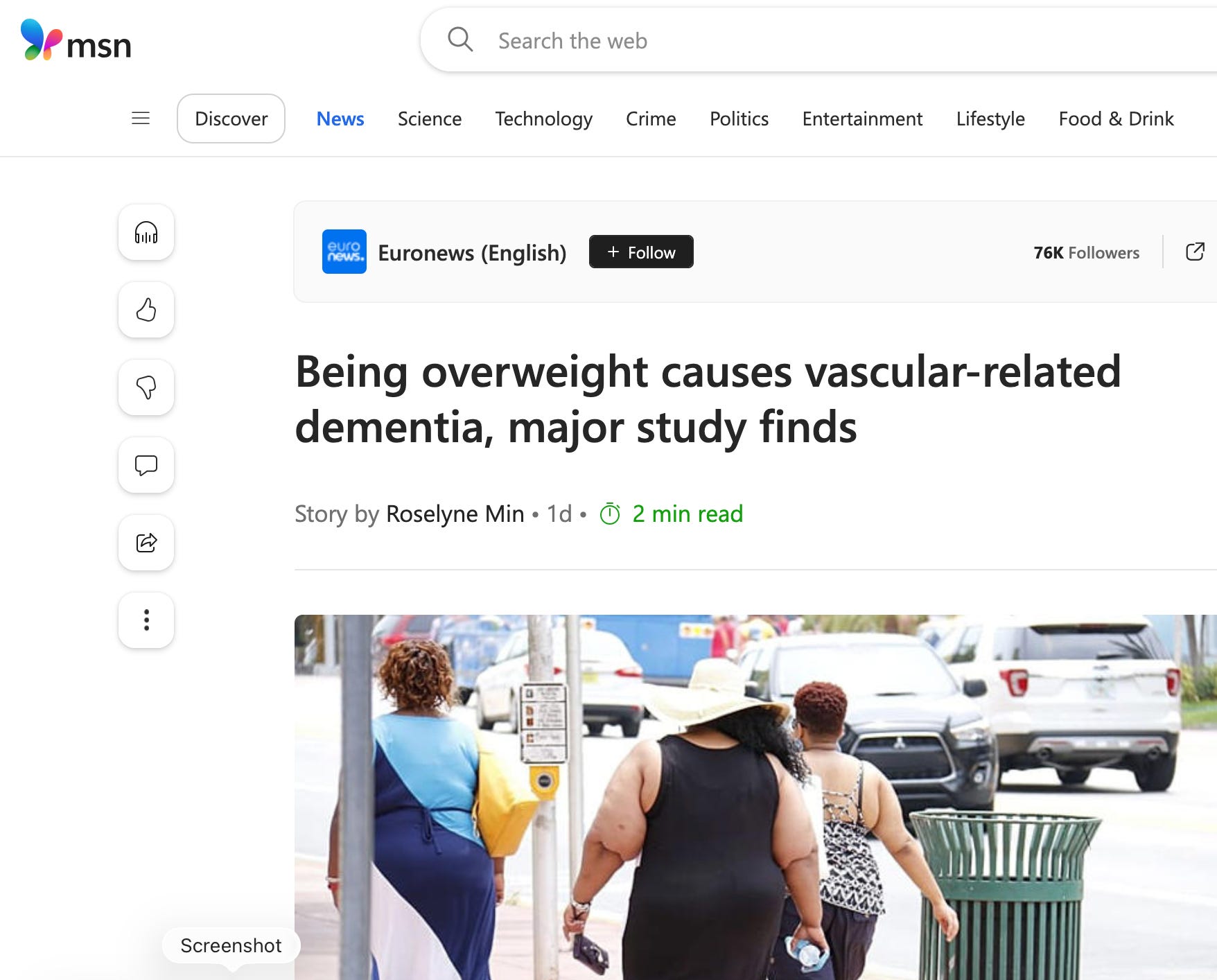
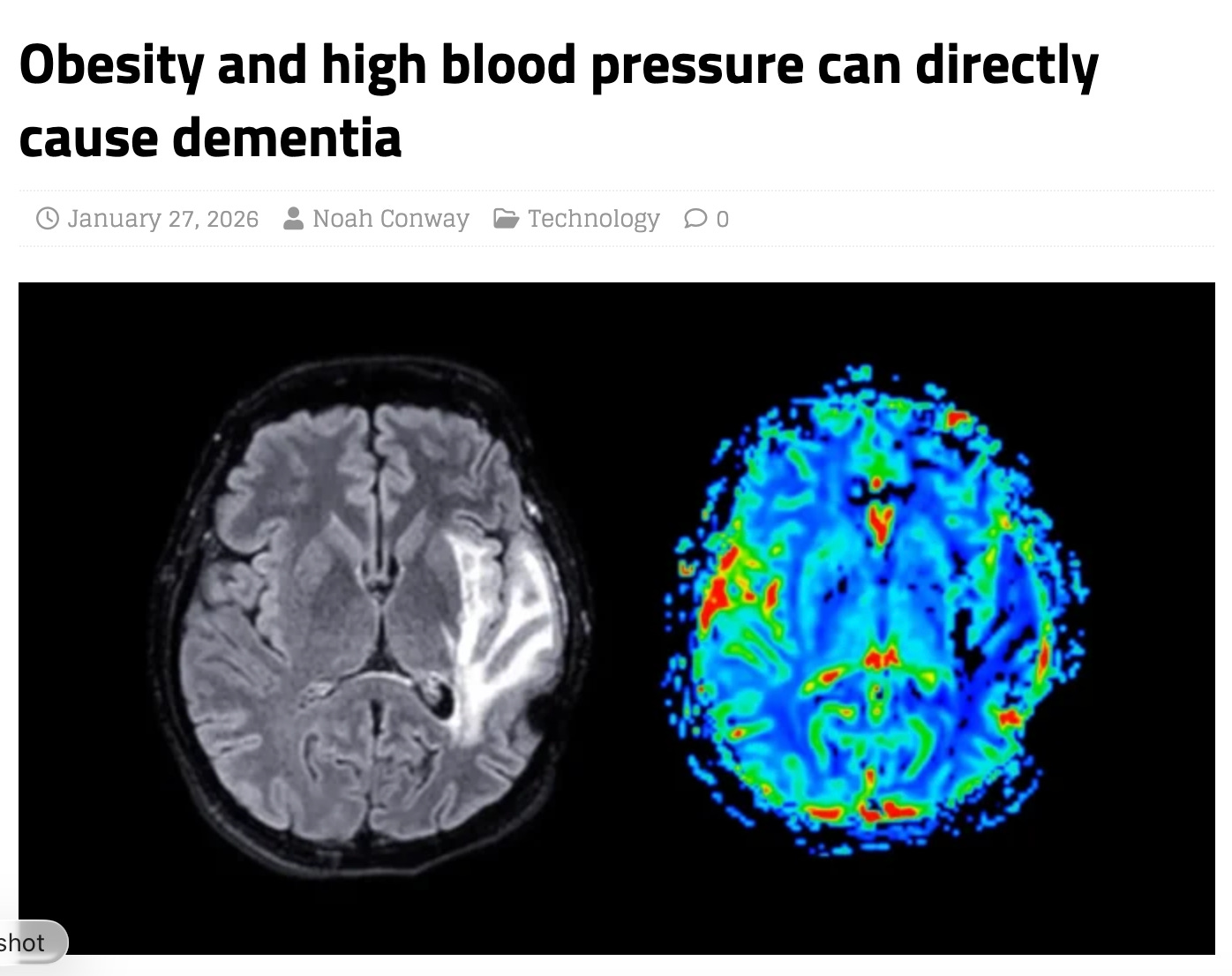
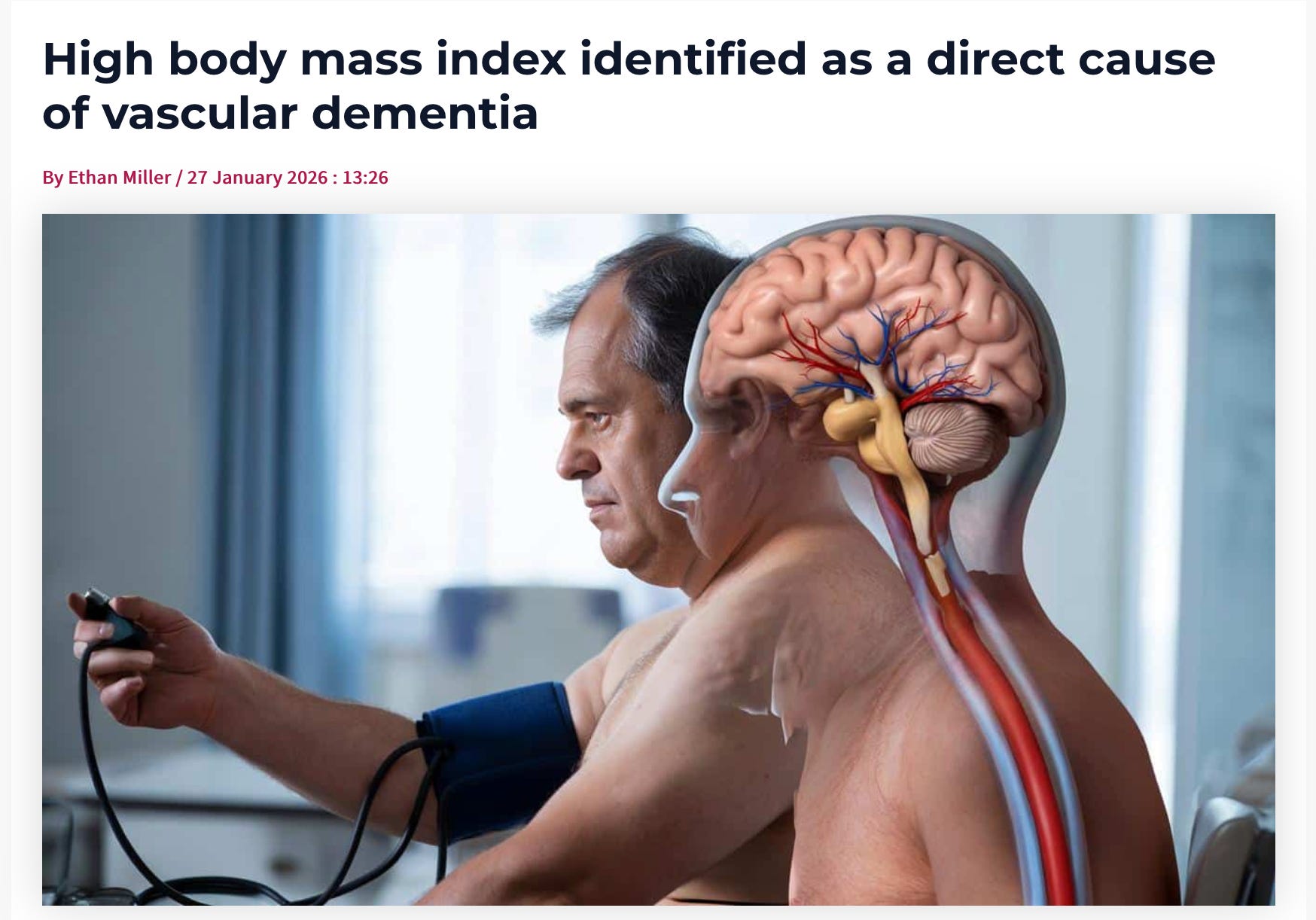
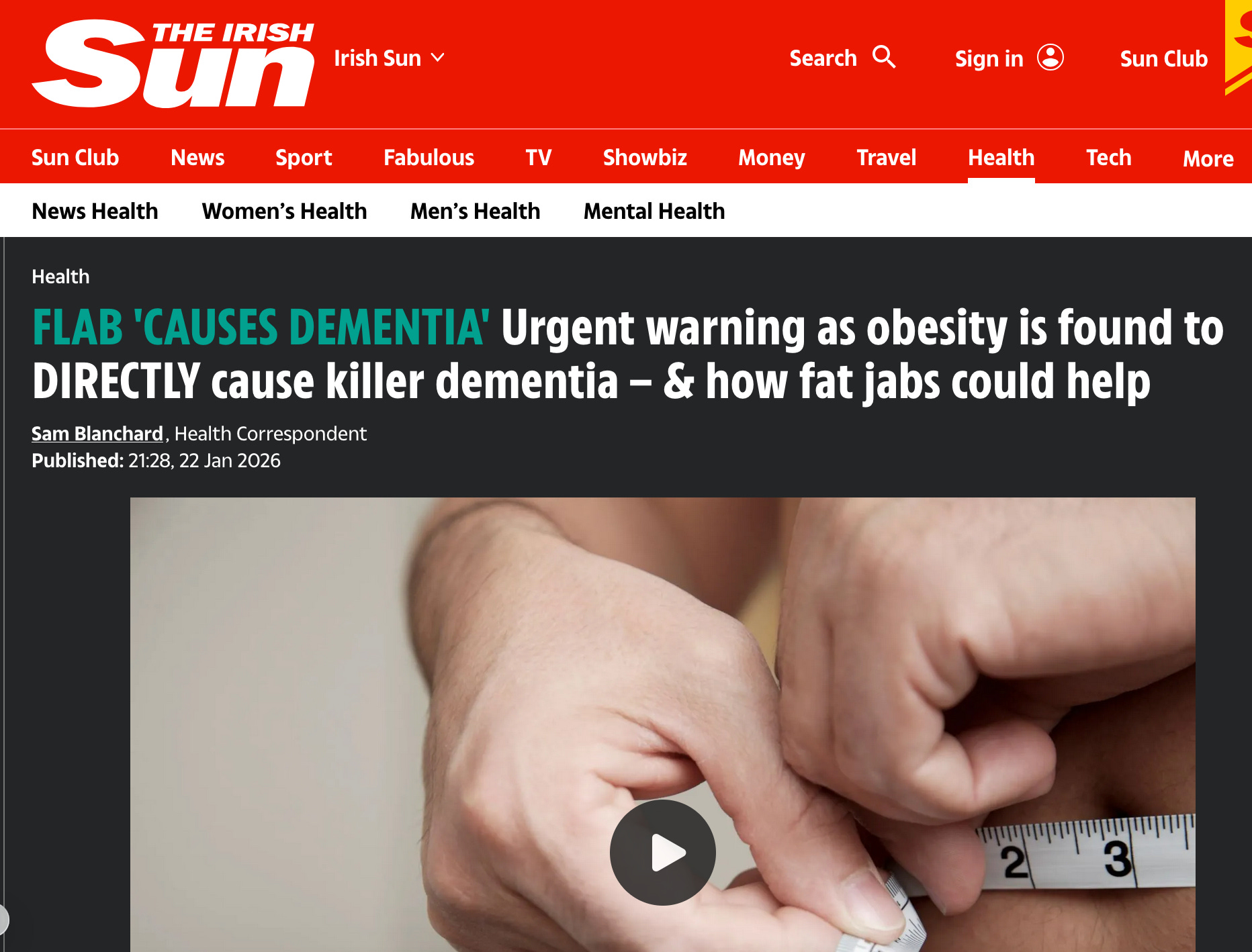
The only problem? These headlines aren’t accurate.
Danish researchers analyzed data from multiple cohort studies totaling more than 1 million participants of European descent. BMI was calculated as weight in kilograms divided by height in meters.
The study found these observational associations:
After adjusting for age, sex, cohort, smoking status, education, physical activity, and alcohol consumption, high BMI carries a higher risk for vascular-related dementia.
High blood pressure carries a higher risk for vascular-related dementia.
According to Mendel’s laws of independent assortment, we inherit genetic variants on a random basis during meiosis.
Using a statistical technique called Mendelian randomization, the study confirmed that certain genetic variants raise the risk for high BMI.
It also confirmed that these genetic variants raise the risk for vascular-related dementia.
In addition, it helped show that the observational association between the lowest BMI and dementia is probably reverse causation. (Loss of appetite is a symptom of dementia).
This study is more powerful than other observational studies because it adjusts for genetic variants, which in turn reduces confounding variables.
However, Mendelian randomization is not the same as a randomized, controlled trial. Moreover, the point of the study was to find out if high BMI — not the possession of certain genes — raises the risk of dementia.
The researchers admit:
We cannot exclude that this association is mediated via other nonconventional risk factors.
The researchers explain that high BMI can lead to high blood pressure, which in the brain can lead to strokes, which lead to dementia.
Consider the people with a high body mass index who don’t have hypertension. Based on the idea that high BMI causes dementia, a doctor with a crushing workload might needlessly prescribe GLP-1 RAs for these patients.
In addition, the disproportionate focus on obesity could cause thin patients’ health risks to be overlooked.
When I think of all the other health conditions that obesity supposedly causes, I wonder if the actual culprit is a mediating risk factor (such as hypertension, in this case).
Researchers noted that hypertension medications appear to lower the risk for dementia.
Are there any natural ways to decrease blood pressure? I found a randomized, controlled study that answered this very question.
The study does not show a cause-and-effect relationship between high BMI and dementia.
This study showed that high blood pressure partially mediates an association between high BMI and vascular-related dementia.
It found high BMI to be a likely cause of vascular-related dementia because researchers meticulously adjusted for all the known relevant variables, including genetics.
Correlation isn’t causation.
Many thanks to:
The Journal of Clinical Endocrinology & Metabolism for making this paper free to the public
the researchers (named below)
the anonymous study participants
The excellent newsletter DementiaWHO, for making me aware of this study via this recent article.
Liv Tybjærg Nordestgaard, Jiao Luo, Frida Emanuelsson, Genevieve Leyden, Eleanor Sanderson, George Davey Smith, Mette Christoffersen, Shoaib Afzal, Marianne Benn, Børge G Nordestgaard, Anne Tybjærg-Hansen, Ruth Frikke-Schmidt, High Body Mass Index as a Causal Risk Factor for Vascular-Related Dementia: A Mendelian Randomization Study, The Journal of Clinical Endocrinology & Metabolism, 2026; dgaf662, https://doi.org/10.1210/clinem/dgaf662
No posts
Comments
Nothing yet. Say the first thing.
Sign in to join the conversation.