
By Denise Rivette
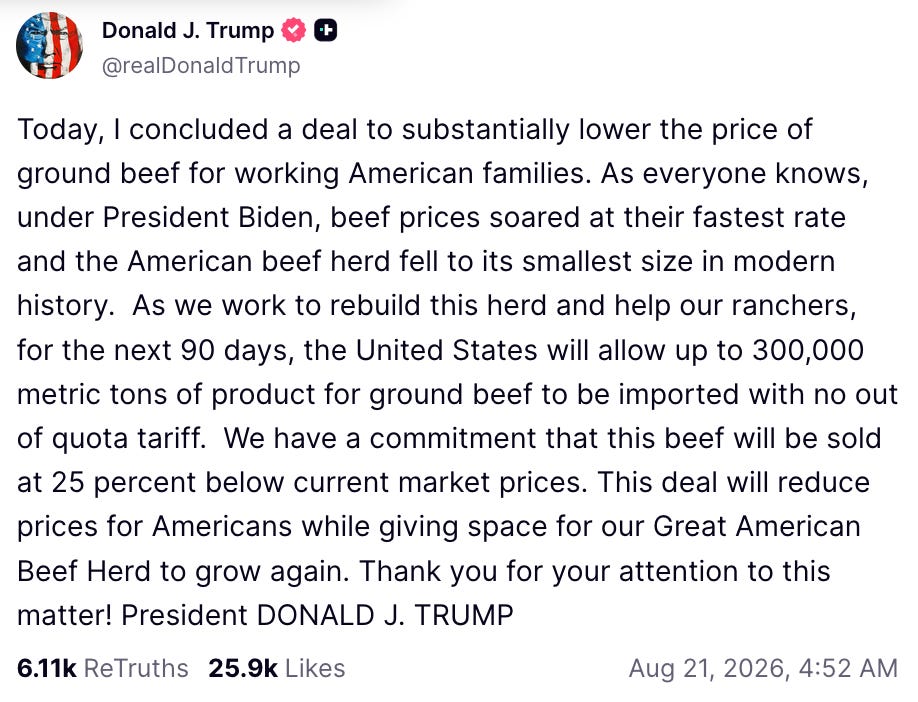
Yesterday, President Trump announced his latest effort to reduce grocery prices and increase American cattle herds. Below are reactions from cattlemen and our federal delegation.
“Trump just opened the door to another 300,000 metric tons of grinder beef imports over the next 90 days, on top of the Argentina deal from earlier this year. He says it’ll lower prices at the counter and “build the herd.”
So how’d the Argentina deal work out? Cattle prices haven’t come down. The herd hasn’t rebuilt. And just this month, nearly 30,000 pounds of Argentine beef hit store shelves in Florida and Texas after skipping required USDA import inspection, recalled only after the fact.
Our question: who’s advising this guy? We’ve got elected officials from Montana and cattle country who could tell him exactly how this works. Where’s this new beef even coming from, and who’s checking it before it reaches your plate?
The American cattle producer is finally seeing a fair price after years of getting squeezed. Now DC wants to flood the market with cheap, under-inspected imports and call it “rebuilding the herd.”
If you think you can rebuild a national cow herd in 90 days, I’ve got some heifer calves to sell you.”
“NCBA is disappointed by the President’s statement. While America’s cattle producers share the goal of keeping groceries affordable for consumers, flooding the market with government-subsidized, below-market beef is not the way to rebuild the American cattle herd. Cattle markets have already turned sharply lower this morning, to the detriment of farmers and ranchers. This is a critical time of year for cattle producers, as we approach the season where they are making decisions regarding their herds. Cattle farmers and ranchers are responding to strong market signals and historically high demand, and we are already working to rebuild after years of ongoing drought, high input costs and other challenges that have reduced U.S. cattle numbers. Today’s announcement and other market interventions throw cold water on the prospect of herd expansion and sacrifices long-term stability for short term messaging.”
I’ve advised President Trump against this course of action for a year because American ranchers have been struggling against the packer monopoly for decades, and this will further harm them - most of whom are MAGA Republicans. The President’s heart is in the right place on wanting lower prices for the American people, and beef prices have been impacted by the [New World] screwworm. But the reality is this action will make it more difficult for American ranchers to rebuild our herd and bring prices down for the American people. And most importantly, this will harm our ranching families who feed the nation.
Montana ranchers are struggling due to years of drought that has thinned their herds. While I commend President Trump for working to lower the price of goods at the grocery store, importing foreign beef is only going to hurt our ranchers and increase prices over the long-term. We need to do all we can [to] support them by letting the market recover.
I understand the President taking action to lower prices at the grocery store, but it cannot happen on the backs of our ranchers. Montana producers cannot be asked to absorb the cost. We must protect our ranchers and strengthen the American cattle herd so American beef remains at the center of our food supply.
For decades, USCA has advocated for the federal government not to intervene in cattle markets, yet policy decisions have steadily moved in the opposite direction. From recent tariff exemptions for Brazil after violating deforestation standards, tariff exemptions for Argentina after violating forced labor standards, to the expected reopening of the border to Mexican cattle on Monday in the face of additional New World Screwworm cases, each action on its own sends a troubling market signal.
U.S. ranchers are already facing historically high input costs, the same inflationary pressures affecting all of agriculture, as well as prolonged drought and extreme wildfires that have reduced access to grazing land in many states. These are the market signals that make rebuilding the U.S. cattle herd far more difficult than it appears on paper. Layering a sudden, government–driven surge of imports on top of these conditions – especially in the fall, when many ranchers market their cattle – further erodes the economic confidence needed to invest in herd expansion. Taken together, they amount to a constant chipping away at our industry’s foundation and moving us closer to a breaking point.
“You don’t put America first by putting U.S. cattle producers last. This move will weaken our markets and gamble with food safety in the process,” said President Justin Tupper.

Comments
Nothing yet. Say the first thing.
Sign in to join the conversation.