
By Robert Chaney, Mountain Journal
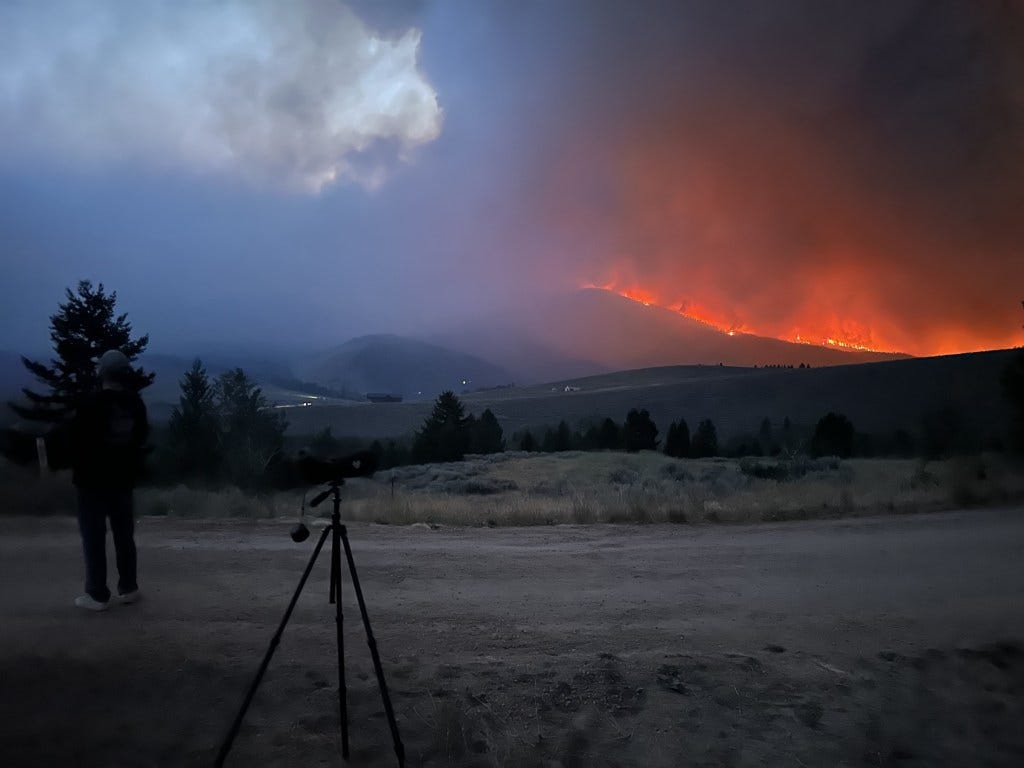
Last Thursday, Erik Borge knew a wildfire was burning about 10 miles northwest of Maverick Mountain Ski Area, near Polaris, Montana. It had been futzing around for a week with little activity.
“On Friday night is when things in my world got sideways,” the co-owner of the ski hill and Elkhorn Hot Spring Resort told Mountain Journal. “The sheriff let me know the fire was coming at us, and was expected to hit Maverick the following evening. That’s when everything went off the rails.”
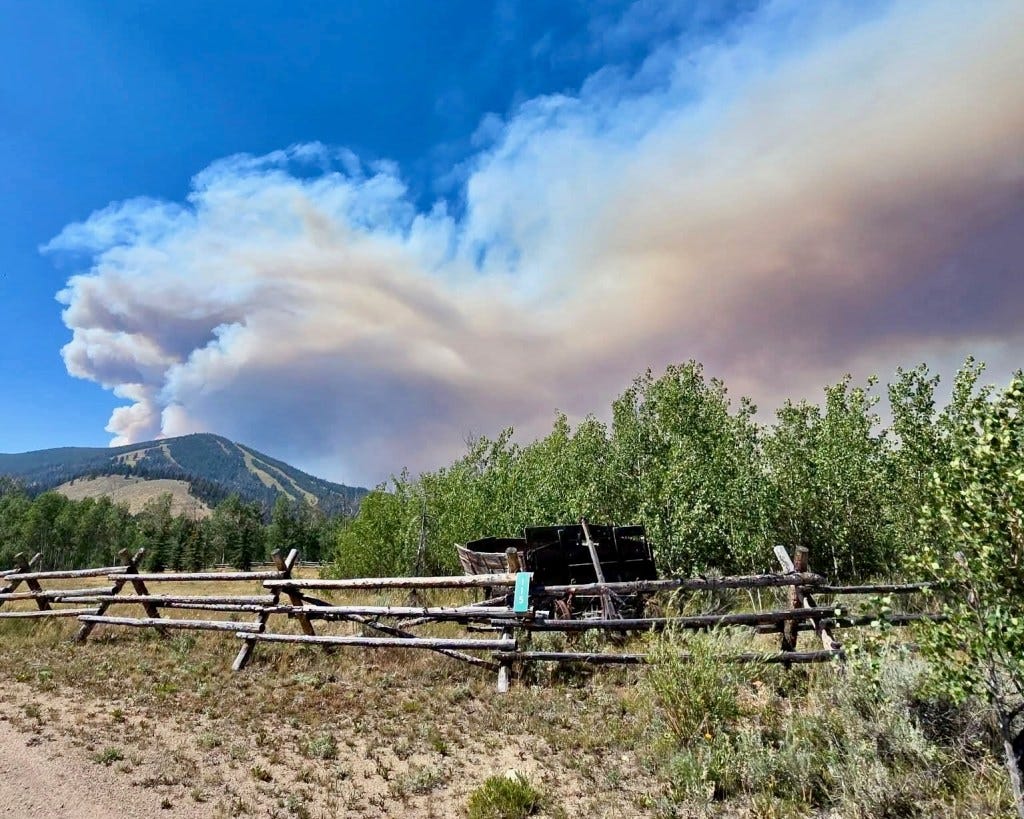
Borge and his wife Kristi bought the ski area in 2015, and the nearby hot springs lodge two years later. Their one-lift operation sits on the edge of the West Pioneers Wilderness Study Area, with runs carved into a 450-acre U.S. Forest Service special-use zone. Smoke from the Sand Creek Fire had been an annoyance since it first appeared on August 1. On August 8, it became existential.
“The Sand Creek Fire exhibited extreme fire behavior on Saturday, August 8. in a hot, dry, unstable atmosphere, with rapid fire spread through pine and fir,” Evan Jacobs, Watch Duty’s Montana regional fire captain told Mountain Journal in an email.
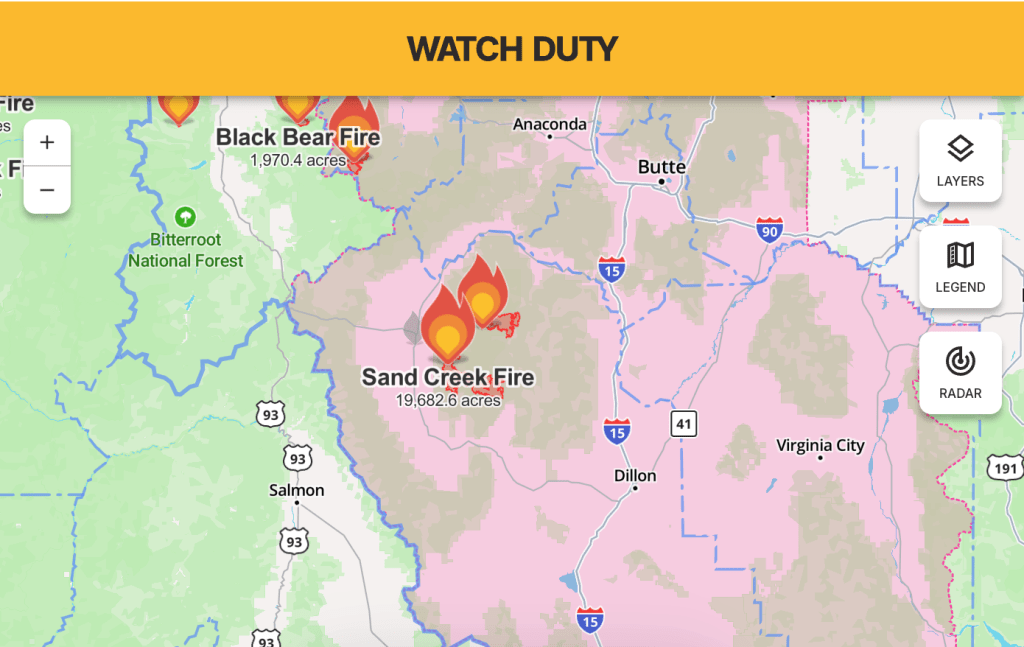
At noon on August 8, Beaverhead County Sheriff David Wendt notified residents they might need to evacuate, skipping the preliminary “ready” stage and moving straight to “set.” Three hours later, the sheriff ordered “GO” for everyone on Maverick Mountain, Elkhorn Hot Springs, Shale Creek, Clark Creek and the north end of the Grasshopper Valley. By Tuesday morning the fire had ballooned to nearly 20,000 acres, putting it well atop the list of Montana’s 10 largest fires this week.
Like a cleanup batter in a baseball lineup, Montana entered the 2026 fire season this weekend with a hard swing. The American West had already seen the deaths of at least seven firefighters, a helicopter crash, 900 homes and buildings destroyed in Spokane, Washington, and smoke from Oregon and California, Minnesota and Canada blowing all the way to New York City and Washington, D.C. More than 4 million acres burned nationwide as of August 10. That’s 156 percent of the 10-year average, according to the National Interagency Fire Center, and Montana doesn’t usually get burning until August.
“The Northern Rockies will remain on the northern edge of a sprawling ridge of high pressure through Tuesday,” Montana Department of Environmental Quality reported Monday. “Fire weather will be an issue thanks to hot, dry, and breezy conditions leading to active fires on established and emerging wildfires. Air quality remains degraded over the western half of the state largely due to massive active wildfires burning in Oregon and Washington. Expect better mixing Monday and Tuesday afternoon thanks to an approaching disturbance.”
That disturbance is a potential line of thunderstorms predicted to enter the state sometime Wednesday, according to the National Weather Service (NWS). “Red Flag Warnings have been issued for the Beaverhead-Deerlodge National Forest, with the strongest winds expected to bring the worst fire weather conditions along and east of the Continental Divide,” NWS said. “Wind gusts will reach 30-35 mph, with localized gusts near 40 mph for the most exposed locations.” The West Pioneer Mountains moved into red flag status Monday evening, with Wednesday’s weather change bringing “gusty, erratic outflow winds [and] the potential for new fire starts from lightning.”
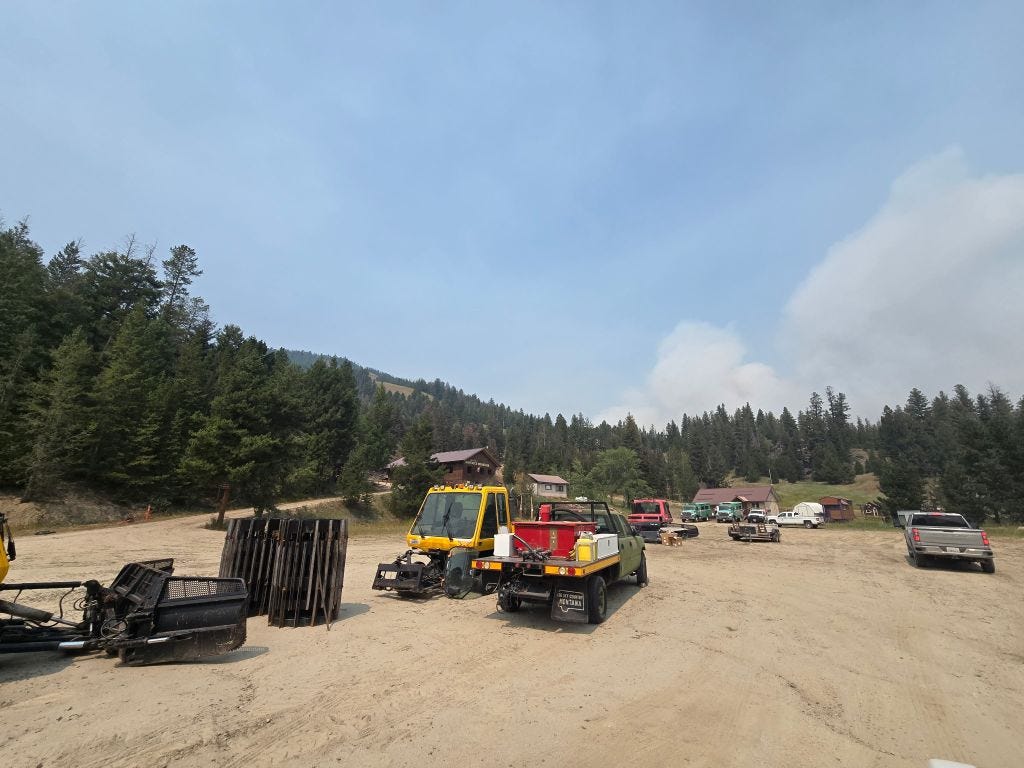
Maverick Mountain sits just 40 air miles northwest of Dillon. The Borges say they have been mustering their neighbors and employees to prepare their property as best they can. A Forest Service hotshot crew scraped the vegetation down to mineral soil around the 11 guest cabins over the weekend and other outbuildings around Elkhorn. Bulldozer drivers have been cutting lines along the ski area runs. A lifesize image of cowboy actor John Wayne has been removed from the Elkhorn Lodge, along with the rest of the decorations.
“He’s kind of irreplaceable,” Erik said of “The Duke.” “We’re really fortunate to have a small, tight-knit team who stepped up and dropped what they were doing to support the locals in the community.”
More at risk are the snow-grooming tractors, which were moved to the middle of the ski area parking lot, and parts of two refurbished chairlifts recently acquired from other resorts (some of which were hauled out by gooseneck trailer to neighboring ranch fields). Borge said two of his ranching neighbors are missing several hundred head of cattle in the burn zone. Air tankers loaded with fire retardant made at least two dozen drops on August 9, Borge said, painting his ski lodge and hot springs the color pink.
By Tuesday, the Sand Creek Fire had grown to 19,682 acres, and NIFC estimated its containment at 1 percent. Montana has logged 1,599 fires to date this year, 80 of which ignited in the past week alone. They’ve burned 88,003 acres.
On Monday, the western border counties of Missoula, Ravalli and Mineral have declared Stage 2 fire restrictions, according to Montana Fish, Wildlife and Parks’ Active Fire Restrictions website. Stage 2 restrictions prohibit all campfires, outdoor tobacco smoking except in cars or hardened areas, and any outdoor use of internal combustion engines, welding or explosives between 1 p.m. and 1 a.m., and banned operating motorized vehicles off designated roads or trails.
“If I have anything left, I’ll be coming back to a mess,” Borge said. “I’m not complaining. Right now it’s about taking care of our community, taking care of our people. Then it’s a matter of putting the pieces back together.”

This article originally appeared in Mountain Journal, a nonprofit 501(c)(3) media organization serving as both a journalistic watchdog and celebrant of Greater Yellowstone. You can support their “public-interest journalism at the intersection of nature and humanity in America’s wildest, most iconic ecosystem” by donating to them HERE.

Comments
Nothing yet. Say the first thing.
Sign in to join the conversation.