
Twice in the last century, August 20 was a day to face the fire.
In 1910, fires across western Montana and Idaho burned about three million acres in a few days. Eighty-seven people died. The people fighting the fires were mostly young men from Spokane and Missoula, kids who were handed a shovel and a bedroll and sent into country they had never seen. Ed Pulaski saved forty of them by holding them at gunpoint in a mine tunnel. Tim Egan tells the story in a must-read book, The Big Burn.
August 20 of 1988 brought a similar fire event in Yellowstone National Park. More than 150,000 acres burned in one day. When it was over, about a third of the park had burned.
August 20 of 2026 is bringing fire that recalls these two earlier events.
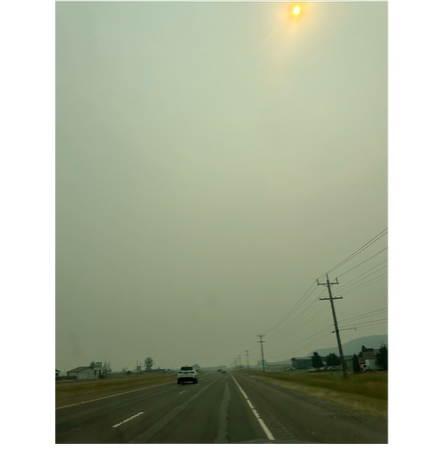
Today, we are facing it with a workforce that is intentionally smaller than it was two years ago.
Montana is facing active wildfires and the country is at National Preparedness Level 5, the top of the scale, with 30,000 people deployed to fight over 75 large fires burning across the U.S. There is no reserve left. That is what Level 5 means. The next level is picking up people from the streets of Spokane and Missoula and sending them out with a bedroll into country they’ve never seen.
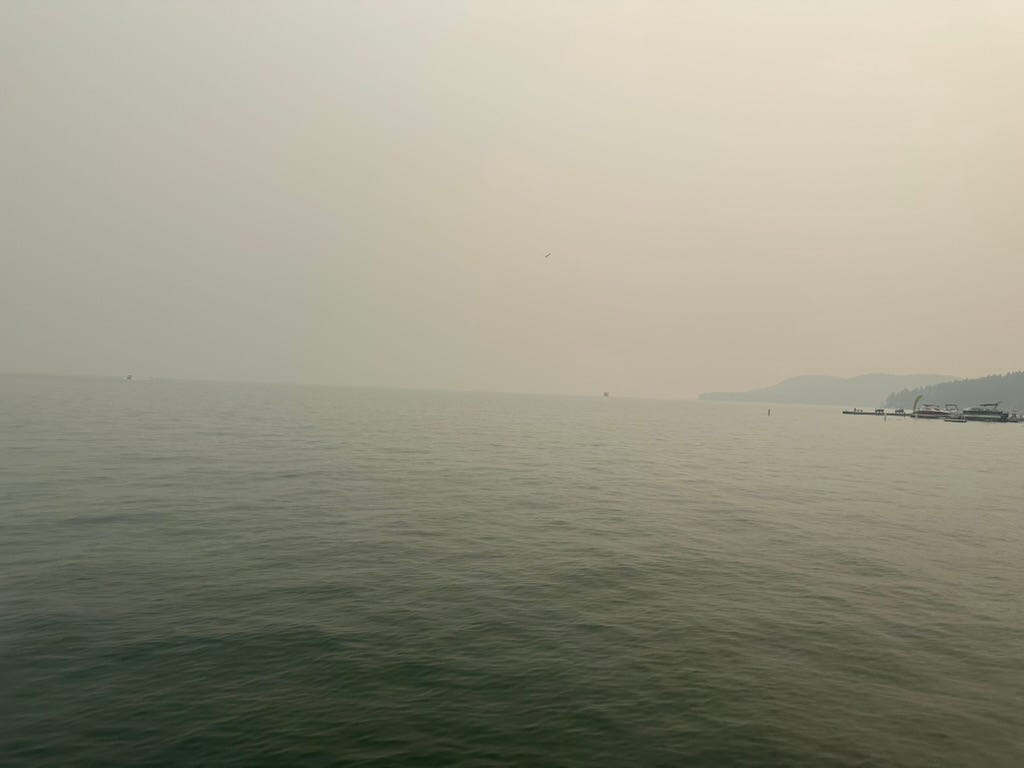
By historical standards this is not a catastrophic season in Montana. Montana burned more than 1.3 million acres in 2017. That is what we need to worry about. This level of smoke is becoming an ordinary August.
After the 1910 fire, there was a reckoning about what the job of the Forest Service was going to be. The Big Burn, as Egan describes, led to a different approach to managing fire. For most of the twentieth century, as a result of the lesson we learned from the Big Burn, we put fires out.
Taking fire away for eighty years didn’t kill fire, it just stored the fuel. Lodgepole pine holds its seed in cones sealed with resin that only fire will open. In 1988, the debt came due in Yellowstone. A winter with almost no snow, a summer with almost no rain, and eighty years of accumulated fuel all came together in August of that year. Twenty-five thousand people, and a hundred million dollars, went to putting the fires out, but in the end what finally stopped them, in September, was snow.
What can we learn from August 20, trying to see as best we can through today’s smoke? Fire is a process we can manage on the front end, through prescribed burning and thinning. But if we hope and wait, we’ll be chasing it on the back end through emergency suppression.
The question is whether we’re willing to fund the boring version of the work in the years when nothing is burning.
Most Forest Service employees hold a red card, meaning they are trained for fire-line duty. The trail crew lead that heads out in early spring is the one that shows up when the fire hits in late summer.
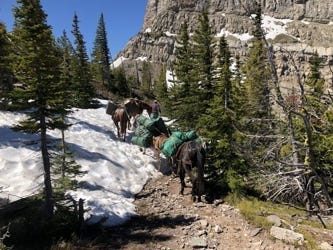
But DOGE and this administration Pulaskied thousands of Forest Service positions. The Forest Service lost at least 1,800 red-carded employees since 2025.
Now, in the middle of the smoke, the administration is looking at consolidating wildland fire operations. USDA is moving Forest Service headquarters to Salt Lake City and converting regional offices, including Region 1 in Missoula, into state-level offices. Non-fire programs that support fire work, like vegetation and watershed management, face cuts in the neighborhood of 30 percent.
1910 taught us that we know how to fund the Forest Service and will do so generously after we watch people die. 1988 taught us that our policies and the land don’t always line up.
This August 20 we are seeing that the landscape doesn’t lie.
The question is whether we learn the lesson.
All together.
No posts
Comments
Nothing yet. Say the first thing.
Sign in to join the conversation.