
A couple weeks ago, I had a dream that has stayed with me ever since.
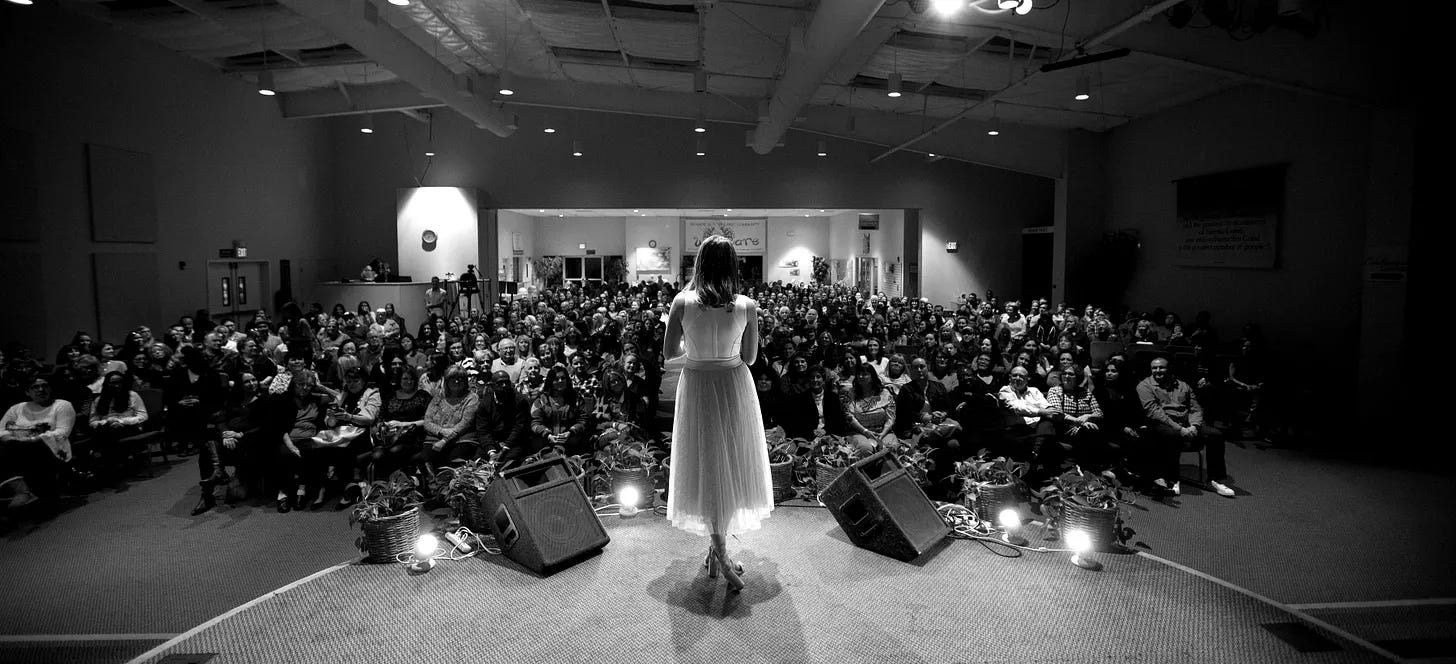
In the dream, I was at a concert. I’d arrived early and found a great seat near the front. Shortly after I sat down, two women next to me asked if I would save their seats while they ran to the restroom.
“Of course,” I told them.
What followed was so frustrating. I held those seats for more than thirty minutes. When other people tried to sit there, I stopped them. When someone suggested the women weren’t coming back, I defended them. Maybe the bathroom line was long, maybe they’d stopped for snacks, maybe they’d be back any minute. I felt responsible for those seats.
Then the concert started, and the women never returned.
Suddenly I realized something: I’d spent all that time protecting seats for people who weren’t coming back.
When I woke up, I couldn’t stop thinking about it, and I couldn’t stop thinking about how much it mirrored my own life.
Over the past few years, I’ve gone through one of the biggest identity shifts of my adult life. I stepped back from mediumship as the center of my work. I legally changed my last name to Imani. I started showing up on Instagram more regularly, started writing again, and I’ve begun speaking more openly about faith, mental health, sobriety, the things happening in our world that have been weighing on my heart, and the questions I’ve been wrestling with behind the scenes for years.
And in all honesty, part of me has worried about how some people would respond. There was a woman who’d followed me since the early days of my television show, someone I genuinely considered my number one fan. She sent handwritten letters. Care packages in the mail. Birthday messages every single year without fail. She was always the first to like a post, the first to comment, the first to show up for whatever I was building.
Sometime over the past year or so, she stopped. No more messages. No more likes. She quietly unfollowed.
I don’t know exactly why. For a stretch of time, I was posting a lot of content about the children in Gaza. I’ve eased up since then because I know these things can be heavy for a lot of people to consume on a regular basis, though I still share stories about those families from time to time because to me it feels like the right thing to do (and to this day, I still communicate with and donate to several Palestinian families on an ongoing basis). For me it was simply grief, the same grief I’d feel watching any child suffer anywhere, and I couldn’t stay silent about it just because it might cost me an audience. If that’s what it cost me, I’ve made peace with it.
It also could have been the shift from Monica the Medium to Monica Imani. It could have been my relationship with Jesus, which for me exists completely outside the context of religion, or some current belief of mine that no longer matched hers.
Or it could have been something I said or did during psychosis that she never forgot, even if it’s not something I’d stand behind today. I was unwell in ways I’m still finding language for, and I know a lot of what came from me during that season hurt people who loved me.
Honestly, it could have been something that had nothing to do with me at all. For a while, I caught myself replaying every post from that stretch of time, trying to pinpoint the exact moment she left, as if identifying the cause would somehow bring her back.
At some point I had to admit I couldn’t keep doing that. I can’t spend my life auditing every belief, every opinion, every piece of who I’m becoming, against the fear of losing one more person who used to sit in the front row.
Then it hit me like a ton of bricks: why am I still protecting empty chairs?
The more I sat with that question, the more I realized it didn’t just apply to my audience. I think we all do this. How many empty chairs are we protecting? How many decisions are we making around people who left years ago?
It might be an old friend, someone you haven’t spoken to in years, yet their opinions or judgments somehow continue to shape your choices long after they’ve stopped being a part of your life. And it’s not even their actual opinions. It’s the ones you’ve imagined. The stories you’ve created.
I had a best friend for fifteen years. We had a falling out during my psychosis, and we haven’t been part of each other’s lives since. I still sometimes catch myself thinking, “I wonder what she’d think about this,” as though her opinion still has a vote in decisions she has no idea I’m even making.
Or it could be a former partner. Someone who moved on long ago, yet somehow still occupies real estate in your mind. You still wonder what they’d think. You still edit parts of yourself around a version of them that isn’t even in the room anymore.
Family dynamics add another layer to this experience. The empty chair can look like outdated expectations, an idea of success or the “right path” handed to you at a young age that you never took the time to question. Maybe nobody is actively demanding it from you anymore, but you’re still carrying it.
Sometimes the empty chair is a career, a title, an identity, a version of yourself that once fit perfectly but doesn’t fit anymore. For thirteen years, mine had the name Monica the Medium attached to it. Every time I’ve considered stepping further into this new chapter, a voice whispers: but what if people expect me to stay the same? What if they liked Monica the Medium more than they’ll ever like Monica Imani?
I’ve come to learn that much of our suffering stems from our attempts to hold onto things that have already ended. This is not a sign of weakness but rather a sign of loyalty. We convince ourselves that letting go means betraying what once mattered.
But letting go isn’t betrayal. It’s honesty. It’s admitting that someone isn’t coming back, and choosing to call that acceptance instead of loss.
In my dream, I wasn’t protecting occupied seats. I was protecting empty ones. That’s what made it so freaking exhausting. The effort wasn’t serving anyone, because the people I was waiting for weren’t even there.
And maybe that’s the part that struck me most: the concert doesn’t stop for the empty chairs. The music still plays. The show goes on, with or without the people we saved a place for.
Some of the people I was afraid of losing were already gone before I even noticed. Some left years ago. Some only ever liked one chapter of my story. Some were attached to an older version of me, the one who channeled messages from Spirit for thousands of people a year and rarely talked about Jesus, sobriety, my healing journey, or the parts of my story I’m still finding the language for.
And that’s okay. People get to leave. They’re allowed to outgrow us, the same way we’re allowed to outgrow who we used to be.
What isn’t okay is shaping our lives to cater to an audience that’s no longer there. It’s not okay to shrink ourselves for those who have stopped engaging with us, to protect seats for absent friends (or followers), or dull our beliefs in the hope that one specific person might come back and sit in the front row again.
Because while we’re busy guarding empty chairs, we risk missing the people who are actually in the room. The ones who are here. The ones who are growing alongside us, excited to meet whoever we’re becoming instead of waiting for us to go back to who we were.
Maybe that’s the invitation. Not to become careless or indifferent, and not to stop loving the people who were part of earlier chapters. It’s to stop arranging our lives around their absence. To bless them, thank them, appreciate the role they played. And then let the seat open up for someone new.
I think about her sometimes, the woman with the handwritten letters and the birthday messages, the one who showed up before almost anyone else did. Wherever she is, I hope she’s well. I’m still grateful for every card, every package, every year she chose to stay. But I’ve stopped auditing myself in her absence, and I’ve stopped saving her a seat.
Because somewhere along the way, I realized the people I was waiting for were never the only people in the room. The concert had already started, new faces were already sitting in the seats I kept looking past, and all that time I spent guarding a handful of empty chairs was time I wasn’t fully present for the people who’d actually stayed.
Support My Work:
If you’ve been enjoying these essays and would like to support this next season of my work, paid subscriptions are currently 25% off through this Sunday.
Paid subscribers receive early access to the deeper chapters of my story, along with occasional members-only essays and reflections before they’re shared more widely. They’re also able to comment on every post and join the conversation.
If you choose to become a paid subscriber, your support helps make it possible for me to continue this writing and finally bring my upcoming podcast, Psychic or Psychosis? (Jesus Take the Wheel), to life this fall. If you join before the launch offer ends, you’ll also lock in today’s standard membership pricing for as long as your subscription remains active, even if prices increase in the future.
Whether you’re a free reader or a paid subscriber, thank you for being here.
This essay is about learning to stop focusing on the people who left and to appreciate the people who stayed. If you’re reading these words, you’re one of those people.
I’m grateful you’re here.
No posts
Comments
Nothing yet. Say the first thing.
Sign in to join the conversation.