
Fabians are in the news; people hear for the first time
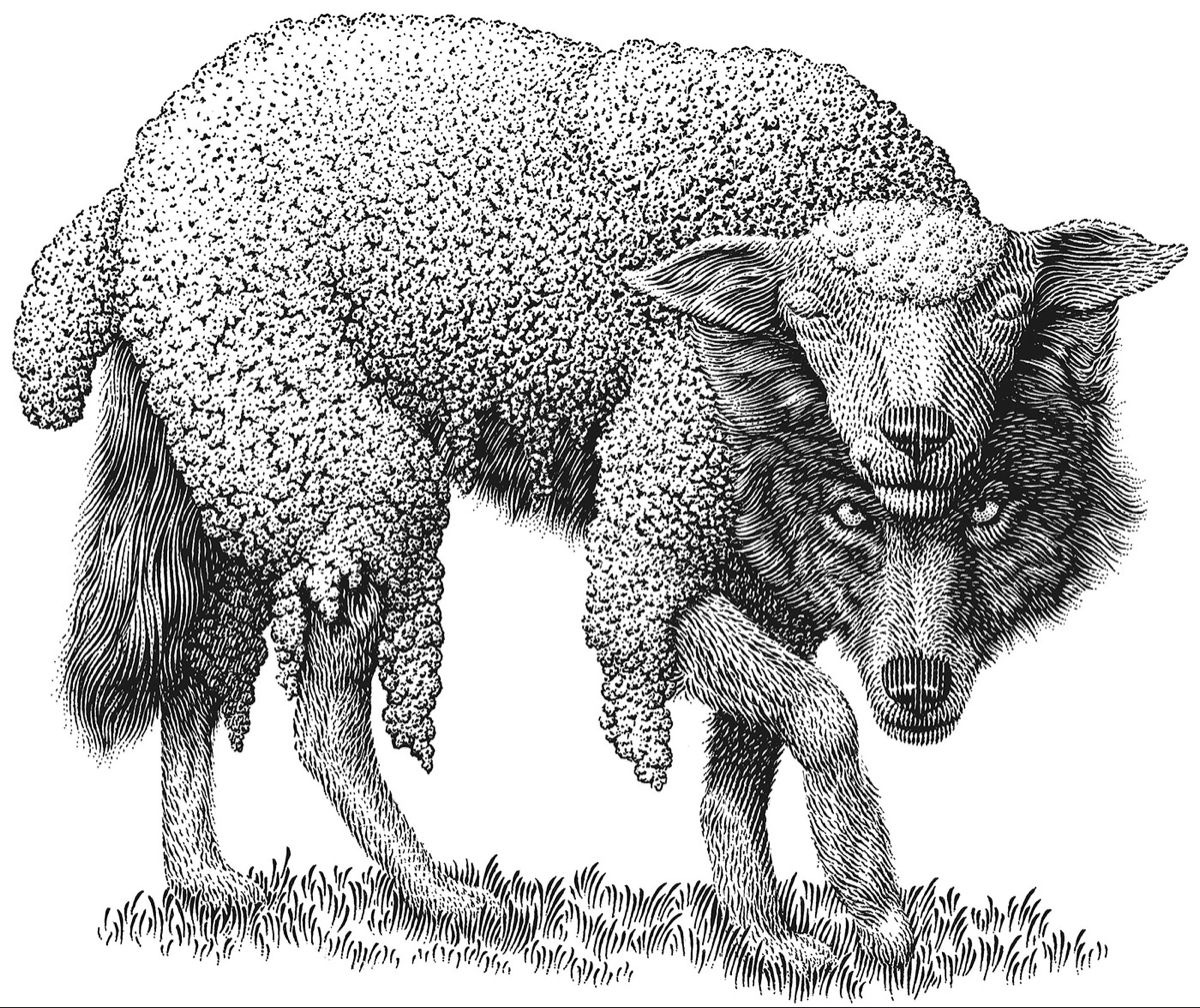
Political target obscures shared origins of left and right.
Their spiritual origins give the lie to materialist ideology
Related:
Europe’s Immaculate Deception Continues - The Hollow Men & Women of Philanthropy’s Vacuum (Sep 02, 2025)
Jokers In The Pact Threaten EU War Machine - Regrowth would make economic sense, if serious (Mar 09, 2025)
Fabians, Milner Group And War - Britain commits to Ukraine, cuts pensions, announces austerity(Jul 29, 2024)
The CIA And The Elephant In The Room - Agency’s role exposed by colluding with Fauci on Covid origins (Oct 02, 2023)
Übermensch or Lawgiver: Who Rules Among Us? - And why there is only one party (Aug 14, 2021)
Occult Capitalism Or Last Exit To Utopia - The Great Reset: a prelude (Nov 02, 2021)
See also:
Spies, Dupes and Charities - Rivals for Power, Part 4. Norman Dodd and the tax-exempt foundations (Aug 07, 2021)
Chronicle of Dissent - SPARS Document - Veiled threats of terror or civil war in official scenarios (Sep 14, 2021)
Russia Rejects UN Pact For The Future - Communitarian dialectic continues to exploit ‘false binary’ (Sep 23, 2024)
Eurasia note #53 - 100 Days and 8 Years Of War In Ukraine (Jun 4, 2022)
Harvesting You For The Greater Good - Reduction of life, liberty & happiness to a commodity (May 05, 2025)
Dash For Land As Financiers Go To Ground - Colombia conference targets globalist grabs (Mar 16, 2024)
Europe’s Parallel Reality: C02 & Degrowth (May 09, 2024)
WHO Pandemic ‘Treaty’ A Grab For Land & People - Based on the Manhattan Principles of 1798 Malthusianism (May 31, 2025)
(4,000 words or a little over 15 minutes of your company)
2 August 2026
Territories tend to revert over time to historic ethnic rivalry or for control of economic resources.
Imperial powers become more brutal as they decline, as diminishing returns from the colonies lead to higher taxation and harsher extraction methods, even on their own native populations.
With the best of intentions, social engineers have tried to mitigate these human traits, through institutions like the United Nations and by “nudging” behaviour. But where did this start?
The Boer wars (1880-81 and 1899-1902) especially the second, severely damaged the reputation of the British Empire over its use of concentration camps and scorched earth. It used the latter tactic in Bengal in 1943 leading to the Bengal famine, though the toll was smaller than the Bengal famine of 1770, also under the British Empire (about 3 million dead versus 10).
The Boer war left Britain diplomatically a leper. The financial and military strain convinced some, like colonial secretary Joseph Chamberlain, that it could no longer act in “splendid isolation” and must seek formal alliances (with Japan in 1902 and France in 1904). Germany supported the Boers, whose population included Germans as well as Dutch, and this intensified Anglo-German rivalry.
This would set the course for World War One but that wasn’t yet visible.
The brutality of the Boer war convinced many that the British Empire must evolve — but in which direction, to escalate or climb down?
One proposal was to bring the United States back into the British fold. If the U.S. could join a federation, that would spread the financial costs of maintaining the empire.
Cliques capture control of an empire by a “long march through the institutions.” The Fabians called their method of political infiltration “permeation,” outlined in 1887, four years before Antonio Gramsci, with whom that phrase is associated, was born.
The idea was to use existing structures, institutions and political parties (ie multiple parties) to implement gradual change, as outlined in the Manifesto of the Fabian Parliamentary League (1887). Today the World Economic Forum talks of “penetrating the cabinets.”
At about the same time, within the British colonial administration, the policy of a “Third British Empire” was promoted by the Cecil family, at the top of English and British politics for almost 500 years. It was financed by the Rothschilds.
The group which backed federation was led by Cecil Rhodes, the Rothschild-backed gold and diamond explorer, whose quest for the gold deposits of the Transvaal led to the Boer wars.
His ally was Alfred, Lord Milner, British high commissioner for Southern Africa and governor of the Cape Colony from 1897 to 1905 and architect of the Union of South Africa. He would found, in the 1910s, the Milner Group and in turn Chatham House, the Royal Institute of International Affairs, to carry forward the project.
Milner (1854-1925) was of German ancestry, born in Giessen, 40 miles north of Frankfurt, home of the Rothschilds, and not so far from the Rockefellers’ origin (Neuwied, 60 miles to the east).
Milner was also, though it is not widely known, one of the architects of the Balfour Declaration that led to the founding of the state of Israel and he envisaged it as a Zionist outpost within the Anglosphere.
Initially they desired in place of the empire a federation. When that proved impossible, they sought to make the U.S. a dominion like Canada. And when that failed the Milner group’s Lionel Curtis settled on a commonwealth.
The Fabians promoted the same ideas as the Milner group, under a different rubric. The Fabian Society in 1906 declared that the British Empire “must be transformed into a great democratic commonwealth.”
See Fabians, Milner Group And War - Britain commits to Ukraine, cuts pensions, announces austerity (Jul 29, 2024)
Milner’s group was connected to, and financed by, gold and diamond interests via Cecil Rhodes’ will, which in turn is managed to this day by the Rothschilds, identifying American candidates for the Rhodes Scholarship.
While the Milner group coalesced around South Africa, the Fabians had their feet in that other jewel of the British Empire, India.
The Fabians had a less material, more spiritual connection.
Helena Blavatsky had moved her Theosophical Society in 1882 to Adyar, India, near Madras (now Chennai). Blavatsky made connections with Alfred Sinnet, editor of the Anglo-Indian newspaper The Pioneer. He would promote her correspondence with the likely imaginary “mahatmas.” Another close associate was Allan Hume, a civil servant and founder of the Indian National Congress.
She would entertain the colonial class with her magical performances, just as a century before the elite had made a celebrity of the magician Alessandro Cagliostro who indulged their occult interests.
See Occult Capitalism Or Last Exit To Utopia - The Great Reset: a prelude (Nov 02, 2021)
Blavatsky would meet Annie Besant in 1889 after the latter published an enthusiastic review of Blavatsky’s book The Secret Doctrine (1888).
Besant had joined the Fabian society a year after its founding. In late 19th century Britain there was an overlap between alternative spirituality (what we now call new age) and social engineers (what we now call progressives).
Comments
Nothing yet. Say the first thing.
Sign in to join the conversation.