
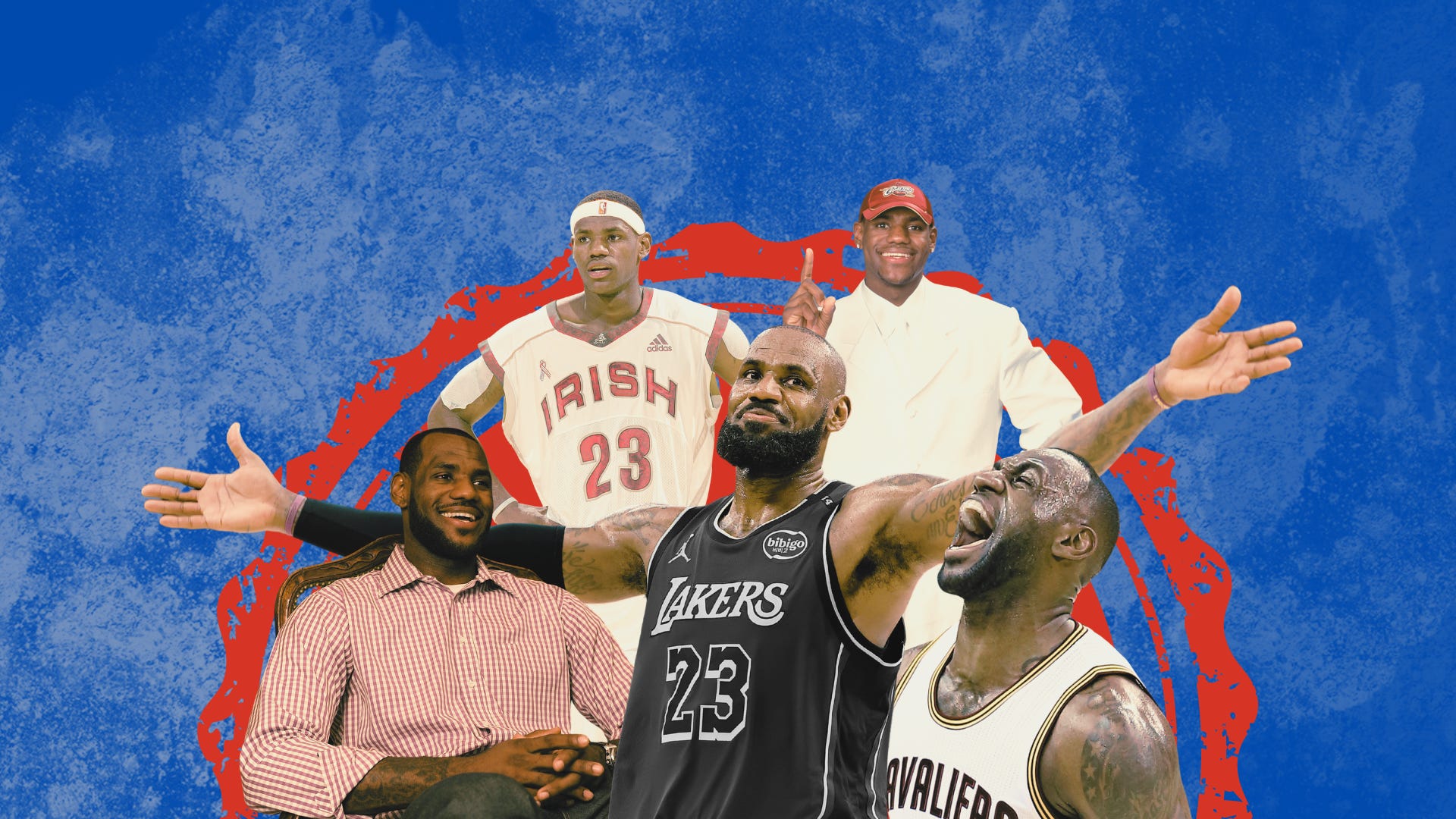
For twenty-four days, the sports world waited with bated breath as the man who defined a generation of basketball pondered his final destination. As the league twisted into mayhem, a summer of buzz and movement, LeBron’s decision loomed above the rest.
The wait stretched so long that the league’s commissioner half-teasingly urged him to make his decision so the schedule could be finalized. Reports from his camp insisted that LeBron was simply deep in a ponderous state, but NBA fans were skeptical. This was, after all, a man who had made a habit of turning career decisions into spectacles — a self-proclaimed King whose public persona had long been defined by theatrics.
But there was no grand reveal around the corner. LeBron James announced his “final decision” in an earnestly worded tweet riddled with typos and separated into multiple posts, a far cry from what people had grown to expect from him, both in its substance and in its delivery.
LeBron James was not going back home to Cleveland, or even back to Miami. He would be joining the Philadelphia Seventy-Sixers.
When faced with a perfect storybook ending — to return home for a hero’s welcome, ending his decades-long odyssey back where it began, bathed in adoration — he chose the path untraveled. He chose to take a risk and chase glory, one final time.
The conversations around this decision ranged from contemptuous to adoring. That’s because opinions about LeBron James are not just opinions about a basketball player. They’re reflections of something much more personal.
I don’t blame people for letting emotions bleed into their opinions of him. It’s impossible to be normal about somebody who defined a generation of basketball. Especially when they were never really given a chance to be normal themselves.
LeBron James was seventeen-years-old when he was branded The Chosen One. He became a myth before he became a man.
He would carry the weight of that title inside every future version of himself. When Cleveland drafted him first overall, it felt as though the prophecy had already been written. The hometown kid was going to save the hometown team. It was too perfect to end any other way.
LeBron spent seven years trying to reach the top of the mountain. But after seven years of coming up short, he decided to veer off the path of destiny, to walk away from the place he was supposed to save in pursuit of his own desires.
In the eyes of millions, The Chosen One made the wrong choice.
I was nine years old when LeBron made The Decision, standing in front of the television in my pajamas. I still had a bedtime, but even I could feel the tension of the moment.
I’m twenty-five now, the same age he was. You might be thinking, This isn’t about you.
But isn’t it?
The power of sports is how it can define time. It is a world inside a world — a story that unfolds across years and decades, something as simple as a highlight capable of transporting us back in time, to where and who we were in that moment.
I don’t remember much about being nine years old.
But I remember where I was when LeBron proclaimed he was taking his talents to South Beach. I remember standing beside my dad inside FedExForum, gasping with eighteen thousand strangers as LeBron thundered down the court in a Miami Heat jersey and attacked the rim with the force of a gladiator. I remember waking up from wisdom teeth surgery, high on laughing gas, my dad eager to inform me that while I was down, LeBron announced that he was coming home. I remember sitting together in the living room of my childhood home, barely breathing as Cleveland tried to do what nobody had ever done before. BLOCKED BY JAMES. Gasps. Hugs. Disbelief.
And now, here I am, living in New York, paying bills, feeding two cats. Covering the end of the career of the same player I watched in my pajamas all those years ago.
As LeBron enters the final phase of his career, I’m overwhelmed by the gravity of it — the gravity of him.
The heroes in ancient mythology were idolized for their supernatural gifts, much like our sports heroes. The difference is that while mythology gave gods human form, we give humans the weight of gods. We ask them to carry impossible expectations, then spend a lifetime debating whether they lived up to them.
And the longer we watch them, the harder it becomes to separate their stories from our own.
That’s why it’s so difficult to be objective about LeBron James. Over two decades, his story became stitched into ours, his career marking the passage of time.
It’s also why GOAT debates contain far more nuance than we’re willing to admit. They are deeper than championships or accolades. We’re protecting the significance of our own memories.
I would never argue with Jordan fans that insist he’s the GOAT. But I could watch every highlight; I could stream The Last Dance on an endless loop. Nothing could replace the feeling of being there to witness someone.
Perhaps that’s why so many people were so certain they knew what LeBron’s wait meant; so certain they understood his motivations.
When somebody becomes the backdrop to our own lives, we mistake familiarity for understanding. We feel like we know them, but we don’t.
We know what they mean to us.
No posts
Comments
Nothing yet. Say the first thing.
Sign in to join the conversation.