
2025 has been a very interesting year in many ways. We have continued to be bombarded with GenAI news. Some have genuinely been impressive developments. But as with most emerging technologies, the incentives to monetize and the lure of hyperbolic promises quickly take over the narrative. GenAI has been no exception. The marketing engines and hype cycles have been running in overdrive.
At the same time, we’ve seen developments poised to reshape multiple domains, whether or not the underlying technology is actually ready. Meanwhile, the debate around reliability and guardrails has largely taken a backseat, with little tangible progress to show.
The development of the fundamental GenAI technology (foundational models) seems to be not just converging but also plateauing when it comes to the scaling bet. There are still avenues left to explore, such as incorporating new data sources, enriching existing datasets, or experimenting with architectural and search‑based perturbations. Yet the resulting performance gains seem increasingly marginal within the current paradigm. Despite the surrounding hype, the core issues remain unresolved.
The applications ecosystem is naturally expanding, but it is still unclear which domains can reliably benefit from GenAI advancements—and whether we will exercise collective wisdom in deploying them. Interestingly, even as the race for adoption and “disruption” accelerates across industries, there is no consensus on what level or type of reliability these systems should strive for.
I will elaborate on this in a forthcoming article, but the short version is this: we cannot assume that rapid or reckless adoption will produce desirable outcomes aligned with the true objectives of these domains. In many cases, the objectives themselves are being redefined to suit the characteristics of the algorithms. Consider the information ecosystem. Its purpose has shifted from reliably informing the public on relevant issues to maximizing engagement in order to harvest data, place ads, and sell products and services.
These newly minted definitions of success may bolster monetization narratives and create a short‑term illusion of societal progress, but they carry significant long‑term costs.
The bets on GenAI continue unabated be it on reliability timelines, or scaling as the sole path to generalization. Yet viable business models remain elusive, and the ROI is still unclear given the scale of the industry’s grandiose investments. It is also uncertain how much of the announced spending is real or will ever materialize. The social constraints continue to raise questions on the data center investments and strategies. From water usage and grid capacity to alternative energy sources and financing challenges, the entire ecosystem is struggling to meet its own promised timelines.
A simple example illustrates the strain: faced with long wait times for grid connections, companies are turning to alternative energy sources to accelerate data‑center construction, including aeroderivative turbines and diesel generators. But the extent, robustness, and climate impact of these measures, especially when deployed at data‑center scale, remain poorly understood.
The jumpt to agentic AI systems have also been unclear in both their promise and their potential impact. Many of the current efforts amount to little more than polished wrappers around LLM chatbots or rebranded workflow‑automation and RPA tools. Even some mainstream players are now expressing doubts about the notion that agentic AI will exponentially transform the economy. And the skepticism extends beyond capabilities: the underlying economics of agentic AI are increasingly being questioned as well.
The claims of imminent AGI continue, though the timelines keep shifting. This is despite past hyperbolic claims on the imminency of AGI or at least AI that will “…superset the intelligence of any single human by the end of 2025.” From the moment such proclamations were made to today, progress in the “intelligence” of foundational GenAI models has noticeably slowed, especially on tasks that matter. I’ve highlighted several of these bold claims before, and revisiting them now is, frankly, quite revealing.
Yet the markets continue to buy into the narrative of exponential breakthroughs just around the corner. The expectation of imminent, transformative leaps remains firmly embedded in the broader economic story, even as the empirical trajectory suggests a far more tempered reality.
Throughout 2025, I have covered a range of GenAI topics aimed at bringing balance and nuance to the broader conversation. The technology is, without question, a substantial leap over past machine‑learning capabilities in several areas. Tasks such as language translation, summarization, human‑like interaction, constrained content generation, search, and retrieval have all seen significant advances. When combined with parallel progress in other AI paradigms, robotics, and compute infrastructure, the result is a genuinely impressive set of developments.
That said, these advances remain nascent and far from mature. The relatively low barrier to adoption has enabled not‑yet‑ready technologies to be integrated across various domains, at times with unpleasant or unintended consequences. The gap between what the technology can reliably deliver and where it is already being deployed continues to be a source of concern.
Below are some links to relevant posts:
The AI Hype ecosystem that disturbs the nuanced discussion of the promise and challenges.
The lessons and takeaways that we should be focusing on from developments such as Deepseek that happened this past year.
Metrics: Focusing on what should be measured for GenAI’s impact and capabilities beyond benchmarks (assessment on benchmark driven metrics already seem to be suffering from data contamination) and what would the true worth of GenAI look like.
How to build successful GenAI products and services in practice towards an AI transformation and the costly mistakes that companies continue to make. The lessons are still relevant and not much has unfortunately changed in how companies pursue GenAI initiatives.
2025 continued to be a year of GenAI promise. In all likelihood, 2026 will ask questions and demand confirmations.
Many of the major bets on GenAI will be tested in the coming year. As these wagers come into sharper focus, we are likely to see a growing chorus of stakeholders seeking validation, both of the bets themselves and of the promises, timelines, and ROI that have been attached to them. My earlier post (below) outlines these bets in detail.
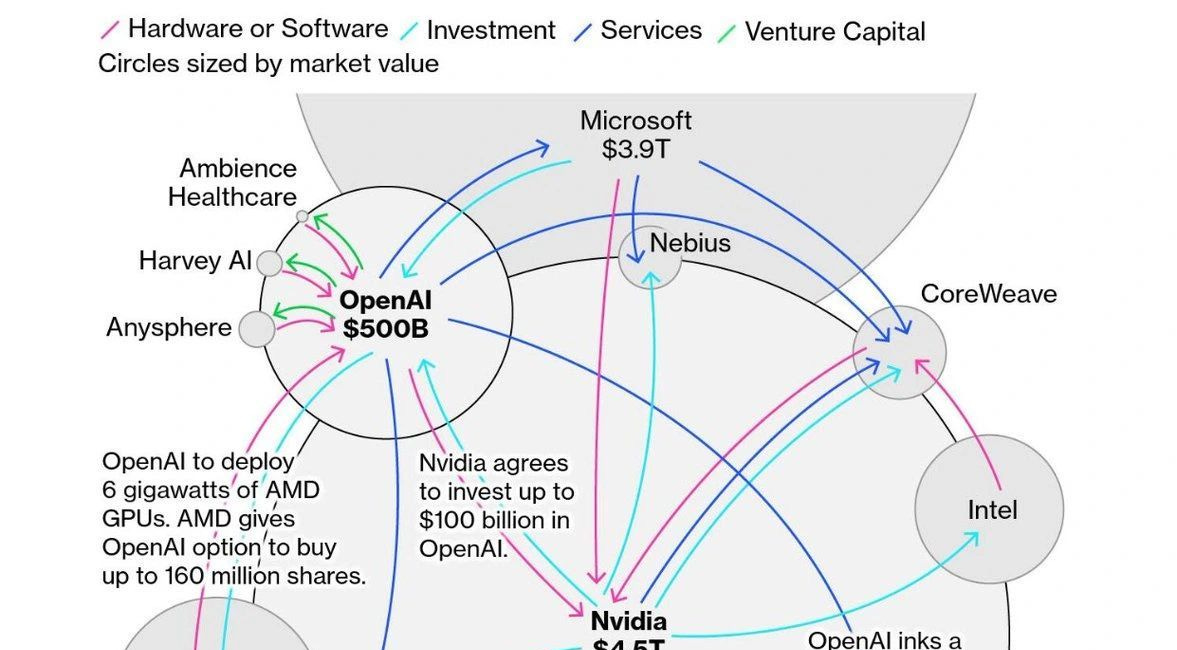
Even more importantly, the “robustness” (or fragility) of the economic ecosystem built around the GenAI narrative will also be tested. This includes the wave of data‑center investment promises, the shift of traditionally asset‑light businesses toward capex‑heavy models, the emergence of seemingly circular deal‑making, and other structural pressures. My detailed post below examines these economic dynamics within the GenAI ecosystem.
The economics, and the economy, of GenAI
·
December 2, 2025
Disclaimer: I am neither a financial expert nor an economist. These are my take as an AI scientist, practitioner and executive having worked on creating substantial business impact with AI. This should neither be construed as a financial advice nor an economic prediction.
Finally, the policy debate didn’t merely stagnate over the past year, it actively retreated.
The monetary incentives across the ecosystem actively disincentivize meaningful progress on GenAI reliability, rigorous evaluation frameworks, or the development of sensible guardrails. A clear example comes from the social‑media landscape. AI no longer merely shapes the information ecosystem. It has further concentrated power in the hands of a few platform owners who now determine not only who can speak, but also what can be spoken. AI systems influence whose voices are amplified, which aspects of an issue receive prominence, what biases become normalized, how narratives are framed, and who is permitted to question or raise concerns.
This is happening alongside a massive surge of AI‑slop and work‑slop that both society and organizations must now contend with. And layered on top of all this are the deeper, unresolved questions about the social contract itself.
I have long argued that our policy discussions urgently need to pivot away from a technology‑centric focus and toward a focus on social outcomes.:
I sincerely hope that as we race towards the adoption of GenAI‑driven capabilities, we make responsible, collective choices that lead to meaningful and socially productive outcomes.
Here’s wishing that the coming year be the first step towards this progress.
Happy Holidays and Happy New Year!
Thanks for reading Praescivi! This post is public so feel free to share it.
Comments
Nothing yet. Say the first thing.
Sign in to join the conversation.