
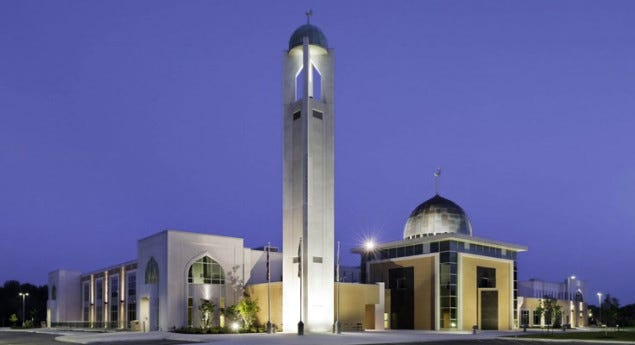
On July 25th, I had the chance to visit the Jafri Community Center (JCC) for the 30th-day commemoration of Imam Husayn’s martyrdom, where Syed Muhammad Rizvi gave the lecture.
Before summarizing his talk, let’s first touch on lamenting—Matam, the act of mourning for Husayn.
The JCC programs were truly memorable, featuring beautiful Quran recitations, heartfelt prayers, moving poetic lamentations, an insightful lecture, and the rhythmic beat of Mata’m, all delivered with a melodic touch.
It was truly moving to see young children not only reciting but also actively taking part in Sa’ef, circling together and rhythmically beating their chests. I’m eagerly anticipating the upcoming lectures by Sheikh Azar Nasser.
Synopsis of Syed Muhammad Rizvi’s lecture.
The theme was Amar Bil Maruf and Nahi anil Munkar, emphasizing how timing and setting play a crucial role in deciding whether to speak up, stay silent, or even ignite an uprising, resistance, or revolution, depending on the country’s demographics, ruler, and laws.
When discussing current issues, especially sociopolitical topics in local communities, it’s important to consider the right time and setting.
Speakers should be mindful of the community’s geopolitical reality. After 9/11, we Shia didn’t appreciate being labeled as terrorists or having Wahhabi and Salafi ideologies wrongly associated with us.
Communities like the Greater Toronto Area shouldn’t be labeled as silent or politically disengaged, since involvement often depends on the specific circumstances of time and place.
From listening to Syed Rizvi’s Friday sermons, I’d say they touch on political topics, but in a balanced and moderate way that stays mindful of the laws.
Syed Rizvi shared this idea by looking back at the history of the Ahlul Bayt during the harsh and oppressive rule of the Umayyad and Abbasid dynasties.
He stressed that pointing fingers or placing blame on leadership is not only wrong but also unacceptable.
For example, he told a compelling story from the era of the fifth Imam, when Zayd, the son of the fourth Imam, was considered the most respected and knowledgeable member of the family.
Zayd planned an armed uprising against the Umayyad rulers and turned to his brother, Imam Muhammad al-Baqir, for advice. His brother commended his intentions but cautioned that it would ultimately cost him his life.
Zayd went on to lead the rebellion in Kufa against Hisham bin Abdul Malik.
The different approaches of the two Imams compared to Zayd’s actions show that even in the same era and under similar circumstances, responsibilities can vary, as illustrated by the examples of Ayatullah Hakim, Khui, and Khomeini.
We should be cautious and thorough when inviting speakers, as some might have hidden agendas or be influenced by outside groups or organizations.
The leadership of the Shia center stays free from Zionist influence, but Arab rulers, Gulf state monarchies, and authoritarian regimes in Muslim countries like Pakistan, Egypt, and others are influenced by Zionists, whom I refer to as Muslim Zionists.
During Sunday morning prayers, Syed Rizvi shared more stories from the post-Caliphate era, highlighting times when rulers attempted to minimize the significance of Hajj.
On Sunday, July 26th, I attended the morning Fajr congregational prayers, and, in keeping with our Shia tradition, a beautiful recitation of Dua Al-Sabah was performed in a sweet, melodious voice.
Dua Al-Sabah is a cherished prayer in Shia Islam, known for its profound spiritual depth and meaningful theology.
Typically recited at dawn, it weaves together themes of faith, devotion, and the close connection between the believer and the Divine.
Reciting it goes beyond a simple ritual—it’s a chance for reflection, personal growth, and deepening one’s bond with the Almighty.
Dua Al-Sabah has rich historical roots, showcases beautiful poetic expression, carries deep theological meaning, and continues to be a meaningful part of modern Shia practice.
Dua Al-Sabah is linked to the Imams of the Ahl al-Bayt, especially Imam Ali ibn Husayn Zain al-Abidin.
According to historical accounts, this prayer was revealed to him during a period of deep spiritual need, offering comfort and guidance to believers navigating life’s challenges.
Dua Al-Sabah is a cornerstone of Shia spiritual practice, capturing the profound bond between a believer and the Divine.
By embracing this heartfelt supplication, people not only enrich their spiritual lives but also build stronger community connections and foster a sense of ethics.
Ultimately, Dua Al-Sabah is more than a simple prayer; it’s a timeless guide that continues to inspire faith and devotion across generations.
I truly enjoyed the delicious tea and breakfast, and I’ll end by sharing a few lines from this beautiful supplication.
Some translation of the verse. And the link below of the beautiful recitation.
Dua Sabah - دعاء الصباح الخطيب عبد الحي آل قنبر | Al-Islam.org
In the Name of Allah, the All-beneficent, the All-merciful.
O Allah, O He Who extended the morning’s tongue in the speech of its dawning, dispatched the fragments of the dark night into the gloom of its stammering, O He Who is near to the passing thoughts of opinions, far from the regards of eyes, Open for us, O Allah, the leaves of the morning’s door, with the keys of mercy and prosperity! Clothe me, O Allah, with the most excellent robes of guidance and righteousness! Plant, O Allah, through Your tremendousness, the springs of humility in the watering place of my heart! My God, how could You drive away a poor beggar who seeks refuge in You from sins, fleeing? How could You disappoint one seeking guidance who repairs to Your threshold, running? How could You reject a thirsty man who comes to Your pools to drink? Never! For Your pools are full in the hardship of drought, My God, my heart is veiled, my soul is deficient, my intelligence is defeated, my obedience is little, my disobedience is much, and my tongue confesses of sinning, Forgive my sins, all of them…
No posts
Comments
Nothing yet. Say the first thing.
Sign in to join the conversation.