

I examine how unequal household labor—particularly the invisible planning and monitoring known as the mental load—can increase stress, resentment, and dissatisfaction within a relationship. It explains that when men take genuine ownership of domestic responsibilities, couples can experience stronger emotional connections, greater empathy, improved communication, and more opportunities for both partners to thrive.
Why read it: Understand why sharing household leadership is not merely about completing chores but investing in the health and future of the relationship.
Click here and read the full article.
This article explains that recurring money arguments are often driven by deeper differences in financial upbringing, personal values, emotional needs, expectations, and definitions of security. It shows couples how empathy, communication, agreed-upon boundaries, and shared financial systems can turn money problems from personal battles into challenges they solve together.
Why read it: Identify what may be hiding beneath your money disagreements and develop healthier ways to discuss financial decisions.
Click here and read the full article.
The Fair Play System helps couples make invisible household labor visible by assigning one partner complete ownership of each responsibility, including its conception, planning, and execution. It also encourages couples to agree on reasonable standards, trust each other’s methods, protect equal leisure time, and regularly adjust responsibilities as life changes.
Why read it: Learn a practical system for reducing the mental load, preventing resentment, and managing the home as a team.
Click here and read the full article.
I share how gender-based stereotypes and blame turn disagreements about specific behaviors into broader attacks on men or women, making trust and repair more difficult. It encourages couples to replace accusation and contempt with shared accountability, curiosity, clear communication, and systems for managing money, parenting, and household responsibilities together.
Why read it: Learn how to move beyond divisive gender narratives and focus on the behaviors and solutions that create a stronger partnership.
Click here and read the full article.
When a woman becomes the primary earner, both partners may face challenges involving masculine identity, social stigma, financial dependence, relationship satisfaction, and expectations about gender roles. The article also examines how unequal household labor and the mental load can persist even when the woman earns more, placing additional pressure on the relationship.
Why read it: Better understand the experiences of men in female-breadwinner relationships and how couples can build a more equal and resilient partnership.
Click here and read the full article.
This guide explains how adding a child as an authorized user to a responsibly managed credit card may help establish a credit history before adulthood. It also addresses issuer reporting policies, the risks of late payments and high balances, identity-theft protection, and the importance of teaching children to use credit responsibly.
Why read it: Learn how to give your child a financial head start without exposing them—or yourself—to unnecessary credit risks.
Click here and read the full article.
Drawing from a conversation with Dr. David Smith and Dr. Brad Johnson, this article explains that workplace equality and equality at home are closely connected because caregiving expectations can affect both partners’ professional opportunities. It highlights practical ideas such as leaders “leaving loudly” for caregiving responsibilities, men openly using family benefits, and spouses listening with empathy before offering solutions.
Why read it: Understand how supportive workplace cultures can strengthen careers, caregiving partnerships, and marriages.
Click here and read the full article.
This recipe provides step-by-step instructions for preparing homemade pork fried rice with pork, cold rice, vegetables, eggs, oyster sauce, soy sauce, and butter. It also offers creative ideas for transforming leftovers into omelets, stuffed peppers, salads, and additional stir-fries.
Why read it: A perfect article for an approachable, family-friendly meal that makes excellent use of leftover rice and can be adapted for future meals.
Click here for the recipe.
“My wife wants a divorce. She said I’m too unamerican. I saw that coming from a kilometer away.”
Read 155 Best Dad Jokes to Make Anyone Smile.
Today we welcome Dr. Megan Ford and Dr. Christine Hargrove. Dr. Ford is the University of Georgia Director of the Love and Money Center, Certified Financial Therapist, and Licensed and Marriage Therapist. Dr. Hargrove is the Love and Money Center Assistant Director, UGA Clinical Assistant Professor, Certified Financial Therapist, and Licensed and Marriage Therapist.
For today’s episode, Dr. Ford and Dr. Hargrove share research on financial conflict, the emotional burden of day-to-day money management, and how roles like “bean counter” shape stress within relationships. The conversation also offers practical, research-backed strategies for couples and neurodivergent individuals to manage money with greater awareness, compassion, and teamwork. Enjoy the show.
Click here to listen to the podcast episode.
Click on your favorite social media to follow:
Washington Post
Do you sit behind a desk? You connect with your family after a hard day of work, and you have headaches or muscle stress. You need solutions.
The strategies shared in 5 breathing exercises that actually help you feel calmer can help. It’s behind a paywall, so if you’re not a Washington Post subscriber, you can Google how to use their five recommended breathing strategies:
Box breathing
4-7-8 breathing
Physiological sigh
Alternate-nostril breathing
Diaphragmatic breathing
Click here and read the post.
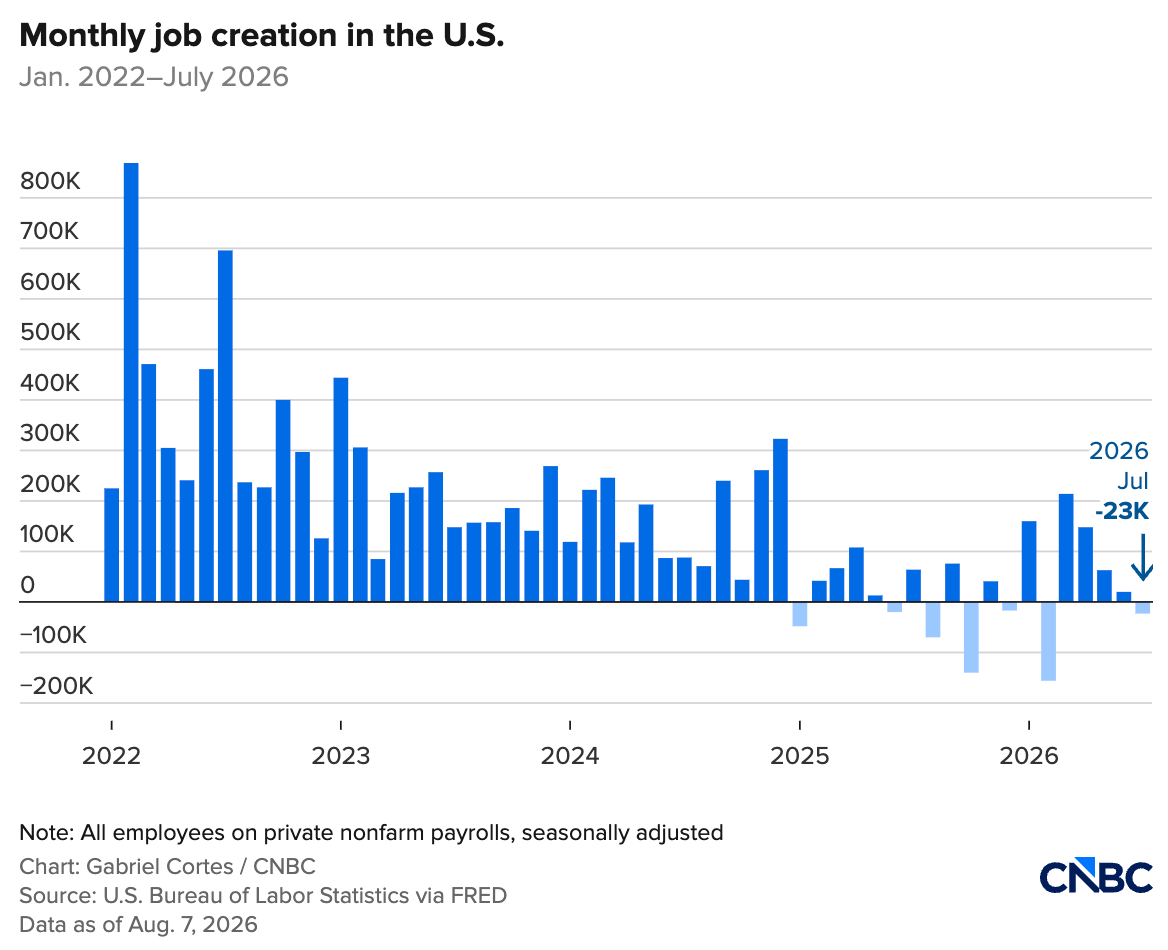
If you know anything at all about economics, you understand that trade wars, tariffs, and an unnecessary war that is restricting 20% of the world’s oil supply are bad for the economy. We have all three, each initiated by our current administration.
The stock market has been holding up, but for how long?
AI-related stocks have registered 75% of the S&P 500’s total returns since the launch of ChatGPT, artificially propping up the stock market. And remember, the stock market is not the economy. It’s a bubble that will pop, but nobody knows when.
As you can see above, the job market has progressively worsened since 2025, and yesterday’s jobs report was an unexpected decline. Meanwhile, the labor force participation rate, that is, the number of people employed or seeking employment, has dropped by over a percentage point since 2025, and rising prices (inflation) have outpaced wage growth over the past year.
Translation? The economy is on shaky grounds.
We can all hope for the best, as long as we plan for the worst. Now is a good time to revisit your emergency savings account balances. I recommend setting aside at least 6 months of expenses for emergencies.
Here is a post from the past that can help:
5 Tips for How to Save Money: For Couples
Would you be willing to click the share button below to share this newsletter with two people who you believe would appreciate the ideas and strategies I share?
I help couples build stronger partnerships by managing money and the home together.
If you received this newsletter from a friend, here’s a bit about me:
I hold an M.Ed., CFT™, AFC®, CPFFE®, Fair Play Certified®, and am the founder of Modern Husbands and a nationally recognized leader in financial education and relationship equity. I am the only professional in the United States known to hold the combined credentials of Certified Financial Therapist™, Accredited Financial Counselor®, and Fair Play Facilitator®, allowing me to help couples strengthen both their financial and household partnerships.
My career includes serving as a Visiting Scholar with the Consumer Financial Protection Bureau (CFPB), contributing to President Obama’s Advisory Council on Financial Capability, and holding senior leadership roles with Next Gen Personal Finance. I have also been recognized as a CNN Money Hero and National Educator Award recipient.
Through Modern Husbands, I provide coaching, courses, educational resources, and media content that help dual-career couples manage money, share domestic responsibilities, and build stronger relationships. My work has reached millions through my website, podcast, newsletter, social media platforms, and appearances in national media outlets.
Click here to schedule a free 15-minute exploratory call if you’re interested in individual or couple support.
Until next time,
Brian Page, M.Ed., AFC®, CFT™, Fair Play Facilitator™, Founder, Modern Husbands
No posts
Comments
Nothing yet. Say the first thing.
Sign in to join the conversation.