
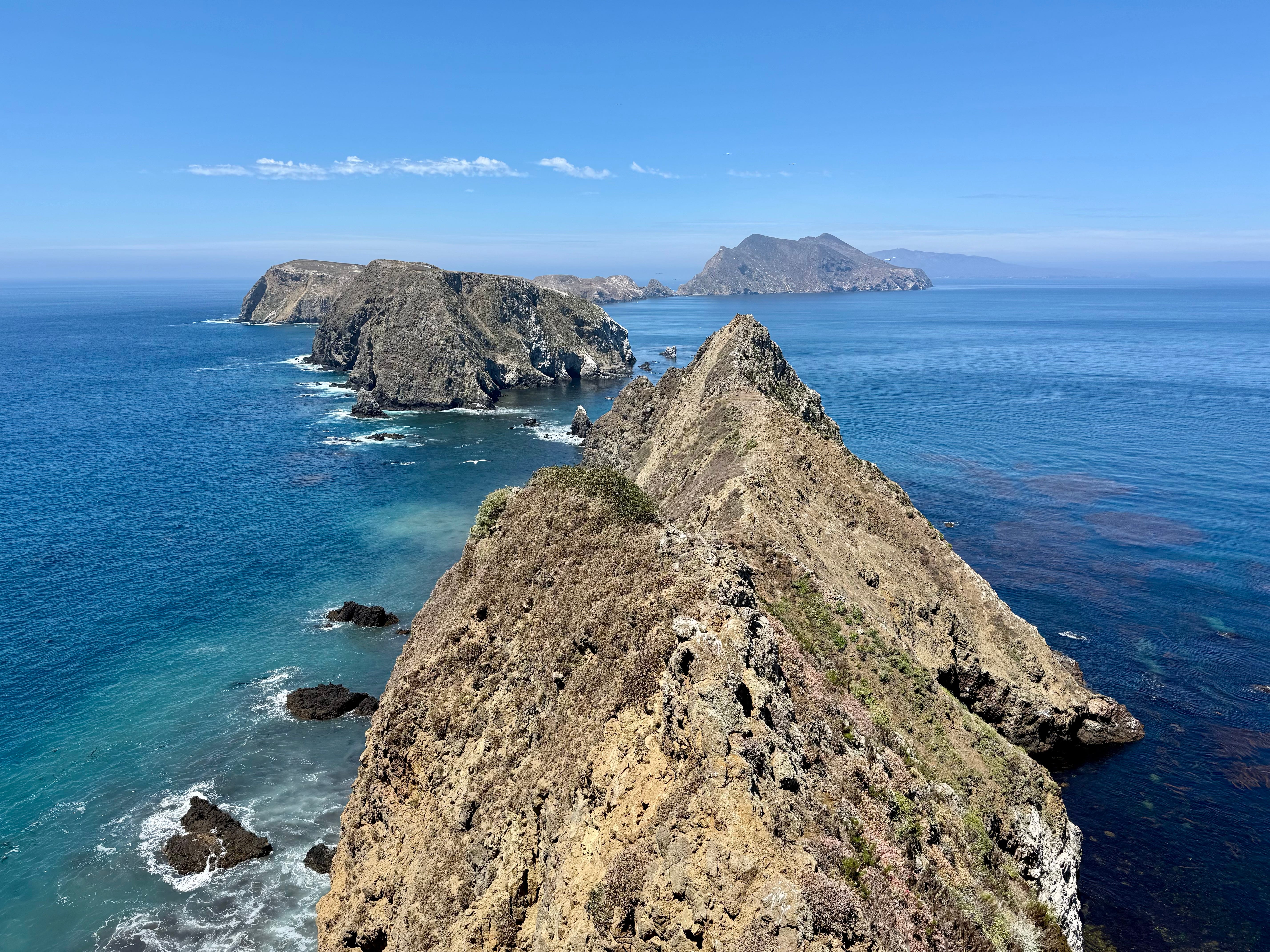
As our Island Packers boat approached Anacapa Island, revealing itself slowly through the lifting fog, I found myself mesmerized by the color of the water along the shoreline. Brilliant turquoise green blending with deep cobalt as ribbons of giant sea kelp swayed gently with the tide along the ocean’s surface, hinting at the underwater forest below.
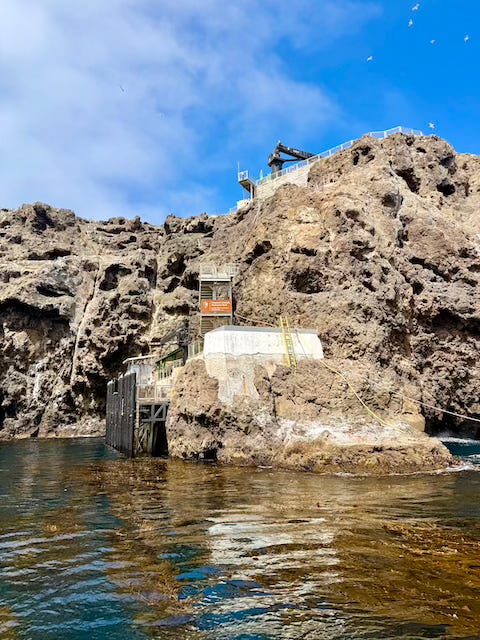
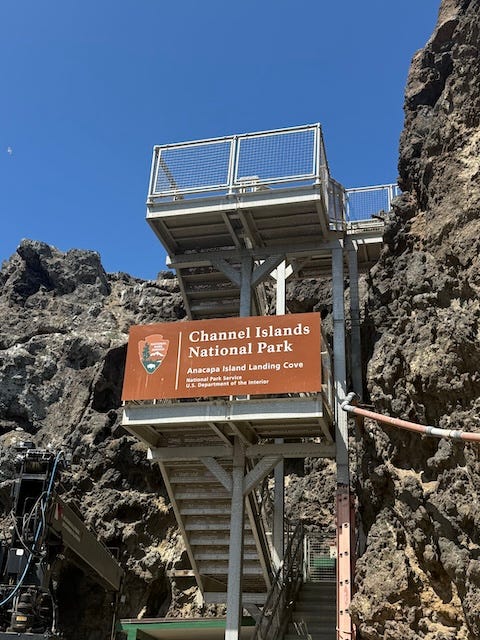
Getting our bearings, we disembarked and made our way up the 157-step staircase to the island’s plateau, where everything changed.
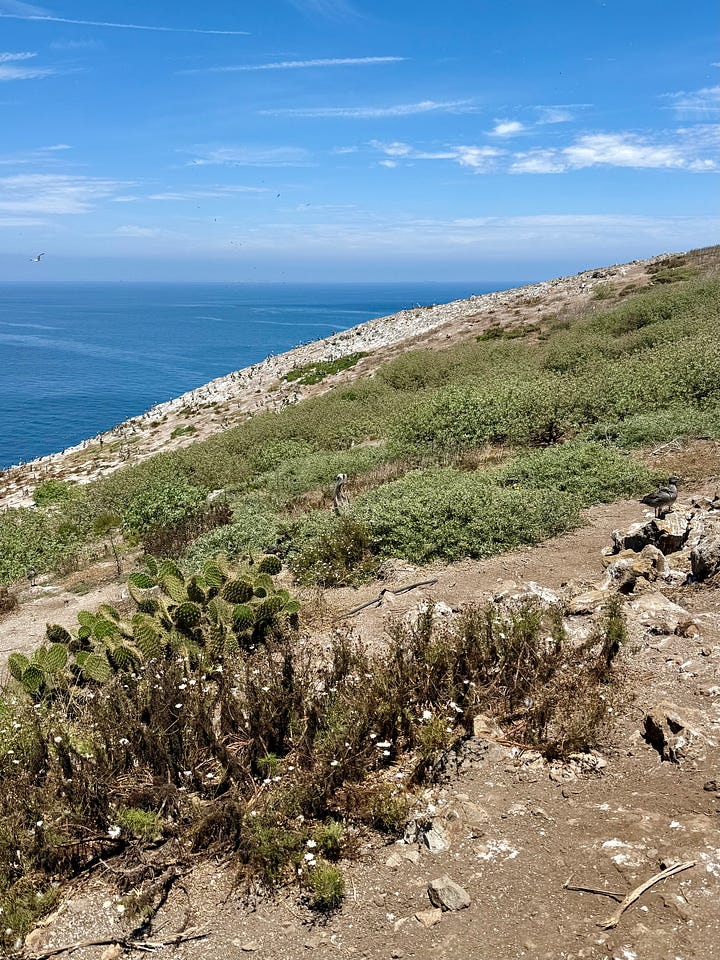
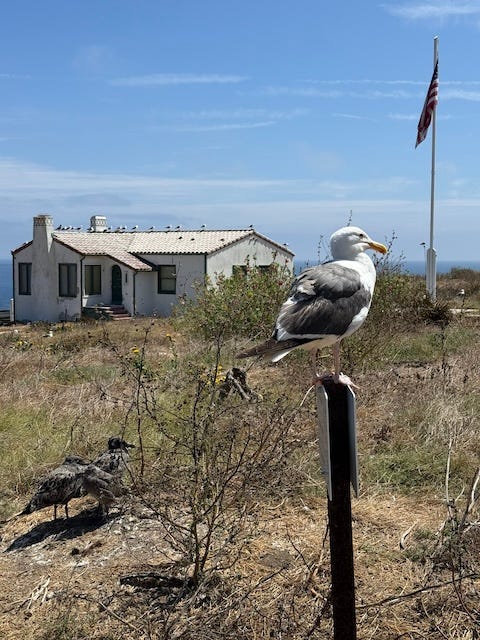
The landscape suddenly felt stark. Wind swept across the volcanic cliffs, and the air was filled with an almost overwhelming chorus of Western gulls, thousands of them, and the stench of their remains. Their calls echoed across the island in every direction. It was loud, raw, and entirely unlike the peaceful scene we’d experienced, approaching from the water below.
At first, it felt like a place defined by contrasts.
It wasn’t until later that I realized it was impossible to separate the sea from the island itself. The turquoise water, the volcanic rock cliffs, the seabirds, the wind are all parts of one holistic, living landscape.
However, after learning more about its history, I came to realize those contrasts were exactly what made Anacapa so extraordinary.
Although I’ve lived within sight of California’s Channel Islands for much of my life, I’ve visited them only a handful of times over the years.
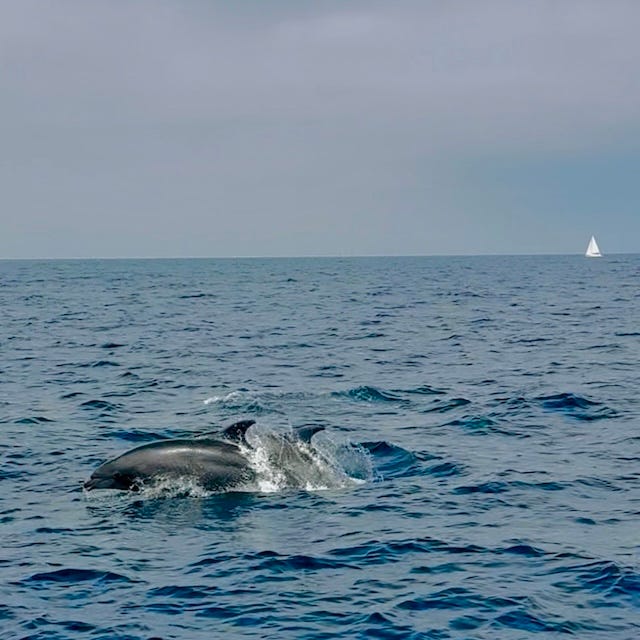
As a child, I vacationed on Catalina, camped on Santa Cruz Island with family friends when my son was much younger, and attended a Patagonia sales meeting there during my first week of work. On that particular trip to the islands, somewhere in the middle of the Santa Barbara channel, we found ourselves completely surrounded by hundreds upon hundreds of dolphins.
It was incredible.
In an act of pure poetry, the captain of our chartered vessel slowed the boat until we drifted silently with the swell. Then, through the boat’s speakers, he filled the air with classical music, creating a moment that felt almost impossibly cinematic. With dolphins leaping in every direction, it felt as though the islands themselves were welcoming us.
It’s one of those rare moments that forever lives in my full-sensory memory.
Preparing for this trip, I asked a friend who visits the islands often if there was anything I should know before heading out on my day-long excursion.
His advice was both sensible and deeply motivating.
“Bring sunscreen, a hat, plenty of water…and read Island of the Blue Dolphins along with some Chumash history.”
It turned out to be some of the best travel advice I’ve received.
Like many who grew up on the West Coast, I first read Scott O’Dell’s Island of the Blue Dolphins in elementary school as required reading while studying the early California Missions and Indigenous Peoples. I remembered loving it as a child but hadn’t thought about it in decades.
Reading it again before visiting the Channel Islands transformed not only the experience itself, but the attention and intention I brought to it.
The novel follows Karana, inspired by the true story of Juana María, often called the Lone Woman of San Nicolas Island.
A member of the Nicoleño people, she became stranded on San Nicolas Island in the 1830s after her community was removed to the mainland. She survived there alone for eighteen years, building shelter from whale bones and brush, hunting and gathering food, and sewing what became one of the novel’s most enduring images, a dress crafted entirely from green cormorant feathers stitched together with animal sinew.
She was eventually brought to Santa Barbara in 1853 but, after nearly two decades of isolation on the island, died only weeks later from illnesses to which she had no immunity.
Whether you’ve read the novel recently or not, it’s difficult not to carry her story with you while standing anywhere among the Channel Islands.

Long before it became a national park, the Channel Islands formed part of the homeland of the Chumash people, whose relationship with this coastline stretches back more than 13,000 years.
It’s remarkable to think that while we recently celebrated 250 years as a nation, these islands have been home to the Chumash for thousands upon thousands of years before that.
Even the island’s name carries that history.
Anacapa comes from the Ventureño Chumash word Anyapax, often translated as “mirage” or “illusion,” describing the way the island is known to shift and disappear within the coastal fog, which was our experience arriving there. It is also the only one of the eight Channel Islands that still carries its original Indigenous name.
It’s interesting how learning more about the islands and its people influenced the way I experienced Anacapa on that bright, sunny day.
I arrived captivated by the brilliant water, the giant kelp seemingly growing before my eyes (3’ a day in fact, I am told), and the dramatic volcanic cliffs. Then ascending to the islands plateau, I found myself standing among thousands of nesting gulls in what felt like an unexpectedly harsh landscape in stark contrast.
Before arriving, I'd already read about the islands and their history at my friend’s recommendation. But it wasn't until I was actually standing there, surrounded by the wind, the seabirds, the unmistakeable aroma of a thriving wild landscape, that the stories and research I carried with me, truly settled into place. What I'd learned beforehand gave the landscape context; being there gave it meaning.
One Chumash story, shared through the Channel Islands National Park, tells of Hutash, Mother Earth, who created the Chumash people on Limuw, known today as Santa Cruz Island.
As the island became crowded with inhabitants, Hutash stretched a rainbow bridge across the ocean to the mainland so the people could cross. Some grew dizzy looking into the mist below and fell into the sea. Rather than let them perish, Hutash transformed them into dolphins.
To this day, the Chumash consider dolphins their brothers and sisters.
Suddenly, I couldn’t stop thinking about that unforgettable boat ride so many years ago, surrounded by hundreds of dolphins dancing with us through the wake on the Pacific.
It struck me how our memories can return years later with new understanding. What had always been one of my most treasured travel memories had now taken on deeper meaning, simply because I now understood a bit more about the people, the stories and the history connected to place.
Of course, Anacapa is spectacular even without knowing any of this.
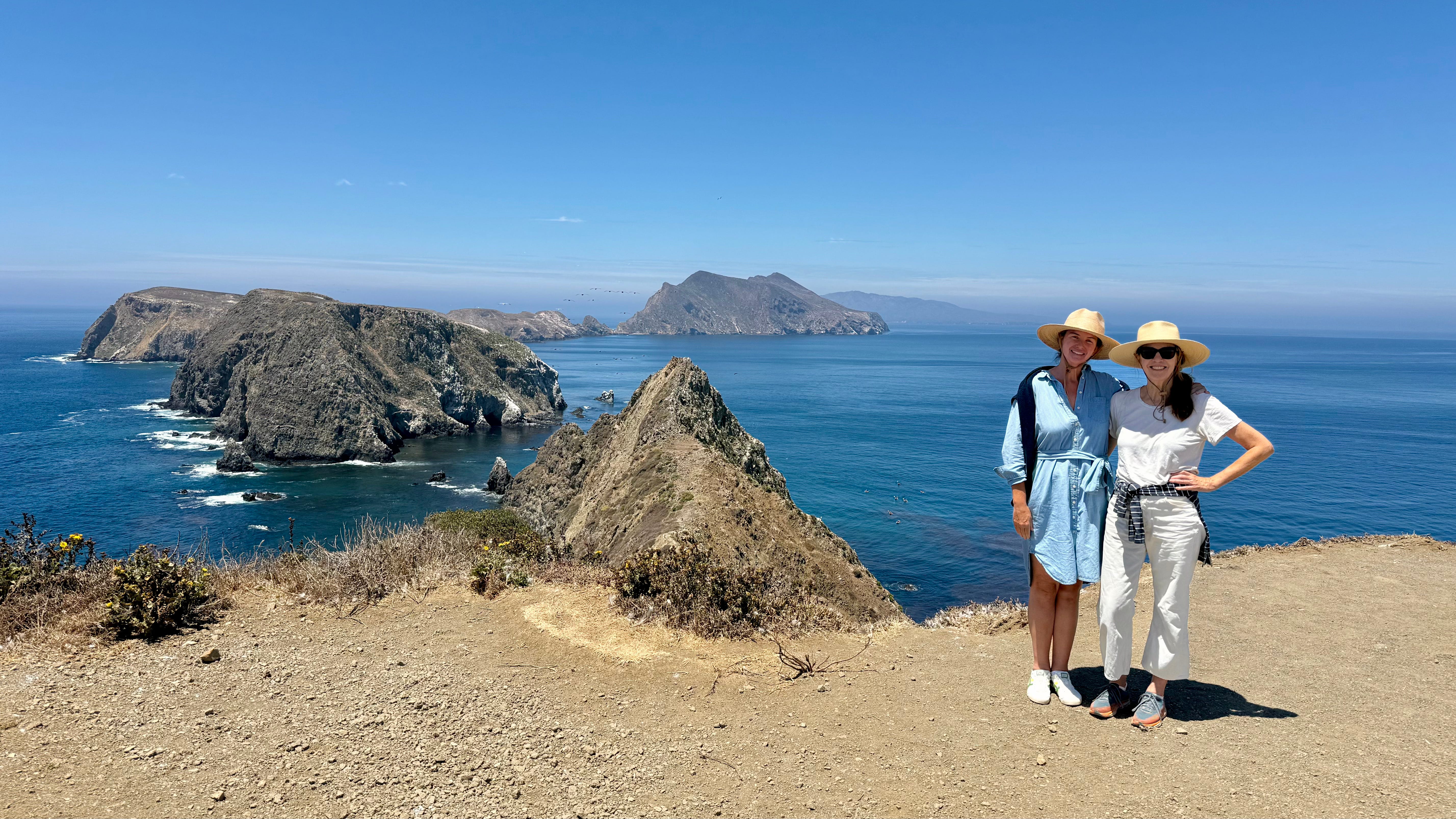
Standing at Inspiration Point, one of the Island’s most breathtaking overlooks, the full shape of Anacapa finally comes into view. What can appear from the approaching water to be a single island is, in fact, three narrow volcanic islets - East, Middle, and West. Only East Anacapa, where we arrived, is open to the public, while the middle and western islands remain protected wildlife habitats.
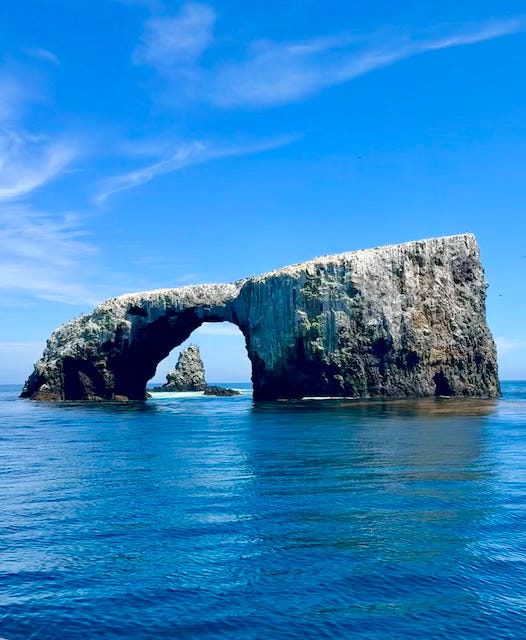
Arch Rock, just off the eastern tip of the island, is an iconic 40-foot volcanic arch that has become the defining symbol of Channel Islands National Park.
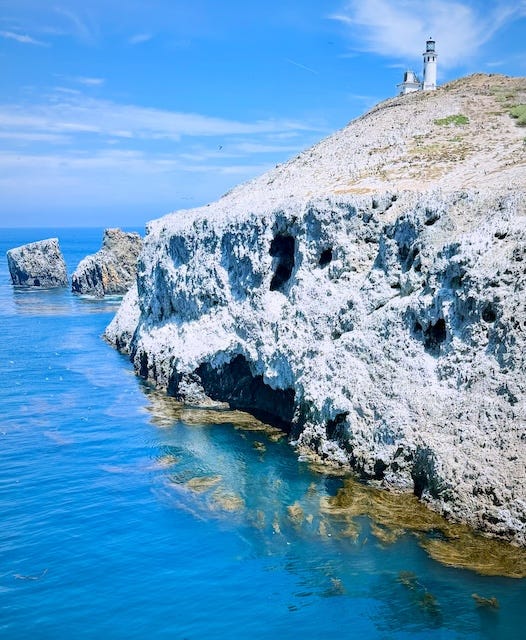
The island also serves as a bird sanctuary. Anacapa is home to one of the largest breeding colonies of the endangered California Brown Pelican, a species that once teetered on the brink of extinction before conservation efforts helped it recover. Watching them soar above the cliffs, it’s easy to understand why these protected nesting grounds remain so vital.
And then there are the gulls.
So many gulls.
If you happen to visit during nesting season, as we did, you’ll quickly discover that Anacapa belongs to them. Their calls fill the air from every direction, transforming what initially feels like an overwhelming welcome into a vivid reminder that this is, first and foremost, a thriving wild place. We are simply visitors.

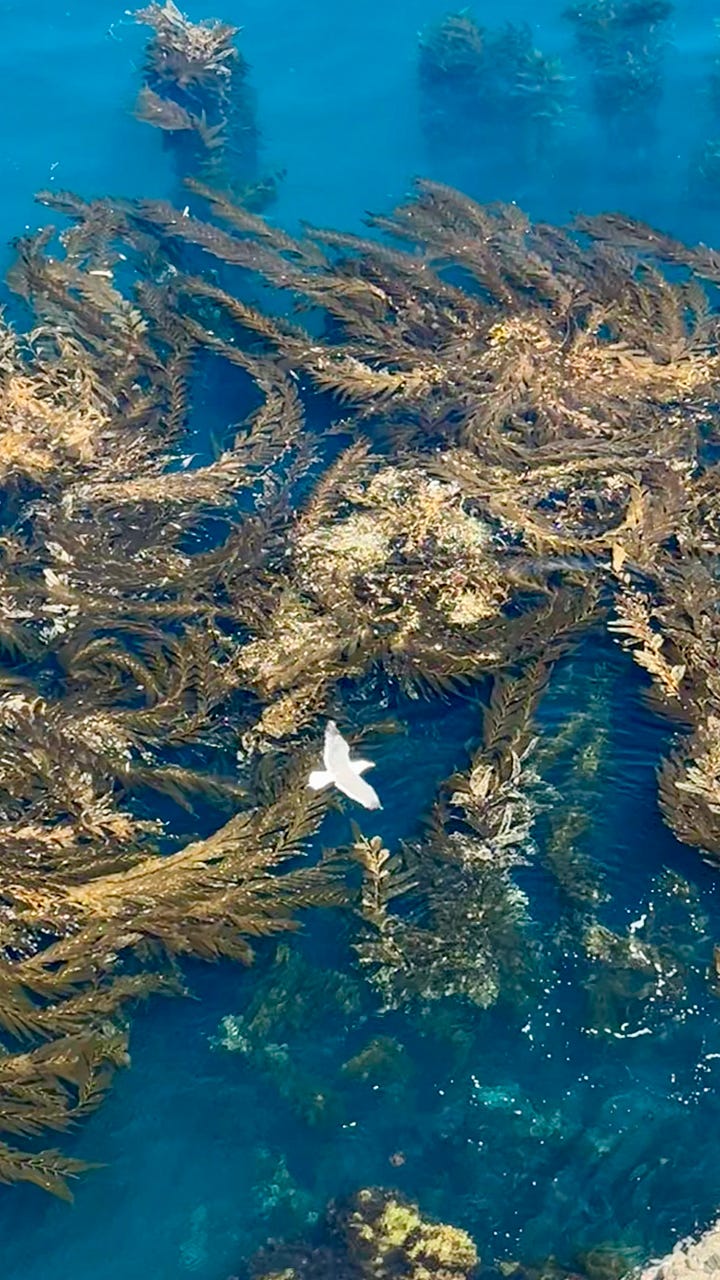
The waters surrounding Anacapa and the other Channel Islands, the same brilliant turquoise waters that first captured my attention upon arrival, are protected as a State Marine Reserve, allowing giant kelp forests, often called the "sequoias of the sea," to thrive. Floating on the surface of the clear blue water and extending far below into the depths of the Pacific, they support an astonishing diversity of marine life and remind us that much of the island’s beauty exists beyond what we can see on the trail.
At the end of the day, I may have left Anacapa with a bit too much sun and some beautiful photographs, but what has stayed with me isn’t the color of the water or even the overwhelm of the thriving bird colonies. It’s the reminder that every landscape has memory and a story waiting to be discovered.
From my home in Ojai, itself located on the traditional, unceded homeland of the Chumash people, to the shores of Anacapa, I was reminded that these aren’t separate places at all. They are part of the same living story, one that began thousands of years before any of us arrived and continues long after we leave.
Travel, has a way of becoming richer when we arrive with more than an itinerary.
As I boarded the Island Packers boat for the return trip to Oxnard Harbor, I found a quiet spot to myself on the shady, starboard side and settled in. Tired from a day spent in the sun and fully immersed in the elements, I watched the same brilliant turquoise water that had captivated me that morning slip quietly past the boat, reflecting on everything I’d experienced throughout the day.
As the island slowly disappeared into the distance, I found myself thinking back to the advice my friend had given me before the trip.
“Bring sunscreen, a hat, plenty of water… and read Island of the Blue Dolphins, along with some Chumash history.”
The sunscreen and water got me through the day.
The stories, however, gave me something far more lasting: a deeper appreciation for the people who first knew these islands, and a desire to continue learning about the histories woven into the landscapes we so often admire without fully understanding.
Everything that I saw - the otter playing in the sea kelp, the rings of foam around the rocks that guarded the harbor, the gulls flying, the tides moving past the sand pit - filled me with happiness.”
Karana from Island of the Blue Dolphins
To learn more about visiting the Channel Islands from Ventura or Oxnard visit: Island Packers
To learn more about the Channel Islands National Park visit: National Parks Service
Thank you so much for joining me on this journey to the Channel Islands. I hope you found it and its history as inspiring as I did. Please subscribe and follow along for many more travel adventures ahead.
No posts
Comments
Nothing yet. Say the first thing.
Sign in to join the conversation.