
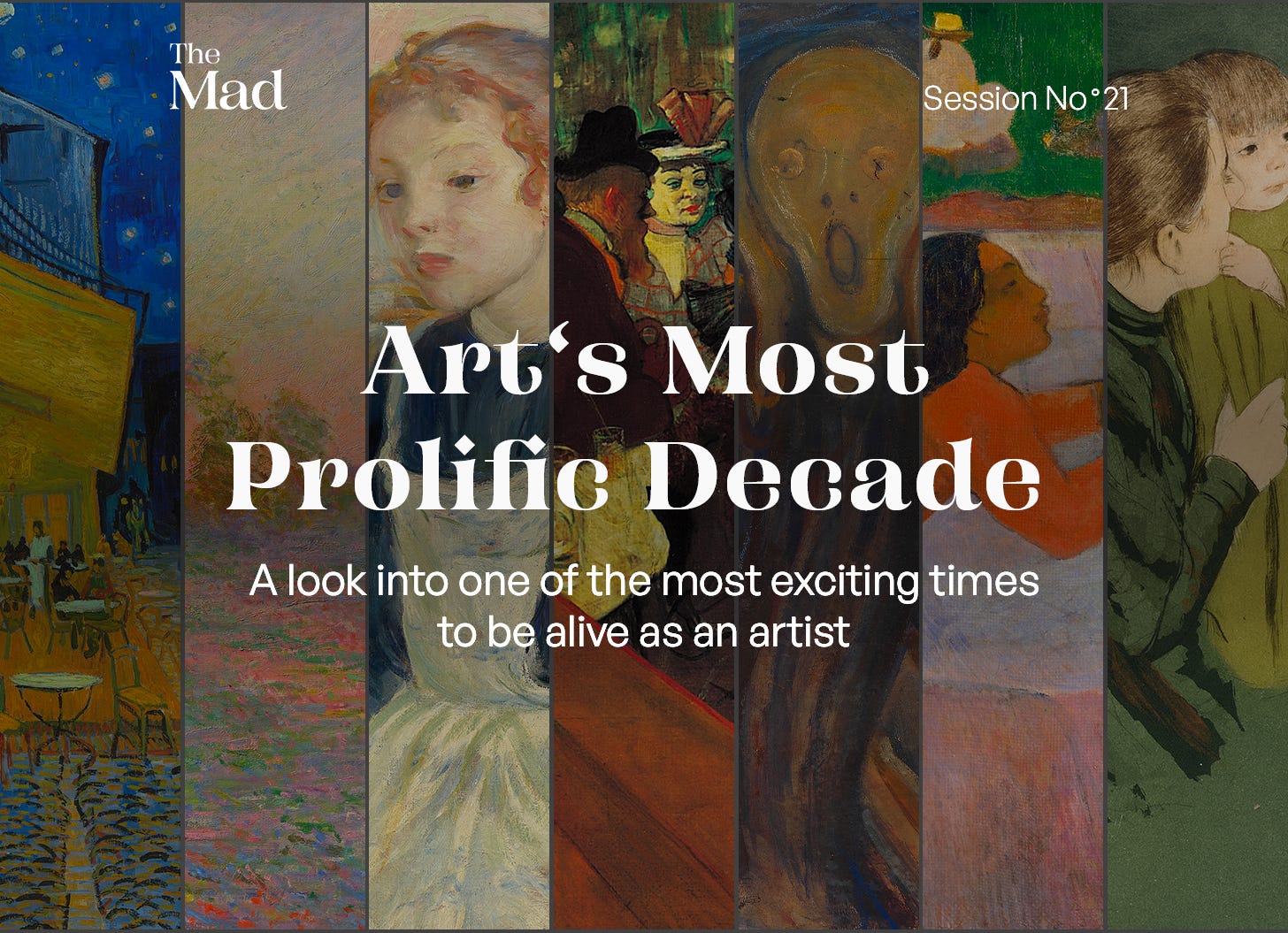
When we look back at the late 19th century, it is easy to filter it through a single, neat historical textbook label. We are told it was the era of the Post-Impressionists, or the dawn of modern alienation. But when you live through history in real-time, you don’t see labels - you see an astonishingly crowded, open-ended laboratory.
If we look at the eleven-year stretch between 1888 and 1898, we find one of the most prolific, broad, and flat-out exciting chapters in human creativity. There was no single aesthetic rulebook or dominant capital of style. Instead, an international web of artists was simultaneously working out entirely different ways to capture life, space, and color. From the electric nightlife of Parisian cabarets to the sun-bleached fields of Brittany, from tender domestic quiet to strange, dreamlike mythology, the sheer range of what was being produced side-by-side is breathtaking.
Let’s step onto the timeline and trace this brilliant visual explosion year by year, through eleven masterpiece canvases that completely reshaped what a painting could be.
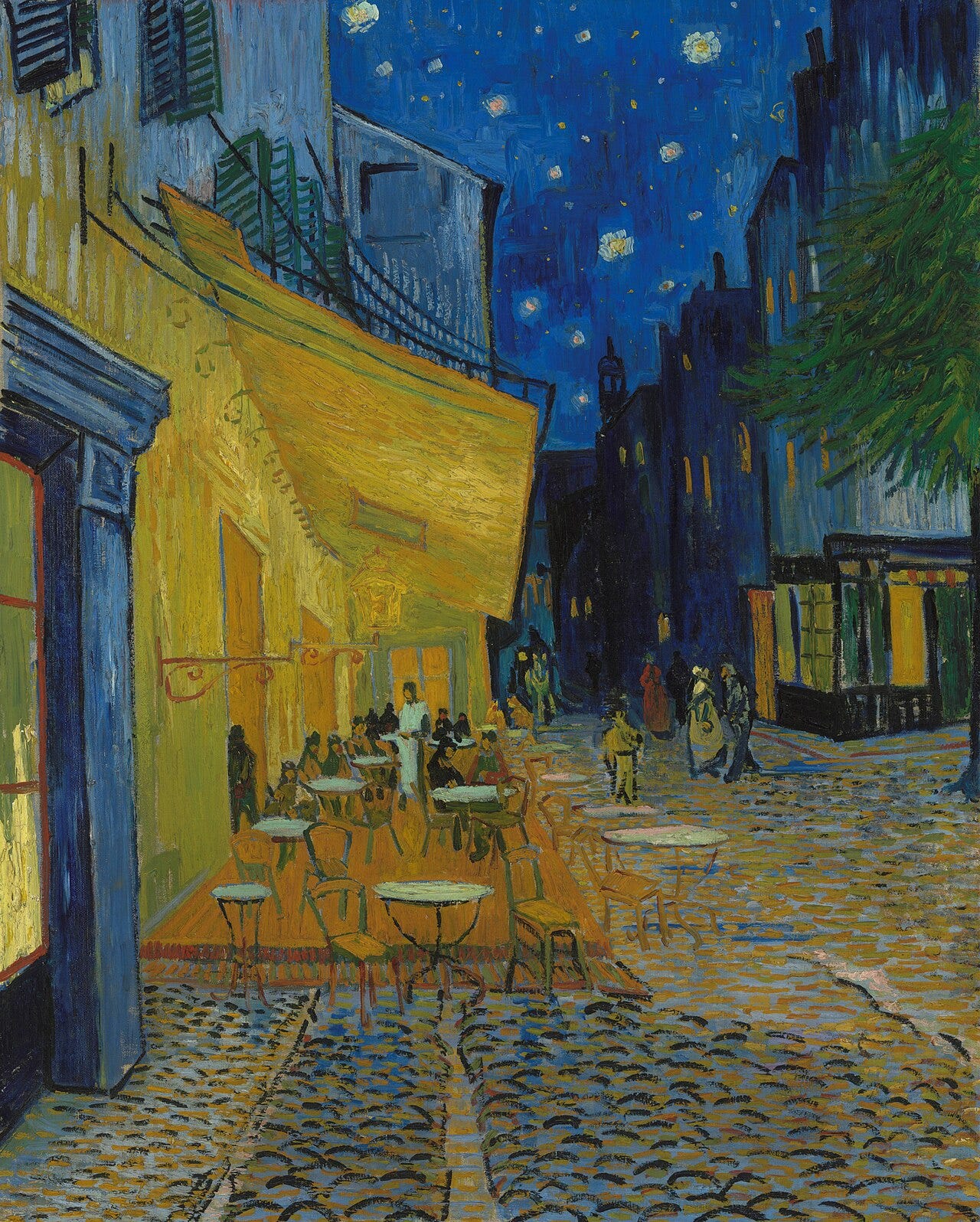
In September 1888, Van Gogh set up his easel in the dark on the Place du Forum in Arles, France. He was captivated by a simple mission: painting the night sky not from memory or by using black ink, but by looking directly at the vibrant, contrasting colors hiding in the dark. He famously wrote to his sister that the night is often far more richly colored than the day, pulsing with deep violets, blues, and unexpected greens.
In this landmark canvas, Van Gogh famously illuminated a popular local hangout using the brilliant, artificial glow of newly installed gas lamps. By pairing the searing, sulfury yellow of the cafe’s awning with the deep, velvet blue of the starry sky, he created a visual tension that makes the entire scene feel alive and hum with energy. He achieved this texture by painting en plein air (outdoors on location) at night, applying thick, rapid strokes of oil paint that catch the light physically. It remains a beautiful, welcoming celebration of communal warmth under an expansive, swirling cosmic sky.
What to look for: Look at the cobblestones in the foreground. They aren’t flat grey stones; they are saturated with reflections of purple, yellow, pink, and green, showing how the artificial lamplight bleeds right down into the street.
Comments
Nothing yet. Say the first thing.
Sign in to join the conversation.