
For decades, the economics of luxury fashion were relatively straightforward. A luxury house created a product, controlled its imagery and distribution, designed the retail environment and, crucially, established the price. Consumers could decide whether a handbag was worth £2,000 or £5,000, but the brand largely controlled the reference point from which that decision was made.
Digital resale is changing that relationship. A consumer can now discover a handbag on Instagram or TikTok, visit the brand’s website and then search a luxury resale marketplace within seconds. She can compare the current collection with previous seasons, see whether an ostensibly scarce product is actually difficult to find, discover discontinued colours and assess what similar pieces are selling for after leaving the boutique.
This creates something luxury fashion has historically had relatively little exposure to: highly visible secondary-market price discovery. The question is no longer simply whether someone wants to spend £3,000 on a handbag. Increasingly, consumers can also ask what that £3,000 handbag might be worth once it becomes pre-owned. For Gen Z, this behaviour is becoming increasingly natural. The implications extend well beyond the luxury resale market itself because resale is beginning to influence what consumers buy new.
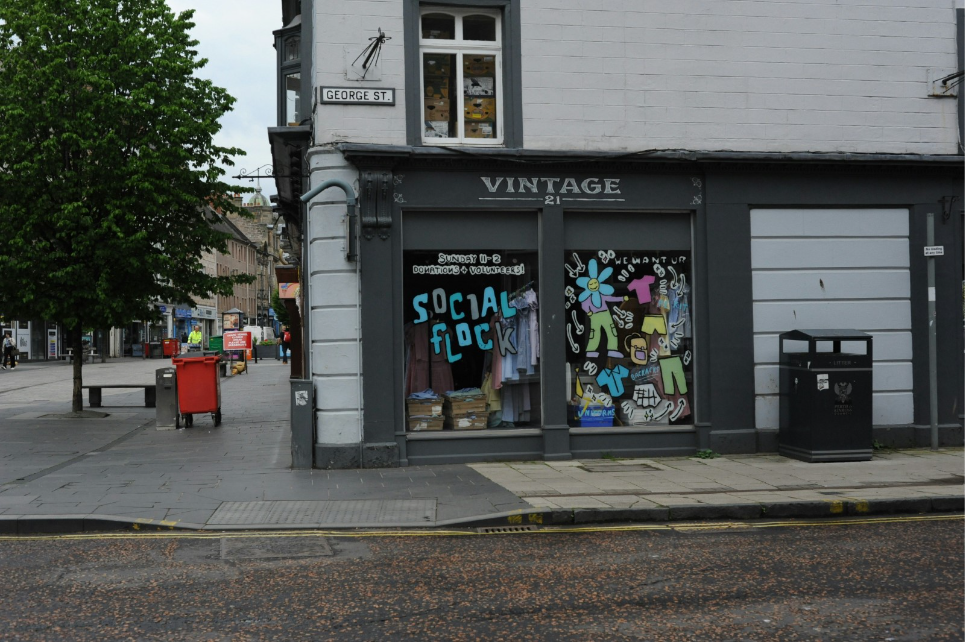
Photo by Chloë Forbes-Kindlen on Unsplash
Luxury Resale Is Moving to the Beginning of the Shopping Journey
The conventional understanding of secondhand luxury places resale at the end of the product lifecycle. A customer purchases a designer handbag, coat or watch, owns it for several years and eventually sells it through a consignment store, auction house or online resale marketplace. That model is becoming outdated.
Research from The RealReal suggests that resale considerations are increasingly influencing primary purchases. Its 2025 Luxury Resale Report found that 47% of consumers consider resale value before buying something new. This suggests the potential second life of a luxury product can now influence its first sale.
For a consumer deciding between two similarly priced handbags, the comparison can therefore extend beyond craftsmanship, aesthetics and brand reputation. She can examine how frequently each bag appears on resale platforms, whether previous versions retain their value, whether older editions are more desirable and how much she could potentially recover if she eventually decides to sell. These are increasingly important components of luxury consumer behaviour, particularly when luxury prices have risen considerably and shoppers have access to more information than ever before. The modern luxury purchase is becoming a more informed financial decision without necessarily becoming any less emotional.
Gen Z Is Becoming a Resale-Native Generation
The change is particularly significant among Gen Z consumers, for whom the distinction between new and pre-owned fashion appears considerably less important than it was for previous generations. Research published by Boston Consulting Group and Vestiaire Collective found that secondhand products account for approximately 32% of Gen Z wardrobes among consumers surveyed. That proportion increases to around 45% for handbags and 36% for clothing.
Price undoubtedly plays a role in the growth of pre-owned designer fashion, particularly for younger shoppers who may aspire to luxury brands without having the disposable income of older consumers. However, affordability alone does not explain what is happening. Secondhand fashion has also become a discovery channel. BCG and Vestiaire Collective found that approximately 80% of Gen Z respondents had bought or discovered a brand for the first time through secondhand.
That finding should matter enormously to luxury companies. It challenges the assumption that resale only becomes relevant after someone is already a luxury customer. Increasingly, the secondary market may be the place where that relationship begins. A young consumer might encounter vintage Prada, an archival Jean Paul Gaultier piece or a discontinued designer handbag on a resale platform before developing any meaningful relationship with the brand’s current collections. The archive effectively becomes another shop window, introducing consumers to decades of brand history rather than simply the products currently available in stores. For luxury houses with strong archives, this creates an asset that extends far beyond nostalgia.
Resale Value Is Becoming Part of the Luxury Purchase Decision
Luxury fashion remains fundamentally emotional. Consumers do not generally buy handbags, jewellery or watches purely because they expect to make a financial return. They buy products because they appreciate the design, craftsmanship, heritage, cultural relevance or simply how the item makes them feel. What has changed is the availability of another piece of information: luxury resale value.
The RealReal’s 2025 data highlighted increasing resale values for several established luxury products, including the Hermès Birkin 30, Louis Vuitton Speedy, Goyard Saint Louis and selected jewellery and watches. Consumers can see not only which products retain significant value but also which products experience much steeper depreciation.
Imagine two handbags displayed in the same department store, each priced at £2,500. Historically, a shopper might compare the brands, materials, craftsmanship, design and desirability. Today, she can also search both products online and discover that one regularly sells for £1,800 in the pre-owned luxury market, while the other frequently appears for £700. Even when the consumer has no immediate intention of selling the bag, that information can influence her perception of value. Luxury products have always carried signalling value, cultural value and emotional value. The growth of resale means they increasingly carry a highly visible market value as well.
The Luxury Resale Market Is Creating a New Form of Price Discovery
This is where the development becomes more consequential for luxury brands. The primary luxury market has traditionally operated within a carefully controlled environment. Brands determine recommended retail prices, manage distribution, cultivate scarcity and invest heavily in creating the cultural and emotional conditions that make those prices acceptable.
The luxury resale market introduces an external valuation system. Thousands of buyers and sellers collectively establish what a product is worth once it moves beyond the brand-controlled retail environment. Condition, rarity, provenance, fashion cycles, authentication and platform fees all affect those prices, so resale values should not be treated as perfect financial indicators. Nevertheless, consumers now have access to information that barely existed at scale twenty years ago.
The luxury shopping journey can consequently move from social discovery to brand research, then to resale research and price comparison before the consumer decides whether to purchase new, vintage or pre-owned. This means resale can simultaneously compete with and reinforce primary luxury. A strong secondary market can enhance the perceived desirability of a product by demonstrating that demand continues long after its initial release. A weak secondary market can expose the difference between a brand’s retail price and what consumers are prepared to pay once the controlled boutique environment disappears.
The Secondhand Luxury Market Could Reach $360 Billion
The scale of the market makes this shift difficult for luxury businesses to dismiss. Boston Consulting Group and Vestiaire Collective estimate that the global secondhand fashion and luxury market could increase from approximately $210–$220 billion to as much as $360 billion by 2030. Their research suggests that resale is growing roughly three times faster than the firsthand fashion market.
Those numbers position resale as considerably more than a niche sustainability category. It is becoming a significant component of the global fashion economy. Digital infrastructure has accelerated that transition. Platforms such as Vestiaire Collective, The RealReal and Vinted have transformed what was once a fragmented ecosystem of vintage stores, auction houses and local consignment shops into enormous searchable inventories accessible from a smartphone.
That searchability matters because it removes much of the friction traditionally associated with buying secondhand fashion. Consumers no longer need to spend an afternoon visiting vintage shops hoping to find a particular handbag. They can search by designer, model, colour, size, year and condition while simultaneously comparing prices across markets. As authenticated luxury resale becomes easier and more trustworthy, the distinction between shopping and resale shopping is likely to become increasingly blurred.
Gen Z Is Redefining What Luxury Ownership Looks Like
There is also a cultural shift occurring underneath the economics. Previous generations were often encouraged to associate luxury with newness. The pristine boutique, untouched product, packaging and purchasing ceremony were important components of the experience. Gen Z appears more comfortable separating luxury from newness.
A younger shopper might combine a vintage designer handbag with a new contemporary dress, resale trainers, independent jewellery and a high-street coat without seeing any contradiction. The traditional hierarchy between new, secondhand, luxury and mainstream fashion is becoming less rigid. Individuality can sometimes carry more status than wearing the newest collection.
This helps explain the growing interest in archival fashion, discontinued collections and vintage designer pieces. The RealReal reported that sales of products categorised as being in “fair condition” increased 32% year-on-year in its 2025 report. The implication is interesting. Visible wear does not automatically make a product undesirable. In some cases, age and wear can communicate history, authenticity and individuality. That may become increasingly attractive in a digital culture where social algorithms can rapidly turn distinctive aesthetics into globally replicated trends. When millions of consumers can see and purchase the same new It bag, owning an unusual version from fifteen years ago can sometimes feel more personal.
Resale Could Strengthen the Most Desirable Luxury Brands
It would be easy to assume that secondhand luxury represents a threat to luxury houses because every pre-owned handbag purchased could theoretically have been a new handbag sale. The relationship is considerably more complicated. A healthy resale market can reinforce many of the characteristics upon which luxury brands build their reputations. Longevity, craftsmanship, recognisable design, scarcity and cultural relevance become much easier to demonstrate when products remain desirable years or even decades after their original release.
Hermès is perhaps the clearest example. The active secondary market for certain Hermès handbags has not destroyed their desirability. In many respects, it reinforces it. Strong resale demand provides additional evidence of scarcity and enduring consumer interest.
Resale can also function as an entry point into luxury. A consumer unable or unwilling to spend £5,000 on her first designer handbag might spend £1,500 on a pre-owned version. As her income and relationship with the brand develop, she may later become a primary-market customer. The strategic question for luxury groups therefore becomes less about preventing resale and more about understanding how they can participate in the entire lifetime value of the products they create.
Luxury Brands May Eventually Have to Design for Resale
If consumers increasingly consider resale value before buying luxury, product design itself could eventually be affected. Brands have a stronger incentive to create products capable of surviving the secondary market. Durability, material quality, repairability, recognisable design codes, authentication and long-term relevance become more commercially important when customers can easily compare how products perform over time.
Creative consistency may matter too. A product designed around a rapidly disappearing microtrend has a different long-term proposition from a product that remains recognisable and desirable ten years after it was introduced. Luxury houses with deep archives and established design codes could therefore have a structural advantage in an increasingly circular market.
This does not mean luxury fashion will stop experimenting. Innovation and creativity remain fundamental to the industry. It does suggest, however, that longevity could become a more visible measure of whether a product deserves to be called luxury. If an item is marketed as exceptional but has little desirability or utility three years later, consumers can increasingly see that reflected in its secondary-market price.
Authentication and Digital Product Passports Could Transform Luxury Resale
Trust remains one of the biggest obstacles to buying expensive pre-owned goods. Consumers need confidence that products are authentic, condition descriptions are accurate and sellers can be trusted. The continued development of luxury authentication, digital product passports and product provenance systems could therefore become critical infrastructure for the next phase of the luxury resale market.
In the future, a luxury handbag could carry a digital history alongside its physical one, showing when and where it was originally purchased, confirming authenticity, recording repairs and potentially allowing ownership to be transferred securely. Luxury brands are uniquely positioned to provide this information because they created the products in the first place.
Rather than losing the customer relationship after the initial sale, digital provenance could enable brands to remain connected to their products throughout multiple ownership cycles. That could create opportunities around authentication, repairs, trade-ins, resale commissions, warranties and customer acquisition. The product would no longer disappear from the brand’s ecosystem once it left the boutique.
Department Stores May Need to Rethink the Meaning of Luxury Retail
The implications extend beyond luxury houses to department stores and multi-brand retailers. Traditional luxury retail has largely been organised around selling new inventory. Consumers, however, increasingly see a much larger potential wardrobe in which new and pre-owned products exist side by side on the same smartphone.
This creates an opportunity for retailers willing to rethink the customer journey. A consumer searching for a new designer handbag could potentially see authenticated archival alternatives alongside the current collection. She could trade an existing handbag against a new purchase, access repair services or receive valuations for products already sitting in her wardrobe. Luxury loyalty programmes could eventually recognise not simply what a customer purchases but the value of the luxury products she already owns.
The boundaries between luxury retail, resale, authentication, repair and trade-in are therefore likely to become increasingly blurred. Retailers that understand the customer’s entire wardrobe may ultimately have a much richer relationship with her than those that understand only her most recent transaction.
Circular Fashion Matters, but Economics Could Drive Resale Even Faster
The rise of the luxury resale market is frequently discussed through the lens of sustainability and circular fashion. Keeping high-quality products in circulation for longer can reduce waste and challenge the assumption that fashion should be disposable. Those arguments remain important, particularly as the fashion industry faces increasing pressure to address its environmental impact.
However, the rapid adoption of resale may ultimately be driven just as strongly by economics and changing consumer behaviour. Luxury prices have risen. Consumers have become more value-conscious. Digital technology has made price comparison effortless. Authentication has improved, resale platforms have become easier to use and younger shoppers are comfortable combining new and secondhand products.
A consumer therefore does not need to identify as a sustainable shopper to participate in the circular economy. She may simply want a better product at a better price, or a more distinctive handbag than the one currently displayed in every luxury department store. Commercial incentives and environmental incentives are beginning to overlap.
What the Rise of Luxury Resale Means for the Future of Luxury
The most significant change created by resale may ultimately be psychological. Luxury companies are losing some of their historical control over the definition of value. Brands can still establish retail prices, manage distribution, manufacture scarcity and invest heavily in storytelling, stores, celebrity partnerships and cultural relevance. However, the secondary market now provides consumers with another source of information.
It can reveal that a supposedly scarce handbag is widely available. It can demonstrate that a discontinued collection has become more desirable than the current one. It can show that one brand consistently retains value while another experiences substantial depreciation. It can even reveal that consumers are prepared to pay more for a vintage version of a product than for something newly released. That information is available instantly and increasingly sits alongside social media, brand websites, reviews and editorial coverage as part of the purchasing process.
For Gen Z, checking resale does not necessarily represent a rejection of luxury. It represents a different way of understanding it.
Resale Is Becoming Part of Luxury, Not an Alternative to It
The next generation of luxury consumers is unlikely to abandon new products. There will continue to be pleasure and status associated with discovering a new collection, visiting a beautifully designed store and purchasing something untouched. What is changing is the assumption that new must always be the default.
The future of luxury retail is likely to involve a more fluid model of ownership in which consumers buy new, purchase vintage, sell, trade, repair and rediscover products from previous decades within the same broader ecosystem. For luxury companies, this creates both a challenge and an opportunity. Brands that understand how their products behave after the first sale can potentially build customer relationships extending across decades and multiple ownership cycles. Retailers can move from simply selling products to helping customers manage, discover and circulate valuable wardrobes.
Those that ignore the shift risk continuing to think of resale as somewhere their products go after customers are finished with them. Increasingly, the opposite may be true. Before Gen Z buys luxury, they check resale. The secondary market is becoming part of how consumers decide whether the primary-market price is worth paying in the first place. That changes the economics of luxury, the meaning of ownership and potentially the relationship between brands and consumers themselves.
Sources
The RealReal — 2025 Luxury Resale Report
https://www.therealreal.com/resale-report-2025
The RealReal Investor Relations — The RealReal’s 2025 Resale Report
https://investor.therealreal.com/news/news-details/2025/The-RealReals-2025-Resale-Report-09-04-2025/default.aspx
Boston Consulting Group — Resale’s Next Chapter: How Fashion and Luxury Brands Can Win in the Secondhand Market
https://www.bcg.com/publications/2025/how-fashion-luxury-brands-can-win-secondhand-market
Comments
Nothing yet. Say the first thing.
Sign in to join the conversation.