
Good day my good friend.
The curse of the transport planner is that, even when you are having a break, you cannot switch off, because transport happens all around us. I guess it was inevitable that, by having a holiday on the Norfolk Broads, I would be writing about boats.
Oh, and back by popular demand, I have created a voice-over of the main article in the newsletter. If you want to hear the sound of my voice while doing busy things (or laugh as I stumble over words), then you can do so from now on.
In the heart of the Norfolk countryside, the sound of clanking chains is unmistakable. Clank, clank, clank, metal sliding over metal, broken only by water lapping against steel panels. “Stand back!” shouts a man, raising a hand, and the clanks slow and stop. On the river bank a small flock of ducks ignores the commotion, busy cleaning their feathers or dozing in the afternoon sun. Drinkers outside the pub barely look up from their pints.
My journey is over. The safety rules say cars go first, ahead of those of us who came on foot, despite walkers being very much the majority. The single vehicle, a slightly beaten up Ford Focus, nips off the moment the wooden ramp comes down. Me, my wife and my two dogs, Belle and Ollie, follow with another five or six people. Most of us are heading for the pub, the Reedham Ferry Inn. The ones in walking boots and carrying sticks make for the Wherryman’s Way along the river bank. One hardy soul sets off up the road to the village.
The Reedham Chain Ferry has crossed this stretch of the River Yare since 1949. Its original purpose was a practical one: to move agricultural workers and vehicles between the countryside of South Norfolk and the Southern Broadlands, including Halvergate Marshes, Acle and Reedham itself. This was a time of upheaval in farming, as British policy shifted from small scale agriculture towards driving up crop yields. With some of the most productive arable land in the country sitting either side of the river, getting workers and supplies across it mattered.
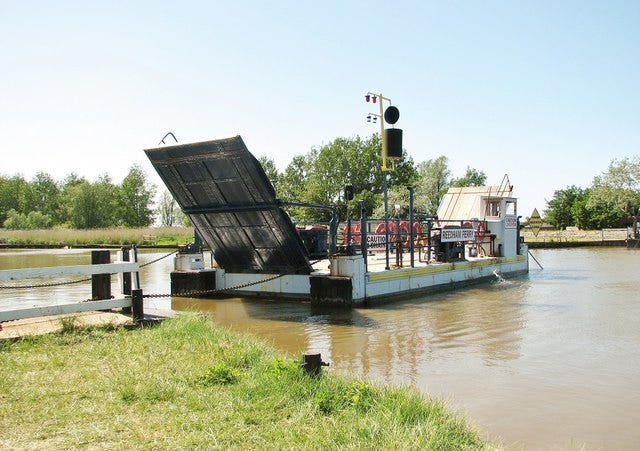
The case for the crossing still holds. Even now, the nearest road crossings of the River Yare are on the A47, one an eighteen mile drive west over the flyover on the Norwich Southern Bypass, the other a sixteen mile drive east at Breydon Bridge in Great Yarmouth. Transport purists will point out that barely a mile away the Wherry Lines cross the Yare at the Reedham Swing Bridge. That misses the point. While Reedham station is a handy fifteen minute walk from the ferry, the nearest station on the southern side is at Haddiscoe, which has just 1,305 people living within three kilometres of it.
But in a lot of ways, the picture is very different today. Changes in farming have cut the demand for agricultural labour, and heavy machinery is no friend of a small boat with a seven and a half tonne weight limit. The ferry still runs on demand until 10pm every day, starting at 6:30am on weekdays and 8am at weekends and on bank holidays. The demand is more mixed now, a core of regular users alongside big peaks in leisure traffic. The pricing reflects this. A day return in a car costs £8, though regulars can buy a multi-card giving ten return trips for £32. Pedestrians pay 50p a single trip. Belle and Ollie travelled for free.
For that, you get a two minute voyage. Set against an alternative that can run to an hour behind the wheel, maybe £8 is not so bad after all.
When you picture a river ferry in the UK, the Reedham Chain Ferry is probably not what springs to mind. You might think of a gentle river cruise or a water taxi, the kind you find in Cardiff or Bristol. You might think of the Thames Clipper services in London, or of the handful that make a genuine river crossing, such as the Woolwich Ferry or the Shields Ferry. Anyone of a certain generation will go straight to the ferry across the Mersey, made famous by Gerry and the Pacemakers. Yet, as I found while researching the Scottish Rural and Island Transport Community’s project on UK water transport, river ferries come in all shapes and sizes.
Just a few miles from Reedham, on the River Waveney, a foot ferry runs between the Waveney River Centre and Carlton Marshes, reopened by David Bellamy no less. On the Isle of Wight, an island that is (in)famous for its ferries, getting between Cowes and East Cowes, two of the most densely populated spots on the island, means using the Cowes Floating Bridge, which is far more floating than it is a bridge. The most striking example is the Portaferry to Strangford ferry in Northern Ireland. It has operated in the same place for four hundred years, and it connects two sections of the A2, a major road. This is the equivalent of National Highways deciding the bridge that takes the A1 across the Tweed near Berwick is surplus to requirements, and a ferry should do the job instead.
River ferries sit in a peculiar governance arrangement in the UK. The vast majority are privately operated. At Reedham, the present owner, David Archer, built the current ferry himself with the late Fred Newson, a boat builder from Oulton Broad. Some services receive public money to keep going, often with no specification beyond a requirement to run. In 2023/24 the Harwich Harbour Ferry, across the mouth of the Stour and Orwell, took just over £31,000 from various local councils.
Five river services in the UK are provided directly by a public sector authority. The busiest is the Woolwich Ferry, crossing the Thames between Woolwich and North Woolwich. Its estimated two million passengers a year are carried at a cost of around £9m a year to Transport for London. Another is the Shields Ferry, run by Nexus between North and South Shields across the Tyne, carrying around 400,000 passengers a year at a cost estimated at £6m a year. The ferry across the Mersey between Liverpool and Birkenhead receives around £3.5m a year in revenue support from the Liverpool City Region Combined Authority for a peak hour service, operated by Merseytravel under the Mersey Ferries brand. The Cowes Floating Bridge and the Portaferry to Strangford ferry, mentioned already, are provided by Isle of Wight Council and the Department for Infrastructure in Northern Ireland.
Even with public sector operation, integration with other modes is mixed at best. The Shields Ferry does it well, folded fully into the Nexus fare zones and the regional POP card. The Woolwich Ferry is technically well integrated, being free to use, and on many other London river services you can tap an Oyster card, subject to an extra charge. The Mersey Ferries sit within Merseytravel’s Saveaway ticket. The Cowes Floating Bridge and the Portaferry to Strangford ferry, by contrast, want you to buy a separate ticket. And for all of them, local public transport is often a fair walk from the landing.
The regulation of these services is, in the time-honoured tradition of British transport governance, fragmented. There are three broad legal requirements on anyone running a river ferry in the UK: navigation, the safety of the vessel, and the competency of the master. This is where the post gets properly nerdy, but it is nerdy for a reason. So strap in.
Take navigation first. Anyone operating a ferry on UK inland waterways is subject to rules set by a navigation authority. There are around thirty of them, and the biggest are the ‘Big Three’: the Canal and River Trust, the Environment Agency and the Broads Authority1. The Reedham Ferry falls under the Broads Authority. Each authority has its own responsibilities and powers. Broadly, most can:
register or license boats on the waters they control;
charge a licence fee, tolls, or both, on vessels using the waterway;
set rules for how vessels are navigated;
maintain locks and other structures;
dredge the main navigation channels, and
manage flood control
Even where there is a general right to navigate along or across a river, that right can come with rules and charges that change from river to river. To add to the fun, some crossings carry ancient ferry rights that have to be upheld. That is a whole post in itself, but as a taster, the Helford Ferry in Cornwall was recorded in 1023, by King Canute of wave-commanding myth, as having the right to run a ferry.
Then there is the safety of the vessel, which turns on Vessel Certification. To boil down some genuinely dull and technical regulation, it hinges on passenger numbers.
For twelve or fewer passengers, with the vessel not going to sea, you can comply with either the relevant Maritime and Coastguard Agency (MCA) code or the local authority’s licensing scheme. The Inland Waters Small Passenger Boat Code, produced jointly by the MCA and the Association of Inland Navigation Authorities, sets the national framework for equipment, build and manning, which local authorities can apply in full, in part, or swap for their own rules.
For more than twelve passengers in UK categorised (inland or estuarial) waters, the Merchant Shipping (Passenger Ships) (Safety Code for UK Categorised Waters) Regulations 2010 apply, unless the ship already holds a passenger certificate under the 1995 Survey and Certification Regulations. Every passenger ship of this size needs a passenger ship safety certificate.
Waters are classified A to D, with seagoing classes beyond, and the category of your particular stretch of river sets the standards for construction, stability and equipment. Vessels are surveyed and certificated, normally on a five-year cycle with annual checks, including hull and bottom inspections.
Finally there is the Boatmaster, or the captain as you and I would call them. No random person can just turn up and start up the engines. A Boatmaster’s Licence, issued by the MCA on behalf of the Secretary of State, is required to master passenger vessels on the UK’s inland waters in categories A to D, covering canals, rivers, lakes and some estuaries, as well as limited coastal work. The governing instrument is the Merchant Shipping (Boatmasters’ Qualifications, Crew and Hours of Work) Regulations 2015, which also sets the rules on crewing and hours.
It is partly because of this tangle of rules that transport planning so often ignores inland ferries. Professionals will also tell you to keep a sense of proportion. The Woolwich Ferry carries in a year what the London Underground carries in a single day. So why should transport planners care about ferries at all?
We should care for one simple reason: connectivity. Like a ferry to an island, a river ferry stitches together communities and places that the water would otherwise hold apart. And the crossings it provides are not marginal. The Reedham Ferry saves an hour’s drive through Norwich or Great Yarmouth. The nearest alternative to the Portaferry and Strangford ferry is seventeen miles away. The Woolwich Ferry has had other river crossings nearby since the 1990s and 2000s - first the DLR extension to Lewisham and then another separate DLR extension to Woolwich Arsenal - but neither is a convenient swap for the communities living next to the ferry landings.
This is the part that gets lost. River ferries are rarely about moving large numbers of people across a city. They are about a few thousand people, sometimes a few hundred, for whom the alternative is not a slightly slower journey but a completely different shape of daily life. Lose the Reedham Ferry and the school run, the trip to the shop, the visit to a relative on the far bank and the commute to work all lengthen by the better part of two hours there and back. At a national scale that barely registers. At the scale of a household in Reedham or Thurlton, it is the difference between two places being neighbours and being strangers.
Connectivity at this scale does quiet, important work. It keeps a village pub trading, because the walkers and cyclists on the Wherryman’s Way can actually reach it. It keeps a small business viable when its customers and suppliers sit on the far bank. It widens the pool of jobs a person can realistically reach, and the pool of workers a local employer can draw on. For anyone without a car, which in a rural community is a larger share of people than we sometimes assume, that 50p crossing is not a convenience but a lifeline. None of this turns up in the headline passenger figures, and none of it survives the crude test of asking how many people use the thing. The value of a river ferry is not in the size of the flow of passengers across it. It is in what becomes possible because the ferry exists at all.
There is also a subjective side to connectivity that ferries expose rather neatly. We can estimate the change a crossing makes in journey times and costs. What is harder to capture is feeling. A river is a psychological barrier as much as a physical one. Even where a direct link exists, the presence of water can make two places feel like separate worlds. A ferry partly bridges that feeling. Reedham and Thurlton sit across the Yare from one another, and the sense of distance between them would be far greater without the ferry tying the banks together.
That feeling matters more than transport professionals like to admit. People decide where to live, where to work, where to send their children to school and where to spend their evenings on the strength of whether somewhere feels reachable. A ferry that runs on demand until 10pm tells a community that the other side is open to it. Take it away and you do not simply add miles to a journey. You quietly redraw the mental map of a place, and you make a whole side of the river feel like somewhere you no longer go.
But the thing that struck me most while researching river ferries, the thing we forget when we are drawing up our grand transport plans, is their cultural weight. Ferries have a peculiar habit of becoming woven into the identity of a place in a way that almost no other river crossing manages. Nobody writes a song about a flyover.
The clearest example is the ferry across the Mersey. I am quite sure Merseytravel could save itself £3.5m a year by scrapping the Mersey Ferry outright, with little real effect on most people trying to get between Birkenhead and Liverpool. It could even pour the savings into more buses and trains through the Mersey Tunnels. But doing so would be what my old Director of Transport at Buckinghamshire County Council used to call “like shooting Bambi.” Yes, you can do it. It might even make sense on paper. But the uproar would not be worth it, because this is exactly the kind of thing communities value in a way that logically appears unreasonable.
That unreasonable attachment, however, is not sentiment to be tidied away. It is a real asset. The Mersey Ferry is on the postcards, in the song, in the way the city pictures itself. The only things that are arguably more of a cultural icon on Merseyside are The Beatles, Liverpool FC, Everton FC, and possibly the Liver Building2. It pulls in tourists who would never set foot on a local bus. Liverpool City Region understands this, which is why it treats the ferry as an income generator rather than a cost to be trimmed. A ferry can be a landmark, a ritual, a thing people take their visitors on, a backdrop to a thousand photographs. Try generating that kind of affection for the Mersey Tunnel.
You see the same thing on a smaller scale at Reedham. The ferry is not just a way across the Yare. It is the reason the pub is busy on a Sunday, the punchline of half the local stories, the first thing visitors go and see. The chains and the clank and the wooden ramp are part of what Reedham is. Strip the crossing back to its bare function and you would still have a way of getting a car to the other side. What you would lose is harder to name and harder to replace.
I am quite sure that if the people of Reedham woke up to the news that the operator was packing it all in, they would be on the phone to their councillors and MPs within the hour.
The funny thing is that the transport planner in me knows there is a better answer to the basic problem of getting from one bank to the other: build a bridge. It is the logical thing to do, and on a spreadsheet it would win every time. And yet these ferries keep running, in defiance of logic. We have done the logical thing before. I doubt anyone crossing the Severn on the M4 into Wales longs for a return to the ferry that ran there until 1966.
But maybe it is no bad thing that we have not replaced every one of these crossings, and maybe the tension in how we treat them is the whole point. Across the UK, river ferries are never going to top the list of problems facing the transport network. At a community scale, though, they are vital, or at the very least they carry an importance far out of step with the modest size of their operations.
Transport planning has a proud tradition from engineering, data analysis, mathematical modelling, and applying logic to identified transport issues. But I think river ferries are an example of our need to sometimes embrace the illogical. The ferry that has worked that crossing for four hundred years is not the most logical solution, but at a human level, it feels like the right one. Our data shows that inland ferries are of relatively little low value. In fact, at a national level we don’t even collect data on the number of passengers using river ferries. But that does not mean they are not valuable in other ways. Our policy making needs to find a way of embracing this unknown value.
For me, the reason I like ferries is a personal one. They provide the opportunity to slow down, and enjoy the process of travelling. At Reedham, should there have been a bridge, we could have driven across the river in about five seconds, saving time on getting to the other side. But we would have not noticed the ducks pruning their feathers, or seen the changing colours of the river as we crossed. We would have missed the gentle wind blowing through our hair, and the light conversation between friends on board.
Its for that reason that I hope the likes of the Reedham Chain Ferry continue for decades to come.
While I love writing this, and my writing will always remain free to view, if you are able to donate whatever little you can to help out it is much appreciated. I do have bills to pay after all! You can do that right here.
The clever clogs at our universities, government departments, and other clever people have published the following excellent research. Where you are unable to access the research, email the author – they may give you a copy of the research paper for free.
Can River Ferries Deliver Smart Growth? Experience of CityCats in Brisbane, Australia
TL:DR - Ever heard of Ferry-Oriented Development? You have now.
Water Transit and Ferry-Oriented Development in Sweden: Comparisons with System Trends in Australia
TL:DR - Compares water-transit patronage growth and the role of FOD and planning policy, noting water transit is a small but growing share of public transport (0.5% of trips in Stockholm to 3.7% in Brisbane).
Boat commuting, travel satisfaction and well-being: Empirical evidence from Greater London
TL:DR - Commuting by boat makes you happier.
TL:DR - Contrasts the predictions of NYC’s Citywide Ferry Study with observed spatial, social and economic transformations around ferry terminals, examining whether terminal construction causally changes neighbourhood socio-economic conditions.
TL:DR - Builds a GIS database of 514+ historical river-crossing ferry sites from old military topographic maps, analysing how ferries served and shaped localities over time.
There has been some positive news on ferries recently, and here are those stories.
Orbit Clipper launch marks new era for sustainable London transport
Thames Clippers’ Orbit Clipper, described as the UK’s first fully-electric cross-river passenger ferry, completed its first passenger trip across the River Thames between Rotherhithe and Canary Wharf, with a launch ceremony attended by the Mayor of London. The 150-passenger vessel is being phased into operation alongside the existing Twinstar, with full exclusive service expected in spring 2026 and crossings every 10 minutes on weekdays.
Hyke Electric Ferry Pilot Sees Success in Norwegian Public Transport
Norwegian firm Hyke’s fully electric F-15 Shuttle operated on the Bekkhus–Vaterland route across a 225-metre crossing of the Glomma River as part of Fredrikstad’s municipal transport system, carrying more than 41,000 passengers between April 2024 and July 2025.
Mayor Mamdani Announces Most Summer Ferry Service in City History Ahead of 2026 FIFA World Cup
New York City announced addition summer ferry services, running through to 13 September 2026. The East River route also recorded its two highest ridership days ever at more than 40,000 boardings over a single weekend.
Sydney will get its first-ever electric ferry – starting with a route to the new Fish Market
The New South Wales Government announced that construction on Sydney's first 24-metre battery-electric ferry will begin in 2026, modelled on the existing Parramatta River Class ferries and initially servicing the Sydney Fish Market route at Blackwattle Bay. Shoreside charging infrastructure will be installed at Barangaroo Wharf, with twelve months of testing set to begin in early 2028.
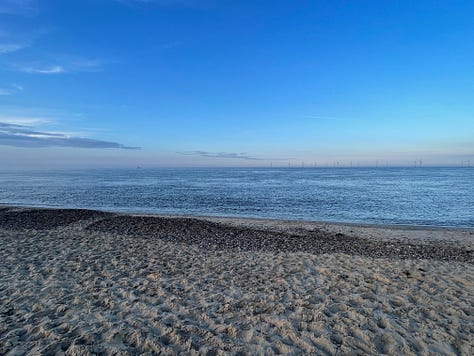
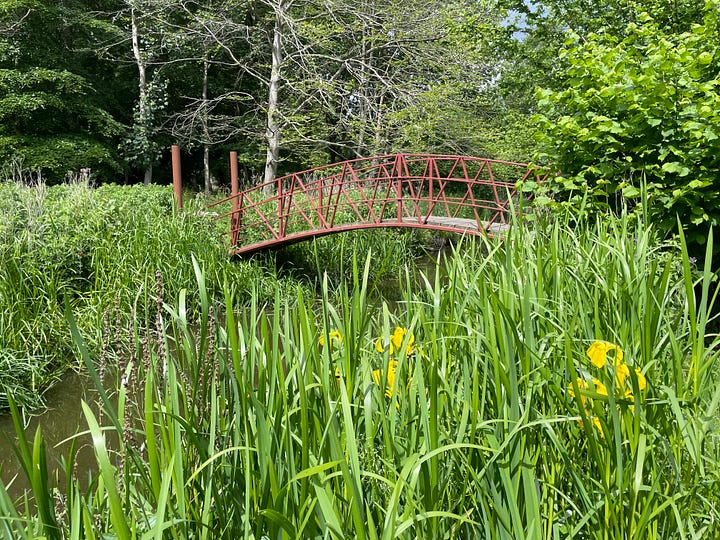
I was hard at work…enjoying the countryside and coastline of East Anglia.
What can I say? It was a week that was well worth the travel for. Every evening was a lovely walk along the beach at Caister-on-Sea. We even managed to spot some seals playing just offshore - though they were too quick for the cameras.
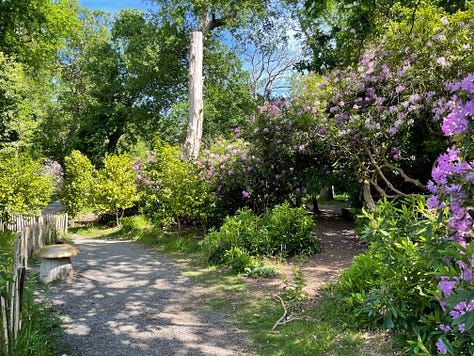
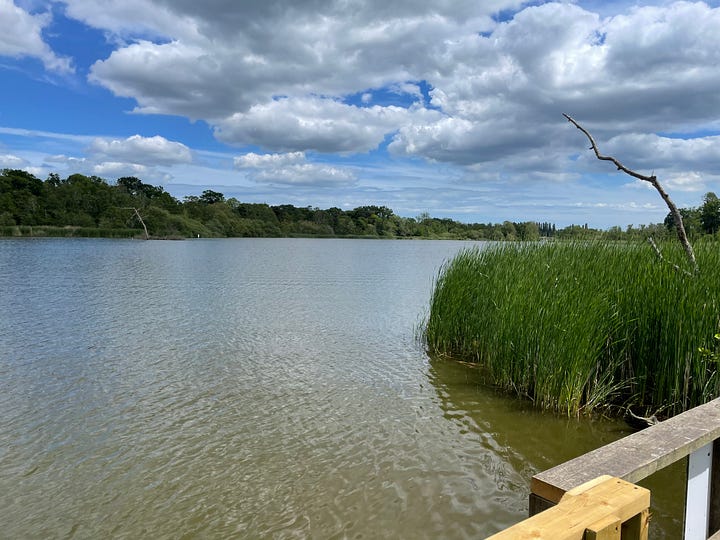
There was a lot of dog walking. Most of the photos below are from Fairhaven Gardens, which truly do live up to their name. Carlton Marshes and Hickling Broad are other personal favourites.
To fill in the downtime, there was reading, and I managed to finally get through George Monbiot’s Feral. If you are a nature lover, you will love it.

Orinoco Flow by Enya is the best song involving boats and I won’t hear a word otherwise. Sorry, Gerry and the Pacemakers.
What can I say about it? It’s that song you know that you know, but you forgot its name (for those of you who haven’t clicked on it, think the words ‘Sail Away, Sail Away, Sail Away’). It was released in 1988 but sounds like it could have been released last week. The video looks stunning. It’s the best new age song in history and I can proudly say its my guilty pleasure. Which makes it not a guilty pleasure, weirdly.
An interesting aside, it is because of its duties as a navigation authority that the Norfolk and Suffolk Broads are technically not a National Park, and the associated Broads Authority is not a National Park Authority. Though as it has the other duties that are typically bestowed upon a National Park Authority, and the area markets itself as a National Park, and it acts like a National Park, its reasonable to say that this point is a moot one.
I realise now that by listing these, I have probably opened myself to accusations of some kind of cultural heresy by not including places like Birkenhead Park, Port Sunlight, and arguably the Blue Funnel Line. I await the numerous emails I will no doubt get in response.
Comments
Nothing yet. Say the first thing.
Sign in to join the conversation.