
Good day my good friend.
I got ahead by two weeks in order to do research for an upcoming post, promising to post it today. Needless to say that I didn’t do it in time. So you have this post instead. What I am researching is coming, its just life has a funny habit of getting in the way.
While I have you here, there are a couple of public service announcements. Firstly, my good friends at the Young Mobility Network are running a bike tour in London on 2nd September at 5:30pm. If you are a young professional, you should go.
Secondly, it seems my posts are getting cut short by email clients. So under the Latest Research and Positive News sections I’ve cut the summaries and just provided the links. I’ve also cut the length of some of the non-core sections too.
This year, Mobility Camp is coming to Sheffield on 30th September, and it promises to be another amazing day of discussion, debate, and taking action. Anyone with an interest in transport should be there, and so should you. You can get tickets here.
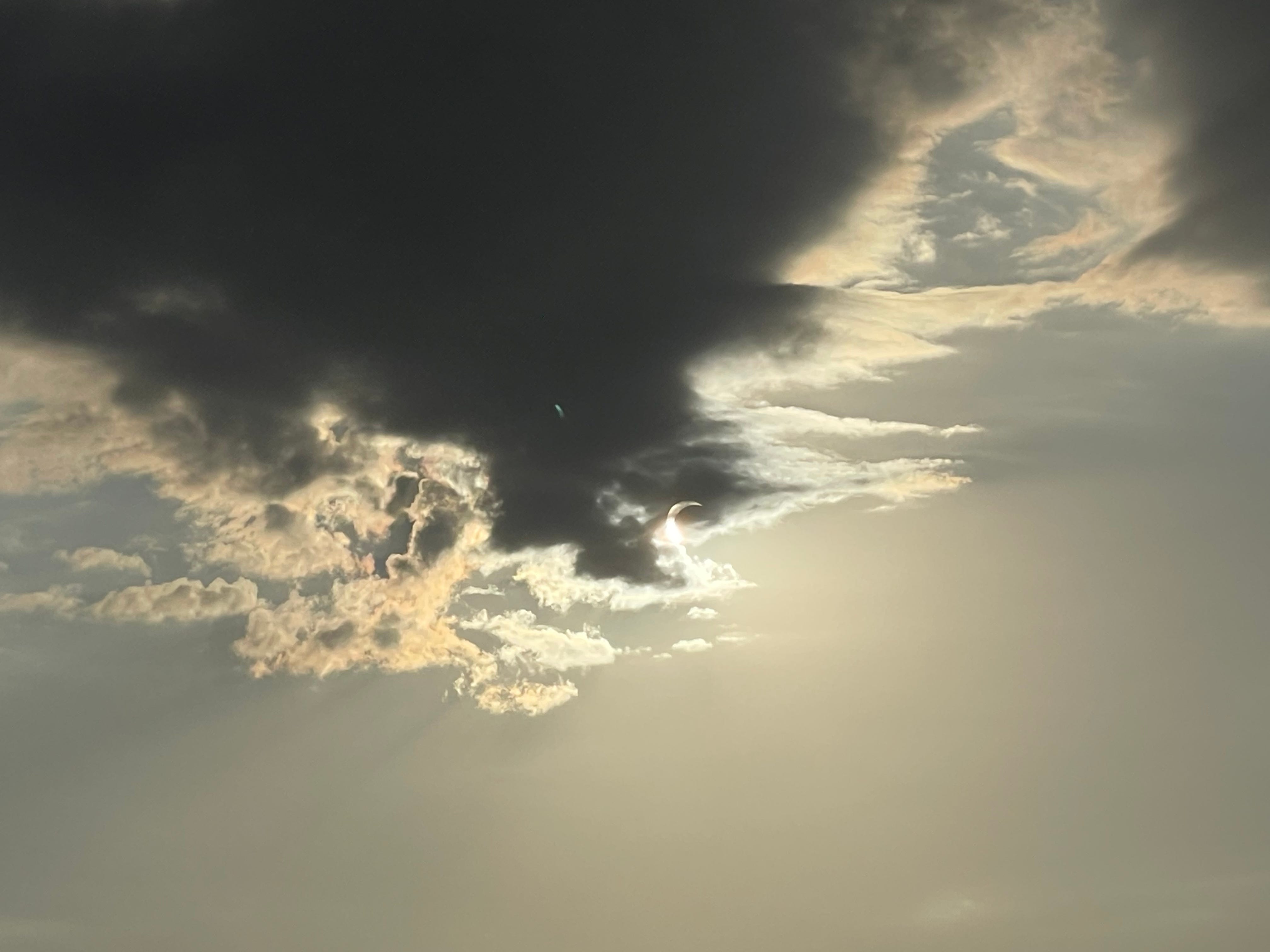
It is quite rare that two very different interests of mine manage to combine themselves together for one fleeting moment. But this week, my interests in transport and astronomy managed to do just that. This last Wednesday, the UK experienced a solar eclipse. We didn’t experience complete totality, sadly, but as the eclipse made its way across Greenland, Iceland, the North Atlantic, Northern Portugal, and Spain, most of the UK experienced a near-total eclipse. The further South West you were, the greater the eclipse was, with parts of Cornwall experiencing ninety-five percent coverage of the sun, whereas Aberdeen experienced a ninety-one percent eclipse.
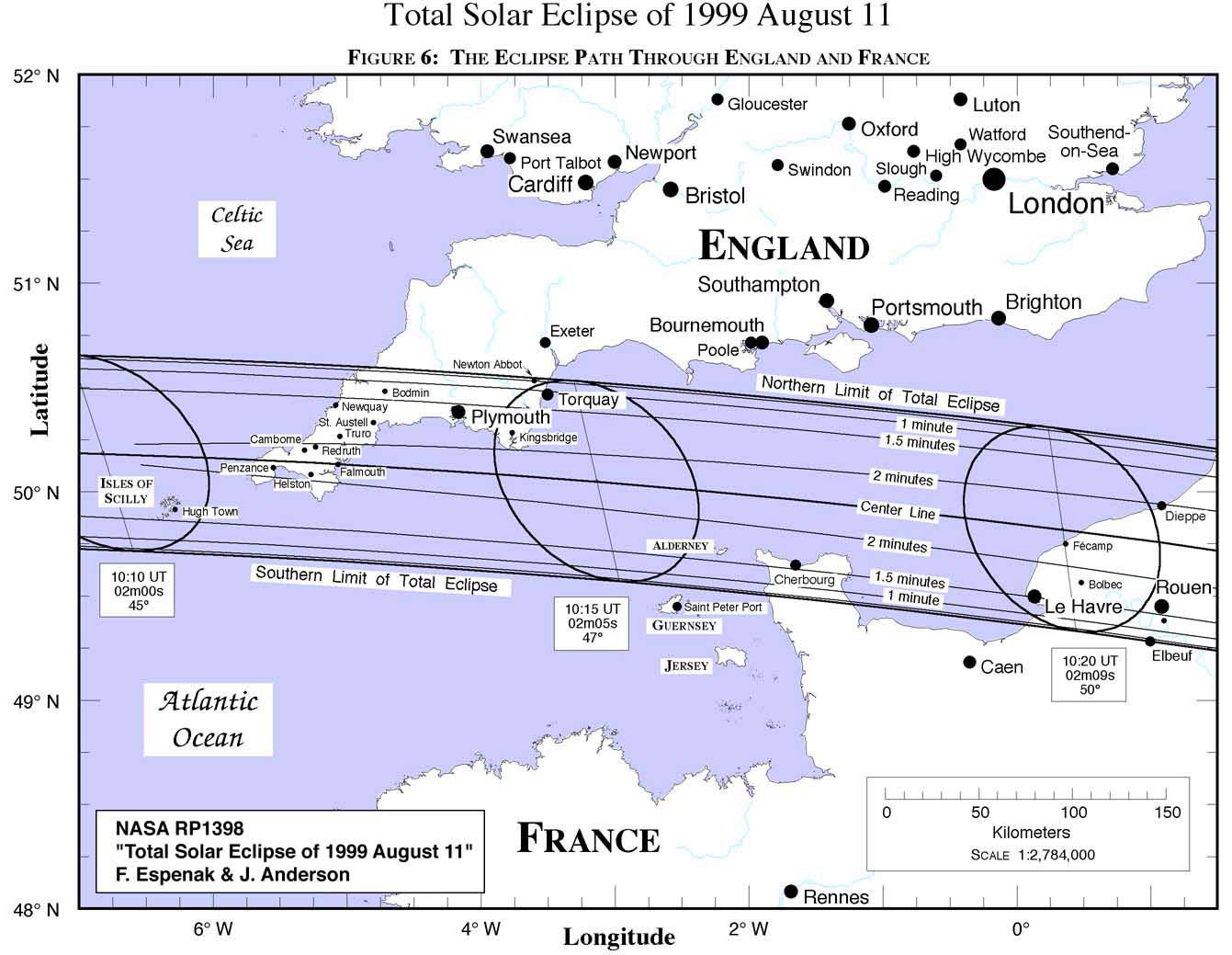
I had the privilege of not just being around for the last total eclipse that visited the UK, on 11th August 1999, but being in the privileged position of being able to travel easily to go and see it. While full totality would miss where I lived in Barnstaple in Devon, its path would take it over Cornwall, and much of South Devon. So, on the morning of the eclipse, me, my mum, one of my sisters and some of her friends all piled into my mum’s clapped out Citroen ZX, and like many others we joined the journey south.
Whereas the crowds were heading to the likes of St Ives, the Lizard, Penzance, and Plymouth, we decided to head off the beaten track to a village called Shaldon. This is situated on the opposite bank of the River Teign to Teignmouth, and we drove to a hill by the side of Marine Parade. This hill offers a gorgeous view. The mouth of the river and Teignmouth can be seen to the left, before the English Channel opens out in a sweeping view right in front of you. Our view was only blocked by The Ness, a small wooded headland jutting out into the channel, which is also home to Shaldon Zoo - a very small zoo dwarved by its nearest neighbour at Paignton. We arrived two hours before totality, and over the course of that time the hillside slowly filled up with people.
The moment of totality is one that I won’t forget. Naturally, it being the UK, clouds stopped us from seeing its true splendour, but the moment was still something to behold. Darkness came over the hill like a wave, and we could see the moon’s shadow head out across the English Channel. Some of the Devon coast that we could see past Teignmouth was still in daylight, and the contrast could not have been more stark. But what remains with me is the monkeys. The monkey’s screeching loudly as the moment of totality came, and during the two minutes that the darkness hung over us. I don’t know if it was a warning, terror, or excitement, but that sound is something I won’t forget.
Once the moment had passed, everyone on the hillside packed up, got in their cars, and tried to leave. We, being veterans of the usual rush of tourists that come through Barnstaple every summer, decided not to head off, and walked across the Shaldon Bridge to get ice cream in Teignmouth. We walked past a long line of traffic over the bridge, trying to get out of the area.
Some months before that, unknown to a seventeen year old me who hadn’t decided by that point to go for transport planning as a career, the House of Commons published a research briefing called the August Solar Eclipse. It gave MPs indications of what to expect from the eclipse, and with regards to transport its summary highlighted:
The possibility of large crowds converging towards Cornwall and Devon to witness the total eclipse is a mixed blessing for the local tourism industry. Some regular visitors to the counties are reportedly staying away in the expectation of road congestion and over stretched emergency services.
It also gives some insight into the uncertainty associated with the transport planning for the eclipse itself.
No-one knows how many people will travel to Cornwall and Devon to see the total eclipse. However, it is widely accepted that thousands, if not millions, of additional visitors will come to the counties during this time. Gage Williams, the County Planning Co-ordinator for the eclipse in Cornwall, has produced a document entitled Implications of the Eclipse on 11 August 99. This includes an estimate of the likely number of additional visitors to Cornwall, based on the capacity of the three main roads into the county. Assuming that traffic flowed steadily over a two-week period around the time of the eclipse, then up to 1.5 million additional people could visit Cornwall. This would be on top of 300,000 tourists and visiting friends and relatives who would ordinarily be present. Though this figure is probably an overestimate (traffic levels tend to be low in the early hours of the morning), it does not take into account people travelling by other methods or willing to spend more than 2 weeks in the county. In addition, many visitors are likely to opt for South Devon instead. Some estimates place the total number of additional visitors to the West Country as high as 4 million or more.
Such was the uncertainty of the impacts of the eclipse that policy makers at Devon County Council and Cornwall County Council were expressly warned by experts to not promote the eclipse in its annual tourist promotions.
It is estimated that an additional one million people came to Devon and Cornwall with the express intent of watching the eclipse. Me, my mum, my sister and her friends were one of the sixty thousand who travelled south on the day. In the end, people came by all sorts of means. Most drove, many crammed into packed trains, and charter flights were put on to Newquay Airport. Even cross channel ferries stopped their engines under the line of totality in the hope to get a view.
In transport we do come across major events similar to this all the time. Barely a couple of months ago I wrote about the FIFA World Cup and how football matches tend to have a somewhat unique demand profile. People attending football matches typically slowly arrive over the course of a couple of hours before kick off. Starting off with a trickle and slowly ramping up over time before, in the twenty minutes before kick off, everybody starts to go through the turnstiles and take their seats. Just after full time, everyone leaves in a big surge immediately after the final whistle has blown.
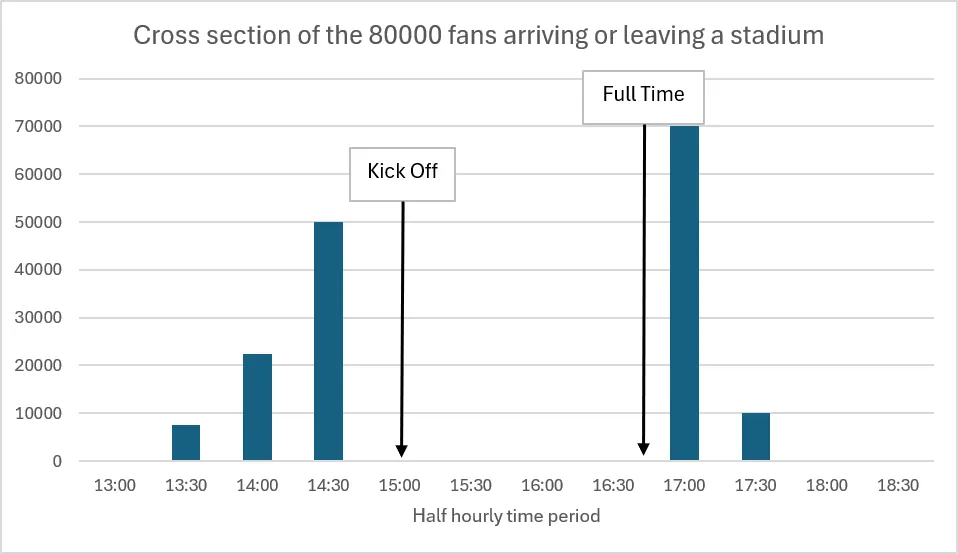
But this isn’t quite right in terms of explaining how major, unique events actually affect demand. In this instance, people are trying to get to and from a single point - the stadium. But for some major events their geographical spread is much more dispersed. Even then, there may be key points along the line of route where demand may be concentrated due to ‘the action’ happening in those areas.
A good example is the London Marathon. The Marathon itself runs over a twenty-six mile course, taking in Woolwich, Greenwich, Bermondsey, Wapping, the Isle of Dogs, and the City before the final stretch down The Mall. Yet despite its length and ample opportunities to see the race, travel advice for spectators advises that at eight locations, people should arrive early or expect delays. These are Cutty Sark, Canada Water, Bermondsey, Tower Bridge, Canary Wharf, Limehouse, Tower Hill, and the final stretch from Parliament Square to The Mall.
While not as concentrated as eighty thousand trying to get to and from a stadium, this poses a fundamentally different transport management proposition. While there is likely to be isolated changes to entry and exit arrangements at stations and diverting buses on grounds of health and safety, transport network operators can play into the geographically dispersed nature of the event and the network effect of their operations to manage the event.
A solar eclipse takes this to an extreme. Two of the most studied solar eclipses in history in terms of their transport impacts took place in the last ten years, and both were in the United States of America. In 2017, the Great American Eclipse drew a line of totality from Oregon to South Carolina. In 2024, the Great North American Eclipse ran from eastern Canada, south west through the United States, and into Mexico. Keen to understand the impacts of these on how people travel, the Federal Highway Administration studied the impact of both, and came to conclusions that may seem counter-intuitive.
In 2022, Ngeni, Mwakalonge, and Siuhi published a paper on the highway impacts of the 2017 Eclipse, and the lessons learned from this. What their analysis of the FHA’s own data found was that the impact of the eclipse on traffic demand was highly variable. Of the eleven states that they studied, while Oregon, Idaho, and Wyoming saw significant traffic increases on the day of the eclipse, Nebraska, Kansas, and Missouri had reduced daily traffic. The authors put this down to those states transportation agencies advising residents to reduce their errands on the day of the eclipse so as to reduce the traffic impacts.
When they looked in more detail at hourly flows, what they found was that across the whole corridor there was a thirteen percent decrease in traffic below the upper ninety five percent confidence interval during the eclipse time, but soon rose to thirteen percent above the lower ninety five percent confidence interval after the event. In other words, traffic went down as the eclipse took place and just before it, but rapidly increased again. Furthermore, this increase sustained itself for two to three days after the event, and only at that point did normal traffic levels resume. For the traffic drop before the eclipse there was significant variation. In Wyoming, which saw a seventeen percent increase in traffic on eclipse day.
This highly varied picture also occurred during the 2024 Eclipse. Sakhare, Desai, Mathew and Bullock found through the analysis of connected truck data that congestion varied wildly. Overall, across the thirteen states impacted by totality during the event, there was a thirty percent increase in congestion miles (i.e. congestion) compared to two weeks before the event. But even within this there were significant variations. Arkansas, Ohio, New Hampshire, Maine, and Vermont saw their levels of congestion increase by well in excess of one hundred percent. Vermont saw its congestion-miles increase by seven hundred and eighty percent. In contrast, there were significant decreases in congestion in Texas, Oklahoma, and in some parts of Kentucky.
What we can see here is that mega events do generate significant movements, and while in some cases they are spatially concentrated, the more dispersed the event, the more dispersed the impact. No doubt had me, my mum, my sister, and her friends got into the car and left immediately, we may well have been caught in traffic attempting to leave Devon and Cornwall after the eclipse had ended. However, the spatial impacts of such an event would have been highly uncertain.
Unfortunately, there is no corresponding analysis of the traffic impacts of the eclipse on the West Country in 1999. I do remember traffic reports on the radio at the time reporting heavy traffic on the A38, the trunk road that runs from Exeter to Plymouth. However, as we were cutting across country, we experienced no delay in getting home.
But there is an idea that I want to introduce here, that we have partly learned over the years. Its not that we cannot predict the impacts of some significant events. Most transport agencies and local police forces can predict pretty well where crowding is likely to be an issue after events in highly concentrated locations such as stadiums, and they handle them well on the whole. But mega events like an eclipse introduce significant uncertainties in demand as a result of the nature of the event and its geographical locations.
In a PhD thesis in 2012, Kangjing He looked at just this, with a specific focus on the Beijing Olympics of 2008. He found that the impact was large but largely temporary. Travel patterns shifted significantly during the Games under the demand management regime put in place, but most of those changes did not persist once the Games ended.
The response was also highly heterogeneous. It varied significantly between demographic groups defined by residential area, age, occupation, income, car ownership and pre-Games mode, and car users and public transport passengers reacted differently from one another in both the short and the long run.
But the most critical finding is the difference between what people said they would do, and what they actually did. The differences were significant across all modes of transport, with walking and the subway the standout mismatches. This significant gap is, in itself, a finding. What He found was that the stated preference surveys undertaken to inform planning for the Olympics consistently predicted incorrectly. Planning built on pre-event stated intentions is therefore working on sand, especially for the discretionary modes.
The second is that the uncertainty is not uniform across the population. Because different segments move in different and sometimes offsetting directions, an aggregate forecast can look stable while concealing large compensating shifts underneath. We often look at the aggregate impact of mega events and how they will affect the transport network, but He’s work suggests that population segments are a more robust model for predicting behaviour changes in such instances.
I can see that in my own experience. A family group who is relatively local and knows the impacts of a sudden rush of tourists into an area is a different proposition to another family driving into the West Country for a few hours to see the eclipse. But even with this, I think the most significant point it also something that He’s work points towards, and the analysis of the eclipses in the United States attempts to tackle. That is the crushing lack of shared knowledge on how to deal with such events.
There was no study of the impact of the 1999 eclipse on travel patterns in the West Country, despite knowing about its date and even specific time for nearly one hundred years. Even the data collected in the United States is partial, and notably omits public transport entirely. And this is not uncommon among transport planning for major events. Much of the knowledge on how to deal with significant events such as this is in the minds of transport system operators, and locked away in management plans in some back office of a council building. The experience of dealing with unexpected situations on the fly is often not captured at all, instead resting in the heads of committed professionals who want to keep transport systems safe and moving.
Us here in the UK will get another chance to learn the lessons of managing the transport demands associated with a solar eclipse. That date will be 23rd September 2090, when once again Cornwall and Devon, as well as much of the south coast of England, will be covered in totality. Get preparing those research applications, and start preparing the management plans for it now - you only have another sixty four years to prepare. From my own experience, I can assure you that it is an event like no other.
While I love writing this, and my writing will always remain free to view, if you are able to donate whatever little you can to help out it is much appreciated. I do have bills to pay after all! You can do that right here.
The clever clogs at our universities, government departments, and other clever people have published the following excellent research. Where you are unable to access the research, email the author – they may give you a copy of the research paper for free.
Real time transit demand prediction capturing station interactions and the impact of special events.
Understanding travel behaviour change during mega-events: lessons from the London 2012 Games.
Short-term metro ridership prediction during unplanned events.
Modelling travel mode choice behaviour for planned special events using a CPT-based HI-MADM approach.
Your weekly dose of positivity in a world where bad news dominates. Enjoy.
The World Cup drives record transit ridership across North America
ScotRail records its busiest week since returning to public ownership
The London Marathon moves three-quarters of a million spectators
Vancouver posts its busiest transit day since the 2010 Olympics
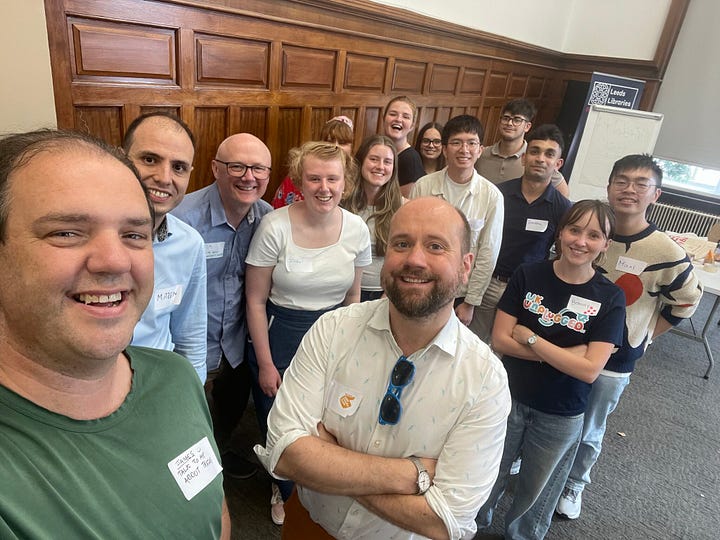
These last two weeks, as part of the Transport Box project, I got to help out at two sessions that a load of volunteer engineers ran for kids with Special Educational Needs. I’m not sure who loved the sessions more - the kids or the engineers!
In what is arguably one of the best live performances of all time, Nirvana performed a pitch-perfect cover of Jesus Doesn’t Want Me For A Sunbeam, originally recorded by The Vaselines. It’s only tangentially related to eclipses, but it mentions the sun and I absolutely love it. That is good enough for me.
A couple of things worth noting as you read this.
I use AI as a research assistant to find credible, well-cited academic evidence. I check every source, carry out my own research and, where time allows, consult domain experts or their published work. The writing itself is mine, spelling mistakes and all.
I am a transport planner, so my expertise lies in public policy, movement and its impacts. When writing outside that field, I may occasionally get things wrong despite researching carefully. That is on me, and I always encourage readers to do their own research.
If you have been sent this newsletter, please consider signing up. Its free to do so, and I don’t spam your inbox with random rubbish - just my own words.
Comments
Nothing yet. Say the first thing.
Sign in to join the conversation.