
Despite the author-generated controversy we previously discussed, The Luciano Story by Sid Feder and Joachim Joesten may yet be enticing to some researchers and underworld history enthusiasts because it includes statements from Salvatore “Charlie Luciano” Lucania, himself.
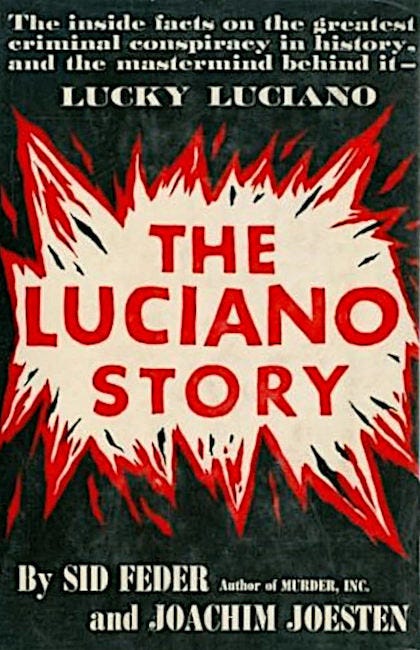
The fact that Lucania sat for interviews in Italy with coauthor Joachim Joesten during the spring of 1953 was certainly used as a selling point for the book. But the Joesten-Lucania conversations were hardly earth-shaking and probably disappointing to many who plunked down $3.75 for the 1955 hardcover in the hope it would reveal an “inside scoop.”
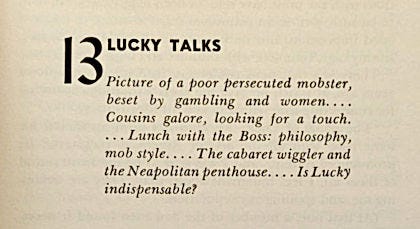
The conversations were generally confined within the book’s last chapter, entitled “Lucky talks,” consuming pages 303 to 327. Even when gathered into this single chapter out of the total of fourteen in the work, the Joesten-Lucania interviews seem flimsy, superficial and whiny. The coauthors apparently understood this, as material was drawn in from other Lucania interviews to add substance.
One portion of the Joesten-Lucania discussions was somewhat intriguing for its time (though the same information already had been published elsewhere), causing it to graduate from the book’s tail end all the way up to Page 71. It related to the brutal beating of Lucania back in October of 1929. (You’ll recall that a police officer found the badly cut and bruised Lucania walking along a road in Staten Island on October 17, 1929.)1
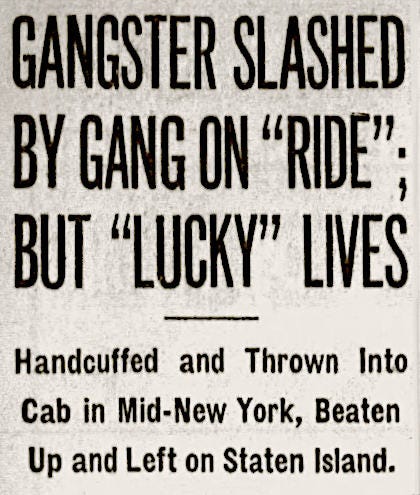
About the beating, Joesten asked Lucania, “Do you know who did it?”
“Sure - the cops,” Lucania answered. “They were just trying to find out things.”2
→ The answer seemed to invite follow-up questions: “What sort of ‘cops’?” “How many were there?” “Did you know them personally?” “What did they want to find out?” “Why did they beat you so severely?” “Why do you think you were left on Staten Island?” “Why did you reportedly give a different story at the time?”... There’s no record that such questions were asked. ←
Apparently without the need for any other details, Feder and Joesten eagerly accepted this version of the beating. (Noting that “cops,” to Lucania, could have referred to any branch of law enforcement, from a local force on up to federal agents, they - probably more Feder than Joesten - surmised that federal narcotics agents had been responsible.):
The authors believe this explanation of Luciano’s famous ride is the only one that holds water. It is the only one that explains why he was able to come back alive.3
Other explanations, generally involving a kidnap and a poorly attempted murder of Lucania by his underworld rivals, had trouble explaining the survival of the victim. That problem must have been clear to Feder, who just a few years earlier had co-written (with former prosecutor Burton Turkus in the book, Murder, Inc.) one of the more colorful of the problematic tales:
Another mob boss wanted to learn the location of a batch of narcotics that Luciano had carefully put away. The rival hood had his strongarms pick Charley up and take him out to Staten Island... There, on a road that saw little of traffic, they hung Charley up by his fingers. They sliced him up somewhat. They used the handy plug-ugly’s trick of applying cigarettes to the soles of his feet, and here and there. The cigarettes were lit. Charley wouldn’t talk, even if it killed him - which it very nearly did. After a while, they left him hanging there, and departed...4
→ The Turkus and Feder book, Murder, Inc., also asserted that Lucania’s survival led to him being awarded the gangland nickname of “Lucky.” It now seems Lucania was “Lucky” before that incident occurred. ←

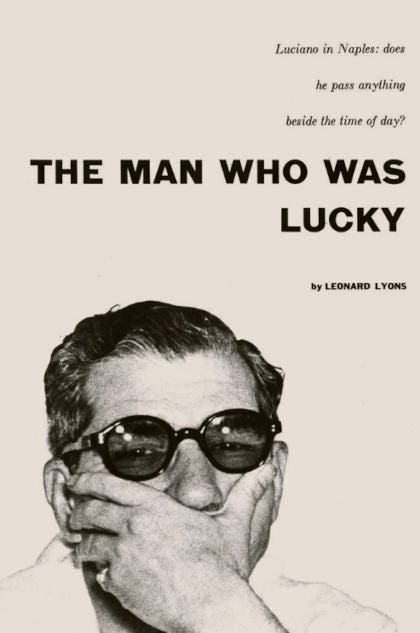
→ A detailed story of Lucania’s beating being inflicted by law enforcement was published in the U.S. at about the same time that Joesten was first hearing it in Italy. Syndicated newspaper columnist Leonard Lyons had picked up that story and others when he met with Lucania during a summer 1952 family vacation to Italy. Lyons dropped bits of their conversations into columns written later in 1952. A long article about his encounter with Lucania was published in the April 1953 Esquire magazine. In that article, Lucania blamed four police officers for roughing him up and leaving him out on Staten Island. Lucania told Lyons that the four wanted to know the whereabouts of “a certain guy.” In addition to the Lucania account, Lyons mentioned partially conflicting information provided by a friend who was a former FBI agent. The friend suggested that the police beating was the result of Lucania having a romantic affair with the sister of a Harlem police officer.5
… About six years after Lucania spoke with Joesten, the mafioso met over the course of several days with sports columnist Oscar Fraley to work on the script of a movie. (In addition to sports, Fraley had a strong interest in organized crime: he had worked with former federal agent Eliot Ness on the popular book, The Untouchables, released soon after Ness’s death in 1957.) When talking with Lucania, Fraley heard a similar story about law enforcement inflicting the 1929 injuries, but Fraley extracted far greater detail from his subject.
… Fraley wrote about the conversation with Lucania in a United Press International article widely circulated in February 1962, shortly after Lucania died. According to Fraley, Lucania told him New York City Police, trying to convince Lucania to divulge the whereabouts of gang leader Legs Diamond (apparently, the “certain guy” Lyons heard about), administered the 1929 beating: “They [the press] thought a mob took me for a ride. That’s a lotta bunk... It wasn’t any gang job. They don’t miss. It was the cops...”
… Lucania was known to be working for Diamond at the time, and several large men grabbed him one night and took him for their version of “a ride.” Lucania, with adhesive tape binding his hands and sealing his eyes and mouth, was thrown into the back seat of a car. He attempted to kick out one of the car windows, and the serious physical punishment followed. Later, with a gun to his head, he was questioned about Diamond, and he realized that his abductors were police officers.6
… When Oscar Fraley went to work with Sal Vizzini and Marshall Smith in the early 1970s on a book about Vizzini’s career as an undercover narcotics agent, it seems he may have brought the Lucania story with him. It was presented in the Vizzini book as Vizzini’s own recollection of a conversation with Lucania. But there is reason to doubt that. As in the Joesten and Fraley interviews, the beating subject supposedly came up through a reference to the “Lucky” nickname and its legendary origin in the 1929 incident. Lucania reportedly bristled at the mention, but it was not clear if he objected only to the popular accounts of the beating or also to the use of the Staten Island violence as justification for his nickname. As in his conversations with Joesten and Fraley, Lucania reportedly told Vizzini – who was posing as Major Mike Cerra, a U.S. Air Force pilot with duties in Italy – that law enforcement was responsible for his 1929 injuries.
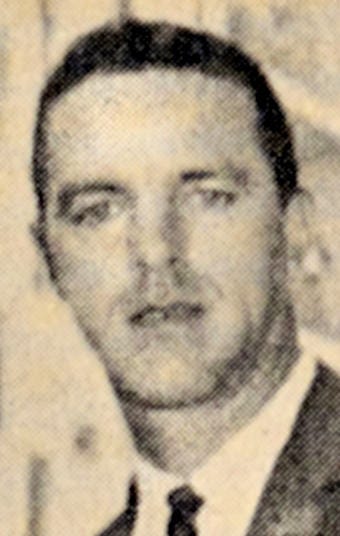
… The Vizzini-Lucania discussion is placed in the period following the September 1960 Fraley interview. The Vizzini book mentioned that news had gone out about a Lucania movie project; that was likely the project Fraley did script work on. Vizzini claimed that Lucania told him New York City plainclothes police officers, eager to locate Legs Diamond, were responsible for his 1929 trouble. Of course, Vizzini’s alleged recollection was published a decade after Fraley’s story was released, and it was published in a book that was coauthored by the same Fraley. Its details very closely match the Fraley story. So, it is not certain whether Vizzini personally covered the subject in his talks with Lucania or borrowed from his coauthor.
… While Joesten and Fraley were known to be working on writing projects at the time of their talks with Lucania and presumably took extensive notes, that was not the case for Vizzini. He reportedly recalled the Lucania remarks – despite their being unrelated to Vizzini’s undercover narcotics role – from pretend social chats. Calling into question the authenticity of his story, Vizzini attributed an especially lengthy speech to the former crime boss. The related direct quotations consumed parts of five pages and totaled more than 1,360 words. (That is dozens of words longer than President John F. Kennedy’s “Ask not what your country can do for you...” inaugural address, just about one typed page less than Martin Luther King Jr.’s “I have a dream” speech and about five times the length of Lincoln’s succinct Gettysburg Address.) If accurate, the Vizzini-Lucania conversation marks a moment of uncharacteristic chattiness for Lucania and one of spectacular mental retention for Vizzini.7 Another problem with the Vizzini account is its description of Legs Diamond as a gunmen employed by Lucania. This reversed Fraley’s stated relationship (and the generally accepted relationship) between the two men and is one area where the two stories differ.8 ←
It seems that Joesten’s initial interview of Lucania was not too difficult to arrange. Ed Hill, executive editor of the Rome office of the Daily American, managed to secure for Joesten a letter of introduction to the manager of the Hotel Turistico in Naples, where Lucania spent a lot of his time. Joesten took a room at the hotel and used the letter to obtain an audience with the manager, a Signore Fantoccio. Fantoccio got word to Lucania that an American author wished to speak with him. Lucania showed up at the hotel the next day and called to Joesten from the lobby.9
During their conversation, Lucania complained about press coverage and promised, “Someday, I’m gonna write my own memories. Then the real story is gonna come out.”10 (Lucania’s hope to pen his own memoirs may have caused him to withhold details from Joesten.)
Someday, I’m gonna write my own memories. Then the real story is gonna come out.
He suggested that unscrupulous movie producers were trying to convince him to finance a movie about his life. “They want me to foot all the expenses! They figure it’ll be about $300,000.” (In an earlier conversation with Lucania, columnist Leonard Lyons recommended that Lucania enter the movie business and discussed figures in that same range to finance a movie project. That may have been where Lucania picked up the number.) Lucania said he would not put up a nickel for a movie about his life and had legitimate offers that would pay him for participating in a movie project.11
Lucania claimed that the hounding of law enforcement made it difficult to engage in any legitimate business enterprise:
Let’s say I’m a partner in a cannery, for instance... Like if the cannery does business in the United States. If they know Lucky’s in it, they probably open every single can we ship, to look for dope.
The former New York crime boss told Joesten that people, claiming to be his “cousins,” were constantly looking to him for handouts. “In this country, everybody who got money, got a lotta cousins.”12
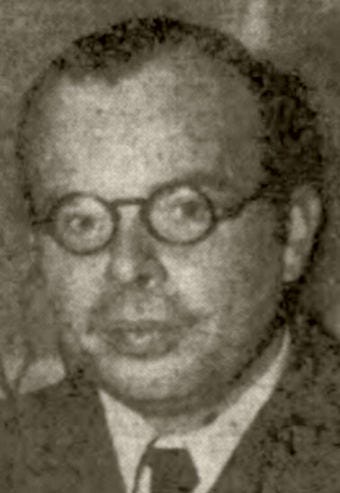
Joesten asked him how he managed his early release from New York prison, and Lucania spoke of his legendary assistance to the Office of Naval Intelligence while held at Great Meadow Prison: “I got my pardon because of the service I rendered the United States.” But he then acknowledged another possibility: “I guess they also realized that fifty years was too much for a crime like that.”13
(Joesten interpreted this as a Lucania admission that he had committed the crime, but the comment can be understood merely as Lucania’s acknowledgement that he was convicted of the crime.14)
Lucania grumbled that he was being persecuted by the U.S. Federal Bureau of Narcotics and its proxies.
Hitler was an angel in comparison to what Esslinger [Lucania apparently enjoyed mispronouncing the surname of Narcotics Commissioner Harry Anslinger] is. For six years, I have no peace at all. It is a nonstop persecution. I don’t know what Esslinger wants from me. No charge against me about dope will ever stand up. If there was evidence - just an inch of proof - I’d be in jail in less than an hour.15
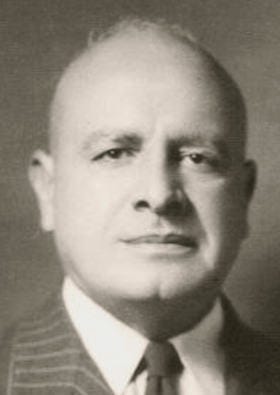
FBN persecution was the result of politics, according to Lucania. “It’s about time to stop rapping me for all the bad things that happen in the United States and Europe,” he told Joesten. “They even blamed an illegal Venezuela diamond racket on me!”16
In addition to his arranged interview with Lucania, Joesten happened to run into Lucania at Giacomo’s restaurant in Naples one day and was invited to join Lucania. During the meal, Lucania commented on his appetite for spaghetti: “I really go for it - never get tired of it.”
Lucania also spoke about his desire to keep his home address secret, a problem for him, as the Italian police insisted on having his current address in a registry. As far as Joesten was aware, the only writer allowed access to the residence was Llewellyn Miller, who became familiar with Lucania and his significant other, former showgirl Igea Lissoni.17
Joesten did learn the address and attempted a drop-in. He spoke with Lissoni, who told him Lucania was not at home.18
The Luciano Story also presented quotes from about a half dozen other early 1950s occasions in which Lucania crossed paths with members of the press. These included a September 1951 interview for the Milano Sera newspaper, an indignant news conference at Naples in that same period, a curt “No pictures” comment punctuated with a couple of punches of cameramen following extensive police questioning, an observation on the Italian legal system while in custody for an eight-day period, an interview by Llewellyn Miller for a December 1952 article in American Weekly Magazine and an interview by Leonard Lyons for a lengthy article that appeared in the April 1953 issue of Esquire Magazine.19
Milano Sera quoted Lucania as stating that Frank Costello (whose appearance before the Kefauver Committee six months earlier was shown on television) “once shined my shoes, and was glad to do it.” Lucania told Joesten that the quote was invented.20
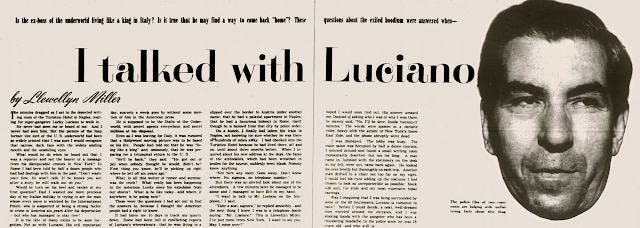
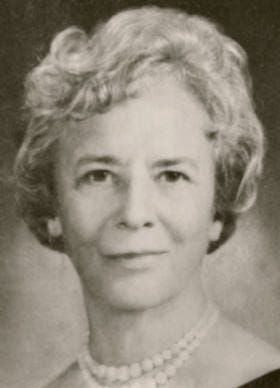
The Miller interview provided an intimate look at Lucania’s home life. The reporter visited the apartment overlooking the Bay of Naples, which was shared by Lucania and Lissoni.21
The Luciano Story used Lyons’ interview to point out that Lucania preferred the methods used by FBI Director J. Edgar Hoover to those used by Narcotics Commissioner Harry Anslinger. “A guy does somethin’, Hoover grabs him... He don’t shoot his mouth off...,” Lucania said. “This Esslinger. Yakity-yakity-yak...” Anslinger’s unsupported accusations, according to Lucania, persuaded Italian authorities to take away Lucania’s passport and restrict his movements.22
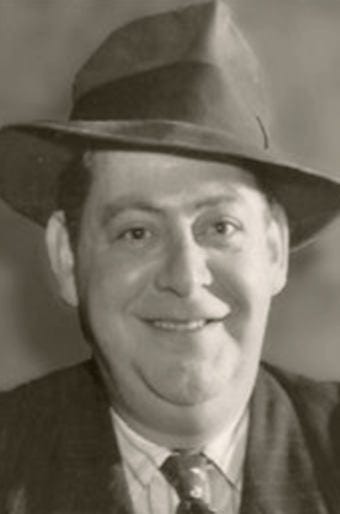
Another selling feature of The Luciano Story was probably the fairly detailed account Sid Feder added to the book (over the objections of coauthor Joachim Joesten) relating to Lucania’s alleged contribution to the U.S. military effort during World War II. This tale, cited as justification for the early release of Lucania from his compulsory prostitution prison sentence, was presented in Chapter 9, entitled “Lucky and Operation Underworld.”
According to Feder, a “killer pack” of German “U-boat” submarines terrorized the U.S. coast off New England, New York and New Jersey and “roved in our very harbors” during the early stages of the war. The U.S. Office of Naval Intelligence (ONI) was reportedly greatly concerned by this enemy activity and by the prospect that the U-boats might be receiving supplies and support from Nazi sympathizers within the U.S. fishing fleet. After “the specter of sabotage” arose with a devastating and suspicious (but later explained) ship fire in New York harbor, ONI decided that it needed access to the crime-dominated unions working in the fishing industry. Lieutenant Commander Charles Haffenden of ONI decided that the fishing boat crews and seafood market workers were under the control of the Mafia, and he led the effort to win the cooperation first of market power Joseph “Socks” Lanza and then of his gangland boss, the imprisoned Lucania.
Early conversations included Lucania’s attorney Moses Polakoff and longtime Lucania underworld ally Meyer Lansky. Reportedly to facilitate direct ONI communication with Lucania (though it certainly facilitated other types of communication, as well), the prisoner was transferred from remote Clinton State Prison at Dannemora to Great Meadow State Prison at Comstock, New York, not far from Albany. (For more on this period, see “Mob boss ‘Luciano’ in the hands of the law.”)
At the Navy’s request, special arrangements were made for Lucania to have unmonitored and largely undocumented visits. Through the course of this “operation,” Lucania and Lanza agreed to cooperate and apparently instructed other leaders in the fishing fleet and on the docks to cooperate with military intelligence officials. As the operation continued, according to Feder, it grew to include Joseph “Adonis” Doto, Frank Costello, Willie “Moore” Moretti, Vincent Mangano and others.23
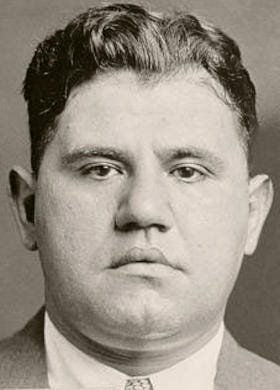
In a moment of reflection, Feder noted, “There will be no attempt here to evaluate the work done by Lucky and his hoods. Only Navy Intelligence knows how valuable it really was - and N.I. isn’t talking...”
There will be no attempt here to evaluate the work done by Lucky and his hoods. Only Navy Intelligence knows how valuable it really was - and N.I. isn’t talking...
But Feder followed that up by noting that no incidents of sabotage occurred on the U.S. Atlantic coast during the war. This came across as a suggestion that “Operation Underworld” was successful, rather than as evidence that the problem the operation sought to resolve either did not exist or was already adequately addressed by other agencies.24
Later in the war, as the Allies contemplated invasions of North Africa and Sicily, ONI reportedly used Lucania underworld connections to help plan attacks. Feder stated that the Navy learned about Sicilian geographic features and municipal infrastructure. The underworld contacts also provided the identifications of antifascist Sicilian mafiosi who could be counted on to support the Allies, he claimed. Feder said the information provided by Lucania and his Mafia associates was “extremely valuable.” He was at a loss, however, to state specific examples.25
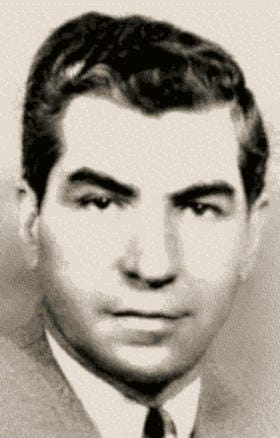
By the end of the war, all records of ONI’s “Operation Underworld” and its valuable information had vanished, Feder reported. At war’s end, Navy officials did vaguely inform the New York State Parole Board that Lucania provided assistance. That was sufficient to win Lucania a parole recommendation and a 1946 commutation from Governor Thomas Dewey.26
Later in the chapter, criticisms directed toward Dewey’s commutation of Lucania’s sentence were dealt with in strongly negative terms. Feder charged that U.S. narcotics officials had little knowledge of their own field and were inventing stories about Lucania. Feder described the investigations of the U.S. Senate’s Kefauver Committee as “antics” and labeled the committee itself as a “TV circus,” taking a position similar to that of Governor Dewey. (Governor Dewey of New York and Senator Carey Estes Kefauver of Tennessee, ambitious men of competing political parties, regularly sniped at each other. Dewey was a Republican Presidential candidate three times in the 1940s, winning the GOP nomination twice but losing in the general elections. Kefauver campaigned for President as a Democrat twice in the 1950s, becoming his party’s unsuccessful Vice Presidential nominee, behind Adlai Stevenson, in 1956.)27
Today, this chapter of The Luciano Story is probably most useful as an early glimpse into the legend of Lucania’s contribution to the U.S. war effort (a subject dealt with in more detail within The Luciano Project by Rodney Campbell, Mafia Allies by Timothy Newark and related works) and as an illustration of postwar political partisanship.28
“Gangster ‘taken for ride’ lives to tell about it,” Brooklyn Daily Eagle, Oct. 17, 1929, p. 1; “’Ride’ victim wakes up on Staten Island,” New York Times, Oct. 18, 1929; Feder, Sid, and Joachim Joesten, The Luciano Story, New York: David McKay Company, 1954, p. 71.
Feder and Joesten, p. 71.
Feder and Joesten, p. 71.
Turkus, Burton B., and Sid Feder, Murder, Inc.: The Story of the Syndicate, New York: Farrar, Straus and Young, 1951, p. 82.
Lyons, Leonard, “The man who was Lucky,” Esquire, April 1953 p. 130.
Fraley, Oscar, “They called him ‘Lucky’ but he always denied it,” Chicago Sunday Tribune, Feb. 4, 1962, p. 32; Fraley, Oscar, “’Lucky’ Luciano ‘told all’ to newsman shortly before his death,” Port Huron MI Times Herald, Feb. 1, 1962, p. 8; “In the end ‘Lucky’ Luciano was not really so terribly lucky after all,” Bridgeport CT Sunday Post, Feb. 4, 1962, p. 14.
Vizzini, Sal, with Oscar Fraley and Marshall Smith, Vizzini: The Secret Lives of America’s Most Successful Undercover Agent, New York: Arbor House, 1972, p. 166-170.
Vizzini, Fraley and Smith, p. 166.
Feder and Joesten, p. 305-306.
Feder and Joesten, p. 307.
Feder and Joesten, p. 308.
Feder and Joesten, p. 309.
Feder and Joesten, p. 322. Lucania’s use of the word “pardon” was incorrect. He was not pardoned. His sentence was commuted.
Feder and Joesten, p. 322.
Feder and Joesten, p. 318-319. This Lucania mispronunciation of Anslinger’s surname was also featured in the 1973 Italian motion picture, Lucky Luciano, which generally represented the Narcotics Bureau’s side of the story.
Feder and Joesten, p. 312; MacDougall, Michael, “The Inside Straight: ‘Lucky’ Luciano smuggled ‘rocks’ into U.S. via Venezuela,” Ottawa Journal, Sept. 22, 1951, p. 21; MacDougall, Michael, “The Inside Straight: Deported Lucky Luciano is still full of ‘tricks,’” Miami Daily News Sunday Magazine, Nov. 11, 1951, p. 6. There were in fact reports that Lucania was smuggling diamonds into the U.S. through Venezuela.
Feder and Joesten, p. 323.
Feder and Joesten, p. 326.
Miller, Llewellyn, “I talked with Luciano,” The American Weekly, Sunday magazine (accompanied Buffalo Courier Express, San Francisco Examiner, San Antonio Light, Miami Herald,...), Dec. 14, 1952, p. 4-5, 22-23; Lyons, Leonard, “The man who was Lucky,” Esquire, April 1953, p. 66-67, 127-128, 130-131.
Feder and Joesten, p. 310.
Miller, Llewellyn, “I talked with Luciano,” The American Weekly, Sunday magazine, Dec. 14, 1952, p. 4-5, 22-23.
Feder and Joesten, p. 319.
Feder and Joesten, p. 176-203, 209-210.
Feder and Joesten, p. 203.
Feder and Joesten, p. 207-210.
Feder and Joesten, p. 211-214.
Feder and Joesten, p. 214-217.
No posts
Comments
Nothing yet. Say the first thing.
Sign in to join the conversation.