
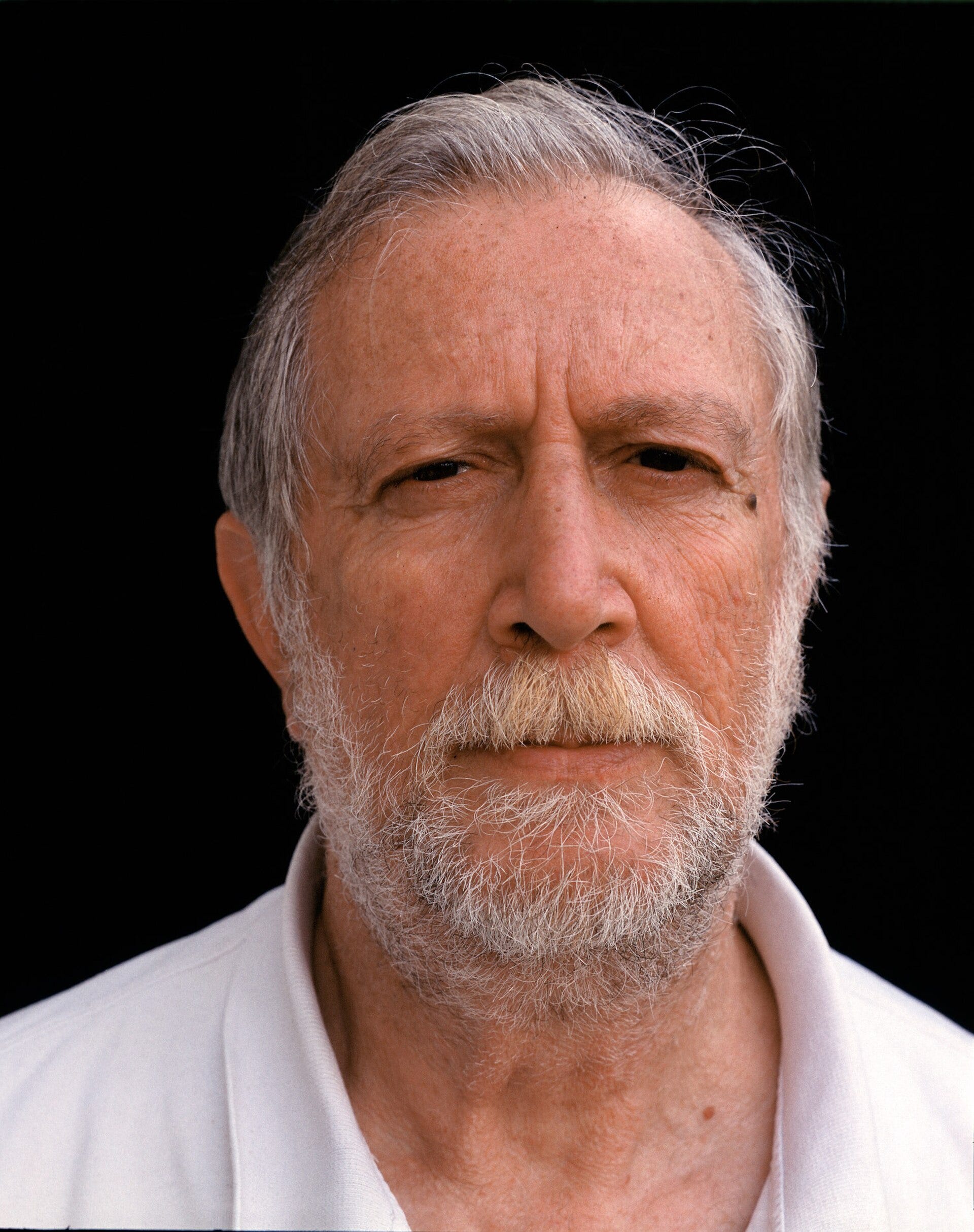
“I believe art in our situation, where — when you don’t have a homeland, when you don’t have, I mean, a country, a political thing, and when people deny your existence — you know, in Israel and many, many places in the West, they deny your existence — so, art is a form of saying that we are here.” Sliman Mansour
On August 24, 2026 Sliman Mansour died at the age of 79.
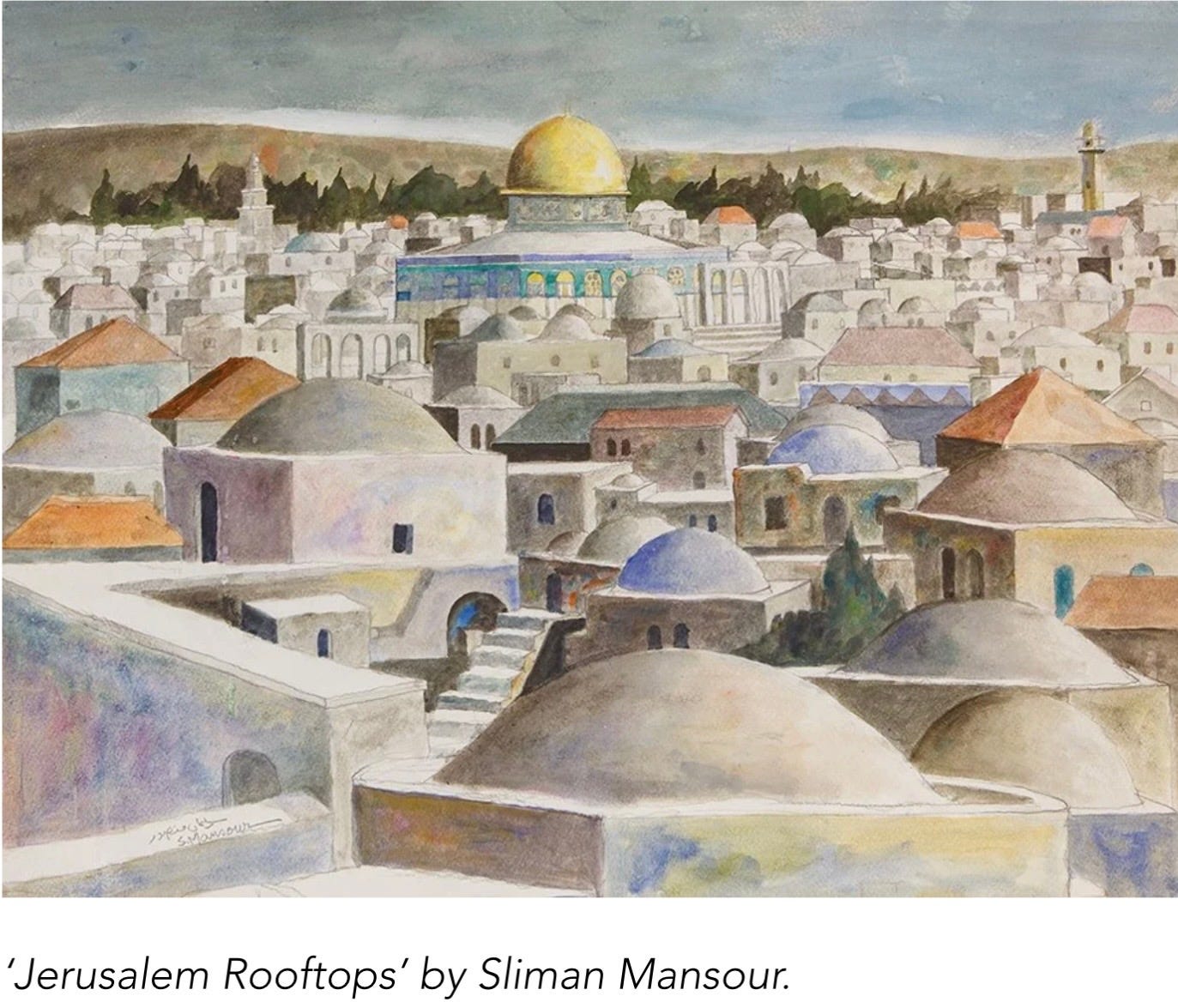
Sliman Mansour is a Palestinian artist whose style embodies Palestinian national identity. Born in 1947, he spent his childhood in Birzeit and his adolescence in Bethlehem and Jerusalem, where he has remained since the occupation of the West Bank and Jerusalem in 1967.
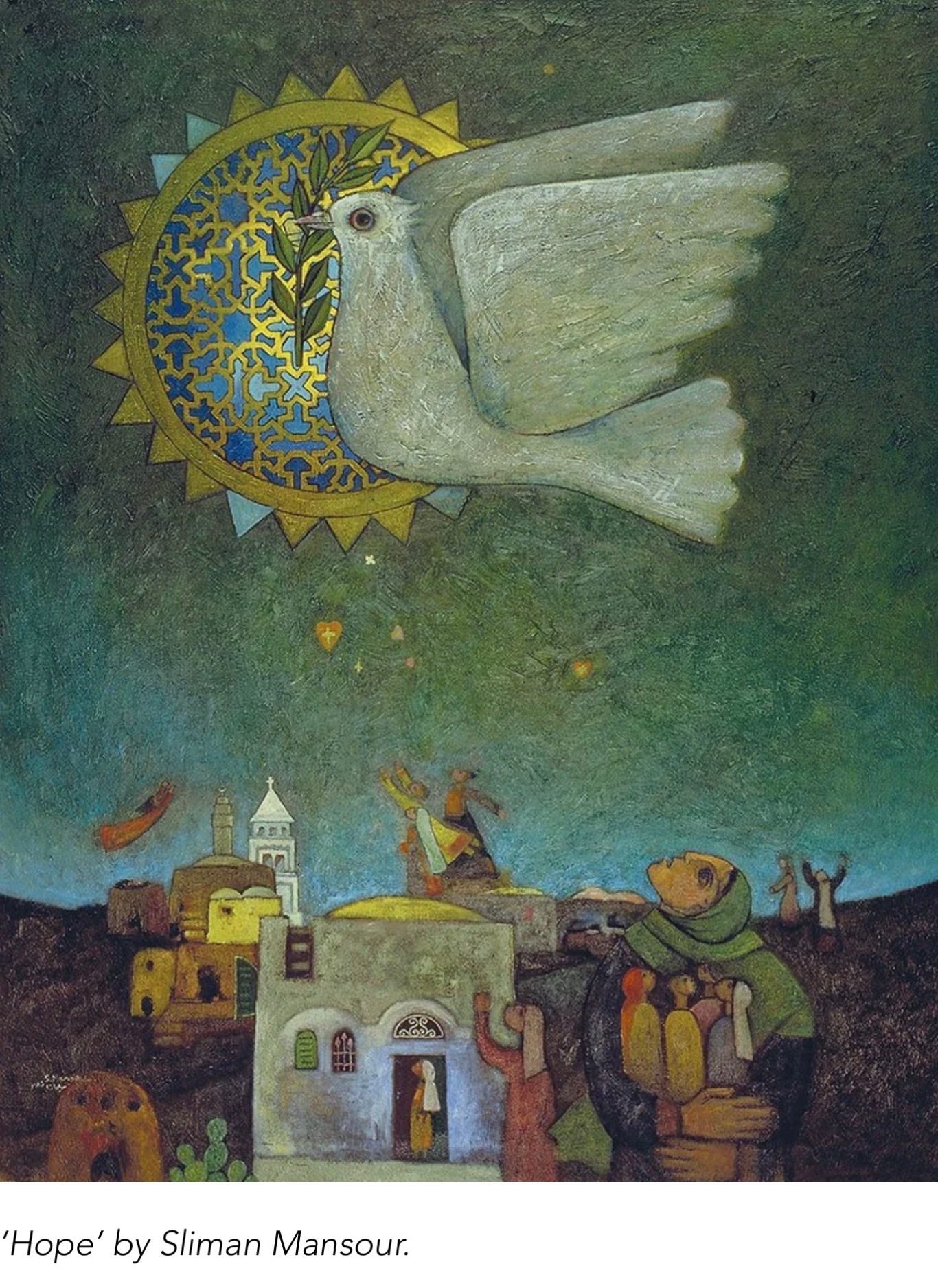
Since the early 1970s, Mansour’s art has exposed the intensity of life under occupation, including isolation, displacement, loss, and community strength.
Mansour’s use of symbolism honors the Palestinian cultural changes in the Palestinian movement. His use of symbolism from life, culture, and history portray perseverance and connection with the land.
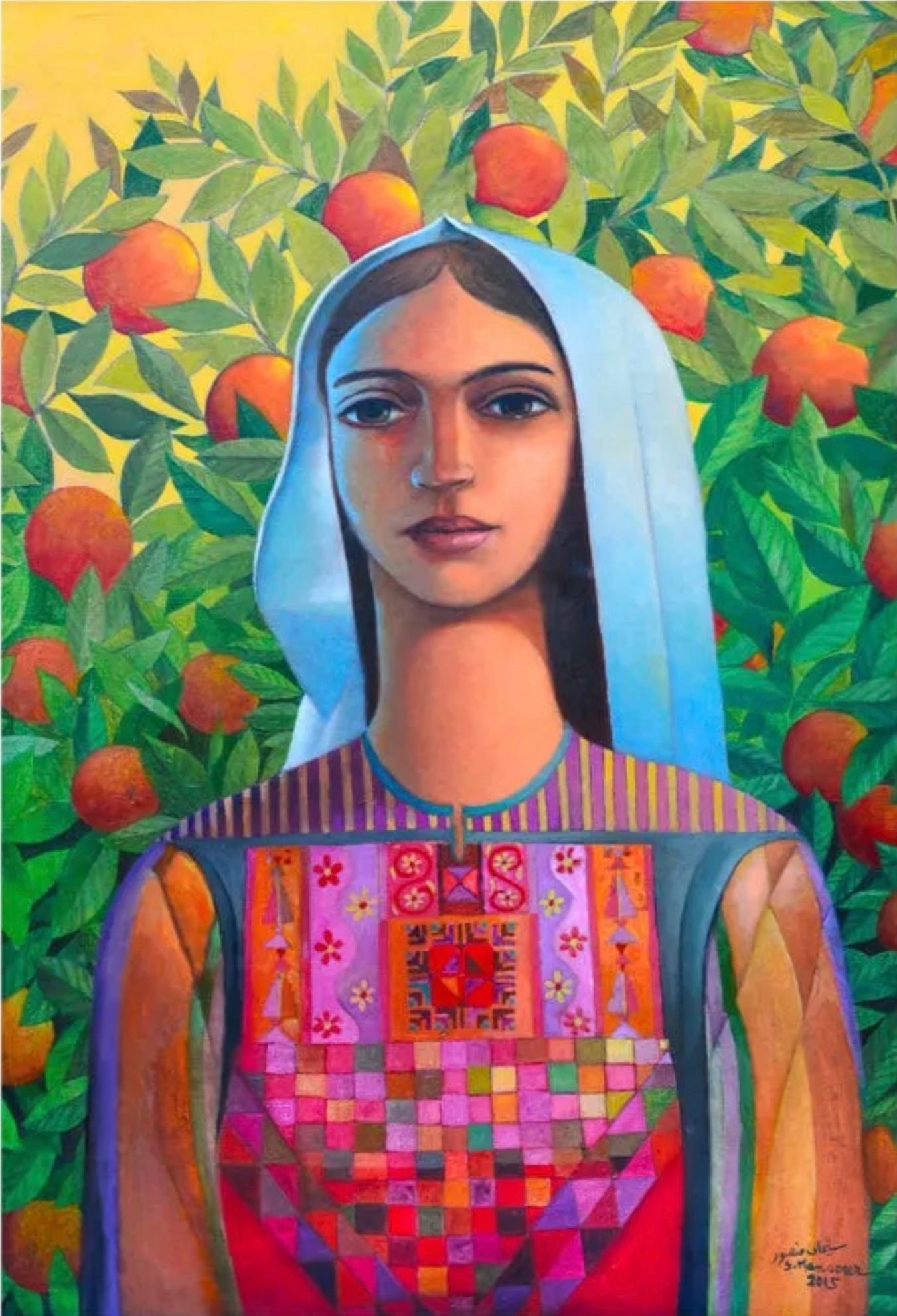
Orange trees represent the land lost in the 1948 Nakba.
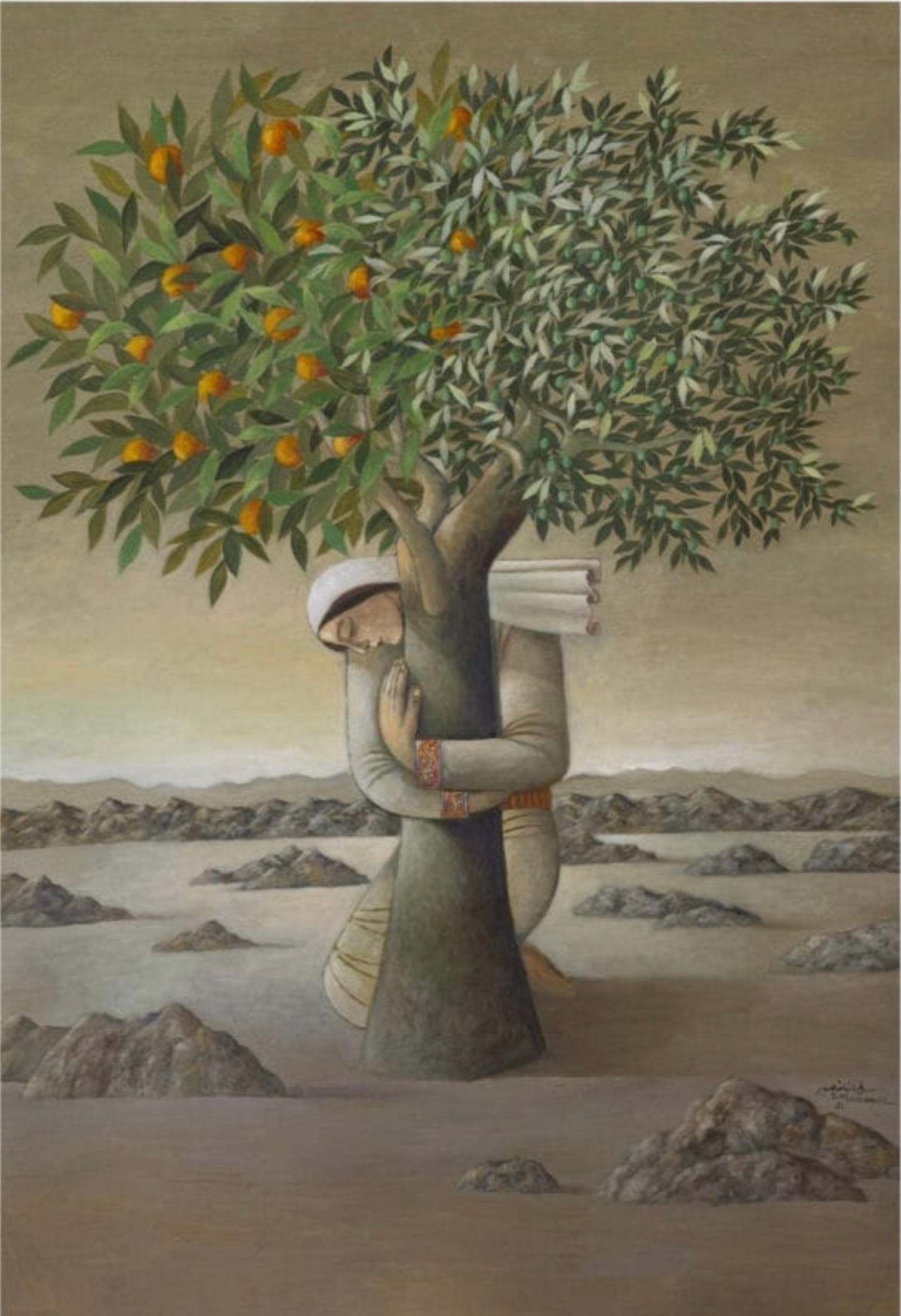
Olive trees portray the land occupied in 1967.
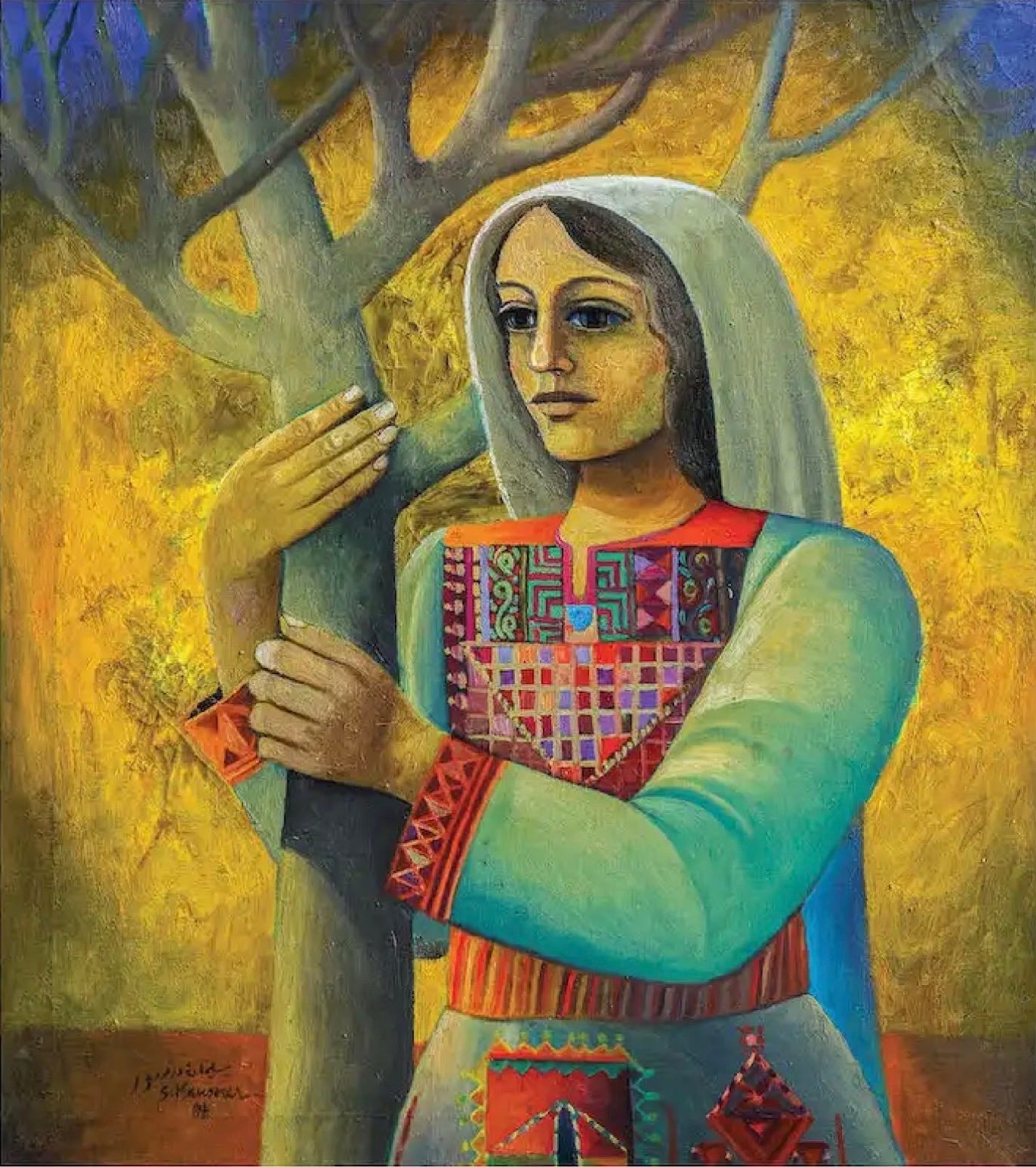
Women in traditional dresses, symbolize the land and the revolution.
Untitled
The stoned terraces, symbolize Palestinian farmers.
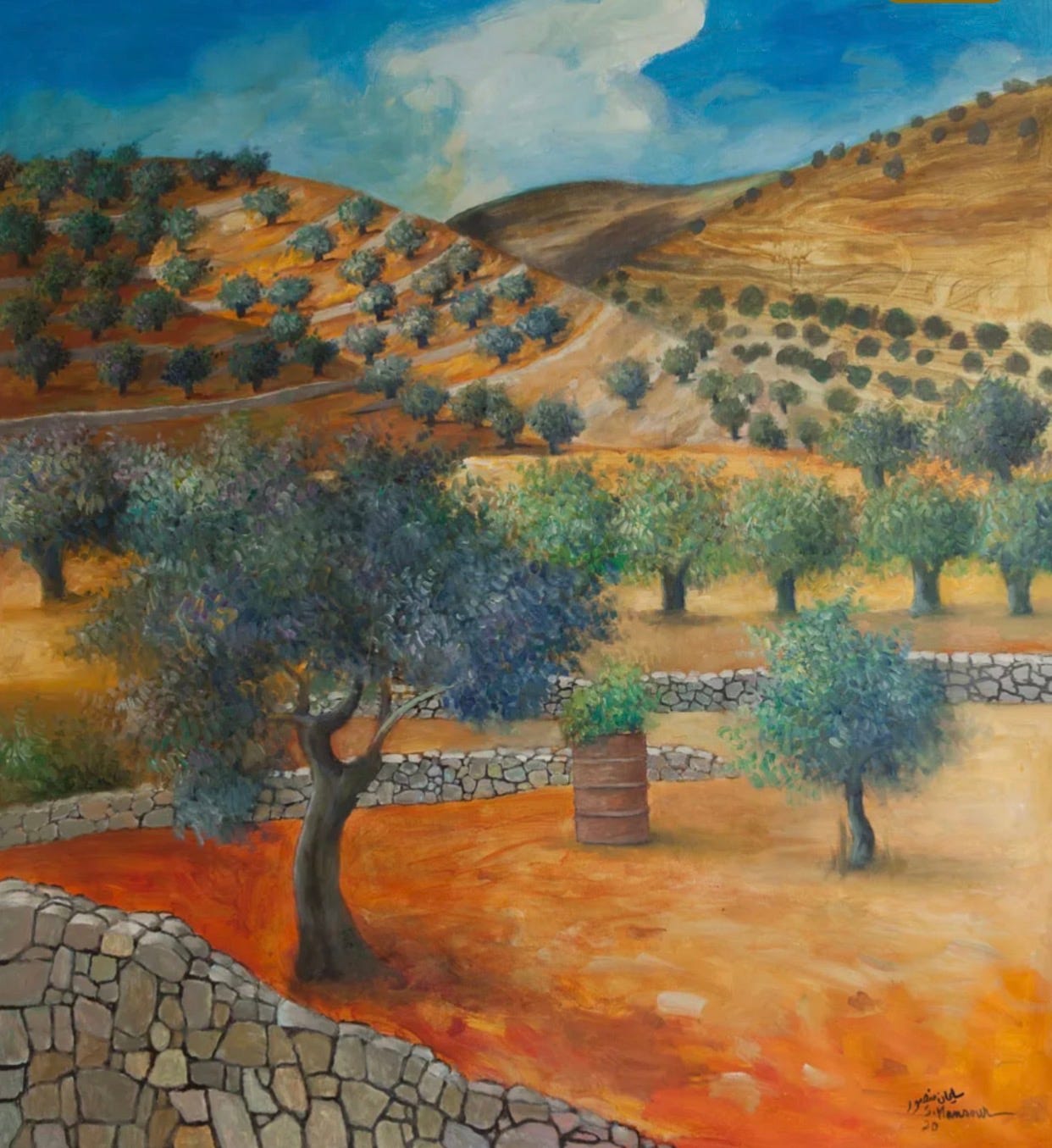
Landscape with a Barrel, 2020
In response to the intifada in 1987, the New Visions movement, was established by Mansour, Vera Tamari, Tayseer Barakat, and Nabil Anani to boycott Israeli art supplies. Encouraging artists to utilize locally sourced natural products such as coffee, henna, and clay. Mud represents the beginning of life in many cultures. Mud from Palestinian land were often used by Mansour; the cracks of drying mud capture the essence of the Palestine.
In 1973, Mansour co-founded the League of Palestinian Artists. In 1994, he co-founded the al-Wasiti Art Center in Jerusalem, to build a bridge between Palestinian artists in exile and for international artists to preserve Palestinian art. He is a founding Board member of the International Academy of Art and taught at Palestinian cultural and educational institutions, including Al-Quds University.
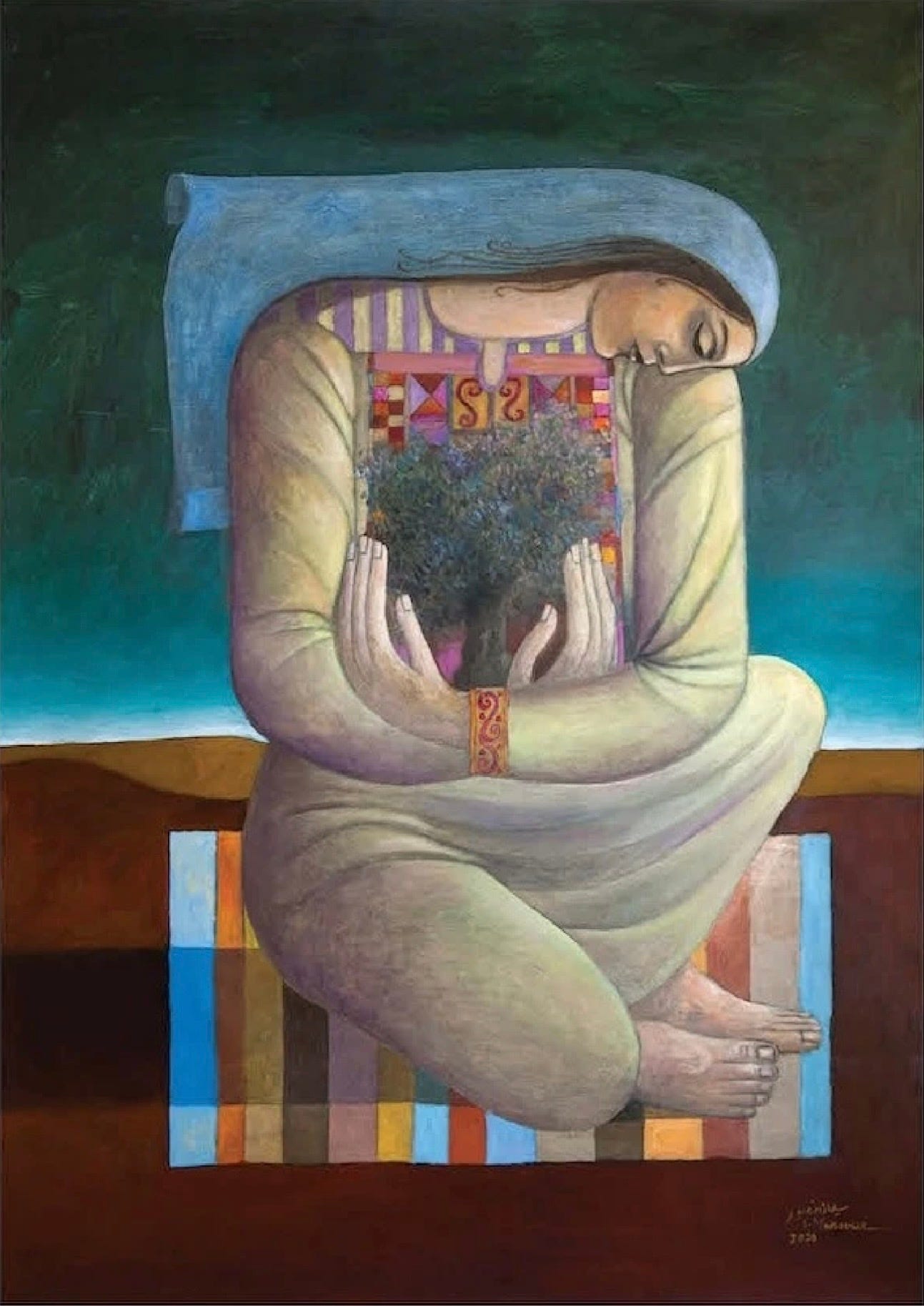
Land Day

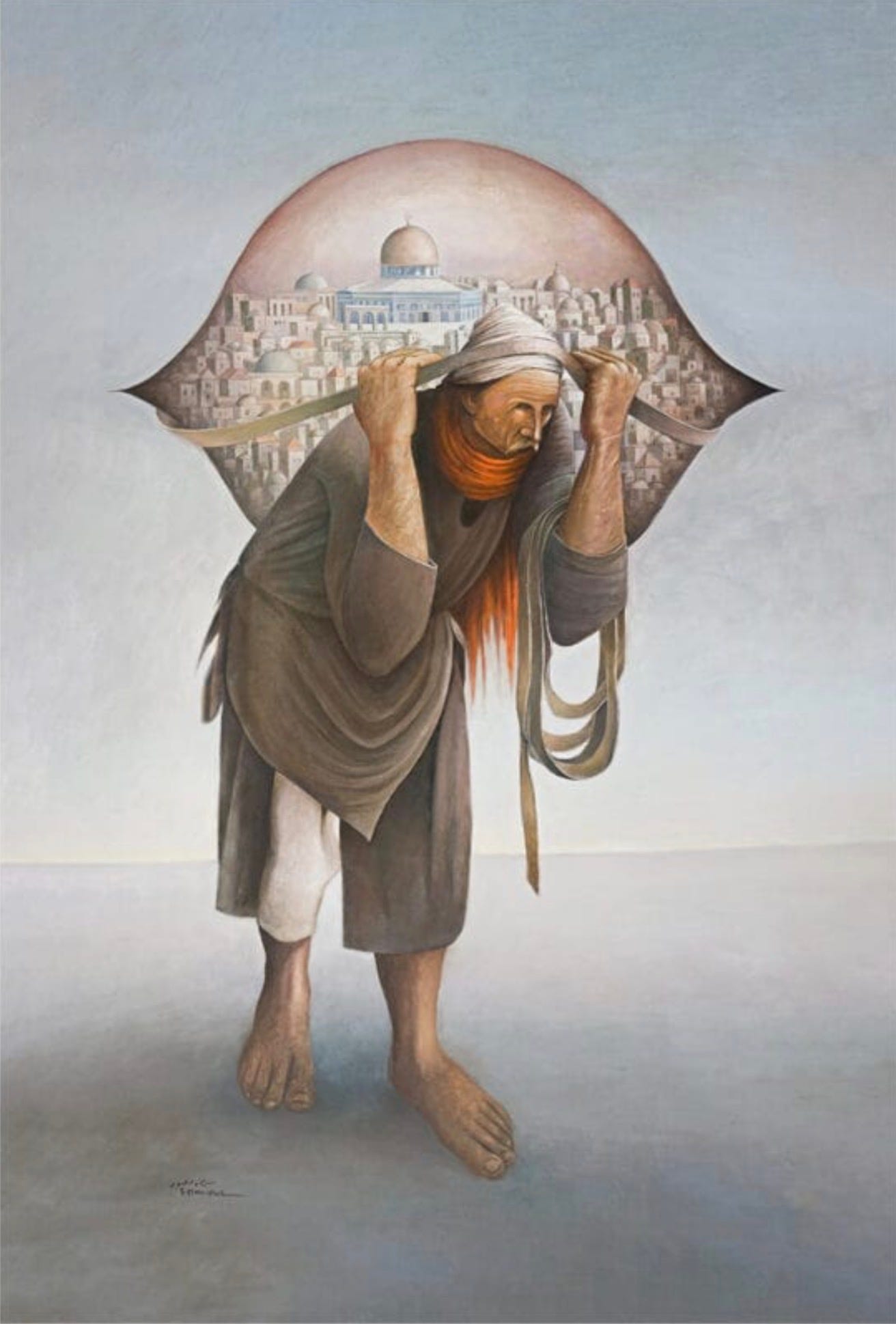
One of Palestine’s most enduring images: Jamal al-Mahamel, The Camel of Hardships. An old porter carries Jerusalem on his back, a symbol of exile, identity, and steadfast resistance. Mansour created three versions: the first in 1973, the second in 1975 (later lost due to the US bombings of Libya), and a third in 2005, following feedback from Jerusalemites. The painting spread far beyond galleries. It became a poster, a postcard, a memory carried in Palestinian homes around the world.
In 1998, Mansour received the Palestine Prize for the Visual Arts and the Grand Nile Prize at the Seventh Cairo Biennial. In 2019, he was awarded the UNESCO-Sharjah Prize for Arab Culture for highlighting Palestinian and Arab cultures internationally.
Mansour’s works have been showcased worldwide.
Inaugural Exhibition, Institut du Monde Arabe, Paris 1987
“Occupation and Resistance,” the Other Museum, New York 1990
The Sharjah Biennial, Sharjah 1995
“Seven Palestinian Artists,” Darat al Funun, Amman 1997
“Made in Palestine,” the Station Museum of Contemporary Art, Houston, 2003
“Art Palestine,” Meem Gallery, Dubai, 2011
“Abstraction and Calligraphy — Towards a Universal Language.” Louvre Abu Dhabi in collaboration with Centre Pompidou, 2021
Comments
Nothing yet. Say the first thing.
Sign in to join the conversation.