
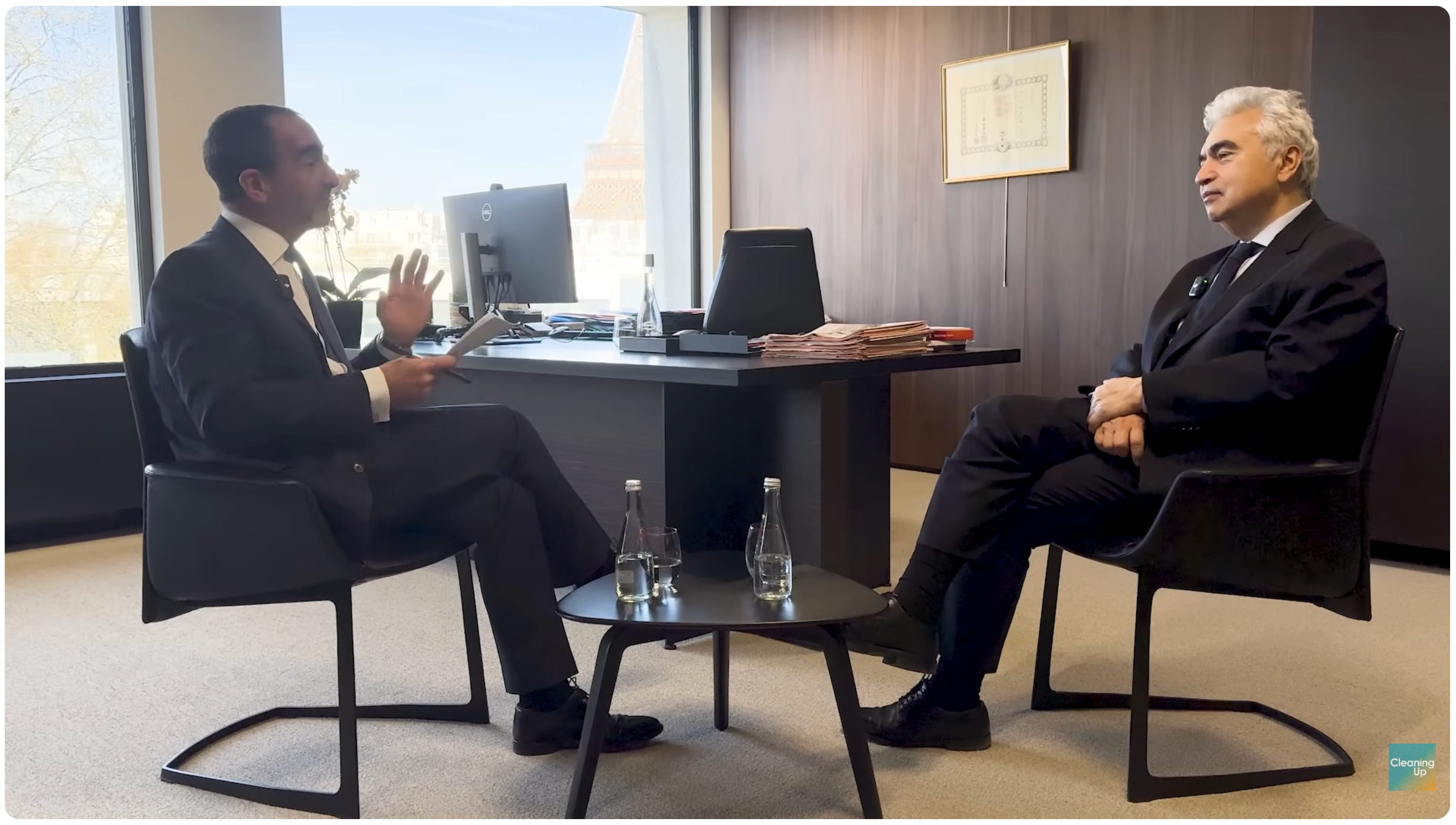
This week’s episode of Cleaning Up is a truly unique conversation with Fatih Birol, Secretary General of the International Energy Agency (IEA).
Fatih and I have known each other for nearly two decades. We first crossed paths (and swords) in March 2007, at a workshop in Paris, when he was the IEA’s Chief Economist and I was building New Energy Finance. The IEA World Energy Outlook 2006 did not reflect the explosive growth in renewable energy that my team was recording, and its Alternative Policies Scenario failed to reflect the extraordinary potential of clean energy. I was quite vocal, accusing the IEA of an abdication of responsibility. Luckily, Fatih forgave me and directed his team to look at our data, which of course was robust and which we provided to help inform subsequent IEA reports and models*.
Fatih and I met frequently over subsequent years, often at World Economic Forum in Davos, and we enjoyed our conversations. In 2019 he invited me to serve on the IEA’s Global Commission for Urgent Action on Energy Efficiency, under the chairmanship of then Irish Taoiseach, Leo Varadkar.
When I launched Cleaning Up, I invited Fatih to be one of the first guests. He joined me for Episode 21 in January 2021 in the midst of the Covid pandemic (check out my beard!). He returned for Episode 133 in July 2023, just over a year after Russia’s invasion of Ukraine. Both were rich conversations, still fascinating as time capsules of the key issues at the time.
When I invited Fatih back to the show for the third time, and we put the March date in the diary, I knew we would be talking about energy security. I wanted to focus the conversation on new fragilities being built into the energy system as the buffers of fossil fuel storage are being removed, and the dependence on electricity increased - as well on as the continuing impact on the energy system of Russia’s war on Ukraine and other other conflicts.
Little did either of us know that in January this year President Trump would capture the head of state of Venezuela, holder of the world’s largest oil reserves, and a month later unleash a war of choice on Iran, holder of the world’s third-largest reserves - unleashing what Fatih calls in the episode “the Mother of All Energy Crises”.
I was enormously grateful (and not a little surprised) that Fatih and his team kept our recording slot in his diary, given his role at the heart of the crisis, coordinating responses and messaging between the organisations 32 full members and 16 associate and accession members. When we spoke, it was just a week after the IEA’s historic release of 400 million barrels of oil from its strategic reserve, over twice the size of any previous release and nearly one third of its holdings. Fatih’s team asked me to hold off releasing our conversation until this week to avoid unintended reactions by the market.
I am not going to summarize everything we talked about here. You will need to watch or listen to the episode. It centres on the crisis, and what Fatih thinks will be the implications. He highlights three main long-term impacts - renewables, nuclear and EVs - drawing a parallel with the structural changes in the wake of the first oil shock in 1973, but also talks about the near-term importance of energy efficiency and demand management, as well as the unwelcome but temporary surge in the use of coal, and the likely increase in domestic production by countries with oil or gas resources.
It’s a great episode, shorter than usual (for obvious reasons). Please make sure you watch or listen to it now!
And thanks once again to Fatih for not postponing recording, despite the most extreme pressure on his time.
Don’t miss Michael’s conversation with Fatih Birol, General Secretary of the International Energy Agency, the man at the heart of the energy market response to the war war in the Gulf
You will also enjoy next week’s episode. It’s with Jennifer Granholm, two-time Governor of Michigan and U.S. Secretary of Energy under President Biden.
Do please make sure you have subscribed to Cleaning Up on your favourite podcast platform or on YouTube
Also, do please subscribe to the Cleaning Up Substack newsletter for the inside scoop on episodes, plus observations on key new stories by my long-time editor Angus McCrone - as well as following what the Cleaning Up team is up to. This week, Bryony and I are in San Francisco for Climate Week, where we’ll be hosting a Leadership Circle event at the Exploratorium. If you want to know how it goes, you need to subscribe (don’t worry, it’s free)!
*Before you comment on the quality of the IEA’s renewable forecasts, yes, I do know they have been hilariously conservative every year for over two decades. In fact I have been one of the leading voices pointing this out, helping to popularise the famous chart (perhaps first produced by Auke Hoekstra) showing the organisation’s forecast misses:
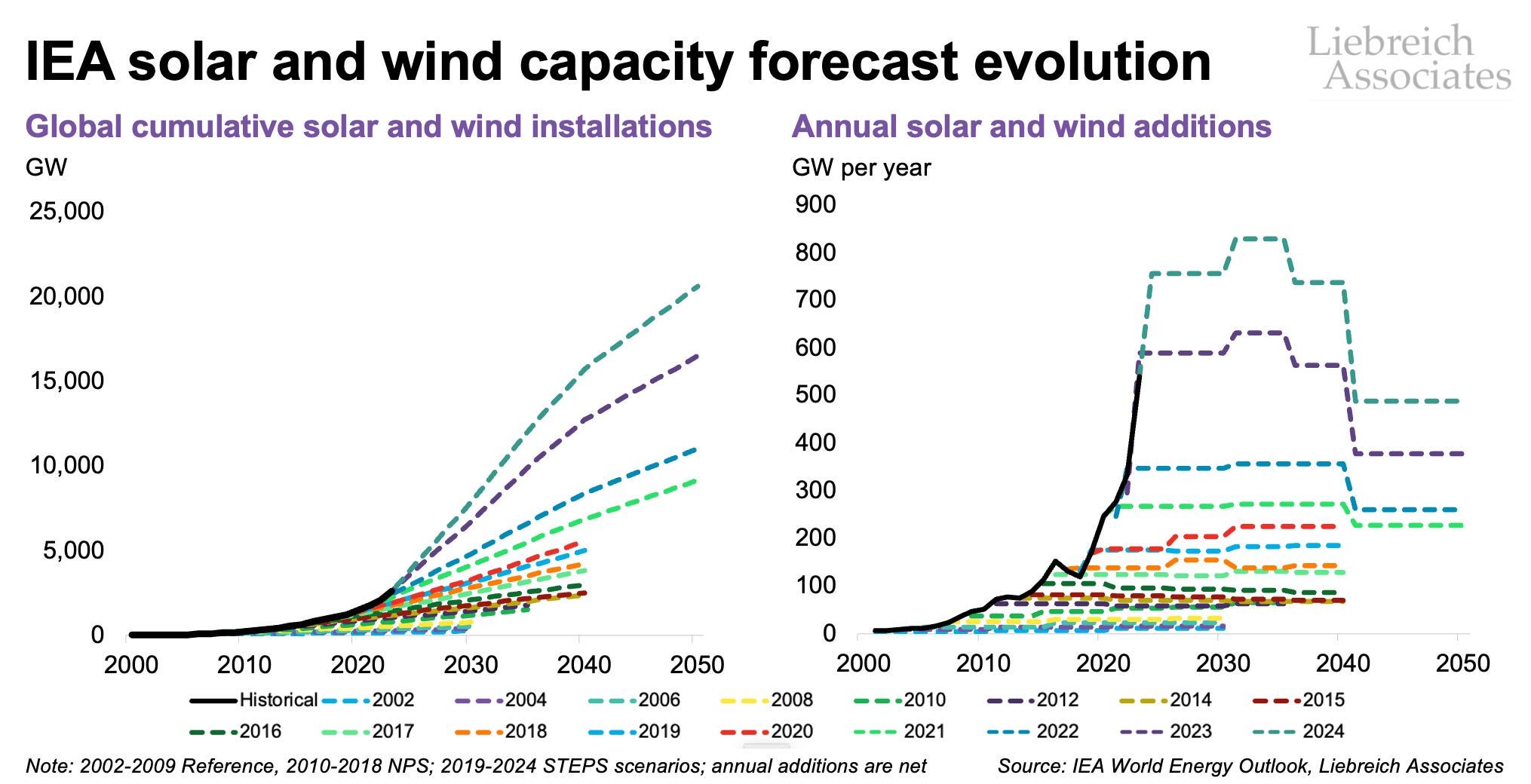
So yes, the IEA has been way too conservative in its projections for renewables. But that doesn’t detract from the extraordinary work Fatih and his team have done, and continue to do, informing the world about the energy system’s contribution to climate change and pathways to reduce its impact - work which we also discuss in the episode.
Comments
Nothing yet. Say the first thing.
Sign in to join the conversation.