
Paulina Day draws from the stories surrounding the evolving art/life work — Paulina — a quest of historical and imaginative reenactment prompted by a desire to recover a tragically broken matrilineal line.
While investigating the buried stories of the dead, I’ve learned these stories find their fullest meaning through the living. Like my experiences with Patrycja Dołowy, my co-conspirator, creative partner, and guide during my time in Poland researching Paulina Hirsch’s testimony. Patrycja is a prolific writer, artist, memory worker, and a member of the small remaining Jewish community in Poland. I have learned more from Patrycja than all the archives and historical texts combined. Now I get to share some of her story with you.
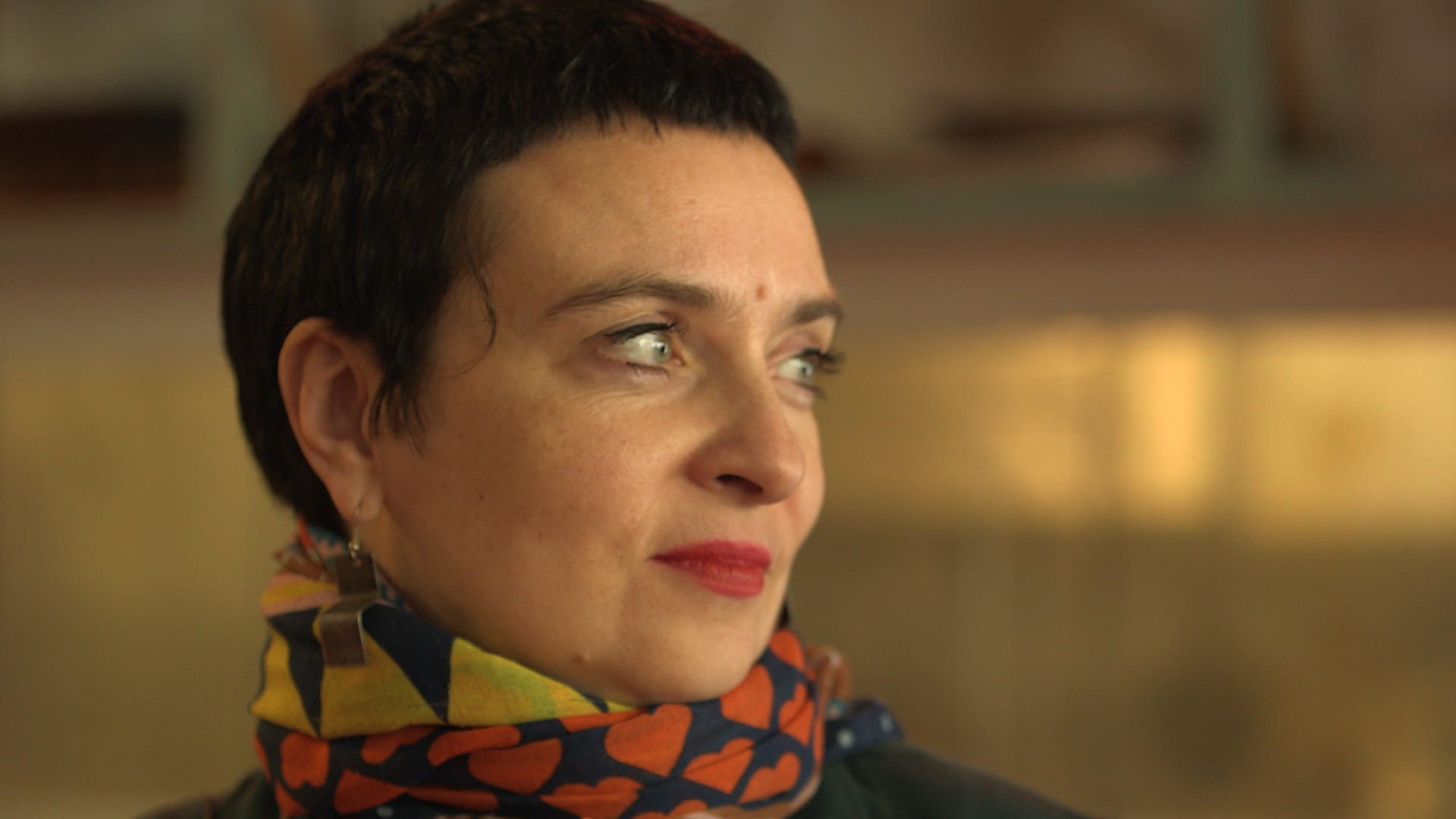
The following is an edited transcript of a conversation with Patrycja back in June, 2025.
ML: We have spent hours sharing stories with each other of our experiences growing up in the US and Poland in the 1980s and 90s. What memories stand out in your mind now about your childhood experience, especially regarding your experience being Jewish in Poland during those years?
PD: It’s interesting, I haven’t thought about those experiences as much in the last two years. Because of the situation in Israel and its global impact, I had to start asking myself what Jewishness means for me now and sometimes this has been a difficult question, but it also has brought me new answers. But when I turn back to my memories of childhood, that was a time when everything that was Jewish was only in an under the skin feeling. It was not something that we talked about.
It was a time of being very, very lonely and not really touching Jewish things. So, although it was also very special that my immediate family had the consciousness that we were Jewish, there was no way to observe it, no traditions, no holidays. We had our family holidays — the official holidays — because it was communist country. But these were, in fact, Christian holidays because traditionally, Poland is a very Catholic country. But during those holidays (Christmas, Easter, etc), my family had some differences — sometimes different customs, and sometimes different dishes.
ML: Can you remember any examples of slightly different customs or different dishes you had during the holidays?
PD: For one thing, we would start the holiday on sundown, the evening before [as all Jewish holidays are observed]. And my favorite thing to eat was one of my grandmother’s desserts, which we had during Easter. A lot of dishes we had were not the common Easter dish (Passover eggs, gefilte fish). But this one I am speaking of was our favorite. It was a kind of chocolate block cake. When my grandmother passed away, I couldn’t find this taste. I looked for it in bakeries and I was even trying to make it myself. But there were always some ingredients missing. And I couldn’t imagine what could it be? And when I was an adult, and traveled with my children to Israel and went to our very first seder at my cousin’s, my cousin’s children were running around saying, where is our Passover cake? Where is our Passover cake? And then this Passover cake came out, and it was exactly my grandmother’s cake, with exactly the same taste, and the missing ingredient, I realized, is matzah.
ML: I know the cake that you’re talking about. My mom used to make it when we had seders at our house growing up. I think I tasted it again after a long time at your parents’ Passover /Easter dinner in Poland!
PD: For a long time, I didn’t know these different foods and customs were uncommon. And when I realized that we did things a little differently, I think this was when my loneliness began. I just felt different. A stranger to the people around me. I couldn’t find my story represented in other stories, and I felt that I was just kind of odd. Not just me, but also my family. I know now that it was about not being unable to find your story and place yourself in an environment you live in, without these important parts of your identity.
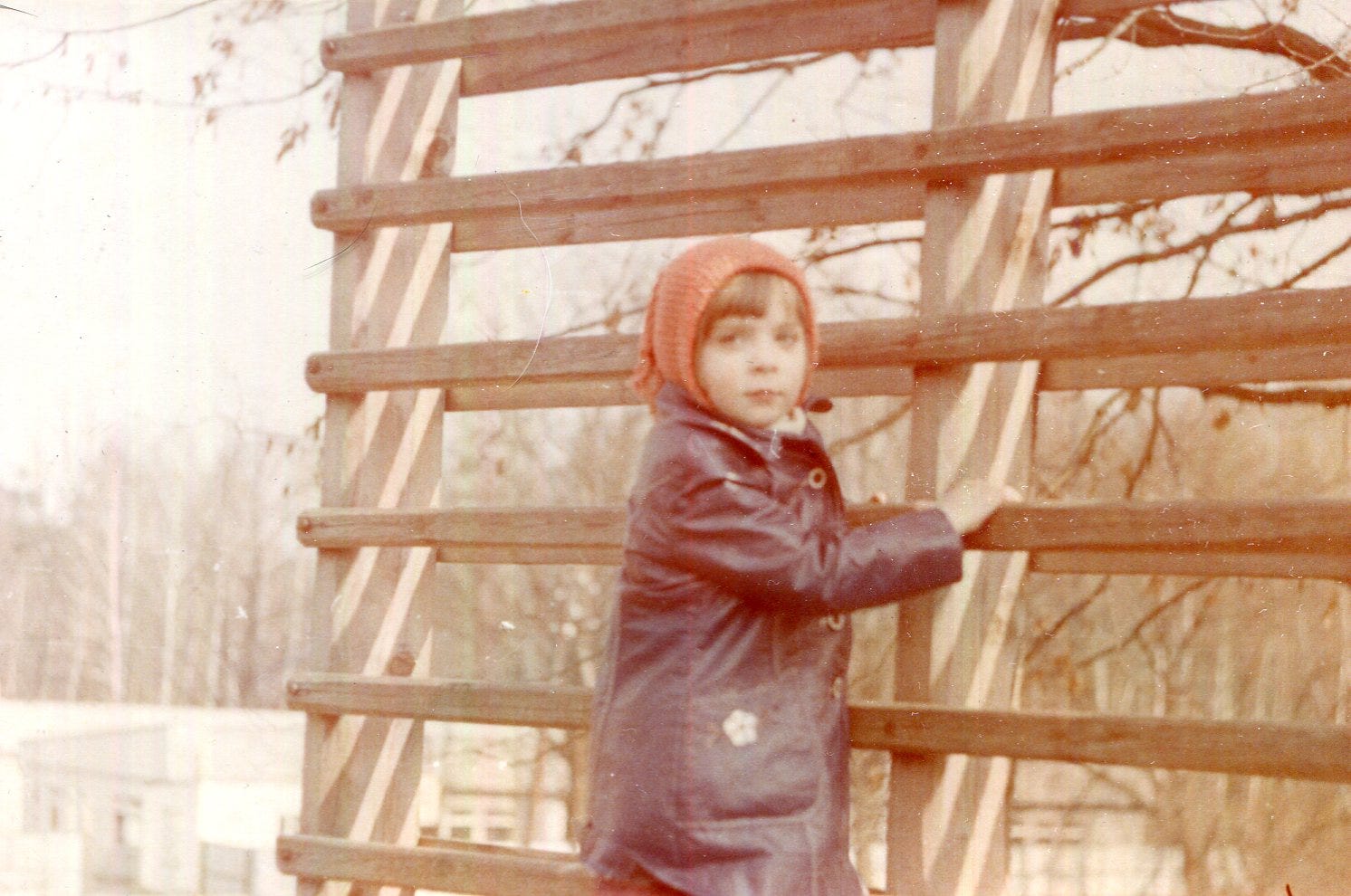
And there was the inherent fear of antisemitism, which I learned a little later, as a teenager. It came about with the transformation in Poland.1 Everything came out of hiding then. I started hearing, from everywhere, bad things being said about Jews. And from this time, it was very difficult. I was afraid of speaking with my friends about the fact that I was Jewish. And when I finally shared with my nice boyfriend that I was Jewish, I couldn’t sleep at night. I felt like I betrayed my family. I asked my parents the next day if it was okay that I told him and they said that people just know it anyway. They told me that to calm me down.
ML: How did your boyfriend at the time respond?
PD: I met him after many years in the JCC in Warsaw!2
ML: So he turned out to be Jewish too?
PD: Well, that is a very funny thing about the generation of Jewish people (Holocaust survivors and their children) who decided to stay in Poland. Only once it became more open, did we realize that the majority of our close friends are Jewish as well. So this was really a very Jewish, well, a very Polish Jewish experience, I think!
I can understand that in my grandparents’ generation, the experience of the Holocaust was very fresh and they really couldn’t talk about it, not only because of the trauma, but also because there was widespread antisemitism and a lot of danger for Jewish survivors who were trying to get back into their houses. They would be even killed in some situations. In my family, they were just told; this is not your house anymore. In my grandmother’s family, four sisters survived, and three of them left for Israel, Canada, and the US. Only my grandmother stayed. So, when she made this decision, it was on the condition that she could not talk about being Jewish outside the family, or, I mean family-like because there was no biological family left. So it means that all these mishpacha3 were my grandparents’ family — friends in the same situation who were just trying to meet together, play bridge together, etc. They also had children in the same schools (there was an association of children schools called Society of Children’s Friends that were not Catholic). It changed after 1968, so it was not the same for my generation. For us, it was more of an underground culture. But many of us kept together somehow, not even realizing it.
ML: Can you explain briefly what shifted after 1968 or why that’s a turning point?
PD: In 1968 there was a huge antisemitic campaign in Poland that drove the remaining Jewish population out. Till then, we still had several tens of thousands [~30,000] remaining after the war and after previous antisemitic campaigns [1946, 1950, 1956]. But 1968 in Poland, like all over the world, was a time of grassroots revolution. And the Polish government started to fight with students and labor protestors — many of whom happened to be Jewish. This was just following the Six-Day War, and Poland, as an ally of the Soviet Union, had sided with the Arab
countries against Israel. Suddenly, the anti-Jewish narrative (i.e. those betrayers from Israel who are not really Polish, they are Zionists) served multiple purposes.4 Many young people were arrested, and many were fired from work, from universities. The majority of Jewish people had no option but to leave the country. After 1968, there were only really a few thousand people who stayed. That was when being Jewish became so stigmatized, it was something that you couldn’t even ask about.
ML: Considering all of this history, why did your grandmother first decide to stay in those years immediately following the Holocaust? And then again, around the events of 1968, why did your parents decide to stay under those conditions?
PD: I really don’t know why my grandmother decided to stay. I ask myself to this day. Maybe she was really connected with the place? There’s usually someone else in the family who survived and stayed in the cases of people who stayed. I can understand this, but why my grandmother decided to stay even when her sisters left, that’s more complicated to me. I think its related to my grandfather — they met very quickly after the war. They were both volunteers in the Jewish Committee trying to help family members who survived find each other.5 My grandfather had a different experience of the war because he was never in the ghetto or camps. From the very beginning, he joined the underground and was fighting. So, while his family was mostly killed, many of his friends, fellow fighters, survived, and some became important people in in the Communist Party. As a result, he was offered a job as the main trainer of the Olympic team, because he had been an Olympic gymnast. Maybe it was just a practical decision. That was definitely part of it. In the 60s, my grandmother traveled with my father to the US to visit her sister and they spent two years there. My grandmother took a job, but it was not like her job in Poland, where she had been a head accountant. In the US she was an elevator operator. She was the one in the couple who really could do anything. But I think she knew that my grandfather, who was older, would definitely not be able to find work in the US. So, she came back to Poland.
And then, in 68 both of my parents were young students and were engaged in the strikes and demonstrations against the government. The situation was dangerous, but they really believed that they could change something. And I know that they had this conversation in both my mother’s and father’s families: what will they do to stay safe? They didn’t leave and were lucky. My grandfather lost his job but he had a lot of friends, so he found other work, and my grandmother worked for the only Jewish organization remaining Poland after 1968 [The Social and Cultural Association of Jews in Poland] so, her job was safe. Again, these are practical things. But if I think more about feelings, I feel that they decided to stay because they were connected with the soil. Somehow, there is always someone in the family who takes care of the graves. When I say graves, I mean places where graves should be.6
When my father got his post-doc fellowship in the US, it was in the middle of the 70s, and my parents had the option to stay after that. He had a very good job offer at Harvard Medical School. And my American family, they were so surprised when he said that he’s going back. The only friends who understood were Russian Jews who said that my father is like Lenin that he’s going back to end the revolution.
ML: And you were born in the US!
PD: Yes, I was born when my parents were living in Boston. But I was still a baby when my parents decided to come back. Still, I feel a connection to the US from this time. We came back during the Solidarity Movement in Poland.7 It was another time of revolution, but it was also the time of martial law. This situation was hard because my parents were active oppositionists and they were afraid that they could be arrested. My father went to the US embassy and asked if something happened to him and my mother, if the embassy could take care of their child who, born in the US, is an American citizen. And the embassy said, of course. He also asked about my sister (2 years younger), the sister of American citizen. And, well, they didn’t say no. I knew this story all my childhood, and I felt very proud, that being an American meant that Americans will help us. When I went to kindergarten, I used to say that I’m American, that I’m here just for a while. That my name is Pati. They can call me Pati because this is what I am called in America.
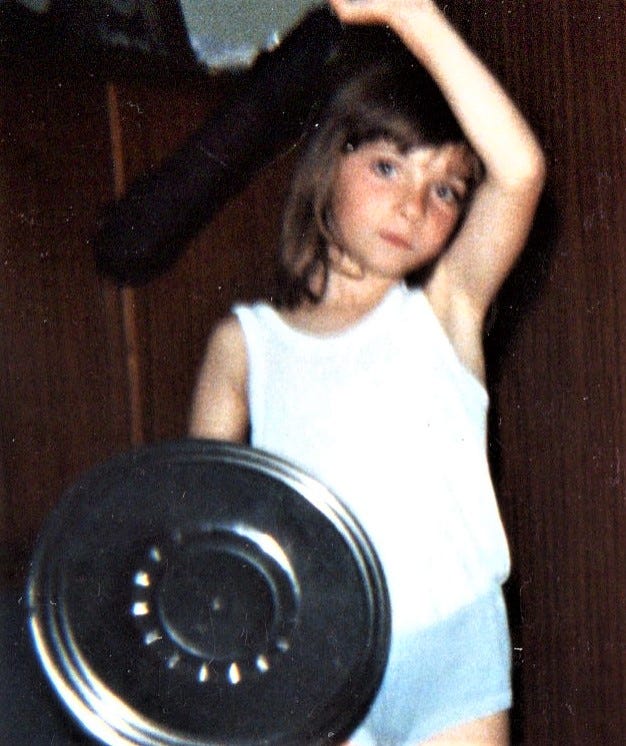
And this makes me think of the conversation between us two in my car when we were traveling together. You were talking about packages that you were making as a child in the 80s for the Jewish children in communist countries. And we got these packages from American children. And when I think about that, I always cry, that you were a child from this one side of the ocean, and you were making some gifts, and then I got these gifts as a child from on the side of the ocean.
ML: The way we met and came together as adults is so special. I am moved and inspired by all that we have shared together. I am equally moved by the work that you do. Can you talk a little bit about your inspiration to become a memory worker and storyteller?
PD: I think this is very much connected with my awareness of the gaps in the story of my family, and in the stories around me. I felt it more strongly when my grandmother passed away, and all my grandparents actually passed away around that time. There were these gaps in my family history, and there’s no one to ask about them. The huge turn came when I became a mother. I remember, I was putting my small boys to bed. I had finished singing to them and I was sitting in the silent dark room as they were sleeping, and I realized that that those stories of our family —my boys’ heritage too — are somewhere in this darkness, and that I must to do something with this silence around my Jewish story, and I have to do it for them. Fo this next generation. It was a very deep feeling inside me.
The other feeling I had those days was when I was walking through Warsaw, I could feel that there are many stories hidden, you know, somewhere underground. In the attics, in the basements, under the pavement, under the grass, they are there. They were calling me, and from those two experiences—one, one is very, very close to me, with my children— and this other is with my city where I’m living.
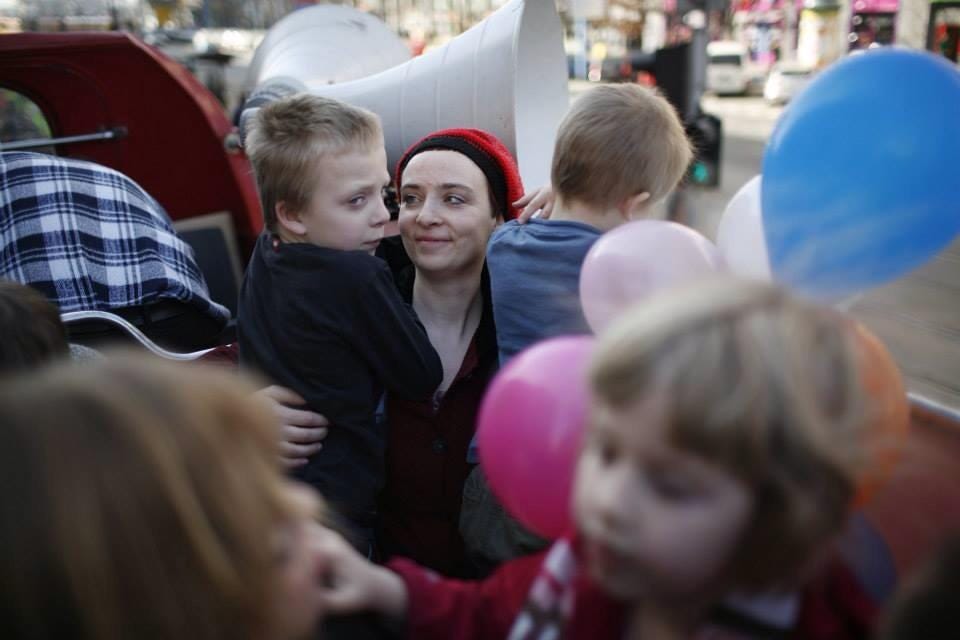
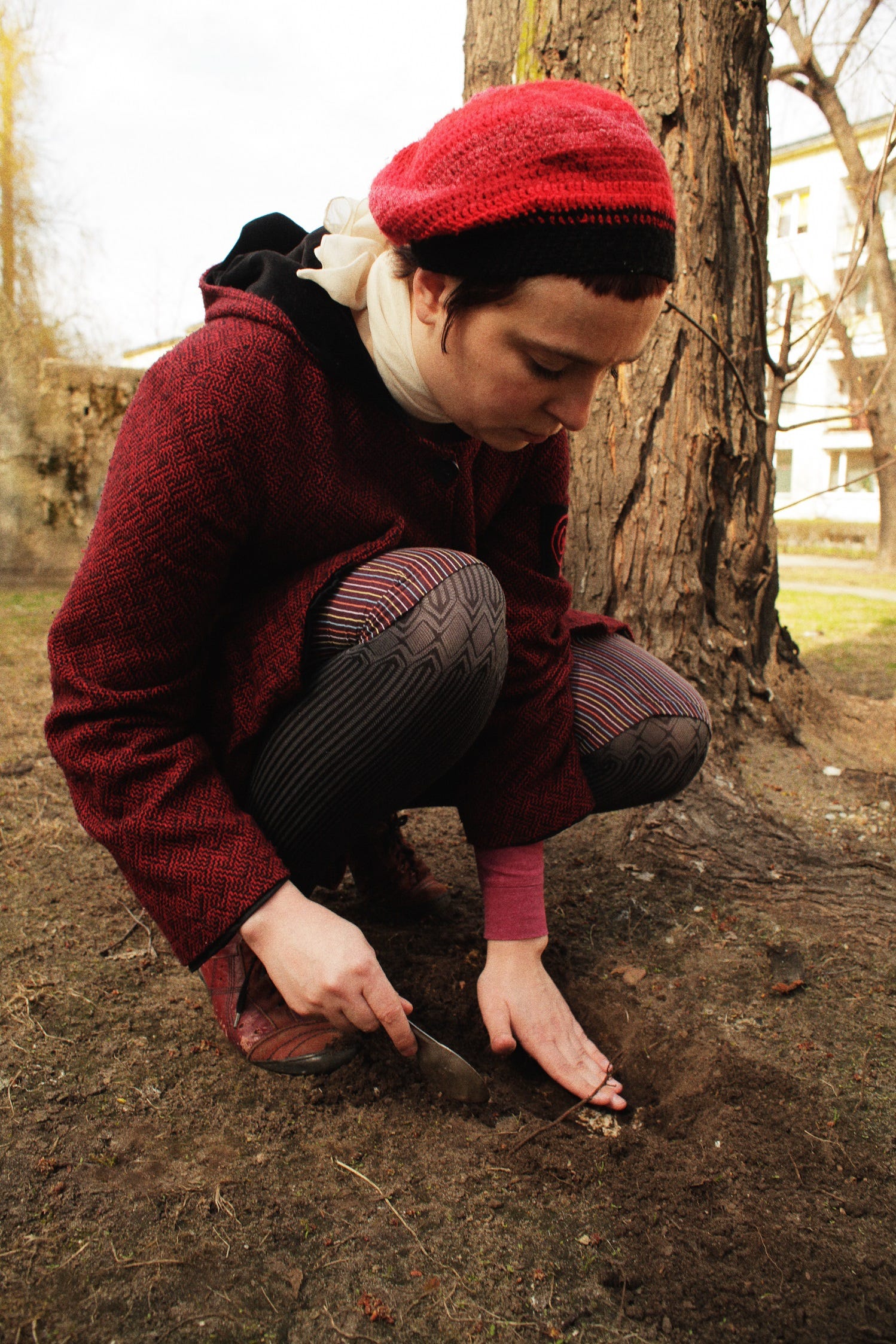
I first had an idea that came from a game from my childhood. It was a very popular game in Eastern Europe where we made small “views” using ribbons flowers, and covered them with glass. (There was a lot of glass around then!). Then we would cover the pretty little view with the soil. And being together, we were witnesses for this this beautiful view that we would bury under the soil and that was it, because we would never remember where it was. So I had an idea to take plaster casts of my body and cover them with the organic photographic emulsion and exposing on them fragments of family photographs, fragments of stories, and then put them in the soil around the city. At first I thought it would be a private act. But people started to come to me with their untold, hidden stories, and suddenly I had a lot of them. I became, like, the carrier, or the caregiver of these stories. I came to feel responsible for them in addition to my own. So that’s how it began. How I started to work with memory and Jewish heritage and try to fill in these gaps.
ML: Speaking of memory and filling gaps, what drew you to the Paulina story and to working with me?
PD: I think the first thing was when I listened to your presentation at the at the Asylum/Polin retreat for Jewish Artists in Warsaw [where we met]. I realized that we have so much in common— that we were both dealing with our grandmother’s stories. And I remember thinking it would be nice to talk to you more.
And then, as you know, you went to the Jewish Historical Institute where you found Paulina’s testimony. And the day we met in a cafe over winter teas, we started to comb through this testimony together. I was reading and translating, but it was you who was receiving it, and you who gave it to me. It was like we both just came upon it together. And this was something. That suddenly you just knew and I just knew that that we have to do something together, with this story. And when I think about it from a practical perspective, I think it was such an amazing accident, that we came together to this place. And that Paulina’s was an amazing, unexpected story, because it was longer and more detailed than usual testimonies, and reading and translating it was like a hard journey, a huge trip through the story. And then, there was this real woman who lived through the very long, very hard way of her story. At the end, she’s lonely, she hasn’t anyone to tell her story. So it really felt at the end of reading this testimony with you was the beginning of the story, the next chapter.
ML: What I am amazed by was this sense of trust or knowing each other without knowing each other. A feeling of a similarity, even though we just met. But the fact that I came to you with this idea going on a long road trip following Paulina’s story across Poland and Ukraine and that you were just like —Yes— to me that was beyond all expectation. It’s very unusual to just meet someone who completely understands my kind of “crazy” right away. You knew what that kind of embodied, performative work does. That regular research into a story like this can only bring us so far. You knew the power of going and being physically in places.
PD: Yes. And that’s really about trust, but then it becomes about commitment. You put yourself into the situation, and then you have to keep together. I mean, we are in this car, this small space, and we have to count on each other. And things would change between us, just like they were shifting and changing with each new read of the testimony, like how we felt when we physically arrived in the first dark place in the testimony — its connection with death and sadness influenced us and also influenced our relationship. It continued to shape and change it. I’m very grateful for this experience. I’m grateful to you, but I am also grateful to myself that I went with the first impulse, and then stuck with it.
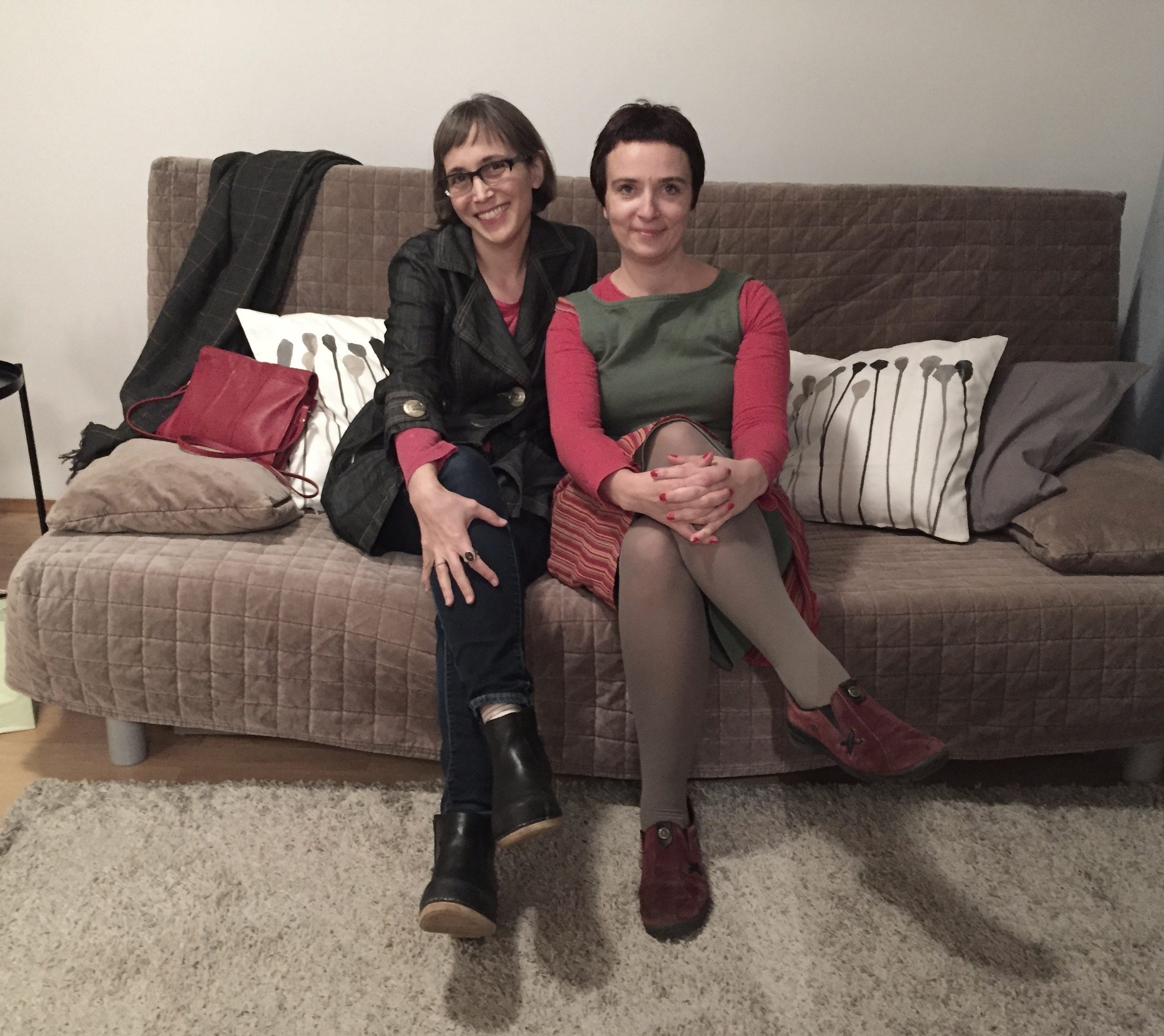
ML: It’s such a big thing that for whatever reason, forces were driving me to make this choice to go to Poland and do this project, but that you also committed to it.
PD: Yes, that was huge. And it was also huge, what was waiting for us there, but we couldn’t know it yet.
[There is so much more to talk about, but that’s a perfect place to end]
Thank you for reading this reflection inspired by caring for the stories of those who can no longer speak for themselves. In this time of war, intolerance, misinformation, prejudice, and polarization, this project focuses on the potential of each other’s stories to provide a vision of hope, possibility, and a sense of deeper understanding.
The transformation refers to Poland’s transformation from a communist state to a democracy beginning in 1981.
The Warsaw JCC (Jewish Community Center) opened in 2013. Its a refreshingly progressive, welcoming cultural space in Warsaw that describes itself as “a safe, caring, people-driven and inclusive space which brings together community members and newcomers interested in exploring, defining and redefining diverse Jewish identities through informal Jewish education and Jewish culture.”
Mishpacha is a Yiddish word for family that also means close friends, like family.
This is also where Paulina gave her testimony, and where she had a job immediately after the war. Could Patrycja’s grandmother and Paulina have met? Could they have known each other?
It is commonly known that many of the Jewish cemeteries in Poland have been destroyed where just fragments or traces remain, some were even completely transformed into parks (for one example).
Comments
Nothing yet. Say the first thing.
Sign in to join the conversation.