
As long-time readers know, I recently spent two weeks in Europe on vacation. While it was amazing, as always, one can hardly visit anywhere in Europe without encountering reminders of historical conflicts and their lasting impact

In my own family, my great-grandfather survived (and helped his family survive) three extinction-level events during his lifetime. His story profoundly influences all of his descendants, including me, instilling in us an instinct to seek safety wherever we go.
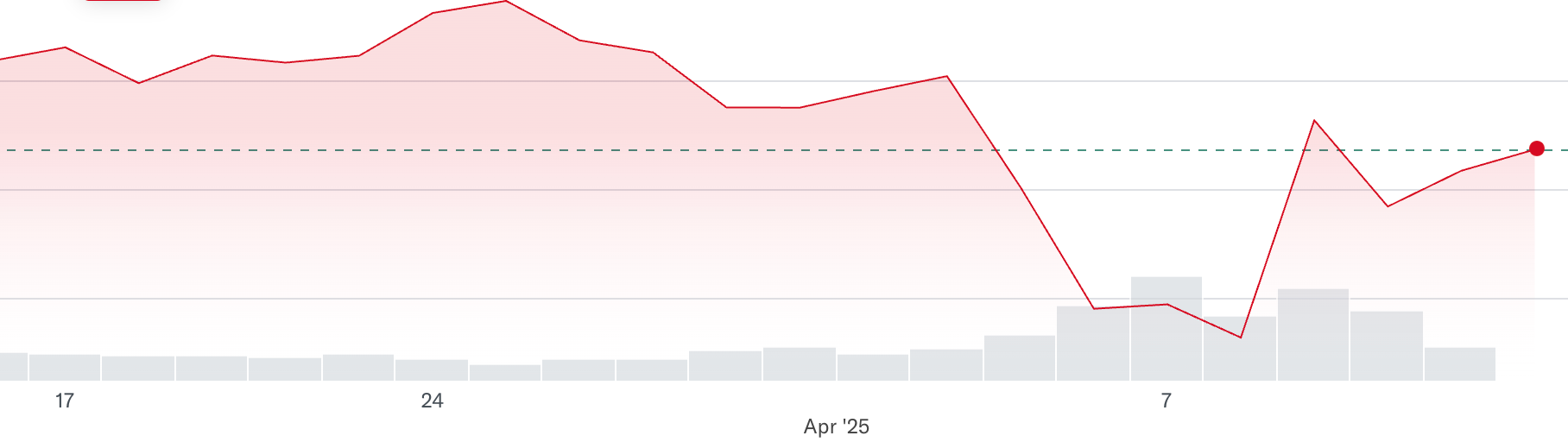
While I was away, some concerning developments have been affecting the stock market. If you're reading this today, there's a good chance you derive part of your income from stock returns. Even if you don't, recessions and AI winters ultimately affect us all. Though these circumstances may seem frightening, I want to assure you that there are always meaningful steps you can take to prepare.
My own journey toward security has evolved significantly over time:
In 2005, as a college freshman searching for career stability, the answer seemed clear: pursue a mathematical discipline with extensive coding experience. This led me to computational physics as my major.
By 2015, working for the US government with "career unconditional" status, I believed I had achieved the pinnacle of job security. Yet we now know this was an illusion. After deep soul-searching, I determined that developing rapid learning capabilities was the safest bet—mastering both technical skills and interviewing techniques. I reasoned that with these abilities, I could secure positions at companies like Facebook or Google, ensuring stability.
However, reality proved more complex. I worked as a technical lead at Facebook (by then Meta) during the 2023 layoffs, and my experience at Twitter in 2022 revealed that true security in tech requires a more nuanced approach than simply landing at a prestigious company.

Learning remains critically important, especially for ML engineers, but it must be applied learning. The state-of-the-art advances rapidly. I advise against trying to stay on the absolute cutting edge (it demands more resources than any individual possesses), but you should remain part of the ongoing conversation. There was no penalty for missing embeddings in the 2010s and only learning about them in 2020, but if you're an MLE who doesn't understand embeddings in 2025, you're at a significant disadvantage.
Remember: you don't truly understand a concept if you cannot build with it. Introduce productive friction into your learning process—do NOT attempt to make learning completely frictionless. The resistance you encounter while implementing concepts solidifies your understanding in ways passive consumption never will.
Each of us should be "over-employed" in some capacity, though this doesn't necessitate violating employer policies or juggling multiple traditional jobs. Having something you can monetize if your primary employment disappears has become significantly more important than it was a decade ago.
Hiring processes have become increasingly dysfunctional. When everyone else relies on automation, differentiate yourself through in-person connections. Build relationships, share insights, share this newsletter with peers (they'll thank you!), and maintain contact with former colleagues.
Manage your money wisely. While I don't claim to predict financial events, it's dangerously easy with tech industry salaries to become complacent. Resist this tendency! Be intentional about your spending habits.
Similarly, be vigilant about your online privacy. In a robust economy, oversharing might only result in embarrassment. During economic downturns, however, it can directly impact your finances. Poor digital hygiene increases vulnerability to identity theft, credit fraud, and account breaches—problems that become significantly harder to address when resources are limited.
If you're considering being overemployed or launching a side venture, data leakage can expose you to employer scrutiny, missed opportunities, or even contract termination. Privacy protects your earning potential when every dollar matters. This says nothing of companies implementing personalized pricing while you've publicly disclosed your income across the internet.

Ultimately, resilience in today's landscape boils down to three fundamental approaches:
Develop a side project (for learning and potential monetization). Whether it's standalone software, a plugin, YouTube channel, blog, or personal productivity tool—find something that engages your interests and can generate value.
Attend meetups/conferences and follow up with connections even when you don't need anything from them—simply check in to see how they're doing. Building genuine relationships creates a support network that transcends transactional interactions.
Be vigilant about information leaks, whether financial or privacy-related. Control what you share and with whom.
Starting next week, there will be some changes to this newsletter:
No more free office hours: While I've loved meeting with you one-on-one, my time is being pulled in too many directions. Instead, I'll be launching a paid career mentoring program.
No more paid subscriptions: If you're currently a paying member, THANK YOU! I'll continue offering office hours throughout the remainder of your subscription. If you want to secure an annual membership, you have until April 20th to sign up. All existing subscriptions will conclude by April 20th, 2026 (the longest membership offered is annual).
Interview preparation program: If you're interviewing for ML positions, please check out my program to determine if it meets your needs. As of this publication, three spots remain for April, and May availability will be extremely limited. Visit https://go.mlepath.com/april-25-blueprint for more information
Comments
Nothing yet. Say the first thing.
Sign in to join the conversation.