
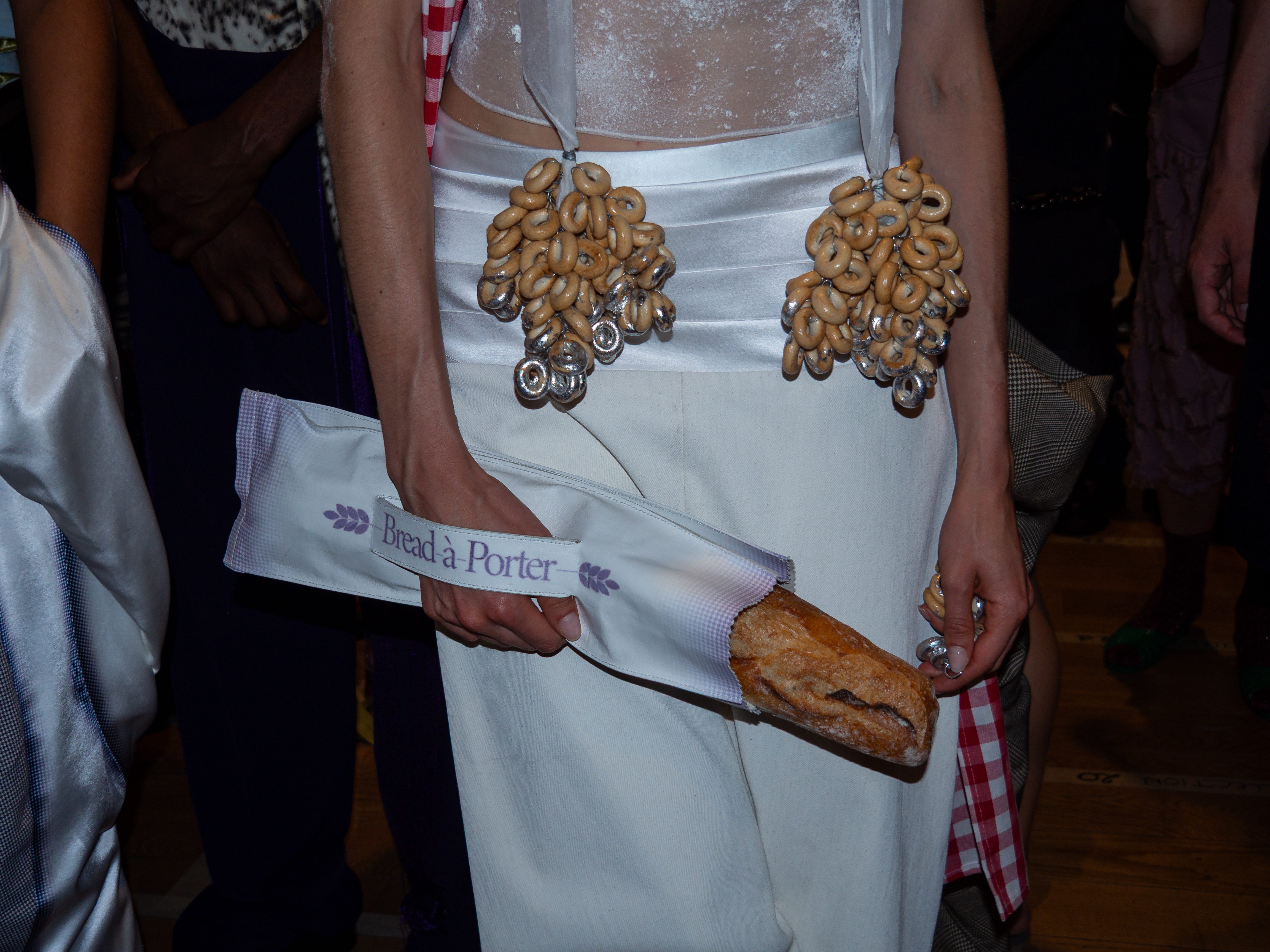
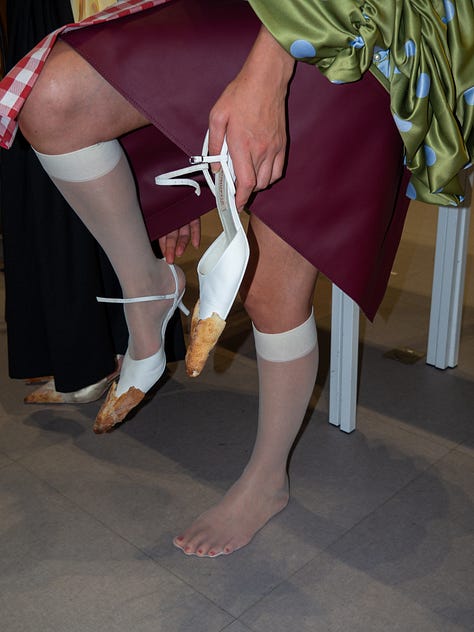
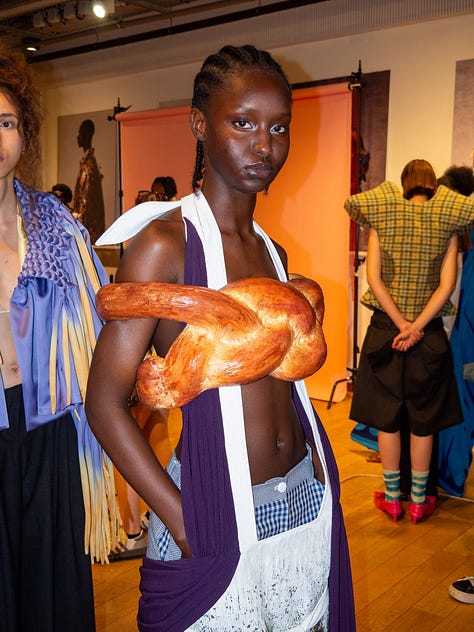
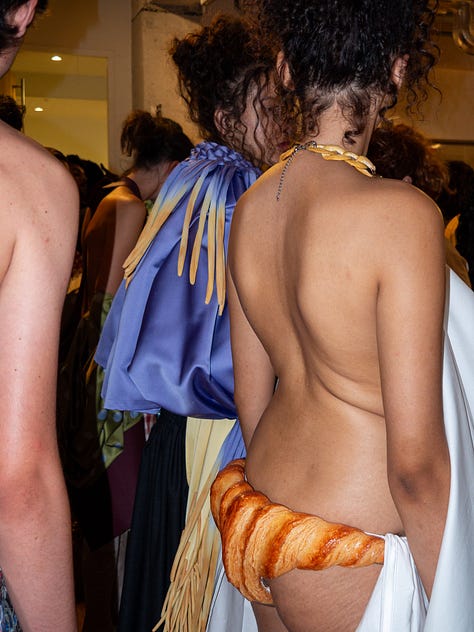
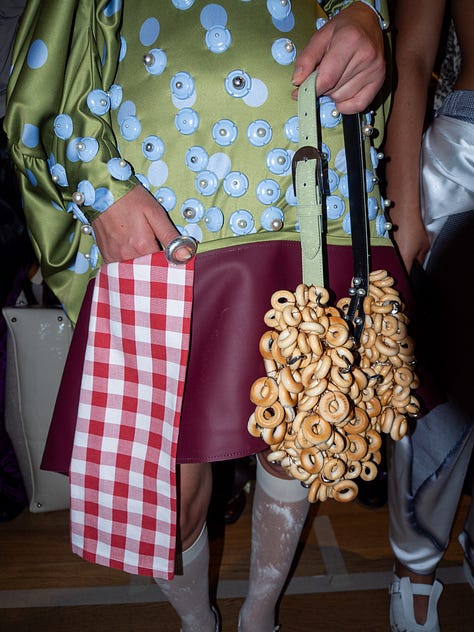
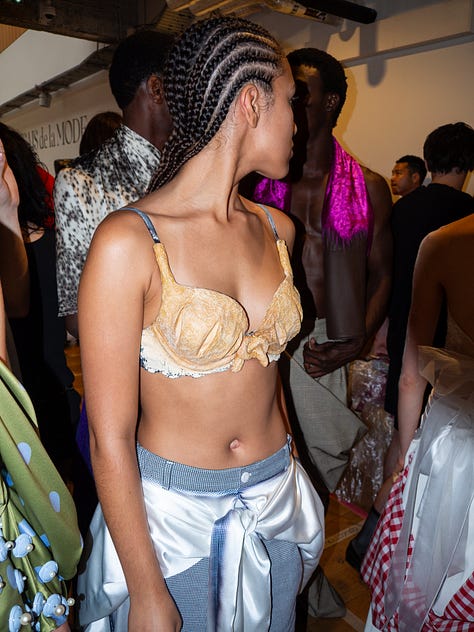
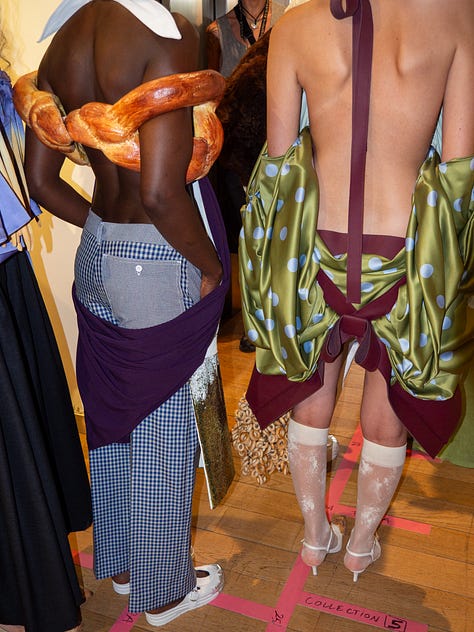
Bread, but make it high-fashion. We’re obsessed with Saulè Milonaitè’s graduate collection. Taking something as simple and as essential as bread and making it into an artistic statement… this is what fashion should be about: constant innovation.
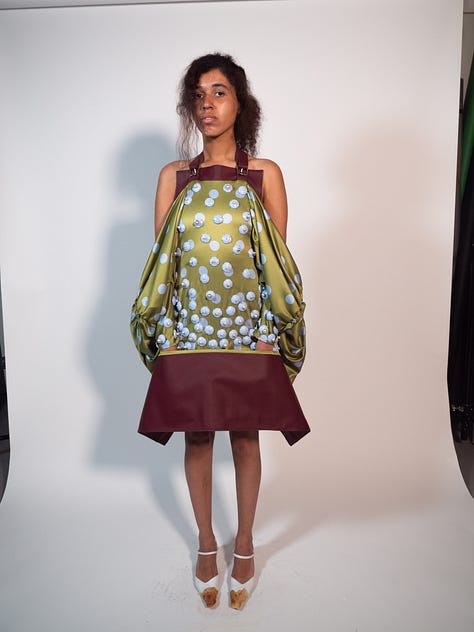
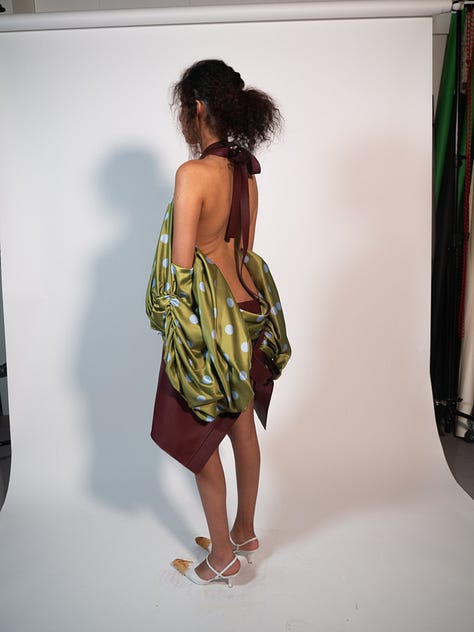
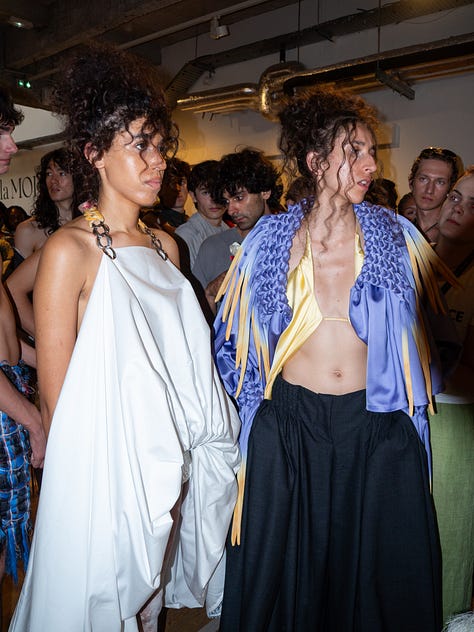
She captured the humorous aspect of the subject without leaning too intensely into satirised costumes, keeping it wearable and cute. The silhouettes are playful, the shapes extend, turning the human body into a moving canvas. Some fabrics cascade slowly, some create a stark contrast between the original inspiration and the traditional eveningwear, and some pull the two together, reminding us that the things that fuel us can slowly become part of us in a colourful, textural dance.
Food and Fashion have been woven together through campaigns and accessory design for a while now, but what stands out about this particular collection is that the subject of bread is not treated as decoration or a way to move the storytelling along. It is at the heart of the collection both visually and emotionally.
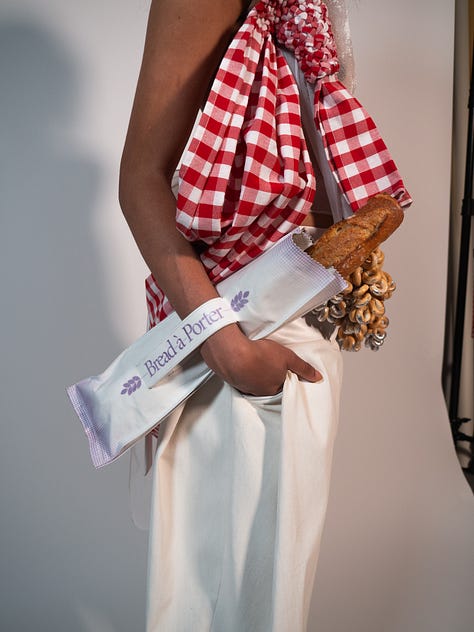
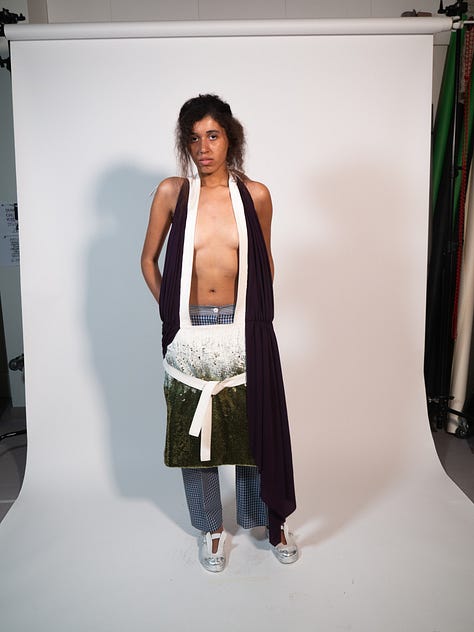
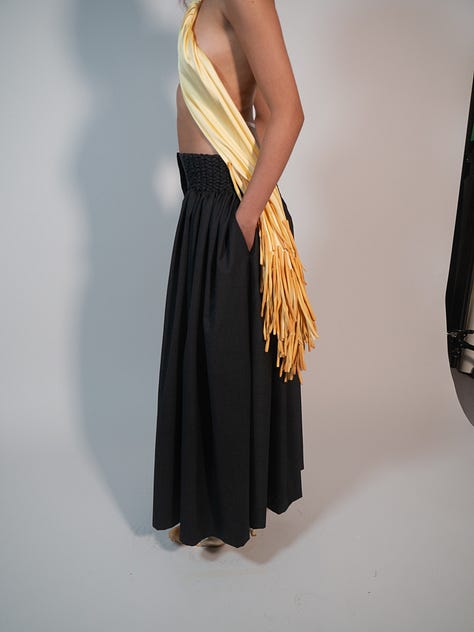
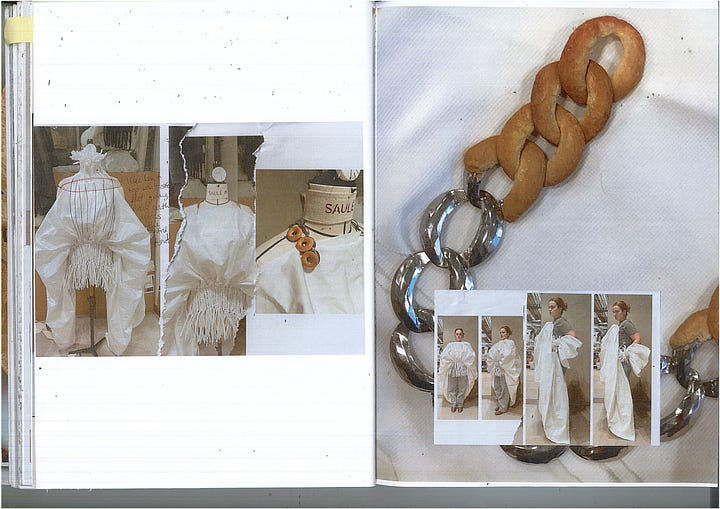
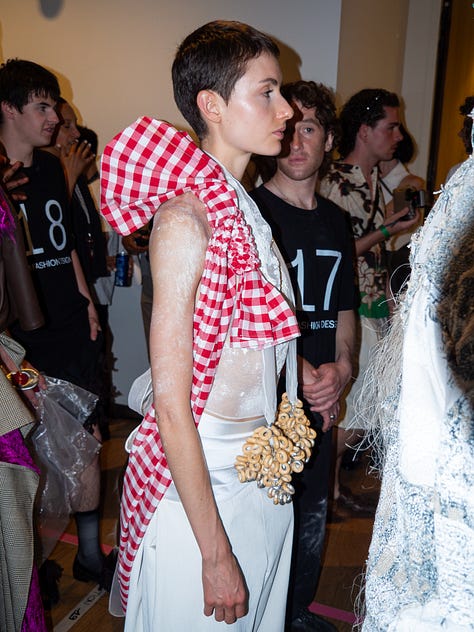
The bread-making process is first deconstructed. The traditional clothes of a bread maker are celebrated in the form of colours, prints, apron-inspired designs, and even the type of fabric you visually associate with the process. Bread in different forms quickly turns into a fridge on a jacket, or a chain on a bag. The more I look at the collection, the more details I notice.
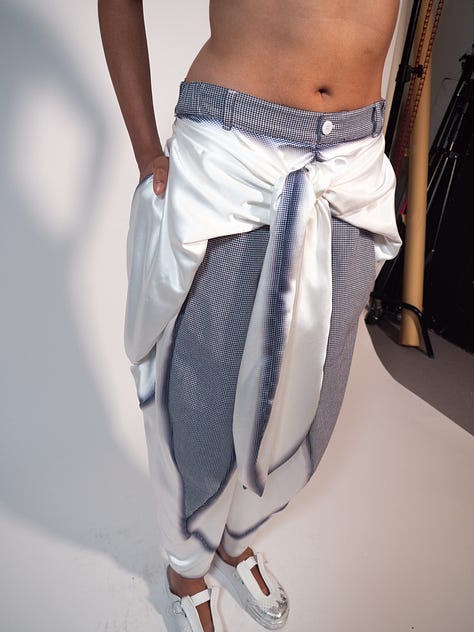
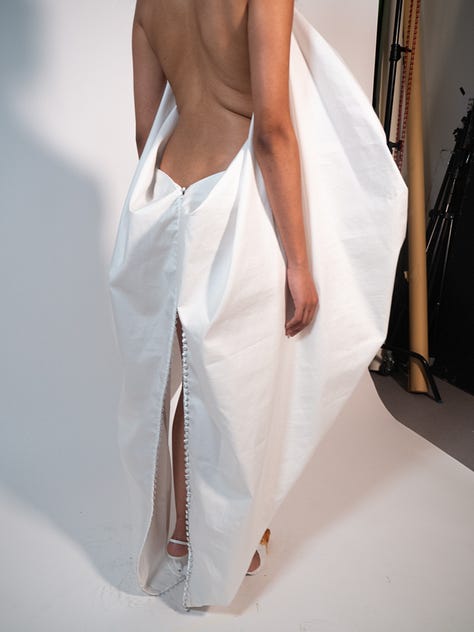
Even the white balloon dress or the oversized pants now remind me of a rising dough, resting for days before it is put in the oven to get that blushing yellow colour.
The process of making the bread itself is not short. It requires a lot of patience, effort and skill. The same can be said for this collection. And that same effort should be put into studying every detail of it. It is not a short process, but babe, that’s the point.
MKH: Where did the inspiration for this collection first come from?
Saulè: I’ve always been obsessed with bread, ever since I was little.
In Lithuania, we view it as something sacred; it’s deeply rooted in our culture, and it’s very different from what I’ve seen here in France. I find it such a beautiful concept: everyone eats bread, but every country looks at it so differently.
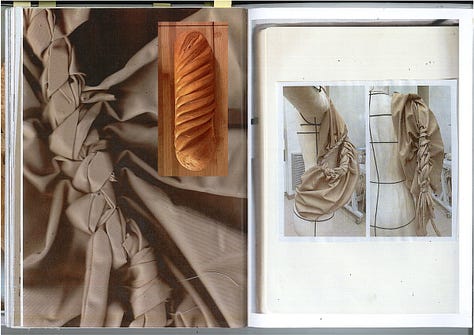
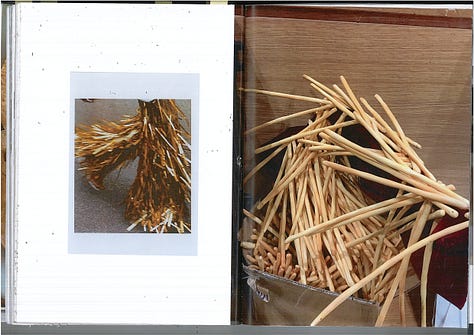
About a year ago, I found this book called Notre Pain Quotidien, around a 200-page book composed entirely of photos of bread, exploring how it’s part of our lives, how you can create things with it. It really focuses on the obsession with bread from an artistic perspective.
When I found it, I saw it as a sign and decided to explore bread from a fashion perspective and see where it could lead.
MKH: Your collection tells the story of bread in so many different shapes and iterations. How did you frame the storytelling in your collection?
Saulè: From the start, I knew that choosing bread as a topic would be tricky; I didn’t want it to become costume-y or gimmicky. So in the beginning, instead of recreating bread literally, I focused on the process of how it’s made, and the attitude of bakers. But I still felt like I was lacking some grounding to it, something more personal.
I’ve always approached fashion by taking something simple and understandable and trying to see it from a fashion perspective, elevating it. By placing bread, a symbol of accessibility and everyday necessity, within the exclusive context of eveningwear, I saw how I could blur the boundaries between necessity and excess, transforming gestures of labour into acts of embellishment.
Through humour, I wanted to invite a more playful and practical relationship with dressing up.
MKH: What was the process behind creating the collection like?
Saulè: I started by really delving into bread, researching cookbooks, the history of bread, and the different processes and ingredients used.
That process of bread-making is really what drove my material explorations, which led to so many different shapes and forms. There were so many variables, which I found fascinating, but it was also a real struggle at first; the garments weren’t coming together as fast as I wanted, since I was mostly focused on experimentation.
Once I refined the techniques into something distinct, I could transform them into actual garments. I also looked at bakers’ garments and their gestures of tying, folding, and draping. I thought about aprons, how they protect you from mess, and wondered: what if it were proper clothing instead? I wanted the mess of creation to become part of the final outcome rather than something hidden.
I imagined what it would be like to put on your fanciest clothes to make bread, and how that could manifest in clothing that embraces the process.
MKH: There is so much craftsmanship behind your presentation. What were some of the technical aspects of creating the clothes you feel most proud of?
Saulè: Looking back at the collection, I think I managed to invent at least one new technique or finishing for every look. I had so much more, but I needed to edit it down.
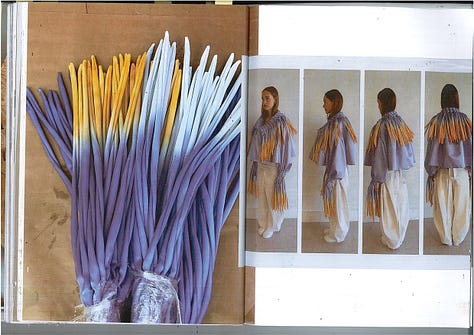
I’m incredibly proud of my collaborations with Teintures de France and Studio Junon, which helped bring the collection to another level. They helped me develop finishing techniques on several looks, including the hyperrealistic bread pieces.
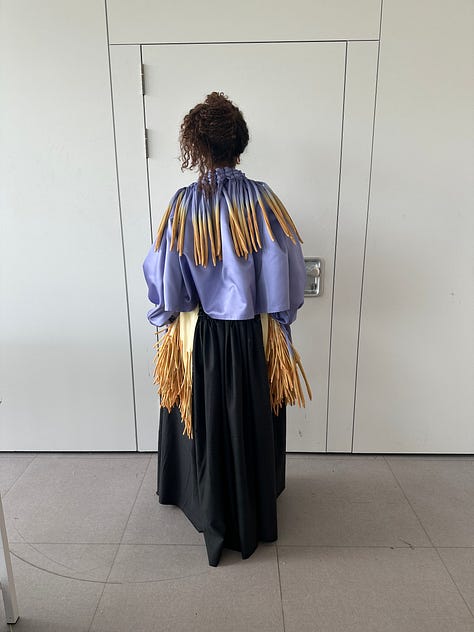
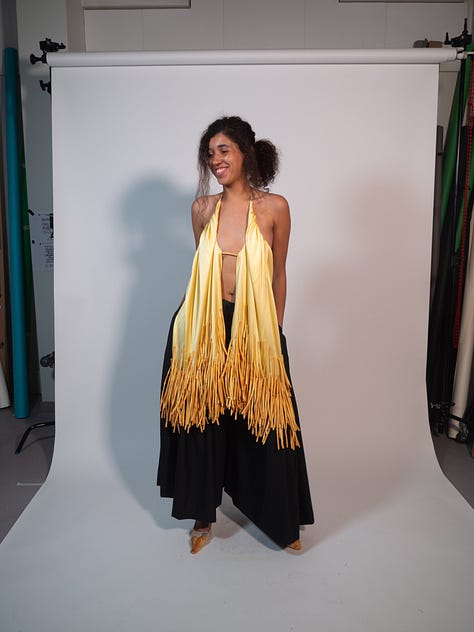
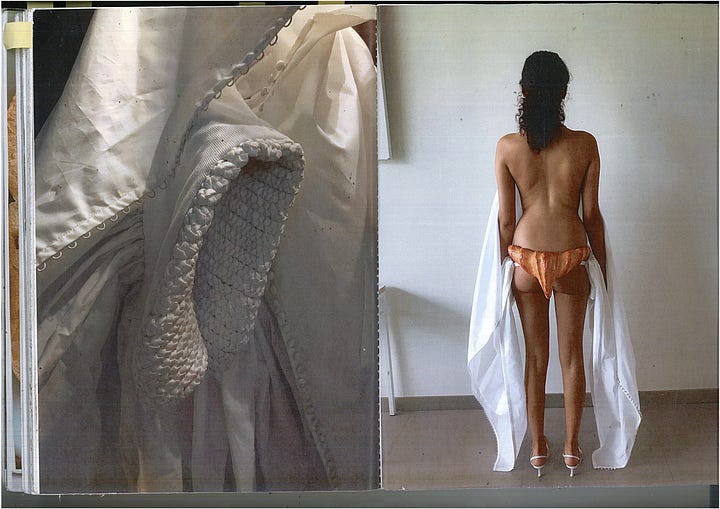
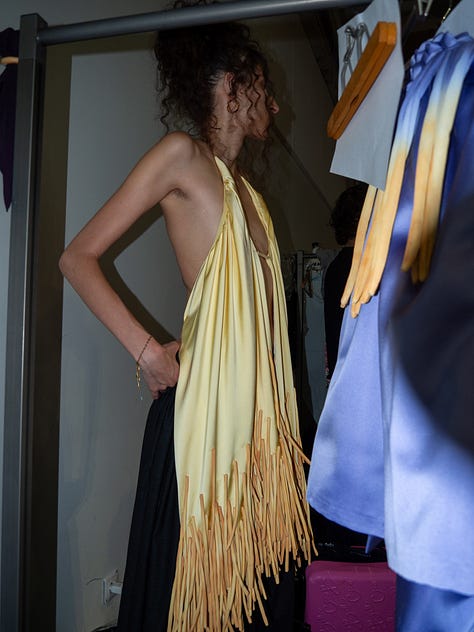
Technically, I think the braiding technique is what I’m proudest of. It looks quite understated, but there’s so much craftsmanship behind it: every fringe has to be cut, sewn, turned inside out, then braided and hand-stitched altogether.
It’s incredibly labour-intensive, but I think the outcome is worth it; it creates this great gathering of volume that can be adapted to almost any kind of clothing. I think the breadstick jacket is my most technically impressive piece, since it joined the braiding patternmaking technique I developed with airbrushing to turn the fringes into realistic-looking breadsticks.
MKH: Your designs are so incredibly original. How do you retain that originality and authenticity in your designs?
Saulè: Thank you. I think it comes from wanting to have fun this year. Since I know it’ll probably be a while before I get to do another collection independently, I just wanted to really enjoy the process. I was listening to my tutors and trying to elevate everything, but to keep it authentic and original, you have to do something that excites you, believe in it, and push it all the way.
It didn’t look like this when I first started developing the techniques, but I knew I’d get there eventually. I just kept that belief in myself.
I think it’s about having fun, experimenting a lot, and never being fully content. I’m always developing, always experimenting, always changing things and looking for ways to improve. Even if I have a breakthrough one week and feel incredibly happy about it, a few days after that feeling settles, and I’m back at it again, wanting to improve more.
MKH: Where do you want to take your designs in the future?
Saulè: My goal right now is to find an internship, ideally one that turns into a job. I really want to work for luxury brands and find my place within them. I think my approach could bring something interesting to a luxury house, in terms of finding something more understandable and accessible while still keeping a high level of execution. Long-term, I’d love to work in a creative, problem-solving space where I can mix fashion with more experimental techniques, creating show pieces, using unconventional materials, while still thinking about how it fits into fashion and what its functionality is.
Ultimately, I want to keep exploring how everyday, familiar things can become extraordinary through craft.
Follow @saulexmilonaite on IG and watch as she creates more and more elaborate and inspiring designs.
No posts
Comments
Nothing yet. Say the first thing.
Sign in to join the conversation.