
I was on the C train at an unfortunate hour the other day, when the people rushing home to sit down and the people rushing out to get drunk create a flammable friction. It was the last leg of a long-enough trip for me, my lap a shelf for overnight bags, one of which was a tote of regrettable decisions: a puzzle I never opened (the Airbnb had a better one), a box of wine I barely tapped (I woke up sick the first morning). Two girls boarded at 14th Street and sat down to my right, on the bench. They were maybe early thirties judging from their vocal and physical buoyancy, with matching Jennifer Love Hewitt haircuts, and as one turned her body toward the other, the spike of her rear end nestled itself in the flesh of my right thigh. It’s normal, foreign body contact in communal spaces, it’s part of the cost of living in New York, its community. But by West 4th the girls were on their phones digging through a group text to build a case at least one of them wanted to make against this girl they both knew who was the absolute, most annoying dumbest worst, all at amusement park volume. I suddenly felt uncomfortable to be so connected, butt to thigh, when her butt was the butt of a spiteful person needing to spread spite, instill spite in others, as they were on their way to hang out with the awful girl! But I was stuck, weighed down by my own baggage, and the rule here is to say something only if you see something, short of which you say and see nothing.
Maybe she was awful. The annoying dumb worst girl. Maybe she did knowingly manipulate everyone in the group to her favor, drag her friends for things her parents did to her, mercilessly, for blood. Maybe she’d killed—though I’d think, if that factored into the assessment, it would’ve come up. But twenty minutes in, it was clear it doesn’t take murder or even meanness to become the target of a character assassination. You just have to be a little flaky and forget to ask someone about their trip to Kansas for people to start talking, and if the people talking feel threatened enough, you’re dead.
There was something very frightening about this to me. A girl could run a campaign on opinions, as if opinions can serve as evidence of fact, and her friend, good friend that she is, malleable to her friend’s opinions as a good friend is, could switch so from neutral to active participant. When the only data on offer was one-sided and attributable to the supposed Awful Girl: her certifiably conscious crimes, her intentional offenses. When recognition of an interpreter, the voice of the Campaigner, was entirely absent, as if she’d obtained a transcript of her foe’s inner monologue that rendered her opinion fact, her perspective accurate, accountability moot.
I feel therefore she is.
I just, connected at the hip as I was to this girl campaigning against a lowest-level assailant, wanted to hear one thing: Why. Maybe I’d missed it, maybe that was the morning, over coffee, like, I feel like Cara doesn’t care about me and it hurts because she’s so smart and pretty and successful and I just wanna be in that club, but what I saw even as I searched for holes in which to plant benefits of doubts was Hate (or perhaps more accurately, Fear), spewing into the air for all of us to share, all of us porous creatures on this train, all of us on this earth struggling to make friends and money and love without losing too much of any of them (i.e. getting ourselves cancelled).
I hear a voice saying, “most,” most people on this earth take moral propriety into consideration—but that is why I’m here, have been here almost three months now trying to put words together to convince us all that we shouldn’t—nay, can’t—believe that there are those people, as opposed to these people, where those people aren’t driven by these core human needs, nor behaving in a way they believe maintains their standing as good and righteous people. I don’t think such a dichotomy exists, a., and b., I think we’re smarter than that. What I worry we are, though, is fearful, and maybe even a little lazy. It takes more work to wade through the deep grey mud between Good and Bad than it does to blame our discomfort on someone else, more courage to forgive than debase. We’d sooner point the finger away than toward ourselves, but it is worth it, and we have to we have to we have to, lest every last one of us have our characters assassinated.
I’m having a hard time with the news these days. Not because it’s bad, though it is mostly heartbreakingly, hope-shatteringly bad, but because, with every story I read, this hostile dogma paves another layer of cement over the world’s gardens and I am thrust into deeper fantasy-building, wherein the panic! lizards camped out at the base of my skull churn out the most ideas, all of which sound good at first but come from a panic! fear-based place and end unhappily. And then I regain sight of this one that’s like an island haven for me, just over there, where the sun shines, every part of my brain, like, yeah, the board approves, A+, but—just, hear it.
I procure twenty acres of undeveloped land (to start, at least), the bullies arrive in rounds and are dispersed. They roam blindfolded until the sun no longer soaks their masks and they are surrounded by trees, and for as long as it takes, minimal picnic provisions dropping from the sky to keep them just nourished enough, berries and hard cheeses and a nutty, Scandinavian cracker (the snap of which they will savor with the squish of the berry, because they are otherwise deafened by silence, forced and foreign), they will spend quality time with themselves and only themselves, and the trees of course, until it doesn’t feel punishing anymore. Until they’ve been unsocialized (not, I must distinguish uncivilized, à la Lord of the Flies, that would be a mess, but unsocialized, as in freed from the gaze of others, from extrinsic obligation, from the need to defend one’s desire to live née thrive née win née subjugate, etc.). A humanist, 21st century Kafka experiment. On the penultimate day, they will write of their experience in a diary, and on the final afternoon, over low-caf Earl Grey, dried apricots and scones, the members randomly exchange diary pages so no one knows who wrote what, only that everyone was scared and hated themselves and felt euphoric at different times, and then they will find the friendliest-to-them face and say hello to it. Hugging is allowed though not compulsory. No one would come willingly, I know, unless I could sell it like a Waldenesque Squid Game with big moneybag promises and maybe a throne that reads King Immaculae, but short of that, it would have to be kidnapping, which is illegal—and not of interest to me! The purpose is pacific!—so my best hope is that a doctor of conventional medicine will find a blight on one of the important brains in this reality, the reality of the 24-hour news cycle and say, Your cortisol levels are unusually high, let’s talk about a lifestyle change.
But it’s too optimistic for us, I’m learning. To think we can rehabilitate a spoiled mind, unspoil a brat. It’s not our way.

The people close enough to kidnap and transfer these grown bullies to the woods don’t, won’t. They may want to, but at its core, the experiment has too much faith in a person’s ability to change, whereas the models we follow assume our identities to be fixed. We validate them every day, validate them into rigidity. We validate the tantrums and accidents posing as strategic diplomacy and beautiful bills with votes and op-eds and name-calling. Call me a bitch and you’ve given me more permission to act like one. Yes-anding, it’s called in my circle, but, right, I’m an actor-writer-Pangloss1, who am I to talk? I only know how to appeal to my colleagues by exposing myself.
In seventh grade, I was nominated by my classmates to become “conflict resolution trained” so I could “resolve conflicts.” I was confused, because I thought I’d been doing a really good job of being an asshole. Just months before, I’d chased the jocks around a knoll in the middle of campus and hit them with my temporary crutches, rather famously convinced a bully (a soft one, but aren’t they all secretly too soft?) to cut his eyelashes off. I was regularly trying to outsmart the teachers and, at home, I was regularly having my mouth washed out with soap for language. I was allergic to the words I’m sorry. But somehow, “conflict resolution leader.” The script they gave us to work from reeked of future ridicule—“I feel [emotion] when [behavior] because [impact], and I’d love if you/we could [positive action].” In the few CRT meetings I oversaw, I laughed as I read the script aloud so everyone knew I knew it was for losers, but my peers were right: I really was committed to conflict resolution.
As emotionally inarticulate as I was then, as resistant to earnestness, sitting in on these conversations that inspired even an iota of confession was like water to brittle roots. I’d been unaware of an alternative to repression and explosion, and those were “cool,” they’re what I saw on tv, what I saw in my parents, they’re what we have in too high a dose in 2026 (with the addition of ridicule as a conversation style), but at my cowtown middle school with a tree mascot, two warring parties carved their way to compromise through their own self-images, and a brittle flower broke through concrete.
So I wasn’t an asshole; we were just children fronting as adults, and it was the 90s.
Were I the friend of the girl on the train, I would be scared. Were my friend luring me into a game of slander pong, I would be wondering wtf is up with them. Why such hate? Why so loud? Why, after repeated exposure to the same irritants, have you not stopped touching them? Why, if you’re aware of your intolerance but risking exposure anyway, have you not looked to your own biology to locate the source of the histamine? You are feeling [how] when [what] because [why]??? You are thirty, twenty-seven at the youngest, auditing friendly-leaning messages like “I’ll make it if I can!” and “Isn’t that the place we went for Sam’s birthday?” in order to convince me, See? Isn’t she the awfullest worst? What happened to you?
As “right” as you may be, as fun as it is to talk shit, as much as I appreciate a new lens to look at an old thing, there comes a point at which your Why needs to make an appearance to balance out the Hate. You must show some curiosity. At the very least, tell me, somehow, that you’re invested in your Why and not making a home out of Hate. Why? So I can avoid scratching you where you’re wounded, so I can have faith I can reach you when you inevitably turn against me.
I’ve had enough friends who dropped people and then, to my shock, dropped me as quickly. They’ve all had at least one thing in common.
With one exception: I was resurrected by one such friend who called me two years after cutting me off to tell me her reason, which added a disorienting but welcome flavor to hour four of a puzzle of the London metro, when all I had left were white pieces. It was a few months into Covid and the quiet was getting to some of us. Her reason, she explained, was petty and probably traversable but got augmented by her embarrassment over the pettiness and then exacerbated by anger that I would do something to make her spin around so, fighting herself, until it ballooned to such a size that it could no longer be traversed, not for weddings, not for the business we started together, and the brain is quick to defend itself, you know, even conscious failings, so, long story short, maybe we could pretend it never happened? The whole me being dead to her thing?
I was so happy to hear from her, and her speech, like a cartoon rabbit, like a cartoon rabbit who wears furs and false eyelashes, playful and paradoxically vain, still charmed all sadness out of me. It was easy to forgive her, a relief to log a human behavioral exception by her example, but I probably wouldn’t go into business with her again. Six years later, still haven’t. Six years later, it was really just the apology and then back to regularly scheduled programming, but it was a tick in the box of people can surprise you - GOOD.
Apologizing can be so hard. I really would’ve rather eaten soap. It makes sense—all models I had for it reinforced the idea that being wrong was dangerous, made you less worthy of love and respect. I could see the cracks in my parent’s faces when they kept arguing a point even as it stopped making sense, and I fancied myself savvier for a while, more capable of slaloming around logical traps (something akin to what the kids call gaslighting), having had two distinct and hardy stubbornnesses to learn from, but once I got comfortable with the words I’m sorry, they became my weapon, my defense, the needle to the staticky balloon. Even when I’m not at fault, even when I’m not particularly sorry, apologizing anyway is more effective most of the time. If even it screeches out of you angrily, I think it leaves a residue in the throat, a suggestion at least of having contributed to a problem, a dynamic. If even they persist in fighting, let them argue their point while you fight for your relationship (what’s at the end of the long, bumpy road of a rant?), or if not your relationship, for compassion as a platform.
If you struggle to apologize, go to Japan. It’s basically a greeting.
There must be a way that tolerance gets communicated aside from apologizing though, that outshines shows of irreverence and occasional acts of physical violence. Namely, how does one get elected to conflict resolve when she is a menace, to the point she is disliked by most of her friends’ parents? I think one explanation, in addition to learning the power of persuasion from ever-bickering parents, lies in being an alien.
I was a Jewish-Japanese tomboy in a predominantly white Christian town, ostrich-proportioned with monkey ears and rabbit teeth. Though I lusted for blonde hair and blue eyes and cosmetic surgery and goddamn Lunchables just once in my life, I knew it was futile, I couldn’t just put lemon in my hair like Steph and Laura did and be pretty. I had to give up trying if I was going to survive.
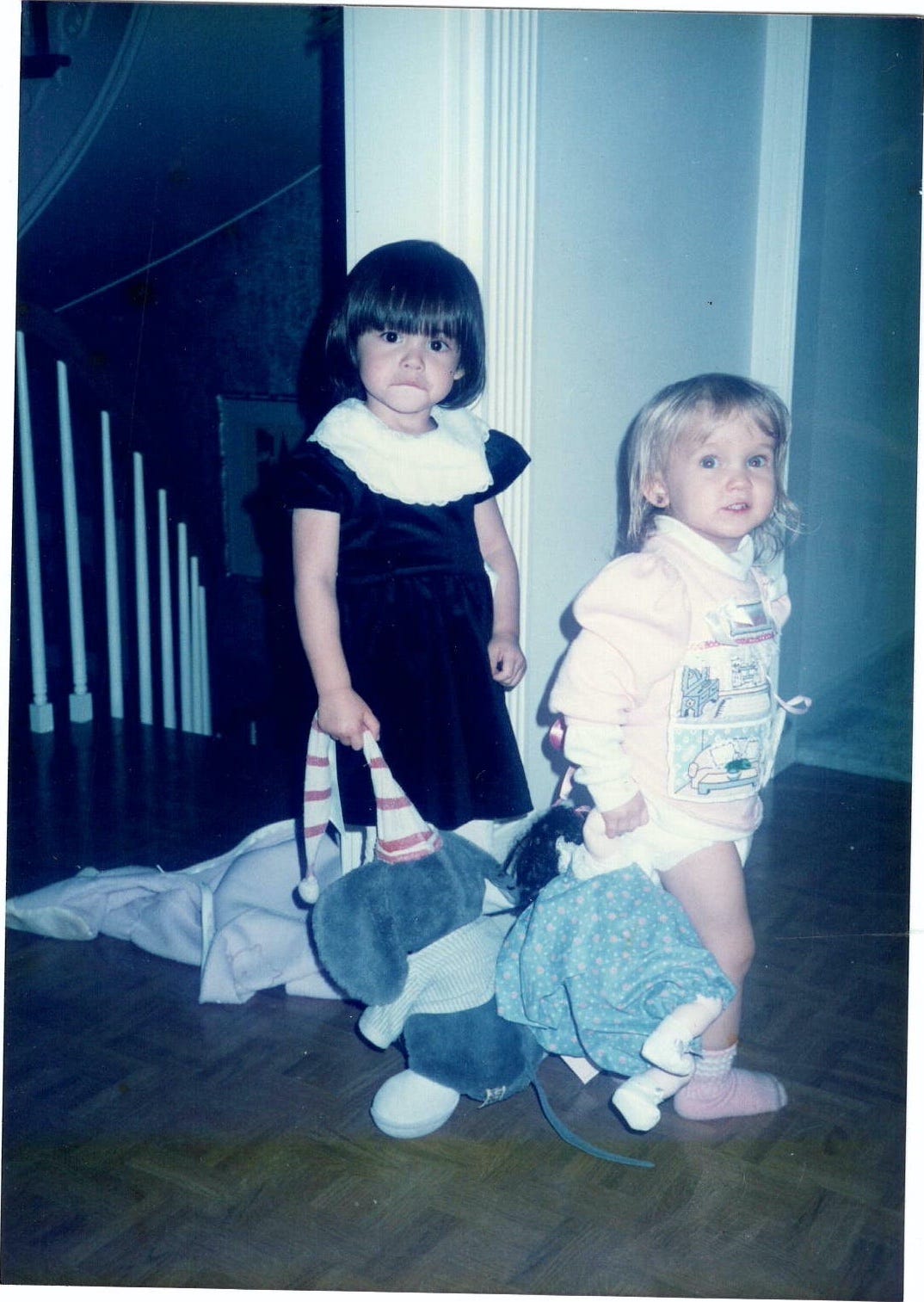
I’m not unique in my outsider sense of self, and even that isn’t a prerequisite for writing your own survival guide. But, I would argue that having to answer “What are you?” (this is, verbatim, how people ask, still, in 2026) inspires very close paying attention to yourself and others. It sets you on a course somewhere adjacent to everyone else’s. That is to say, what the cute little blonde girls get, you’re not a cute little blonde girl, so don’t expect it. The opportunities afforded boys, white men in particular, they’re not yours. The list of Things I Deserve, on which are written things like strength, respect, attention, doesn’t apply to me. I can spend my whole life grasping for the Things I Deserve list and build my personality on falling short, getting cheated and being exhausted. Or, I can build a list from scratch: Things Not Guaranteed an Identity-ambiguous Mowgli but Would Be Nice, Let’s Try, and as I move through my life, my course will continue to diverge from that of the class of high expectations, and I will start to notice the greatest distance emerging in the places our lists conflict. In one, suffering is expected, and attaining, a bonus. In the other, attaining is expected, and suffering is an injustice to be avenged.
Strength, respect, attention. Nice things, never guaranteed. Even granted, rarely adequate, so many ways there are for it to get twisted. That isn’t to say we shouldn’t treat people with respect, give them attention, etc. (I think we should do more of that), just that we won’t always get it, and entitlement to it as a rule, to anything as a rule, will inspire negative feelings when unmet, and lead to things like rage and rancor and retaliation, which tend to beget further rage and rancor and retaliation, and so on, and so on, for fucking centuries, until someone is like, No More! Probably because the instinct to compete (perpetuate violence) is intrinsically human, it is the losers who more often have, or more often see, something to gain in seeking compromise (harmony). And so it is that the marginalized person, the person who confronts their suffering, accepts suffering as a given, who develops their tolerance for gray.
We have to travel only a short distance back to find a Japan that would not apologize, that was forced into pacifism only when they lost a very big war in a very big way.
In eighth grade, the bulliest bully who came to school rarely and smelling of second-hand smoke stabbed another kid with a worm dissection pin on worm dissection day. The kid who got stabbed didn’t deserve to be stabbed, if for no other reason than no one should ever be stabbed, much less a twelve year-old whose greatest sins were talking too little and sweating too much, but I was sadder for the bully. It felt cool and nonconformist to root for the underdog, sure, but it wasn’t why I felt the way I did; I couldn’t help it. Of course I knew it was wrong, and I knew, for Matt G, it must’ve been awful, traumatic probably, but Frankie got expelled and we never saw him again. He was cancelled without a trial, without offer of rehabilitation, without the best of my school believing he could be redeemed. It felt inordinately unfair. Not just unfair; cynical. And I thought the thought I imagine every younger sister to an older brother who drafted plans to literally end her life would have: how much harm could a dissection pin do anyway, all wooden handle with just enough tooth to hold down an earthworm? As much as cancelling a child for a lark? Can’t we just wash his hands of it with a really strong soap?
I’ve been saying this for a long time, and I really mean it: I can forgive anybody. I see how it terrifies people, this indiscriminateness, as if there is somehow less justice in the world if everyone is allowed forgiveness, if there is not a very rigid system of punishment for capital W Wrongdoers, when our own good behavior should get its own goddamn summer camp with a private pool and chef-prepared meals—to which I say, define “good.” We all have enough of an imagination to conceptualize, and enough experience to fathom, what might compel a person to do horrible things. What many lack, I would argue, is the generosity and courage to do so. The willingness to recognize ourselves in bad behavior, to acknowledge our own capacity for badness. None of the adults sat us down when Frankie got expelled to say, “This is what he did, and why, so this is what we did, and why.” They said nothing, instead relied on the action to do the talking, and the kids were left with bad behavior = removal. The kids were taught absolutism, as if it suffices to explain an infinitely complex system. How readily we do this, all of us, everyday, putting periods where there should be question marks.
Consider the copula. The almost invisible word is in the sentence structure noun + copula + opinion stated as fact. Cheese is vile. Tony is a genius. Tony is a loser. How easily our own subjectivity sneaks into our language, when truth can be subjective down to the color green, provable only by comparison to other perceived greens, even as you see, and often do given the bewilderingly high rate of colorblindness, blue. And then, much deeper in the field, the longest-term residents at my silent retreat, there are those who speak with such certitude as to obliterate any interpretive flavor from their speech—the mind readers, character assassins, cancel culture’s biggest champions, themselves the only exception to an ever-expanding rubric of acceptable behavior. They have their reasons, too, I know, where the distance and even dissonance between felt experience and fact is too dangerous to traverse, but the fear and I’d argue self-directed first, other-directed later anger and hatred are ruinous; even the most casual slight from a generally laissez-faire person emits a noxious gas, slowly poisoning everybody. It’s a choice we all have, whether we transform our pain into something productive, or pay it forward and compound the pain of the world.
I didn’t know the word “empathy” from “sympathy” when Frankie got erased (it was the 90s and I was trying to be an asshole), but “empathy” is the more appropriate here, “empathy” being the word that denotes understanding. “Empathy” as a means to understand even horrible things with a willingness to claim them as human so we can make sense of how our nature includes that, too, and then, perhaps, our negotiations for peace won’t be so flimsy, our thoughts and prayers won’t slide off the pains of the world like a wet band-aid. I am, much of the time, eyeing human potential with a near-delusional optimism, quick to liberate people from their moral prisons, shed weight. Much of the time, to good effect. Even those who are, second only to Satan, the personification of half of our most fundamental moral binary - Pure Evil - are worth looking at through a human lens.
Pure Evil, Pure Good even—what does that do, how is that good for us? No debate, no exception, no tolerance for gray, when in the world, there are, dare I say, no natural things that are pure black, only shades of gray so dark they pass for black in anything but the purest light of day.
If I told you that lil Frankie with the intentional rips in his NIN shirt looked like a skinhead because his dad lit his hair on fire with a cigarette and he had to shave down to his scalp, would that change your interpretation of events? Never mind that he came to school one day shouting “I’m a skinhead”—he didn’t even know what a Jewish person was, only knew how hate felt, and how it protected him, made people listen. The only friend he had who didn’t love him out of fear was the family dog, because by 4pm it needed a walk and everyone else was too sodden with liquor. If I told you all that, would you feel differently about Frankie?
I’ve done bad things, and so have you, and haven’t we always had a reason? However thin or consciously unsound, behind every act is a motivation I’ve deemed sound enough to act upon; if even I have known better—which is really the benchmark of “evil,” right? Clarity of intention? And if the world is not black and white, if it is fair to you, you’ve been asked Why; even as an accusation forms in the interviewer’s brow (it’s only human to fill in gaps), they’ll ask you Why acknowledging their own folly and let you tell your story before final sentencing.
Remember the eyelash kid? Or, I guess, the no-eyelash kid? I said he was a bully, and that was the label he was given in school, but you don’t know, you don’t even know his name, you just have to trust me, I’m the storyteller here. I can say he was a bully and then, when I tell him to cut his eyelashes off, you might be more inclined to take my side. The scales of good versus evil have struck something closer to balance. Even though you know what I’ve done isn’t “right,” perhaps because he’s an ambiguous character, and you’re in my hands, you grant me the benefit of the doubt. The truth is, Cord (that’s his name) was a bully. To some kids. To me, he was laughably non-threatening and actually very sweet. He wanted to be a bully more than he was one, when what he really was was an imp. We had a rubber jail cell set up at some festival at school and for reasons that never mattered to me to unearth because I was so enamored with the events of the day, Cord paid five dollars to throw my mom in that fake jail at least six times. I would see him tittering under the eave of one of the classrooms as he watched this woman he didn’t know, but was getting to know, starting to lose it as she went back to jail again, each dollar it cost her to be paroled more expensive to her than the last. But the jail was made of rubber and she was an adult, there was no one to chase her down if she pried the bars open and stepped out. No one but Cord, who was only a hair over four feet tall and smiled gaps around his two front teeth as he put down another five dollars. But she never fled. She played along and made us all feel very clever and very special.
The eyelash thing was before all that. I did it because I thought it was funny and my sense of humor wasn’t developed yet. My mom was the one who told me it was bad, not even Cord. Cord didn’t care. When she made me apologize, she made me do it in a letter so she could approve it, and then she called Cord’s mom to make sure it got delivered. Cord and I both found it all very weird, and he shrugged, like, what’d I miss? Did I not pick up the scissors and snip my own hairs off? That was you? I thought we were flirting or something? (That’s what I thought.) But I guess, to apologize to someone you only maybe owe an apology to can’t hurt, can in fact be a fine thing to do because it can lead to camaraderie, and camaraderie can lead to your mom spending five minutes of every half hour in a rubber jail, which only got funnier as it went on.
Now imagine if my mom hadn’t seen through the antics of a child trying to make fun and instead got properly mad. What does that do to an intention? It suffocates it, really. Even if the intention is good—it’s more damaging, isn’t it, if the intention is perceived as good by the perpetrator? At least justifiable? If a kid is like, how do I get attention from this person whose attention means something to me, don’t know why, even if the result is that a kid goes the rest of their life without eyelashes, or a mom disappoints the PTA because she can’t show up for her volunteer post helping kids paint cardboard to construct a pretend town and now there’s ketchup- and mustard-colored acrylic sludge all over the carpet the school can’t afford to clean up, we don’t keep the eyelashes on the kids, our public schools funded, by putting the kibosh on natural human behaviors. Luckily, we tend to agree that kids (even lil Frankie with the dissection pin who was blindly following his traumatized kid logic and likely hyper-charged by twelve-year-old hormones) deserve the benefit of the doubt, which is why so many of humankind’s closest descendants of angels are grade school teachers.
So what if we extended that grace further?
Alain de Botton, philosopher-writer and accredited luller-to-sleep, said we should see our lovers as children in order to love them better.2 It sounded radical when I heard it in 2017 but is now, having listened to the On Being episode five or six times, a necessary relationship survival skill. “[It’s] one of the kindest things that we can do…not to infantilize them, but when we’re dealing with children as parents, as adults, we’re incredibly generous in the way we interpret their behavior.” We naturally search for a benevolent interpretation of events with children, but seldom with adults, even though an adult can (and will) just as well come to you and be an asshole, come home and say “Leave me alone,” door slam, and then, though your first reaction may be outrage, offense, etc., you actually get to decide: you can a. take it personally, because we’re entitled to candor and softness from our partners, or b. chalk it up to them being tired or hungry, hungover or constipated. “And so I think the work of love is to try, when we can manage it—we can’t always,” Alain continues, “to go behind the front of this rather depressing, challenging behavior and try and ask oneself, ‘Where’s this rather aggressive, pained, non-communicative, unpleasant behavior come from?’”

As for those we don’t love—the guy who flips you off after cutting you off, the ingrate who passes silently through the door you hold open, tyrannical world leaders—what do we do with them? To your rejoinder that the wall of bullies only looks down, responds to all entreaties by casting its shadow wider, I say, as long as we’re not megalomaniacal sadists, why follow their lead? I know we can’t seduce the world’s worst actors to my nonexistent silent retreat, but we can use our goodness, our judiciousness, to make human sense of the sooner-we-accept-it-the-sooner-we-can-mend-it human behavior, at least among our neighbors, and lighten, at the least, as a start, the overall load. As for the dangers—how rash and simple-minded are we, that we’d sooner take up victimhood than attempt to humanize, as if our understanding will snowball into sympathizing, or worse, enabling. We’ve participated in a cancel culture long enough to see that it’s a cheap band-aid, a non-fix, the cancelled keep coming back zombified and hotter than ever—so all it effectively does is repeat the messaging that it is dangerous to give credence to the Whys that precipitate Evil, much safer, much easier, to shut them up in an Evil box to (attempt to) bury forever. And it works expediently; it says we can tolerate only so much backstory before we start to see the humanity in the crime and are all endangered. It encourages us to drown out threats with society-sanctioned slurs until we become too hardened to ask our own friends, hey, wtf is up? The system, and so many of our systems, can only handle so much nuance, which is why so many answers take the form of Good or Bad, Guilty or Not Guilty. Rarely is it Needs Help / Needs More Help, Needs Love / Needs Love Radically.
As if the contents of that Evil box won’t seep up through the soil as they rot.
All “bad” things have utility. All bad things, given thoughtful human treatment, afford us the opportunity to become better beings who are better to each other. And, yes, controversially, I believe we all benefit when we treat even the “worst” of us better.
You know that script we all get when one of our friends gets dumped? The one that goes, “They suck, you rule,” or some variation of the same? If we cancel anything, can we cancel that? I’ve heard it as many times as I’ve been dumped (plenty) and it achieves nothing beyond making everyone less human, while also absolving me of culpability, thus reducing any likelihood I’ll learn something that may lead to me not getting dumped the same way over and over and over again. (There were at least fifteen years that I dated the same personality disorder without realizing it.) The truth is, I will grant them all their day in court and they shall all be forgiven, because I can’t not believe that at the center of every hard, stinky nut is a good heart. I may not welcome them again in the way I do close friends, or go back into business with them, but let’s at least ask them Why, and let them answer, and let them answer again once the internal shuffling works something else loose, because the effort is where hope comes from, it’s how we learn; the invitation to let someone else talk despite you knowing the answer (which you probably don’t) is respect; more than saluting an appointed official, bowing to status, it is our curiosity and patience in this country in this world on this planet among 1.5 million species of animals and 400,000 species of plants that will usher in the order we need to get through the day in peace. Nothing can be fixed without identifying the problem, and no matter how much you insist they should know better, you don’t know what people don’t know and you might learn something you didn’t expect to learn.
I have been lucky to know the world to be (mostly) fair; I’ve been asked Why, been offered the safety to step out and atone, atone more, and through this practice, I find that not only does skin heal, bone mend, eyelashes mostly grow back, but people don’t want to hurt me so much as they don’t want to get hurt. Each time I have a little more faith that the cliff of non-defensiveness will extend to meet me even as I reach what I am sure is the breaking point, and it does, it bears my weight and fortifies itself by it. In so doing, the runway for other assholes extends (asshole being a cute catchall for an inherently good person caught in a hate-perpetuating cycle), and my hope is that, as these assholes see me on the edge of a cliff they will recognize the risk I am taking, for them, for goodness to win out, and they’ll wake up to the choice they have. Idealistic, maybe, but at the least, they’ll probably be less inclined to waste their hateful energy on me. Nine times out of ten, the less you react, the less attention bullies will pay you.
Our brains are more sophisticated than trigger cancellation, wise enough to resist the unyielding wall of blanket terminology. As my mom taught me, there is a distinction between saying someone’s a bitch and saying they’re acting like one. And if you’re not a “bitch,” well, that’s good news. You have a chance at redemption.
It doesn’t mean go run a country, elude prison, sleep in my bed. It doesn’t mean enable, condone or forget. It means I will acknowledge your suffering, and maybe that’s what you need. To be a little closer to the human you are, feel your feet on the ground, so you can bear a little more of the accountability for the human impulses you have that got the best of you and do something about it. Perhaps even recognize the system that manipulated you, and do something about that.
It’s not reserved for Jesus and the Buddha; we can offer redemption, too.
A woman just passed by my open window. Just now, as I’m writing this. She was shouting into a phone, “I expected you to show up, why do I have to tell you.” If I have learned one thing from being in all kinds of relationships, it’s that you do have to tell people. It’s unsexy and spoils the fairytale but expectations are promises you make to yourself on another’s behalf; no one else knows about them. Just as resentment is a poison you drink hoping the other person will die.
What I appreciate the most about the Conflict Resolution script, variants of which I find myself slipping into all the time now, and I still roll my eyes, is actually the omission of a word that I think makes all the difference. For reference, it goes, “I feel [emotion] when [behavior] because [impact], and I’d love if you/we could [positive action].” There’s no “make.” It could just as easily say “You make me feel [emotion],” as so many of us do, as if external influences have some kind of inherent power to force an emotion on someone else, but instead it removes blame entirely. It’s not your fault, it’s not even my fault, it just is. I think that’s good. I think it’s okay to absolve the person on the receiving end of the script, even if you think they’re the absolute, most annoying dumbest worst. If there’s any chance of reconciliation, or even the smallest abatement in your own suffering, it may as well start with you.
From Voltaire’s Candide:
In the neighbourhood there lived a very famous Dervish who was esteemed the best philosopher in all Turkey, and they went to consult him. Pangloss was the speaker.
“Master,” said he, “we come to beg you to tell why so strange an animal as man was made.”
“With what meddlest thou?” said the Dervish; “is it thy business?”
“But, reverend father,” said Candide, “there is horrible evil in this world.”
“What signifies it,” said the Dervish, “whether there be evil or good? When his highness sends a ship to Egypt, does he trouble his head whether the mice on board are at their ease or not?”
“What, then, must we do?” said Pangloss.
“Hold your tongue,” answered the Dervish.
“I was in hopes,” said Pangloss, “that I should reason with you a little about causes and effects, about the best of possible worlds, the origin of evil, the nature of the soul, and the pre-established harmony.”
At these words, the Dervish shut the door in their faces.
No posts
Comments
Nothing yet. Say the first thing.
Sign in to join the conversation.