
This essay explores themes of feminism, women’s rights, gender-based violence and ageing.
In the summer of 2018, I was studying light and shadow, angles and expressions, all so I could take photos of myself for my Circle School. I was a reluctant selfie-taker, and was learning the art of “selfography” with the brilliant Paula Ivy.
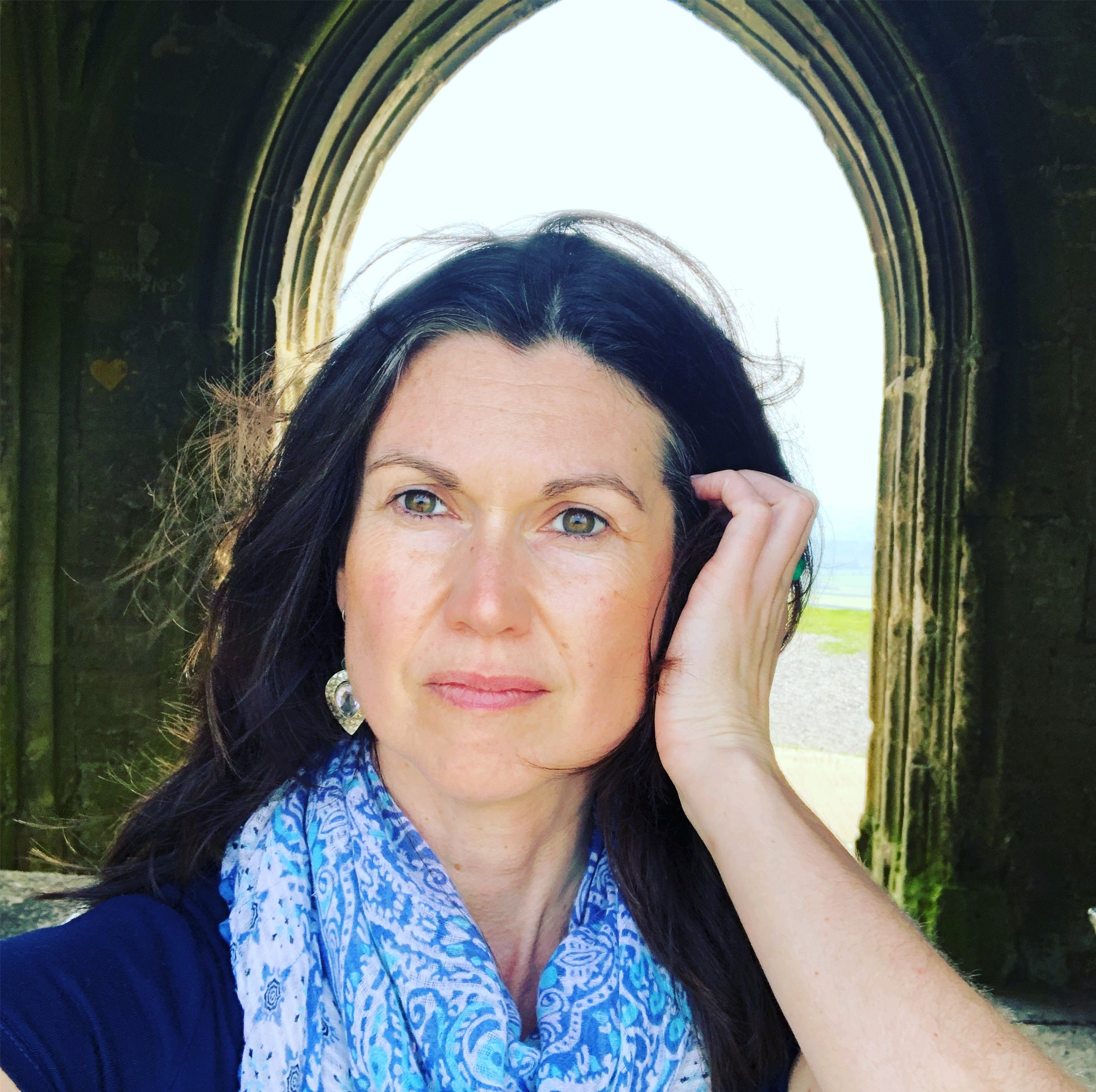
At the top of Glastonbury Tor, I took a series of photos, playing with the techniques. In one of them, I’m not smiling. Not even trying to. I’m simply holding hair out of my face, the wind wild around me, staring straight into the camera.
It remains one of my favourite photos of myself. I’ve never been able to recreate it.
When I shared it on social media, other women saw me. They got it. They understood the experiment and why I was sharing it.
And then there was a random comment from someone I hardly knew; he wrote:
“You’re a good-looking woman, but you’d be prettier if you smiled.”
Men in my life defended his comment as a compliment, certain it was harmless and he didn’t mean anything by it. I wondered if I was indeed making a fuss about nothing, being dramatic or didn’t know how ‘to take a compliment’.
I found myself unable to articulate how unsettling it was, or why it was inappropriate.
I blocked him and continued my journey of experimenting with selfies, but often found myself retaking them to share on social media to ensure that I was indeed smiley!
Now I’m in my 50s, and for Goddess sake, I don’t want to perform a smile for my face to be acceptable! The current apparently empowering narrative on social media about mid-life women, conveniently ignores the capitalist system we are mid-lifeing in, and the huge marketing budgets aimed at us - how we can look better, leaner, younger, stronger (and don’t forget the menopause shampoo!!).
And I’m over it all.
I want to dedicate this next act of my life to continuing my quest for meaning in the chaos, to reading as many books as I can, to sitting in Circle, to sharing stories and bearing witness without looking away, to contributing where I can and tending to those around me.
I want to write more.
I want to re-analogue our life. I want to print photographs, write letters, watch birds, find recipes in cookbooks, learn how my sewing machine actually works, finally darn my scarf, stare into the fire, take candlelight baths.
I want to have full belly laughs.
I want to reclaim my time; rearrange my bookshelves; finally start a project with my dried flowers; carve spoons; paint abstracts; knit fingerless gloves.
What I don’t want to do is smile on demand or from expectation.
And so, on my 51st birthday, I asked River to take photographs of me: not smiling, with lines, thinning, greying hair, slightly drooping right-hand side of my face following Ramsay Hunt syndrome and looking as tired as I feel!
And I shared them as my profile pictures.
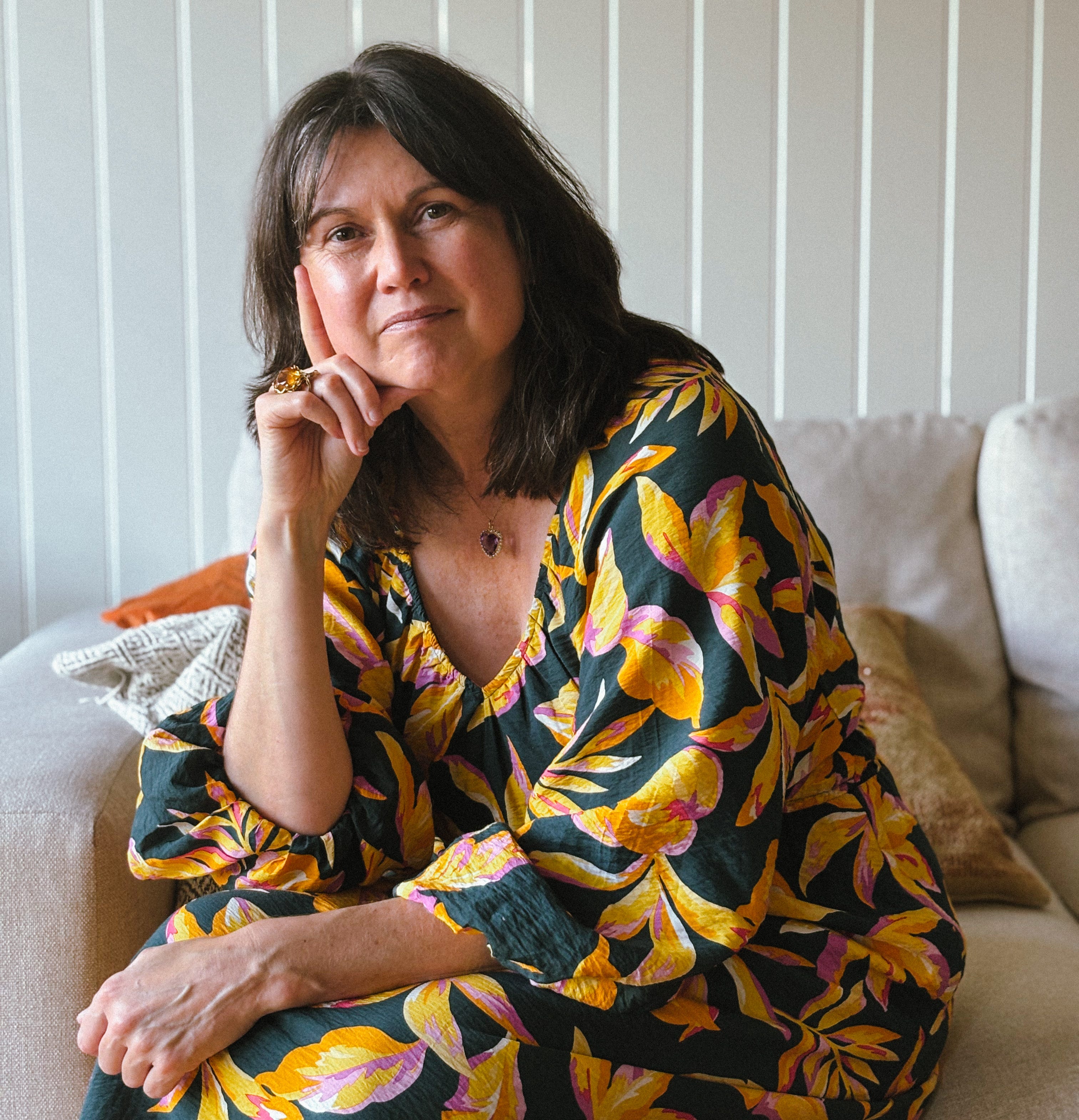
I do cringe a little when I look at them. I wish I’d posed better, that my skin was brighter, that I didn’t look quite so exhausted, (Side-note, midlife influencers have definitely made me feel that I’m not trying hard enough; perhaps I should be adding collagen to everything!)
But I’ve spent years learning to sit with discomfort. I’m listening to what arises, and welcoming it with as much curiosity and compassion as I can muster.
I am so tired of a culture that still tells women how to look, how to behave, how to present, how to (not) take up space. And I’m deeply frustrated / furious by the rise of anti-feminist rhetoric and the trad-wife aesthetic romanticising a world in which women’s autonomy, economic independence, safety and public presence are eroded (whilst they run Instagram accounts and make money as influencers - make it make sense!).
Recent global reports show that nearly a quarter of countries are now experiencing an organised backlash against women’s rights and gender equality. A 2025 report from UN Women warns that gains in women’s rights are being undermined by a “perfect storm” of insecurity, conflict, democratic decay and conservative social policy - putting at risk progress on women’s access to healthcare, equality, and protection from violence. Women’s political representation is declining for the first time in years.
As the annual 16 Days of Activism Against Gender-Based Violence campaign began on 25th November, we are asked to look honestly at the extent of control, coercion and violence against women that persists across every society.
This year, the focus is on digital violence.
So much of our lives now unfold online, and yet these spaces are becoming increasingly unsafe. Digital violence is one of the fastest-growing forms of abuse; 1 in 3 women experience violence globally, up to 58% face it online, from harassment to image-based harm, to deepfakes and 1.8 billion women and girls have no legal protection from digital violence (Call to action: UNiTE to end digital violence against all women and girls).
As women continue to show up and speak out, we also continue to be targeted.
And yet - women keep showing up.
We keep creating, leading, organising, telling the truth, and refusing to disappear.
The expectation that women smile on command sits on the same continuum as the systems that strip away autonomy, silence dissent and endanger lives.
This is the reason that the clip of Millie Bobby Brown being photographed went viral.
A male journalist shouts:
“Smile!” She turns, looks, and says:
“Smile? You smile.”
And walks off.
Granted, most of us aren’t on a red carpet, but every woman has a story of being told to smile by a man.
She refused the performance.
She refused the command.
She refused to make herself pleasing.
Our refusals matter, and they contribute to a broader landscape of resistance.
This is a right we too can claim now, in midlife.
Smiling is not neutral. It is not a simple request. It exists within a much wider system.
But refusal isn’t enough on its own.
We need accountability.
We need tech platforms to take responsibility.
We need laws that actually protect us.
We need long-term investment in women’s organisations and safer digital spaces.
Millie Bobby Brown said, as a 21-year old, what so many of us who were born in the 70s perhaps wish we’d said in our 20s. We are a generation of women for whom sexual assault and harassment were normalised; something girls simply dealt with. I don’t think we had language for it then. We learned early that to exist publicly as a girl and a young woman meant being told how to behave, how to present, how to smile, how to be palatable.
#MeToo (founded by Tarana Burke) was a catalyst for exposing that cultural normality; and also for helping us understand what we had experienced. One published study found that women were increasingly likely to recognise an experience they had as “sexual assault” in the wake of the movement. In the UK, surveys show 58% of women aged 18-24 had experienced someone making sexual remarks to them that made them feel uncomfortable; 38% had experienced inappropriate touching (UK Parliament Committees Written submission from Welsh Charity, Chwarae Teg). Another study found that 64% of women in the UK report some form of sexual harassment in the workplace.
This is a global issue and we can draw on statistics from around the world. Most recently, South Africa declared gender-based violence and femicide a national disaster.
These statistics (and there are many more) aren’t separate from the smile-on-demand culture. They are the demonstration of what living within a system that regulates women’s bodies, women’s faces and women’s behaviours, actually means for women’s health, women’s safety and women’s autonomy.
This is why a photograph is never just a photograph. A smile is never just a smile. .
These seemingly small acts of resistance: an unsmiling photograph, a refusal to contort ourselves in compliance, a decision to tell the truth about our lives, accumulate into meaningful resistance.
For those of us with the privilege of relative safety, and the capacity to take a stand, we can help bring about change. We can reclaim our boundaries and help birth our collective becoming.

If you recognise an experience as harassment, coercion, assault or abuse, whether from years ago or yesterday, please know you are not alone. Support is available through:
Rape Crisis
Local women’s centres
Therapists or support groups
Learn about this year’s theme: digital violence against women and girls.
Share resources from trusted organisations (UN Women, Women for Change SA, Refuge, Women’s Aid).
Share posts if you’re on social media using #16days
Amplify women’s voices and stories - especially those most impacted.
Challenge harmful behaviours when you see them, online or offline (if safe to do so).
Donate to a frontline services and women-led organisations if you’re able to. Organisations that I’ve supported through Circle School include Refuge, Right to Equality and ElectHer.
Today, if you feel safe to do so, try taking or sharing a photograph in which you are not smiling.
Not unhappy.
Not hard.
Just you, without performance.
Notice what arises.
Meet it with curiosity rather than judgement.
Let it be a quiet act of remembering yourself.
Light a candle.
Take three slow breaths.
Place a hand over your heart and on your womb space (or belly).
Say, silently or aloud:
“My face is my own. My story is my own. I honour what I have survived and what I am becoming.”
Write down anything that surfaces - memories, or stories or questions.
Go gently and allow remembrance to become resistance, and resistance to become renewal.


Comments
Nothing yet. Say the first thing.
Sign in to join the conversation.