
Insanity is doing the same thing over and over and expecting different results
-Albert Einstein
In healthcare innovation, we love a good pilot.
A shiny new idea. A team of believers. A press release. Maybe even a feature in the internal newsletter or a pilot showcase.
But the real test isn’t whether an idea works once — it’s whether it can work at scale.
Too often, pilots spark hope but never make it past the launchpad. That quiet, frustrating drop-off between a successful test and system-wide adoption - that’s where the real challenge lives.
Let’s talk about why that happens — and what to do about it.
Pilots are like carefully curated experiments. They are:
Run in narrow, idealized environments
Supported by extra resources and attention
Separated from the friction of real operations
And that’s the problem. What works in the lab doesn’t always survive in the wild.
Here are three of the most common ways promising pilots lose steam:
Let’s say you launch a pilot that uses wearable devices to monitor recovery after surgery.
In the pilot:
You pick a small, tech-savvy patient cohort
You dedicate a nurse to monitor the data
Everything runs smoothly
But when you try to expand:
Patients vary in digital literacy
Staff in other units less familiar with the device
The system isn’t ready to handle a new data feed from many patients at once
✅ The pilot “worked” — but only in a controlled bubble. Outside of it, everything breaks.
Now imagine a primary care clinic tests an AI tool that flags patients for proactive outreach.
During the pilot:
They hire two part-time care coordinators who respond to patient responses
The tool leads to better engaged patient and fewer unneeded hospitalizations
But when the pilot ends:
The staff disappears
The tool keeps sending patients alerts
But no one has time to act on them
💸 You proved impact, but never planned for sustainability.
Let’s say your health system pilots a virtual mental health service.
Patients love it
Outcomes are strong
Leadership is ready to roll it out
But front-line clinicians weren’t involved in the pilot. They’re skeptical. They’re not sure virtual visits can match in-person care. Without their buy-in, usage flatlines.
🙅🏽♂️ You didn’t lose on data. You lost on trust.
Scaling isn’t about repeating the pilot — it’s about translating it.
Here’s how to get better at it:
Too many pilots are rigged to succeed. That’s not the goal.
Instead:
Test in diverse settings. Most pilots limit variation to reduce noise, instead thoughtfully think about how to design for expected variation
Use current workflows and systems. Even better if you can reduce work for those involved rather than add to it
Include users who might resist. You don’t want them to crowd out enthusiasm but you need their perspective to iterate the program before it scales
✅ Your pilot should tell you what’s possible — and what breaks.
Before you launch the pilot, ask:
Who owns this if it works?
What roles or workflows will need to change?
How will we fund this long-term?
Build a “what’s next” roadmap alongside your test. Pressure test the answers with key stakeholers
🧩 Otherwise, success will arrive with no one ready to carry it forward.
Technology is never adopted in a vacuum.
Bring in:
Clinicians
Front-line staff
Patients
Give them a voice in the design. Let them tell you what won’t work. If they shape the solution, they’re more likely to use it.
🧠 Behavior change beats tech specs every time.
Why pilots fail to scale:
They’re built for best-case scenarios
They depend on temporary support
They ignore the people who need to adopt them
How to do better:
Design for complexity, not just control
Think beyond the pilot timeline
Engage the humans who have to live with the change
Healthcare doesn’t need more flashy pilots. It needs more follow-through.
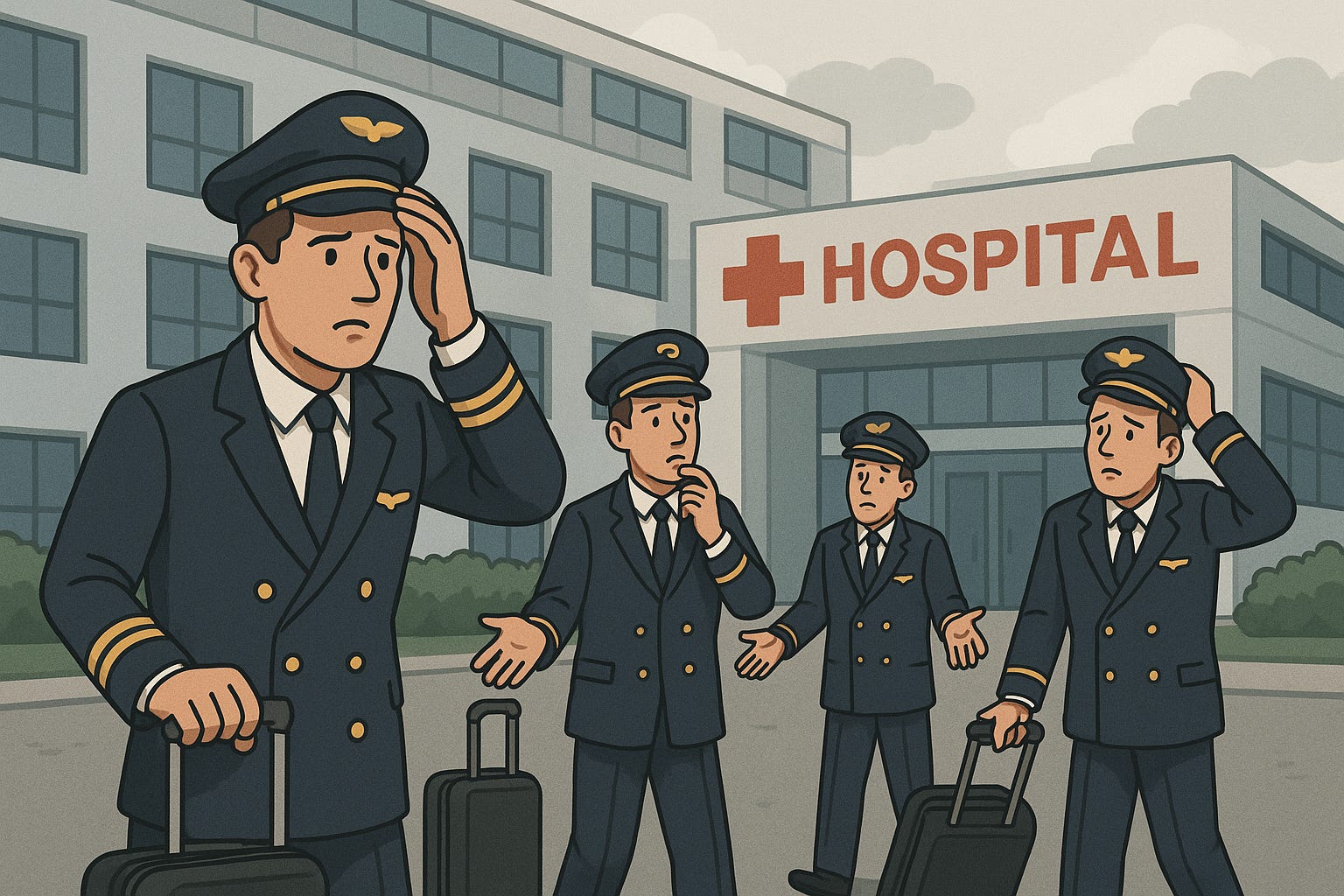
We have more pilots than Southwest Airlines
- Health system executive, when asked if we could pilot a program at one of their hospitals
Let’s stop confusing “we tested it once” with real progress — and start designing for the long haul.
This post is not an endorsement or investing advice. It is personal opinions and does not reflect the views of my past, present or future employers, clients, or colleagues.
No posts
Comments
Nothing yet. Say the first thing.
Sign in to join the conversation.