
Dear Readers,
First, I want to thank all of you for your ongoing support. Every one of you helps sustain me in this work.
Cutting Through is only sustained by your support. This work is not the product of major donors, merchandising, or grants. We need your help to keep delivering the kind of analysis we do. Some of you have seen the recent interviews I’ve done with some notable figures, and there will be more.
As we head into the heat of the midterms, amid the wars in Iran and Ukraine, I will be doubling down on my commitment to bringing you all the best analysis and information I can. That includes these articles, my social media work, the video commentaries and interviews as well as advocacy here in DC that you don’t always see.
If you are able to help, please consider becoming a paid supporter at the “subscribe” links in this newsletter. You can also make a one-time donation at the “One-time donation” links. I know there are a lot of media outlets out there vying for your support, and I hope and believe that my contributions are valuable enough to merit that support. Any help is deeply appreciated, as the support of those who are able will continue to keep this service free for newcomers and those who can’t afford to sustain independent reporting and analysis. Thanks to all of you.
A new bipartisan bill attempts to sanction the Polisario Front, the internationally recognized representatives of the Sahrawi people of Western Sahara. This piece explains what’s going on and why.
Rethinking Foreign Policy, July 30, 2026
Former JTA DC bureau chief Ron Kampeas put out what I think was the best argument I've seen against the idea that genocide was committed in Gaza. So it needed to be rebutted, as I do in this piece.
The Battleground, July 30, 2026
Benjamin Netanyahu gushed about his White House meeting with Donald Trump this week, but the meeting was most notable for what went unsaid about Iran.
Mondoweiss, July 31, 2026
In this wide-ranging interview, I speak with Prof. Shaul Magid about his observations of an anti-Mamdani rally in New York, questions of Jewish identity in the wake of Gaza, and questions of Jewish identity.
YouTube, July 31, 2026 (or listen on Spotify)
In this edition of Globalists, Josh White and Mitchell Plitnick examine the Burnham government’s early moves, assess the prospects for a more progressive direction in British politics, and consider what opportunities—and limitations—the leadership change presents. While the Labour government may prove more responsive to pressure from the left under Burnham than it was under Starmer, meaningful change has never come through complacency.
The Battleground, August 1, 2026 (or watch the video on YouTube)
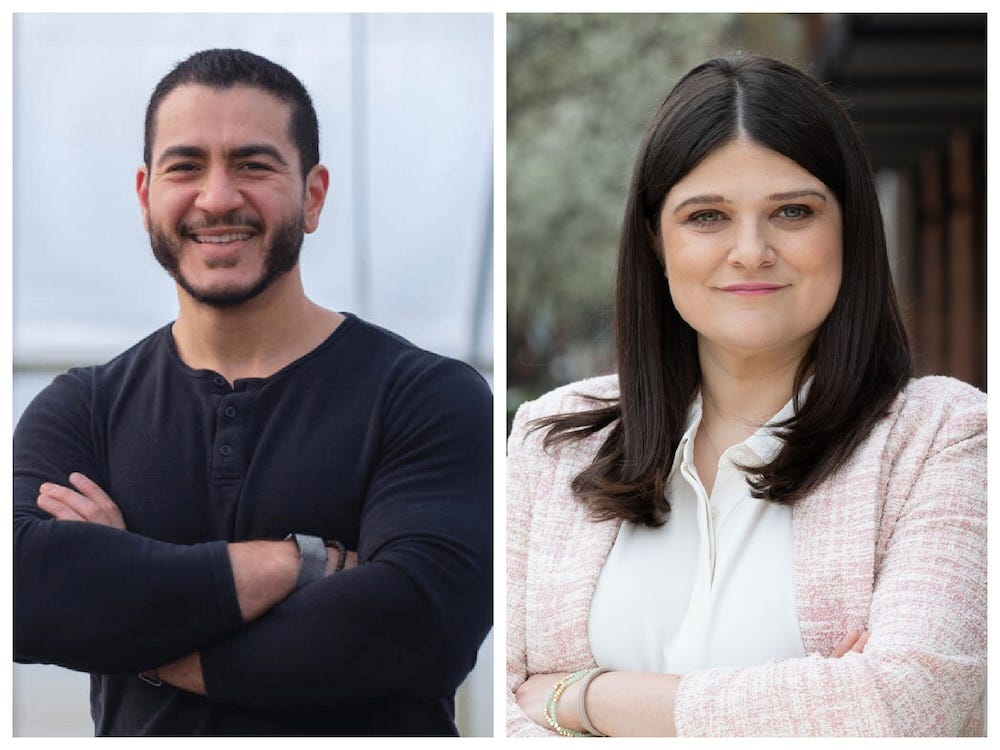
On Tuesday, Michigan Democrats will go to the polls to decide who their nominee will be to take on Republican Mike Rogers for the Senate seat being vacated by Gary Peters. The choice between Rep. Haley Stevens and progressive candidate Dr. Abdul el-Sayed is both stark and hugely consequential, with ramifications that will reach far beyond this one Senate primary.
Stevens represents the old school Democratic party. She is a corporate darling, strongly pro-Israel, and weaponizes identity in a cynical, often quite bigoted way. Her platform is typically vague on specific policy proposals, but she talks about affordability, public education, and manufacturing, all of which are very basic Midwest talking points.
El-Sayed advocates policies including Medicare for All, ending taxes on social security benefits, breaking up healthcare monopolies, a wealth tax, ending military support for Israel, a levy on automation to protect jobs.
Those are some sharp differences, but the divide goes deeper and wider.
Winning in November
This election is pivotal for Donald Trump’s far-right agenda. Both internationally and domestically, a Democrat controlled Senate will severely hamper efforts to block Trump from continuing his reckless and destructive policies, as the House is almost certain to go Democrat, albeit perhaps narrowly.
Michigan is a key state for Democrats to win if they hope to take the Senate, a prospect that, while still something of an uphill battle, is becoming more possible every day as Trump’s policies become more clearly disastrous to more Americans.
Stevens likes to argue that she is the candidate who can beat Rogers. She’s not.
Old school conventional wisdom claims that “moderates,” or “centrists” stand a better chance of beating a Republican. The logic is that undecided and independent voters are somewhere between Democrats and Republicans, and are most interested in pragmatic concerns and bipartisan potential.
That used to be true, thirty years ago, and held true for longer in Midwest states like Michigan. But it hasn’t been the case for many years. These days, elections are all about change, not maintaining the status quo or returning to a “normal” time where people still struggled mightily, but without the madness of Trump.
Stevens isn’t more “electable” than El-Sayed, as she claims. In fact, the opposite is true.
A poll on Friday showed that Stevens would lose to Rogers, while El-Sayed and Rogers were tied. That’s clearly not decisive but, since it is in line with other recent polls, it does show that neither candidate can make the “electability” claim based on polling.
There is a much deeper concern when it comes to the general election, however.
Stevens has gone as far as she has because she has the support not only of the mainstream Democratic machine but also enormous corporate PAC backing. AIPAC, of course, has been the most visible, and by far the largest, of these, but it’s not the only one.
There is also the Center Forward Committee, a SuperPAC that is supported by, among others, Chevron and Philip Morris. There are other financial, insurance, and other corporate lobbies that have spent lesser amounts supporting Stevens.
Some of those PACs might continue to support Stevens in November. But it is more likely they will either switch sides or support both her and her Republican opponent. The latter is particularly likely in a purple state like Michigan where the polling is so close. Supporting two sides in a race is a common practice for lobbyists who want to ensure they have access to whoever wins an election.
But even if they contribute to both, such PACs and their affiliated backers may not support them equally, and may not spend independently of the campaigns in equal, or even divided, measure.
Consider AIPAC’s position. Through their United for Democracy SuperPAC, they have pumped a record amount of money into Stevens’ campaign. $30 million dollars has been pumped into backing Stevens, more than double their previous high, when they spent $14 million to defeat Jamaal Bowman two years ago.
But if Stevens should defeat El-Sayed—a prospect that has become increasingly unlikely, as the latest polls have El-Sayed ahead by double digits—would AIPAC want to back her in November?
After all, Mike Rogers is also a pro-Israel stalwart, and he wouldn’t have to buck his own party and constituents to support arms sales to Israel and continued grants of financial and diplomatic support. Stevens would.
But more important than what the individual senator from Michigan might do is the question of which party controls the Senate. AIPAC can see as well as any of us where Israel stands among Democratic voters, and they can see too what that means for votes in Congress. Even reliable pro-Israel congressmembers are feeling the heat, and many of them, not only the progressives, realize they can no longer give Israel a blank check. Republicans can.
So why would AIPAC want to see Stevens defeat Rogers? The answer is that they wouldn’t. Stevens will not have their backing in the general. So, when we consider that it would take a miracle for her to beat El-Sayed even with AIPAC’s $30 million, and outspending him overall by $45 million, an unheard of gap for a Senate race, how could she possible beat Rogers without AIPAC’s help?
Of course, she can’t. So much for the electability nonsense.
Democratic dog whistle racism
Stevens has not been very subtle about attacking her opponent’s Muslim identity. She and some of her allies ion the party have repeatedly played on Islamophobic tropes about Muslim men being uniquely misogynistic.
El-Sayed was accused of misogyny because he described Michigan Governor Gretchen Whitmer as “bought and sold” when he ran against her in 2018, and described Stevens as “a suit with a large AIPAC bank account” and suggested “maybe they find some way to teach her how to string together two coherent sentences.”
Harsh attack, perhaps, but misogynistic? Nonsense. It’s painfully obvious how strained such accusations are. The comments are not gendered, nor do they play on common misogynistic tropes. Other examples were used, and they all fell into the same category.
But Democratic and Left-Independent voters can see the difference between actual misogyny and privileged women cynically trying to paint any criticism by a male against a woman as gendered. Most women, it turns out, do not buy into this portrayal of themselves as fragile people who cannot withstand passionate debate and political hardball. They are not going to be baited by privileged white women who are trying to use some kind of antiquated, and frankly sexist, standard for how men must talk to women in professional and public settings. And they are not convinced by trying to turn brown-skinned men into particularly menacing figures.
But Stevens and some of her comrades, such as the disreputable Rep. Hillary Scholten have employed them, attempting to play on Islamophobic tropes about Muslim men being uniquely hateful toward women. Indeed, there are plenty of Muslim men who are sexist, misogynistic, even violent toward women. But that is a male issue, not a Muslim one, and there are just as many men, proportionally, who fall into those categories among Christians, Jews, Hindus, Sikhs, Animists, and any other group you can name.
But, as Prof. Sahar Aziz and I noted in our report, Presumptively Antisemitic: Islamophobic Tropes in the Palestine–Israel Discourse, the trope is deployed uniquely and sensationally against Muslim men. Stevens, and certainly her AIPAC backers, know this trick very well.
Stevens doubled down on her Islamophobia by turning to antisemitism and using it to attack El-Sayed. On Thursday, she tweeted, “Everyone in America understands you want to blame all of your problems on Jewish Americans,” referring, of course, to El-Sayed.
I thought Jewish Voice for Peace Action responded very well to that scurrilous tweet. “As a Jewish organization proudly backing @AbdulElSayed we’re fed up with @HaleyforMI saying Jews and pro-Israel groups are the same thing. We’re not. And we all deserve someone in office who won’t use Jews and Muslims like a political football.”
Stevens didn’t just collapse Jews and pro-Israel groups. This Christian woman who talks about how “Israel comes to me in my dreams. I see Israel’s future,” is cynically using Jews to attack her Muslim opponent, while also, as JVP Action rightly pointed out, collapsing us with pro-Israel groups that explicitly support and run interference for Israel’s ongoing genocide of Palestinians in Gaza and ethnic cleansing in the West Bank, among too many other crimes.
But Stevens is finding out the hard way that, especially now that Democratic voters have stared the physical results of racism directly in the fact in Gaza and on streets of the U.S. swept by ICE, more of them are no longer willing to tolerate it.
The significance of El-Sayed must not be lost
Democrats in Michigan seem poised to pick Abdul El-Sayed as their nominee, barring any last minute surprises or shenanigans.
But we must be honest about the race in November.
Michigan is not a Blue state, as we saw so painfully in 2024. The resources that backed Stevens are likely to be split, at best, between Rogers and El-Sayed. The general election plays before a different audience than a primary. It is, in short, entirely possible that El-Sayed will lose to Rogers. Right now, any decent oddsmaker would certainly put it as a tossup, based both on polling and a sober analysis of the playing field.
Abdul El-Sayed would be the first Muslim ever to be a United States senator. That is no small milestone, and it is one that many people want to avoid. Winning this election is going to be a difficult, ugly affair.
More than a few Democratic leaders will be quietly rooting for Rogers to defeat El-Sayed, not only because of his faith but also, I daresay mostly, because an El-Sayed victory in a purple state would prove conclusively that the left wing of the party can win. It puts to bed the phony argument, rooted in an election 34 years old, that so-called “centrists” are the “electable” ones.
And you can be certain that if El-Sayed does lose to Rogers, the old guard, conservative Democrat leadership will display it as “proof” that progressives can’t win, and never mind the fact that every poll indicates that Stevens would do worse, and have for some time.
El-Sayed himself is not the most radical of Democrats running this year. He is not a part of the Democratic Socialists of America and recently clarified that he is a capitalist. But he is certainly more progressive than most Democrats, including a great many who call themselves “progressive.” One look at the membership of the Congressional Progressive Caucus makes that clear enough.
El-Sayed is not a man that mainstream Democrats want in the Senate. That is so true that the aforementioned Hillary Scholten has refused to say she would support him in November.
There are more like her, who would stand aside in November. If the Republicans win as a result, they will just point to the Uncommitted voters of 2024 and say they did the same thing and never mind comparing political differences with opposition to a genocide.
But an El-Sayed victory would not only prove that progressives can win statewide elections, and win elections outside of solidly Blue areas. It would also prove, once and for all, that money does not necessarily decide elections. That would be a heavy blow to SuperPACs, but it would hold even more significance for the future of the huge cadre of “consultants” that are driving Democratic political strategy and who have increasingly replaced politicians as the talking heads in legacy media.
An El-Sayed victory in November is a strong possibility, and it would be a political earthquake in terms of how politics work in the Democratic party. It would empower progressives and populist forces within the party while significantly reducing the role of corporate power, consultants, and the entire old guard that has made such a comfortable living at the expense of the majority under the stultifying status quo.
Haley Stevens is wrong on so many issues, but most of all, she is simply the wrong kind of Democrat for the future. Abdul El-Sayed represents what our future needs to look like. Hopefully, enough people in Michigan are going to see that on this Election Day and the one in November.
By Driss Rejichi, Middle East Eye, July 31, 2026
By Mehmet Alaca, Amwaj Media, July 31, 2026
By Maziar Motamedi, Al Jazeera, August 1, 2026
The New Arab, August 1, 2026
By Meron Rapoport and Aharon Porath, +972 Magazine, July 30, 2026
By Areeba Fatima, Drop Site News, August 1, 2026
Zeteo, July 31, 2026
By Jeet Heer, The Nation, July 31, 2026
Palestine Chronicle, August 1, 2026
By Aurélie Daher, Responsible Statecraft, July 29, 2026
Al Arabiya, August 1, 2026
By Hagar Shezaf, Haaretz, July31, 2026
By Raja Abdulrahim, New York Times, July 29, 2026
For professional information and contact:
LinkedIn: https://www.linkedin.com/in/mitchell-plitnick-616ba5
Comments
Nothing yet. Say the first thing.
Sign in to join the conversation.