
Love is born on Christmas. Today love is revealed to the Magi.
The author of Colossians tells us in this child “the fullness of God was pleased to dwell” (Col. 1:18).
Victorian poet, Christina Rossetti, wrote,
Love came down at Christmas,
Love all lovely, love divine;
Love was born at Christmas,
Star and angels gave the sign.
Love asleep in starlight drew the shepherds to the manger. Love drew the Magi, the Zoroastrian priests from Persia.
Today’s Gospel begins, In the time of King Herod, after Jesus was born in Bethlehem of Judea, wise men from the East came to Jerusalem, asking, Where is the child who has been born king of the Jews? For we observed his star at its rising, and have come to pay him homage” (Mt 2:1-2).
The shepherds who drew near to the manger were socially “other”, the simple, outcasts, the marginalized, a sign Jesus came not for the powerful but for the weak. The Magi, from Persia, present-day Iran, are culturally other, a sign that Jesus came not just for Jews but for Gentiles and for the learned and the wise.
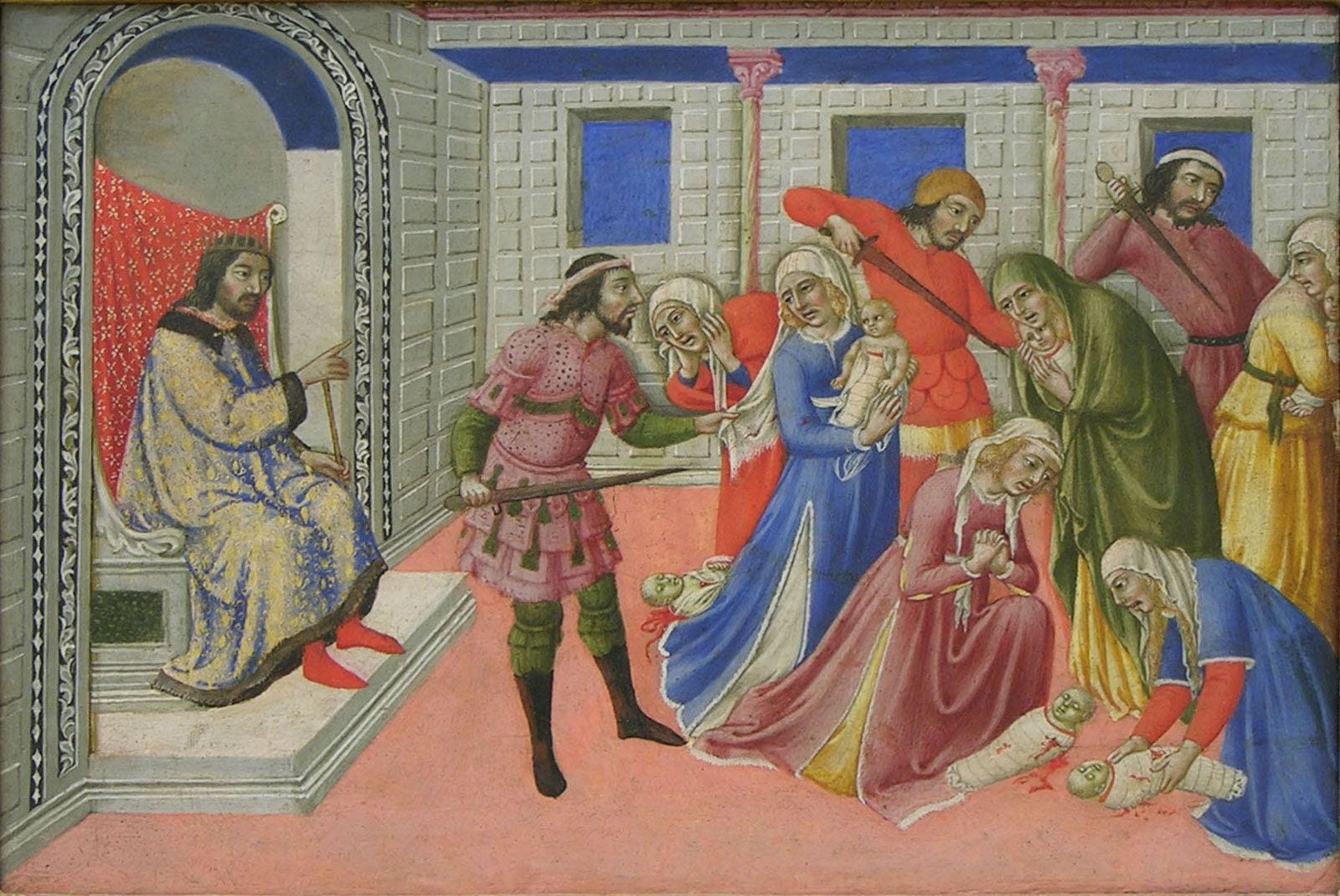
When King Herod learns the Magi are searching for this newborn king, he encourages them,“Go and search diligently.” Herod explains his desire to see the child instructing them, “When you have found him bring me so that I may also go and pay him homage.”
Can evil take on the guise of religious devotion? Have you seen it done? An Anonymous source in the Ancient Christian Commentary writes, “while [Herod was] sharpening his sword, he promised his devotion and painted the malice of his heart in the color of humility. Such is the habit of all wicked people when they want to do serious harm to someone: they feign humility and friendship” (Ancient Christian Commentary, Ia, p 24).
Carrying the King’s command that they return to him and share the location of the child, the Magi continue their search for the baby. They find Jesus and they worship him. And then the Magi, the wise men, discern their next steps, as each of us must discern.
Evil does not declare itself evil. Evil comes disguised as the efficacious choice, the flattering word, the elegant solution. Evil can seem polite. Or logical. Sometimes it seems pious.
In today’s Gospel, wisdom defies earthly authority. Wisdom protects love in defiance of power. If you have ever chosen strength over love, or dismissed mercy as naive or effeminate or weak or woke, I humbly offer that you have spiritual work to do.
Should the three kings have listened to power? One or more of them might have been afraid and felt compelled to. Instead they discerned a mortal threat to a vulnerable child, this infant transgressing eternity and time. The Magi discern a grasping, self-serving king’s false piety. And they defie him. They choose a different route home.
If you are hearing a subtext, this stuff just writes itself, friends. Since you called me to this church, sometimes it has seemed the lectionary is serendipitously attuned to our current crisis. One Sunday I even explained that I preach from the 3-year cycle of the lectionary, that I don’t choose readings, so that you didn’t think I was being too too activist.
One of the assigned psalms from Morning Prayer this week,
It is better to rely on the Lord
than to put any trust in rulers. (Ps 118: 9)
In today’s psalm we heard,
He shall defend the needy among the people;
he shall rescue the poor and crush the oppressor.
He shall redeem their lives from oppression and violence,
and dear shall their blood be in his sight. (Psalm 72:4,14)
Scripture sounds like a call to resistance because the entire story of GOD WITH US is God helping the downtrodden overcome injustice. We are just more attuned to it now because we are in precarious times.
Last week the President’s chief of staff declared, “we live in a world, in the real world . . . that is governed by strength, that is governed by force, that is governed by power….” (NYT, https://www.nytimes.com/2026/01/06/us/politics/stephen-miller-foreign-policy.html)
It is a characteristic of evil that evil is threatened by love, by peace, by equanimity. Evil mocks love, derides love, devalues love.
This morning I was up at 3am with insomnia, and did the worst thing, and checked my phone. And I saw this quote from Bishop Hirschfeld of the Diocese of New Hampshire, “I have asked the clergy of the diocese to make sure their affairs are in order and they have written their wills. It is not the time for statements. It is time to put our bodies between the powers of this world and the most vulnerable”. (Rob Hirschfeld, Bishop of the Episcopal Diocese of New Hampshire)
Here’s how clergy colleague in Western Mass, Rev. Erik Karas, put it last week, “The Epiphany is the story of a deranged, desperately fearful, dishonest, and manipulative king who felt his power slipping away. Out of that desperate fear he lied to and manipulated representatives of allied nations and sent his military to slaughter countless innocents in a pathetic attempt to claw back control of his failing kingdom.
But Epiphany is also the story of God sending wisdom into a land that had seemed to abandon using wisdom all together. It is also a story which gives hope to the hopeless, even in the midst of unimaginable horror and pain. This is also a story which reminds us there is always another way home... a round about way to be sure... but a way nonetheless.
The Magi defied King Herod by taking another way home so that Jesus might live. And because Jesus lived, he was able to overcome the worst injustice the powers of this world could thrust upon him, murder by the authority of the state. Jesus inverted the evil of this world, defied death and rose again.
The story of our faith is triumph over legitimized evil. Be not afraid.
Comments
Nothing yet. Say the first thing.
Sign in to join the conversation.