
I’m not supposed to admit that I often think about what life would be like without my children. No mothers are allowed to say this.
Children are a gift from God, after all! A very messy, loud, and demanding gift, but a gift nonetheless. On the most trying days, I think about what my life—or even just one day—would feel like if I hadn’t chosen to have children, or even if I had stopped at just one. Having one child is difficult, but objectively, more is... more. Two kids take up twice the resources, whether in time, money, or adult patience. It’s not like getting a second cat. Of course, a built-in buddy is invaluable, and it’s pretty cool to flex your genetic permutations in more than one way.
Still, I feel guilty fantasizing about all the things I would do, or even not do, if I were child-free. It’s not fair to my “gifts” who didn’t ask to be born, except my daughter. She pretty much insisted, to be fair.
I thought about this a lot during the pandemic, watching friends and strangers (through my phone, of course) make bread, grow gardens, learn to knit, and take hikes without the constraints of wake windows, bottles, and nap times. So much time to be bored when you’re not trying to keep a 15lb sack of human alive. I know this is an Instagram fantasy. The grass is always greener, and I understand everyone was generally unwell at the time. Not everyone’s boredom manifested into a mason jar of sourdough starter that still lives in the fridge. A state of perpetual anxiety and stress during 2020-2023ish was pervasive for parents and non-parents alike... but still, I wondered. What would I have done with all that time? Precious time!!
This isn’t to diminish what I did do during that period. I somehow still accomplished a lot in many areas of my life. But with a baby turned toddler without childcare, there was no downtime. No TIME. I MEAN NONE!
The responsibility, exhaustion, and relentlessness of parenting are a given. Even though you know that’s the deal on paper when you sign up, it’s still a major shock to the system, especially in the first five years. But beyond this very full-time commitment, the thing that weighs on me most of the time is the feeling that I can’t engage with the world with kids the way I used to, or even the way I want to with them now.
I’m limited, and it’s not just because of my kids.
We’ve moved from “kids should be seen and not heard” to “kids should not be seen or heard.” Within the parenting sphere, things have changed—especially with how boomers raised Millennials. Life was centered around the child when I was growing up. That philosophy carried over into how Gen X parented Gen Z to an extreme, producing helicoptered kids because of how unsafe the world has come to feel (both IRL and online).
But if you zoom out to a macro, societal level, kids are largely unwelcome. It costs thousands of dollars to give birth. No required parental leave. No universal childcare. Even on a day-to-day basis, it’s generally regarded as an inconvenience to have a child near you in a restaurant, on a plane, or at the store. In public, parents have to shoulder the strain of worrying about their kids’ feelings and the feelings of everyone else around them—and maybe, if they’re lucky, their own.
This isn’t to negate the common courtesy and respect we all should be giving our communities. But I don’t think non-parents understand the mental gymnastics we go through to take our kids into public spaces so they don’t, well... take up space. I’ve written before about how we do not value children as a society, which is evident in everything from the laws our government refuses to pass down to signs in stores telling you to keep your kids in check. We are relegated to playgrounds, gardens, and specific sections of the library officially sanctioned “kid-friendly zones.” Those are fun and wonderful, but hot damn, I’m bored!
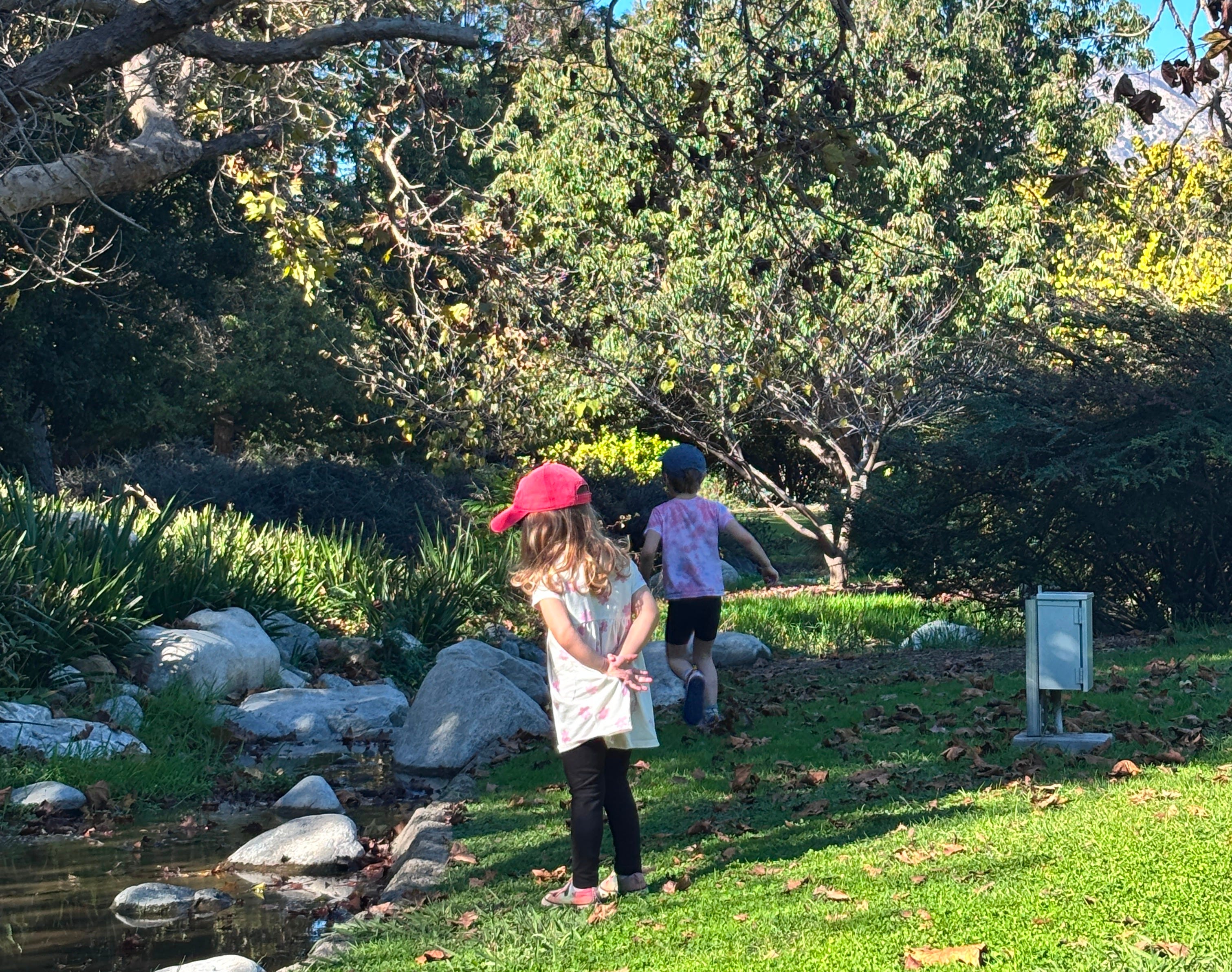
I’m fantasizing because I can’t function “normally” in the world. My kids aren’t welcome, so neither am I.
I long for an alternate reality where I have the freedom to be in the world the way I want. This looks like being able to read or have a conversation with another adult without worrying about being judged for my children's developmentally appropriate behavior of being loud, spilling things, bumping into things, and wanting to ask a lot of questions or recite facts. I want people to stop and talk to my kids, teach them something, ask about their interests, or even lightly discipline or course correct behavior. This means trusting that other people, whether they are parents or not, will keep an eye out in case the kids are about to jump off a wall or fall into a fountain. In my fantasy, I’m hanging out near gorgeous fountains a lot! I want to live in a world where my kids are treated like they belong, and there’s a tacit shared investment in shaping young people.
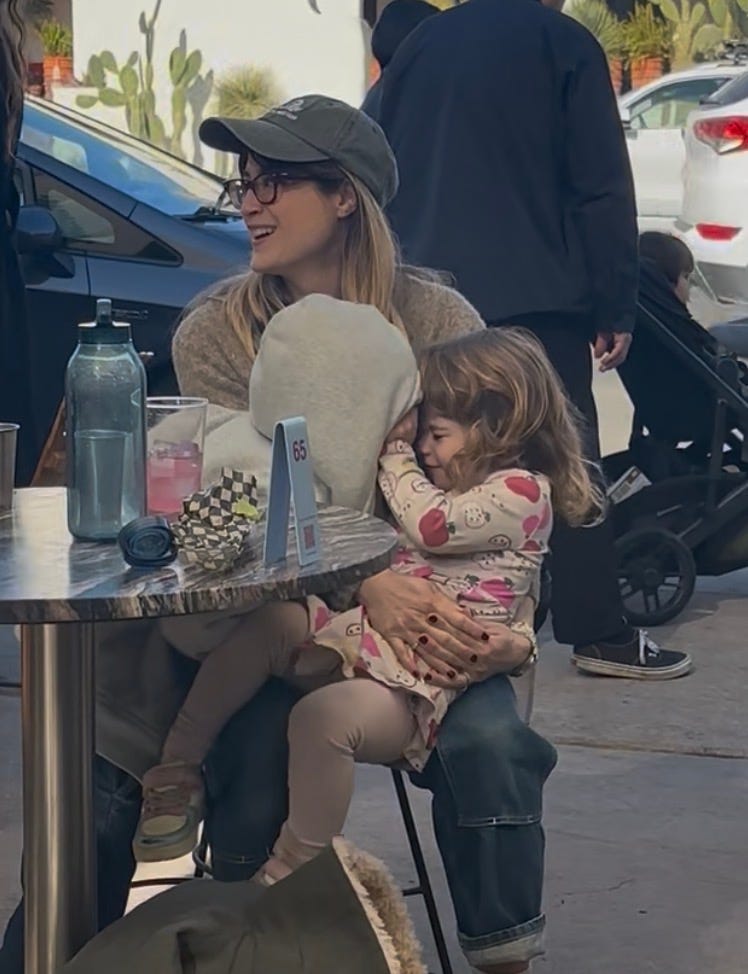
When I’m with my children, I still want the flexibility to engage with or project other facets of myself and my identity, beyond “mommy.” But maybe that’s a pipe dream, and no one is allowed that type of freedom. We love to put each other in superficial boxes based on whatever look or mood someone is serving that day, afterall, so perhaps it’s inescapable.
Some of this fetishizing of child-free life is due in part to the inescapable responsibility of caretaking. Yes, it’s nice to feel untethered for a day or a weekend; that goes for anyone with a job, right? We’ve all got obligations. Parents to care for. Dogs to walk. Bosses to email. We accept the tradeoff of stability, love, and community that comes with these attachments. I accept that!
But it is especially cumbersome and exhausting to do it in public. It’s easier to just stay home or stick to the waterfalls we’re used to.
People say “children are the future,” and it’s true. They will be the doctors who save your life, the contractors who fix your house (the right way), and the accountants who save you money. But those important adults start out as whiny kids who cannot stop moving and interacting with the world in ways that cause friction for adults.
The Social Model of Disability suggests that people are not disabled by their impairments, but rather by environments and societies that do not meet their needs. It’s not the individual with the problem, but rather the environment. Sometimes I think about that when it comes to children in public spaces.
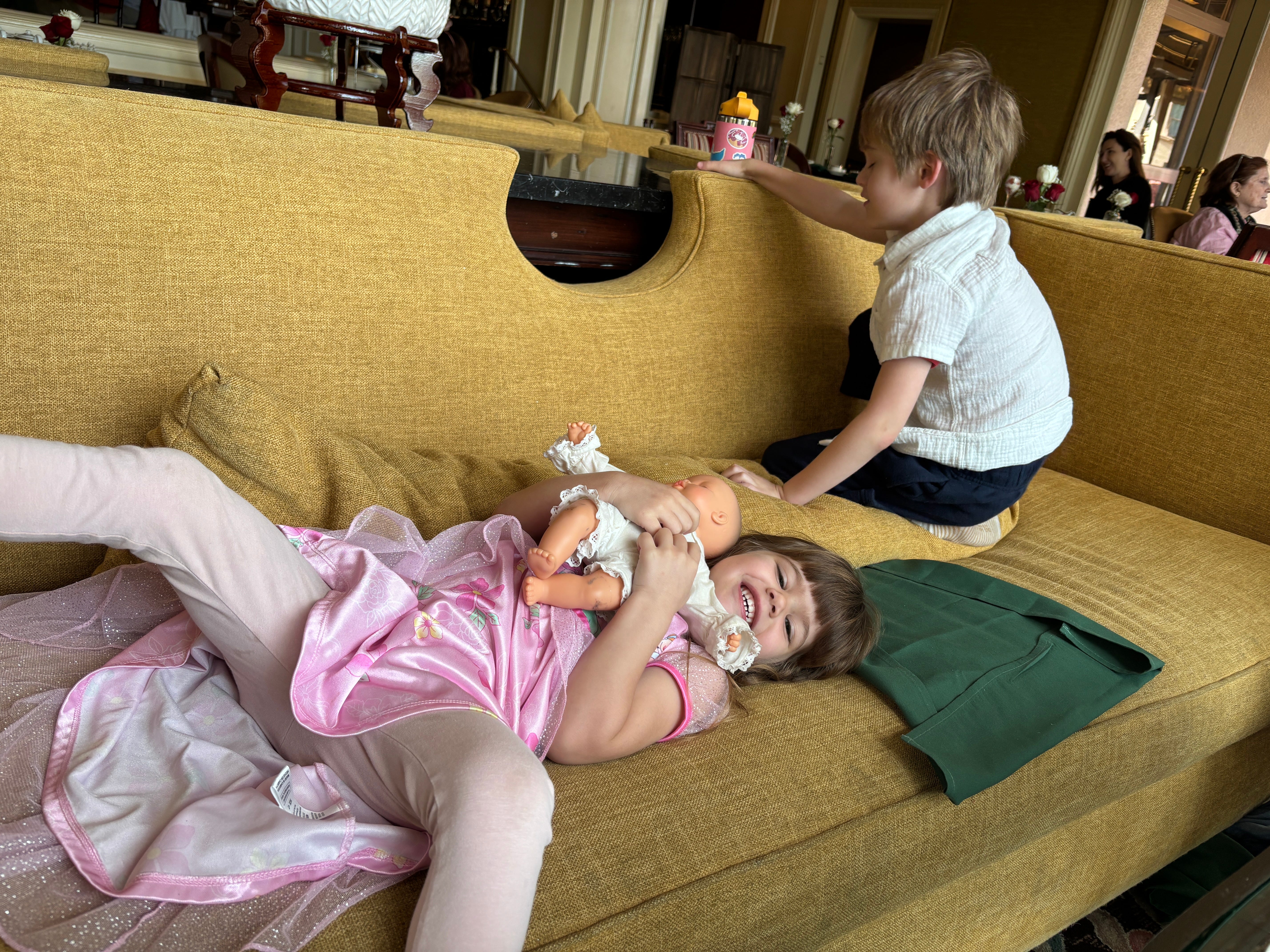
Ironically, the more adults tolerate and even engage with kids, the sooner kids will learn to navigate society appropriately. And it’s not a one-way street! I can tell you firsthand that spending quality time with children will reopen your own aperture on life by zooming in with a microscope on the smallest parts of life. Literally, you often must get low to the ground, helping you re-engage with the world in novel and fascinating ways. If these children are also not your own problem at bedtime, I can guarantee your day will be sweeter for having them be part of it.
I’m not trying to make this a parent-versus-non-parent issue, though perhaps that's inherent. But as much as I want a world where I can be more freely an adult who happens to have children, and not a frazzled M O M trying to wrangle feral animals, I also like to be in spaces without children. Kids certainly don’t belong everywhere!
As Miranda aptly said in an episode of Sex and the City, where Samantha was gravely offended by children at restaurants to varying degrees over the show’s 26 minutes, “Mommy needs two hands to eat her $8 cake.” Only now, it’s more like $18, so even more reason to enjoy your adjusted-for-inflation confection without needing to share it.
Some things and places should be for all of us, and some things should still just be for you.

No posts
Comments
Nothing yet. Say the first thing.
Sign in to join the conversation.