
One of President Trump’s political assets is his intuitive sense of power: knowing how to get people, particularly legislators from his own party, to do what he wants. This past week, however, the president committed a number of own goals that left him looking substantially weaker. (One reporter even asked me whether Trump had “lost his grip on Capitol Hill.”)
In so doing, Trump underscored some of the general rules of politics that help politicians amass and maintain power over Congress, if they are followed – and can diminish their power if they are not.
Before discussing the rules that Trump broke, it’s worth noting two that he did observe.
First, punish individual dissenters to increase compliance from others and enhance your reputation for influence. Multiple incumbent Republicans were targeted electorally by the president for being insufficiently loyal, and they subsequently lost their primaries. By the time Congressman Tom Massie (KY) was defeated in his primary last Tuesday, multiple news outlets were describing Trump as “the alpha dog in Republican Party politics.”
Second, back a winner in advance so you can take credit for their victory. Though the outcome of his primary election was far from certain, multiple polls were showing that Senator John Cornyn (R-TX) had a good chance of losing. By endorsing his opponent, Texas Attorney General Ken Paxton, Trump may have been hoping to take credit for a Cornyn loss, thus further enhancing his reputation for power.
However, Trump ignored or violated several other rules, including:
Don’t disincentivize lawmakers from doing what you want them to do. The incumbent Republicans who lost their primaries are still in office until January – only now, they no longer have to fear their Trump-loving voters. As Massie gleefully reminded his supporters in his concession speech, “I’ve got seven months left in Congress.”
I was reminded of a similar phenomenon from a quarter century ago. Back in 2000, Congressman Matt Martinez (CA) left the Democratic Party and started voting with Republicans after losing his primary and blaming Democrats for his loss. Trump has now created multiple Martinez’s in his own party – enough to be given their own caucus nickname.
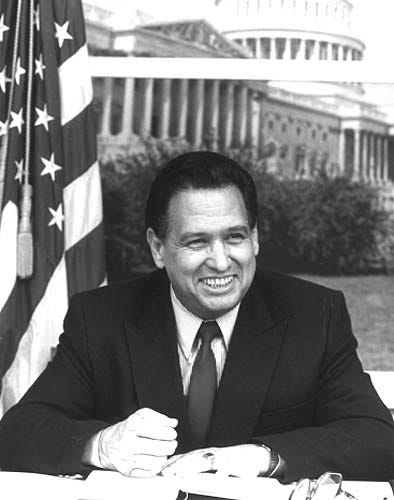
Incumbents who lose their primaries can create problems for their party. Photo of Rep. Matt Martinez (D/R - CA) from Wikipedia. Don’t make things politically harder for your allies. The president wanted Congress to pass a filibuster-proof reconciliation bill that provided funding for the Border Patrol and U.S. Immigration and Customs Enforcement by the end of the month. But then the White House pushed for two controversial proposals: $1 billion for a new ballroom (to be added to the reconciliation bill) and $1.776 billion to compensate victims of government “weaponization” (which did not require congressional approval). Both proposals put senators in a tough political spot: how could they support (or at least not oppose) these unpopular ideas, especially when Americans from both parties are deeply worried about the state of the economy?1
Don’t antagonize legislators unnecessarily. This is pretty obvious; it doesn’t take a close reading of Machiavelli’s The Prince to know that you should not anger people who have influence. Yet Gabe Fleischer notes how Trump’s decision to endorse Cornyn’s primary opponent infuriated many Senate Republicans who like Cornyn personally. (Fleischer also suggests that the weaponization fund may have upset senators who fear its recipients will include people who attacked the Capitol on January 6.)
Understand congressional procedure. The White House acted as if both the ballroom money and the weaponization fund were procedurally immune. But they weren’t. The ballroom money was vulnerable to being filibustered, and as Matt Glassman explains, Democratic senators were allowed to offer floor amendments to the reconciliation bill that would put Republicans on the record on both.
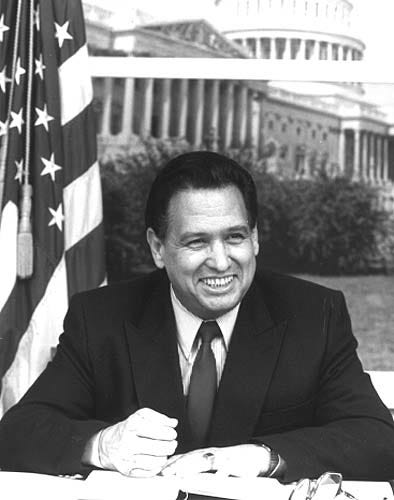
In watching these mistakes,2 I couldn’t help but contrast Trump with a politician who made far fewer errors when it came to exercising and maintaining congressional power: former Speaker and Democratic whip Nancy Pelosi.
Pelosi knew to avoid backing measures that were destined to lose. She understood how to build enduring loyalty from fellow partisans and ways to signal her displeasure with dissenters without turning them into lame-duck rebels. She even knew how to reward lawmakers for their personal loyalty while not putting her own political standing at risk.
Though Pelosi was never president, the Trump White House could do worse than to study her leadership career for tips on how to use and keep power over Congress.
This is hardly the first time the Trump White House has forced congressional Republicans to deal with political problems of it own making. For example, the last government shutdown (which led to the current effort to pass a reconciliation bill) was fueled by the deaths of two citizens in Minneapolis at the hands of federal agents.
One could argue that Trump did far better at enhancing his electoral influence over his party than he did at maintaining his legislative influence over Congress.
No posts
Comments
Nothing yet. Say the first thing.
Sign in to join the conversation.