
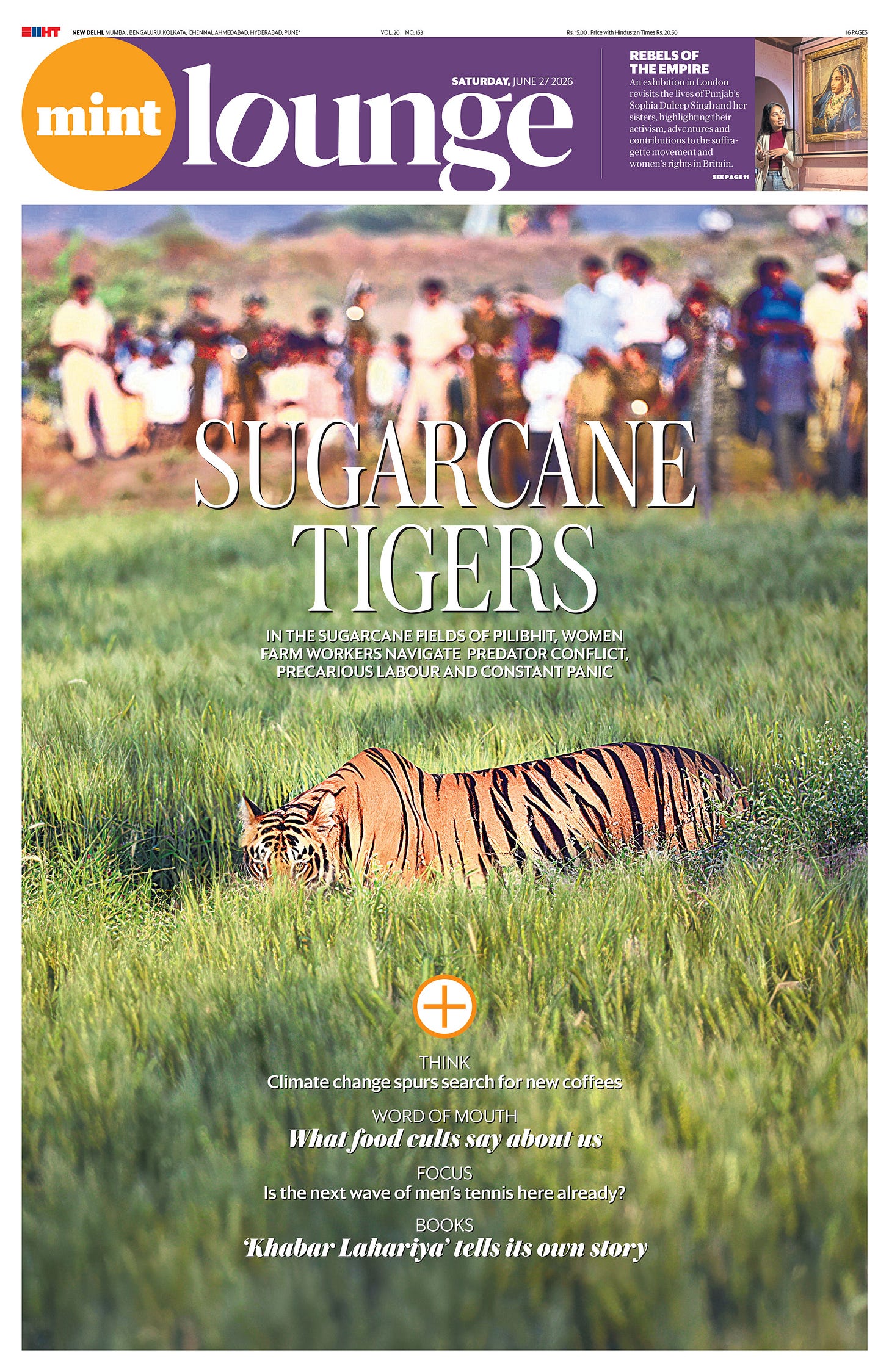
“What distinguished men from animals was born of their relationship with them,” John Berger wrote years ago in About Looking (and in a slightly different context from which I’m using the line). Wherever one lives or whatever one does, this relationship with animals continues in India. It could be a relationship mediated by love, fear, distrust, hate or indifference, but animals are part of our daily landscape, and we negotiate space with them—be it in a city, a village or a forest’s fringe.
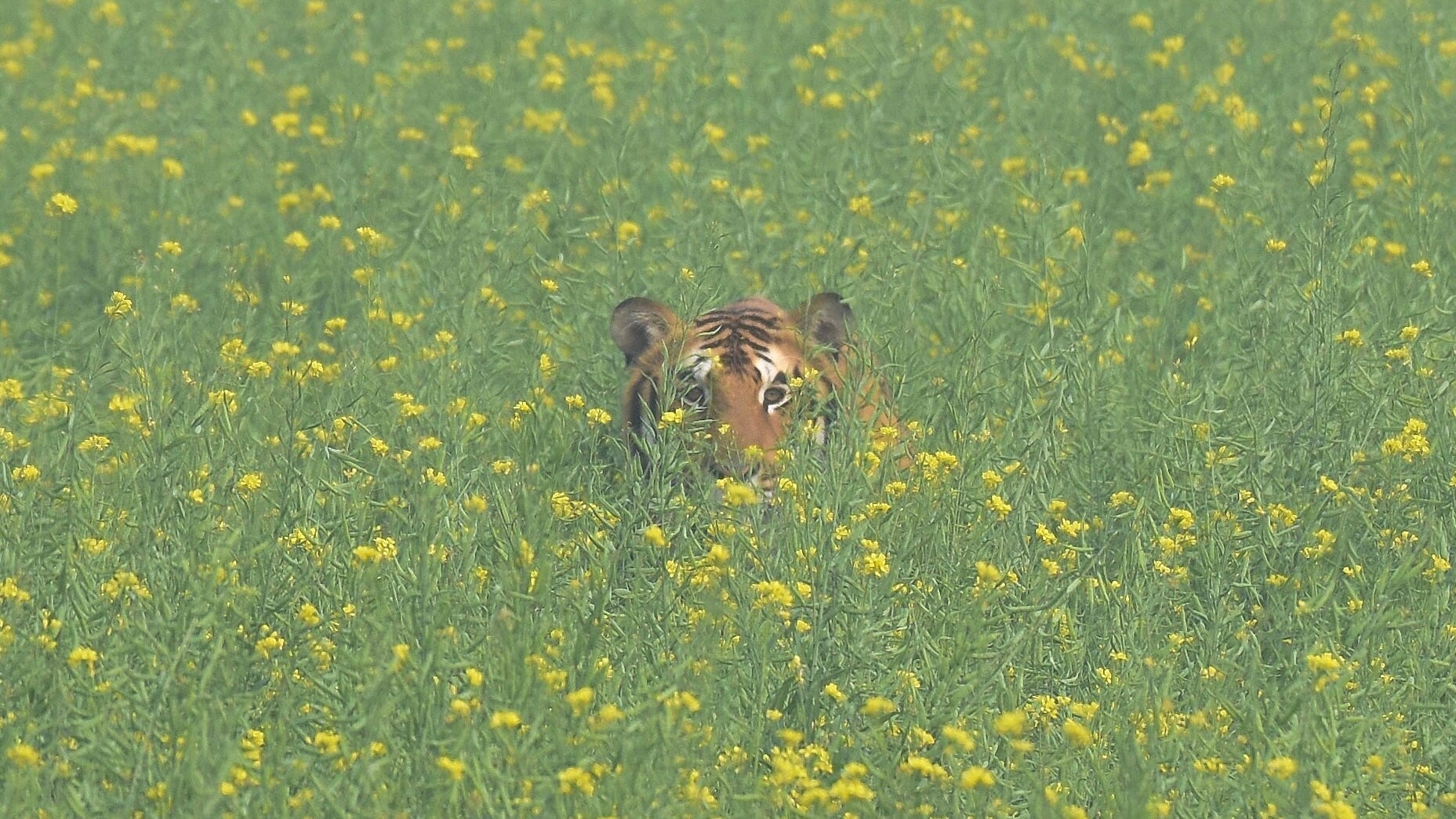
In the Pilibhit forest belt in Uttar Pradesh’s Terai region, fear is the primary emotion that mediates the relationship with animals. Here, tigers live as comfortably in the sugarcane fields as they do in the nearby forest, but cause a great deal of discomfort and terror among the small farmers and labourers—many of them women, for whom the same fields are both workplace and home.
Over many decades, the region’s original grasslands have been replaced by fields of tall, clustered sugarcane, and the tigers, as well as their prey, have become habituated to living in them. They are so completely at home here, even giving birth and raising cubs in the midst of the crops, that locals and conservationists call them sugarcane tigers. Anuj Behal visits Pilibhit and writes about the daily difficulties, negotiations and paradoxes of living beside protected creatures as agriculture expands, the forest shrinks, and tiger numbers rise due to a combination of conservation and community awareness.
It’s the season of sports—the 2026 FIFA World Cup is underway and Wimbledon is beginning on Monday. We take a look at how the coming weeks are likely to unfold on England’s famous grass courts, especially after the surprises that Roland Garros threw up. We’re following the football closely too, and you can read our reports and analyses throughout the week—whether it’s our take on the most exciting goals, the flurry of red cards being pulled, or the effect of migration on the teams—even as you catch up on all our other stories on art, music, film, fashion and food.

There’s a particular kind of heartbreak for supercar owners in India—the better part of ₹5 crore is spent on a low-slung dream machine, only for most of the ownership to be spent in low-grade anxiety. Every speed breaker is a threat assessment, every basement ramp a negotiation. And so, the supercar sits in the super-built-up garage. The 800 bhp Lamborghini Urus SE is designed to address the Indian millionaire’s particular difficulty—taking a supercar out on rutted, potholed roads, writes Rishad Saam Mehta. Read more.

Sophia Duleep Singh is remembered largely as the last princess of Punjab and it is lesser known that she and her sisters, Catherine and Bamba, played a key role in the British suffragette movement, fighting for votes and equal rights in the UK.
The sisters were raised in the UK far removed from their Sikh heritage and supported by the British government, but that didn’t stop them from rebelling and fighting for what they believed was right. A new exhibition in London remembers their contributions, Kavitha Rao writes. Read more.
For years the best drinks in Mumbai were to be had in restaurants as high real estate prices forced entrepreneurs to maximise their spaces and traffic forced guests to make one stop only. This has changed over the past couple of years with small, sophisticated standalone bars opening up across the city, introducing a new culture of mixology and drinking out, writes Jahnabee Borah. Read more.
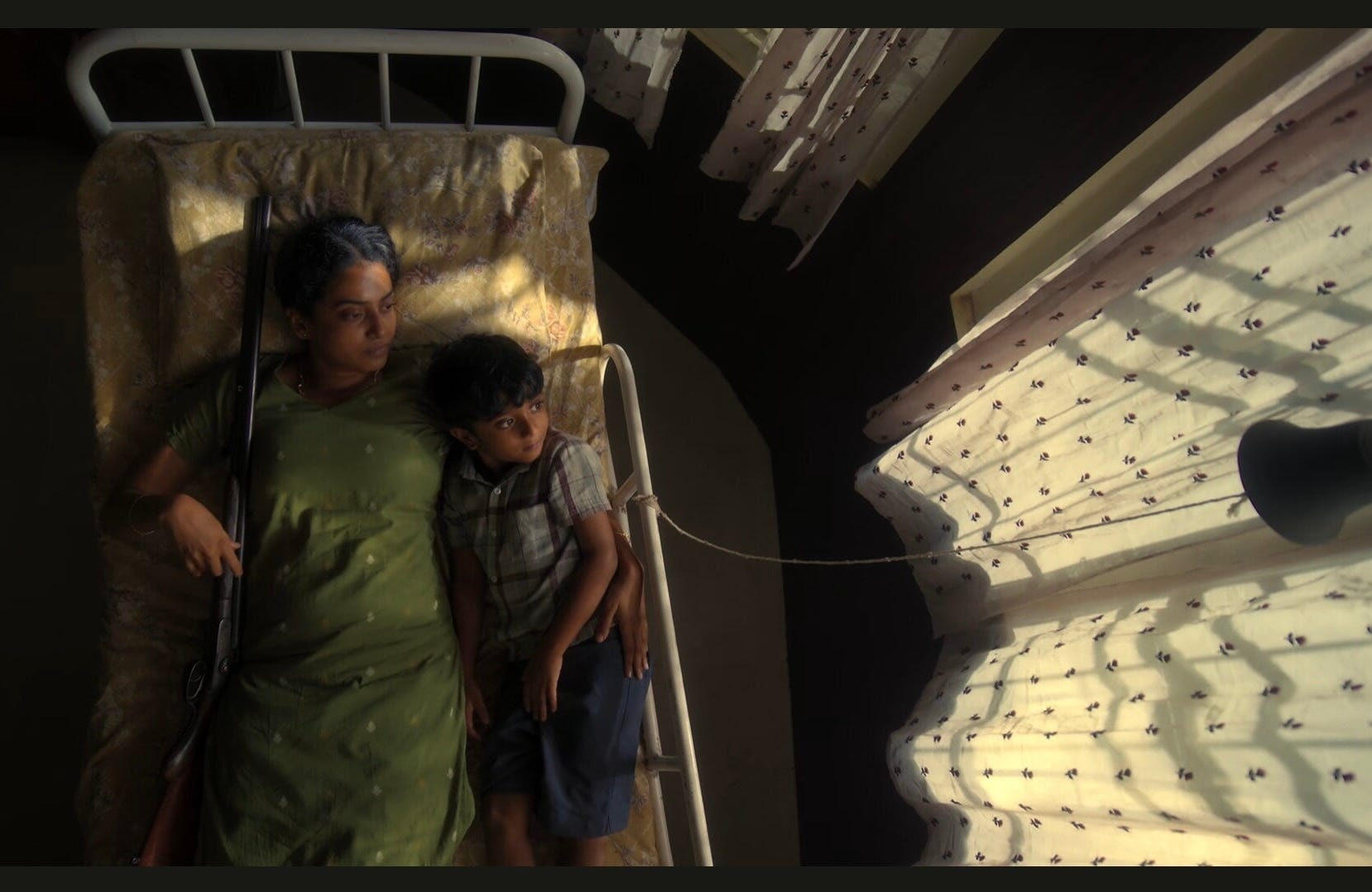
Balan: The Boy, directed by Chidambaram who made his name with Manjummel Boys, is a haven for unreliable narrators, Aditya Shrikrishna observes in his review of the film. What begins as a thriller transforms into a home invasion film with a brief diversion towards procedural only to end as a melodramatic quest.
With a peripatetic mother-son duo in the lead, Balan is a story about the loss and search of identity for a scorned life in which morals don’t survive. Read more.
Boxing bags are not always available in a gym, possibly because people aren’t using them enough. But using it is one of the best ways to elevate your HIIT, speed, reflex and movement training—so if you have the space at home, getting one could be the perfect addition to your routine, Pulasta Dhar writes, while explaining how to set up and use this versatile punching bag at home. Read more.
Shalini Umachandran is Editor, Mint Lounge.
No posts
Comments
Nothing yet. Say the first thing.
Sign in to join the conversation.