
Hello everybody,
This week we’re looking at experiencing the world with older eyes.
We’ll call him Henry, but that wasn’t his name.
Henry was a quiet boy and seemed to have few friends. In the rainy, wintery months, he’d spend his time reading. On clear, lovely days he would walk around the school grounds. He’d stroll along various paths, pausing often to look down at a plant or up at the sky, then he’d potter on. Henry was a boy from another age — another world — out on a saunter in his private, walled-off garden.
At school, I was the kind of chatty, always-joking boy who feared silence. A silence meant boredom. It meant failure. And so, Henry and I never really became friends. The talker and the walker; the busy and the still. In the complicated and hormonal melange of our foundational years, we are rarely given room to explore the vastness of another’s identity. We’re too busy finding our own.
I have few regrets in my life, but Henry is one of them. As you might imagine, there is no trace of Henry on social media. I’ve tried searching — I try almost every year — but Henry is a digital sasquatch. Someone had heard a rumor that Henry was now selling handmade guitars from a cottage in a wood just outside Canterbury. But that was seven years ago and you can saunter a long way in seven years when you’re a sasquatch.
I regret not talking to Henry. I think there was a depth to him, a richness of soul, that I needed then and I probably need now. As Walt Whitman told us, we each contain multitudes. Our personalities are complex, and there aren’t enough archetypes in the deck to truly get to the heart of them all. Back at school, there was a part of me that yearned for Henry. There is a version of my life where we became best friends and where I’m whittling a fretboard instead of typing a newsletter.
I was who I was then, and I am who I am now. But this week, we look at revisiting the old world with new eyes.
Go well,
Jonny
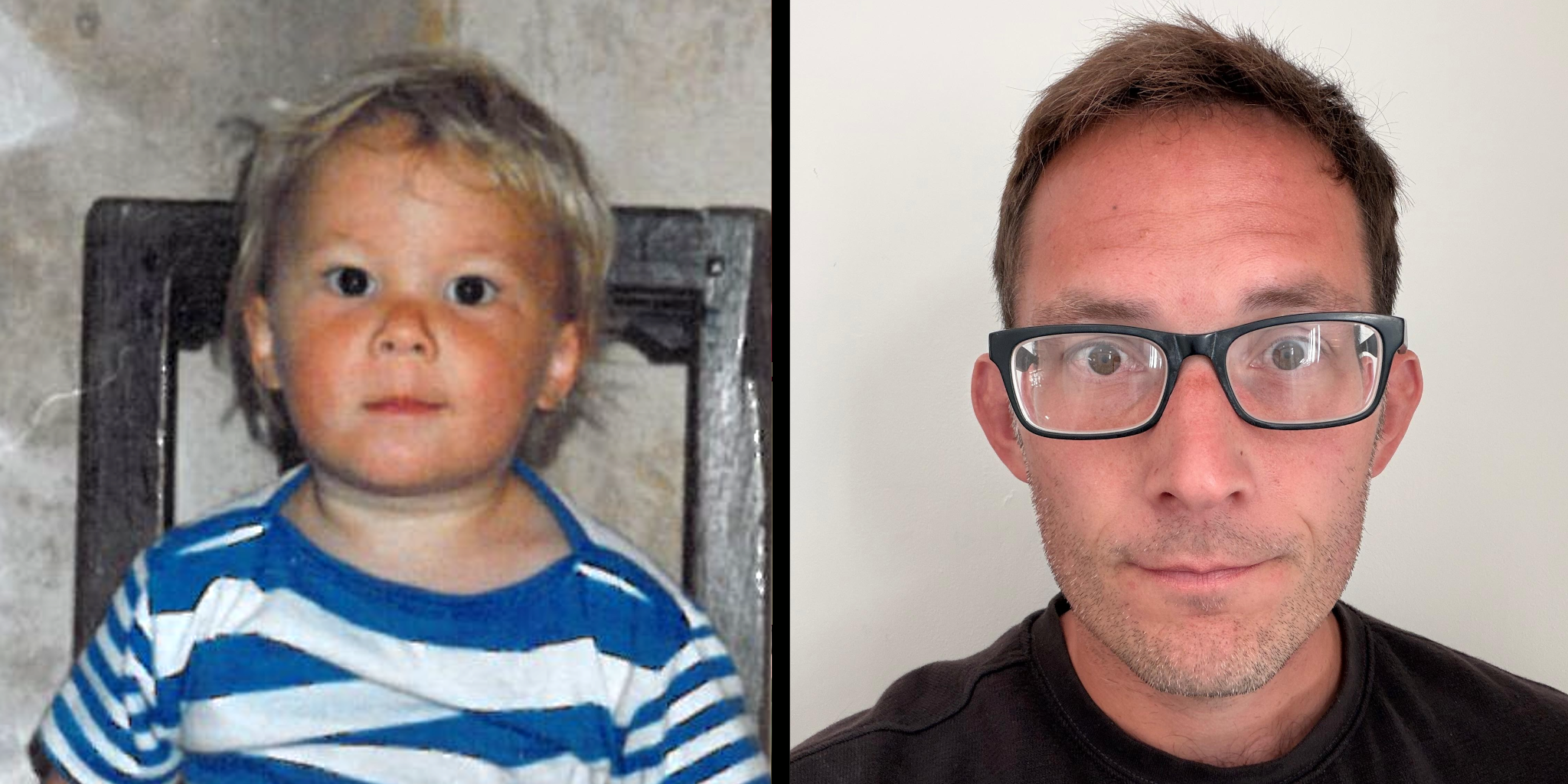
We all change. Only gods and fools do not. We change to adapt to our environment, we change to avoid error, we change because we just want to. But there is change and there is change. For example, I recently got a haircut, and I feel like a changed man.
“Did you get your ears lowered then?”
“Had a fight with a lawn mower, did you?”
Etc., etc.
A haircut is what we might call a superficial change. Often, these types of changes are temporary and reversible, but they might also be something that’s pretty small in itself. You’ve started a new book, you’ve moved the wardrobe to the other side of the room, you’ve upgraded your iPhone. With superficial changes, life goes on as it did before — but with more comments about your hair.
Meaningful changes are those that change your identity. For some people, this may start with a new haircut but often needs more than just that. It could be a new house, a new car, a new job — the elements that make up a new person. For most people, meaningful changes are the gradual step, step, step of a thousand chosen paths. After I left secondary school, I chose to study philosophy at university. I chose to get outside more and enjoy long walks or runs. I chose to turn down big, busy parties for small gatherings and solitude. A thousand paths led me to now, standing on a path that walks remarkably close to Henry’s.
When we change, the world changes with us. I don’t mean this in the purely philosophical sense. Heraclitus was famous for saying that “all is flux” — you cannot stand in the same river twice because neither you nor the river is the same. To be honest, given the state of things in the UK right now, the river may very well just be a claggy bed. No, I mean in the phenomenological sense. When we change, we see the world differently.
Growing up, I used to love David Gemmell’s fantasy books. I’d whittle away entire holidays binging the Drenai saga. Recently, I tried to reopen a Gemmell book and found it simplistic and predictable. The characters were monotonous, the plot black and white, the dialogue hammy. I still love fantasy, but I read differently now.
When I talk with someone, I focus on topics I used to shy away from. I’m far more comfortable with silences and the thoughts that they bring. When I was at school, I would have walked past Henry a hundred times. These days, I’d pause to ask him what’s on his mind.
The joy of growing up — and I’m coming to learn it really is a joy — is getting to know the many textures of experience. The school years bring experiences your 20s do not. My 30s have opened up worlds that seemed distant or impossible when I was climbing trees as a nipper. The love I have for my friends, my family, my wife, and my children has revealed flavors that were never there, or never really enjoyed. I pine for the good old days and wallow in pointless nostalgia as much as anyone, but I’m excited about how growing up offers me things I’ve never before known.
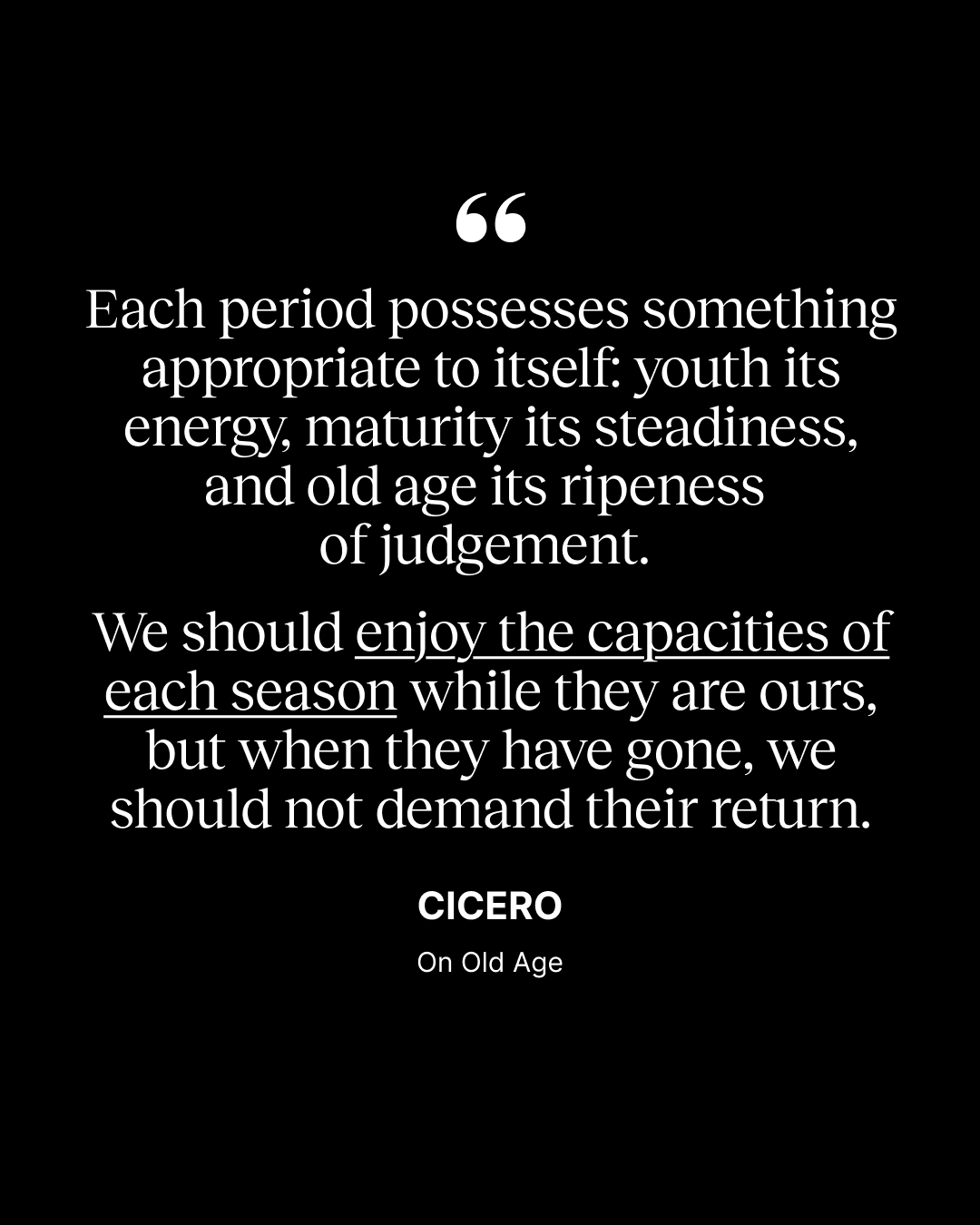
The world is full of boring, ugly, forgettable things. But that almost always speaks more of us than it does of the thing. So, look again at those lost things from your past. Talk to the Henry you once found a bit strange, read the book you once found hard, listen to that song you could never understand. You’re wiser, older, and different. So experience the world with wiser, older, and different eyes.
IN A QUOTE

Jonny is the creator of the Mini Philosophy social network. He’s an internationally bestselling author of three books and the resident philosopher at Big Think. He's known all over the world for making philosophy accessible, relatable, and fun.
Comments
Nothing yet. Say the first thing.
Sign in to join the conversation.